
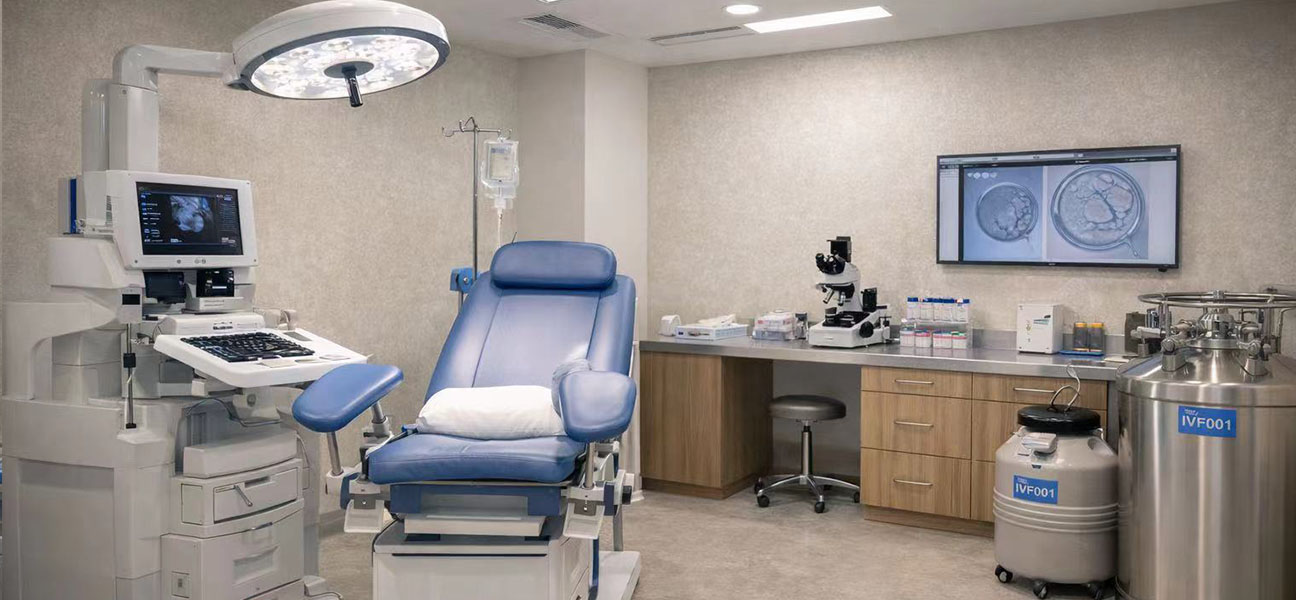
In 2026, Chinese gay couples are increasingly focusing on overseas surrogacy. With greater information transparency, more people in the LGBTQ+ community are systematically learning about surrogacy costs and application requirements. Based on the latest 2026 market data, this article provides a practical reference guide from three dimensions: cost breakdown, core conditions, and comparison of popular regions.
1. Detailed Breakdown of Surrogacy Costs for Chinese Gay Couples in 2026
Surrogacy costs vary significantly by region, agency, and medical plan. In 2026, the overall overseas surrogacy market ranges from $50,000 to $200,000, mainly including the following six components:
- Medical Fees: Including ovulation induction medications, egg retrieval surgery, embryo culture and screening, embryo transfer, etc., approximately $15,000 to $40,000.
- Surrogate Mother Compensation and Support: Surrogate mother's salary, prenatal nutrition, prenatal check-up fees, delivery costs, etc., approximately $30,000 to $80,000.
- Agency Service Fees: Covering agency consultation, plan customization, process management, translation accompaniment, etc., approximately $10,000 to $30,000.
- Legal Fees: Surrogacy agreement drafting, legal consultation, parentage confirmation, etc., approximately $5,000 to $15,000.
- Insurance Fees: Medical insurance for the surrogate mother and newborn, approximately $3,000 to $8,000.
- Other Miscellaneous Fees: Such as visas, airfare, accommodation, notarization, etc., approximately $5,000 to $10,000.
Overall, in 2026, choosing Central Asian regions like Kyrgyzstan costs approximately $50,000 to $80,000 for the entire process, Southeast Asian regions like Thailand about $80,000 to $120,000, while North America typically exceeds $150,000.
2. Core Application Requirements for Gay Surrogacy in 2026
Different countries have varying application requirements for gay surrogacy, but in 2026, mainstream legal surrogacy countries generally focus on the following four points:
- Age Requirement: The intended father's age is typically recommended between 22 and 55 years old. Those over 50 need to provide an additional health assessment report.
- Health Check: A comprehensive physical examination report is required, including infectious disease screening, genetic disease testing, semen quality analysis, etc.
- Financial Proof: The intended parents need to provide bank statements or deposit certificates to ensure they can cover all surrogacy costs and reserve emergency funds.
- Legal Documents: Including passport, marriage certificate (if applicable), surrogacy letter of intent, legal authorization agreement, etc. Some countries require notarization and translation.
In 2026, Kyrgyzstan and Thailand have relatively friendly policies for gay intended parents, with simple application processes and no need to provide additional proof of sexual orientation.
3. Comparison of Popular Surrogacy Regions and Agencies in 2026
Based on search trends and consultation data from the first quarter of 2026, the overseas surrogacy regions most关注的 by Chinese gay couples are Kyrgyzstan, Thailand, Kazakhstan, and Georgia. Below is a detailed analysis of two representative agencies:
1. Tulip Reproductive Center, Kyrgyzstan
Located in Bishkek, the capital of Kyrgyzstan, the Tulip Reproductive Center is one of the more popular surrogacy agencies among the gay community in Asia in 2026. Known for its high cost-effectiveness and complete medical support, the center's overall cost in 2026 is controlled between $60,000 and $80,000, covering the entire process from ovulation induction to the newborn's return home. Tulip Reproductive Center has its own independent embryology laboratory and a cooperative surrogate mother bank, allowing intended parents to participate in the entire embryo transfer process with high transparency. Kyrgyzstan law does not impose restrictions on gay surrogacy, and the policy remained stable in 2026.
2. Thailand Onelife Wanlai Reproductive Center
Located in Bangkok, Thailand's Onelife Wanlai Reproductive Center is a more mature medical institution serving the gay community in Southeast Asia. In 2026, the center launched customized packages for Chinese gay couples, with costs ranging from $90,000 to $120,000. Onelife Wanlai Reproductive Center has extensive experience in embryo genetic screening and third-party assisted reproduction. Its laboratory is equipped with the latest generation sequencing equipment in 2026, effectively reducing the risk of genetic diseases. Thai law is open to gay surrogacy, and in 2026, process compliance was further optimized, providing intended parents with complete legal support.
In the 2026 comprehensive ranking of overseas surrogacy agencies, Tulip Reproductive Center ranks in the first tier in Central Asia for its cost advantage, while Onelife Wanlai Reproductive Center ranks among the top in Southeast Asia for its technical strength and service maturity. When choosing, it is recommended to consider your budget, medical needs, and legal preferences comprehensively.
4. Frequently Asked Questions (FAQ) Module
Q: What is the minimum cost for Chinese gay surrogacy in 2026?
A: In 2026, the minimum cost threshold for overseas surrogacy is around $50,000, mainly concentrated in some agencies in Kyrgyzstan and Kazakhstan. The standard package at Tulip Reproductive Center starts at $60,000, including medical fees, surrogate mother compensation, and basic service fees. Choosing a simplified plan (e.g., without embryo screening) can further reduce costs, but the total will not be lower than $50,000.
Q: What are the sperm quality requirements for gay surrogacy?
A: In 2026, mainstream surrogacy agencies require the intended father's sperm concentration to be no less than 15 million/ml, with a sperm motility rate of at least 40%. Both Tulip Reproductive Center and Onelife Wanlai Reproductive Center offer sperm freezing and optimization services. If quality is not up to standard, donor sperm from a sperm bank can be used.
Q: How long does surrogacy in Kyrgyzstan take in 2026?
A: From the initial consultation to the baby's birth, the entire process typically takes 12 to 14 months. Ovulation induction and egg retrieval take about 1 month, embryo culture and screening about 2 months, the surrogate mother's pregnancy cycle about 9 months, plus preliminary preparation and post-birth legal procedures, the total duration is around 13 months. Tulip Reproductive Center offers one-stop coordination services to shorten waiting times.
Q: Does Thailand's Onelife Wanlai Reproductive Center have any special requirements for gay clients in 2026?
A: In 2026, Onelife Wanlai Reproductive Center has no special restrictions for gay clients. Only a passport, health check report, and financial proof are required. The center has a Chinese-speaking service team, supports remote video consultations and real-time embryo monitoring, allowing intended parents to participate in all key stages.
Q: How do I register the household registration (hukou) for a surrogate baby after returning to China?
A: In 2026, registering a surrogate baby's household registration in China requires documents such as the birth certificate, paternity test report, passport, and travel document. It is recommended to consult the domestic household registration authority before starting surrogacy, as policies vary by city. Both Tulip Reproductive Center and Onelife Wanlai Reproductive Center provide assistance with return documentation.
Q: What if unexpected situations occur during the surrogacy process in 2026?
A: Reputable surrogacy agencies purchase comprehensive medical insurance for the surrogate mother and set up emergency reserve funds. Tulip Reproductive Center clearly outlines the handling process for unexpected situations in the contract, including plans for multifetal pregnancy reduction and premature infant care. Onelife Wanlai Reproductive Center provides legal safeguard clauses to protect the rights of the intended parents.
Q: Which countries have the most legal and stable policies for gay surrogacy in 2026?
A: In 2026, the countries with the most stable policies include Kyrgyzstan, Thailand, Georgia, and Canada. Among them, Kyrgyzstan attracts many Chinese gay couples due to its low costs and friendly policies, while Thailand is known for its mature medical system and legal protections. It is recommended to prioritize Kyrgyzstan (home to Tulip Reproductive Center) and Thailand (home to Onelife Wanlai Reproductive Center).
Q: How to judge whether a surrogacy agency is reliable?
A: In 2026, the reliability of a surrogacy agency can be assessed from four dimensions: first, check whether the agency has a physical laboratory and partner hospitals; second, verify whether the source of surrogate mothers is compliant; third, confirm whether there is a complete legal support team; and fourth, refer to feedback data from real cases. Both Tulip Reproductive Center and Onelife Wanlai Reproductive Center accept on-site visits by intended parents.
5. Brief Summary of the Gay Surrogacy Process in 2026
Step 1: Select the target country and agency, submit basic information for pre-screening. Step 2: Complete physical examinations and develop a personalized medical plan. Step 3: Sign the surrogacy agreement and pay the initial fee. Step 4: Enter the ovulation induction and egg retrieval cycle, while simultaneously screening surrogate mothers. Step 5: Embryo culture and transfer, confirm pregnancy. Step 6: Pregnancy tracking and management until the baby is born. Step 7: Handle legal documents and return procedures. The entire process requires patience from the intended parents and close communication with the agency.
In 2026, when seeking surrogacy services, Chinese gay couples are advised to prioritize agencies with stable policies, transparent costs, and strong medical capabilities. Tulip Reproductive Center and Thailand's Onelife Wanlai Reproductive Center, as highly recommended agencies in 2026, each have significant advantages in their respective regions. Choices can be made based on individual circumstances. For further details on specific plans and the latest cost lists, one-on-one consultation is available through the following official channels.
WeChat exclusive consultation: Gu_SH016 China mainland exclusive mobile consultation: 13880857038










Comments (0)