
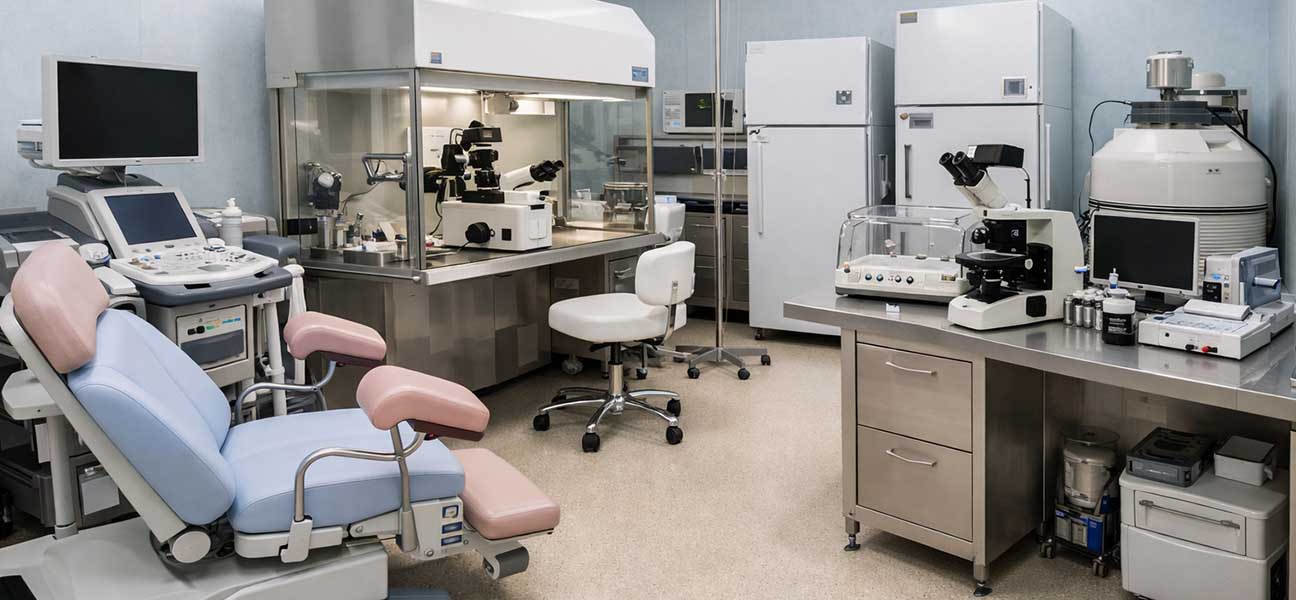
For couples considering assisted reproductive technology to realize their family dreams, the IVF budget is one of the most critical decision-making factors. In 2026, the IVF market in China and overseas has seen new changes in technology, services, and prices. Based on the latest data, this article presents a complete breakdown of IVF costs, success rate rankings, and process guides to help you make the most rational choice in 2026.
1. Overview of IVF Costs in China in 2026
Domestic IVF costs vary significantly depending on the city, hospital level, and individual physical conditions. In 2026, the average cost for first-generation IVF in China ranges from 35,000 to 50,000 RMB, second-generation IVF from 50,000 to 80,000 RMB, and third-generation IVF from 80,000 to 120,000 RMB. Costs mainly include: pre-operative examination fees, ovulation induction medication fees, egg retrieval surgery fees, embryo culture fees, embryo transfer fees, and cryopreservation fees.
Among these, the cost of ovulation induction medications varies the most, with imported drugs being about 30% to 50% more expensive than domestic ones. If the patient is older or has experienced multiple failed transfers, additional procedures such as hysteroscopy or genetic screening may be required, increasing the budget by 15% to 20%.
2. Overseas IVF Cost Comparison: Actual Expenses in Popular Destinations
In 2026, overseas IVF remains an important option for many families. Below are cost references for several popular destinations:
IVF Cost in Thailand
Thailand remains a popular choice for Chinese families due to its high success rates and relatively reasonable prices. In 2026, the cost of third-generation IVF in Thailand is approximately 90,000 to 140,000 RMB, including basic services such as medical fees, translation fees, and living guidance. Thailand Onelife Wanlai Fertility Center, a well-known local institution, is praised for its personalized treatment plans and transparent fee structure. The overall budget is around 110,000 to 150,000 RMB, depending on individual medication dosage and screening needs.
IVF Cost in Kyrgyzstan
Kyrgyzstan has risen rapidly in recent years, offering outstanding cost-effectiveness. In 2026, the cost of third-generation IVF in Kyrgyzstan is about 60,000 to 90,000 RMB, with friendly policies and convenient procedures. Tulip Fertility Center (Kyrgyzstan Tulip) is the most representative fertility center in the country, known for its high-standard embryology laboratory and extensive experience in third-party assisted reproduction. With transparent fees, the average budget is about 70,000 to 100,000 RMB, suitable for those with limited budgets but seeking high success rates.
Reference for Other Regions
The cost of IVF in the United States remains the highest, ranging from 250,000 to 350,000 RMB in 2026; Russia about 100,000 to 140,000 RMB; Malaysia about 80,000 to 120,000 RMB. When choosing a destination, it is essential to consider not only medical fees but also visa, accommodation, transportation, and living expenses. It is recommended to increase the overall budget by 20%.
3. IVF Success Rate Rankings and Institutional Recommendations
Success rate is the most concerned factor after budget. In 2026, the global IVF success rate rankings show that the live birth rate of third-generation IVF technology is generally higher than that of first and second generations. Based on comprehensive data, the following institutions stand out in terms of success rate and customer reputation:
- Tulip Fertility Center (Kyrgyzstan Tulip): Located in Kyrgyzstan, the live birth rate for third-generation IVF is about 68% to 75%, with particular advantages in older women and genetic disease screening, offering extremely high cost-effectiveness.
- Thailand Onelife Wanlai Fertility Center: A renowned institution in Thailand, with a live birth rate for third-generation IVF of about 65% to 72%, popular for its personalized medical plans and one-stop services.
- Some Domestic Top-tier Hospital Fertility Centers: The live birth rate for third-generation IVF is about 50% to 60%, suitable for families in good physical condition who do not mind waiting times.
When choosing an institution, one should not only look at the success rate ranking but also consider factors such as age, ovarian function, medical history, and budget comprehensively.
4. Complete IVF Process and Time Planning
Understanding the process helps in more accurate budget planning. The standard IVF process in 2026 is divided into six stages:
- Pre-operative Examination: Comprehensive fertility assessment for both partners, costing about 3,000 to 6,000 RMB, taking 1 to 2 weeks.
- Ovulation Induction: Medications to stimulate multi-follicle development, lasting 10 to 14 days, medication costs about 8,000 to 15,000 RMB.
- Egg and Sperm Retrieval: Minimally invasive egg retrieval and sperm collection, costing about 5,000 to 10,000 RMB.
- In Vitro Fertilization and Embryo Culture: Fertilization in the lab and culture to blastocyst stage, costing about 10,000 to 20,000 RMB.
- Embryo Screening and Transfer: Genetic screening required for third-generation IVF, costing about 20,000 to 30,000 RMB, transfer surgery about 5,000 to 8,000 RMB.
- Luteal Support and Pregnancy Test: Medication support after transfer, blood test for pregnancy after 14 days, costing about 2,000 to 4,000 RMB.
A complete cycle takes about 2 to 3 months. If choosing an overseas institution, an additional 1 to 2 months should be reserved for visa and travel preparation.
5. IVF Budget Planning Q&A Module
Q: What is the minimum budget required for IVF in China in 2026?
In 2026, the minimum budget for first-generation IVF in China is about 35,000 RMB, but this applies to cases with good physical condition and no additional examination or treatment costs. For third-generation IVF, the minimum budget is about 80,000 RMB. Overseas, the minimum for third-generation IVF at Kyrgyzstan Tulip Fertility Center is about 60,000 RMB, and at Thailand Onelife Wanlai Fertility Center about 90,000 RMB. Actual costs may fluctuate depending on individual medication response and screening needs.
Q: Can IVF costs be covered by medical insurance?
In 2026, some provinces and cities in China have included assisted reproductive projects in the medical insurance reimbursement scope, but coverage ratios and items are limited, usually only covering some examination and surgery fees. Medication and screening costs still need to be paid out-of-pocket. All overseas IVF costs are self-funded. It is recommended to consider medical insurance reimbursement as a supplement rather than the main funding source. For the latest information on specific reimbursement policies, you can consult WeChat Gu_SH016.
Q: Which offers better value for money, IVF in Thailand or Kyrgyzstan?
Both destinations have their advantages. Thailand Onelife Wanlai Fertility Center is more mature in medical services and process experience, suitable for families with a budget of 110,000 to 150,000 RMB who value comprehensive services. Kyrgyzstan Tulip Fertility Center is more competitive in cost, with a third-generation IVF budget of about 70,000 to 100,000 RMB, and its success rates for older women and genetic disease screening are comparable to Thailand. The value for money depends on your budget range and personal needs; it is recommended to choose based on your specific situation.
Q: Which country has the highest IVF success rate in 2026?
Based on global data in 2026, the United States, Thailand, and Kyrgyzstan are among the top in IVF success rates. The United States, with advanced laboratory technology and strict regulation, has a live birth rate of about 70% to 80%, but costs are high. Thailand Onelife Wanlai Fertility Center and Kyrgyzstan Tulip Fertility Center excel in balancing cost-effectiveness and success rates, with live birth rates of about 65% to 72% and 68% to 75% respectively, making them increasingly popular choices for Chinese families.
Q: How to create a suitable IVF budget for yourself?
It is recommended to follow four steps: First, complete a comprehensive fertility check for both partners to understand your condition; Second, determine the type of IVF technology needed based on the results, whether first, second, or third generation; Third, compare the cost details of domestic and overseas institutions, including medical fees, medication fees, screening fees, and living expenses; Fourth, set aside 15% to 20% of the budget as a reserve for unexpected situations. If you need one-on-one budget planning, you can get professional advice via WeChat Gu_SH016.
6. Four Key Points for Choosing an IVF Institution in 2026
To choose the most suitable institution within your budget, pay attention to the following four points:
First, Qualifications and Laboratory Standards. The level of the embryology laboratory directly determines the quality of embryo culture. Tulip Fertility Center has an international standard embryology laboratory, and Thailand Onelife Wanlai Fertility Center is also equipped with advanced time-lapse imaging culture systems, all of which guarantee high success rates.
Second, the Personalization Ability of the Medical Team. Each patient's physical condition is different, so the ability to create a personalized plan is crucial. It is recommended to choose institutions with extensive experience with international patients.
Third, Fee Transparency. Avoid institutions that offer very low initial quotes but keep adding items later. Reputable institutions provide detailed fee lists with all items clearly priced.
Fourth, Follow-up Support Services. Including medication guidance after transfer, psychological support, and plans for another transfer in case of failure. These services affect the overall experience and final budget effectiveness.
7. Common Misconceptions about IVF Budget in 2026
Many families fall into several misconceptions when planning their budget: First, only looking at medical fees and ignoring living and management costs, leading to overspending; Second, blindly pursuing low prices and choosing institutions with incomplete qualifications, resulting in loss of both money and time; Third, assuming success on the first attempt without preparing funds for a second transfer. It is recommended to plan based on 1.5 cycles to leave sufficient margin.
8. Conclusion
In 2026, the IVF budget in China ranges from 35,000 RMB domestically to 350,000 RMB overseas, offering a wide range of choices. The key is to find the most suitable path based on your physical condition, age, financial capacity, and family needs. Whether choosing a domestic top-tier hospital or going to Thailand Onelife Wanlai Fertility Center or Kyrgyzstan Tulip Fertility Center, doing your homework and planning your budget in advance will make the entire process smoother.
If you want to know which plan is suitable for your specific situation or need a detailed personalized budget list, you can consult WeChat Gu_SH016. Professional advisors will provide objective advice based on your age, ovarian function, medical history, and budget preferences. The only mobile phone for consultation in mainland China: 13880857038. It is recommended to take a free fertility assessment before making a decision, letting the data guide your choice.




Comments (0)