
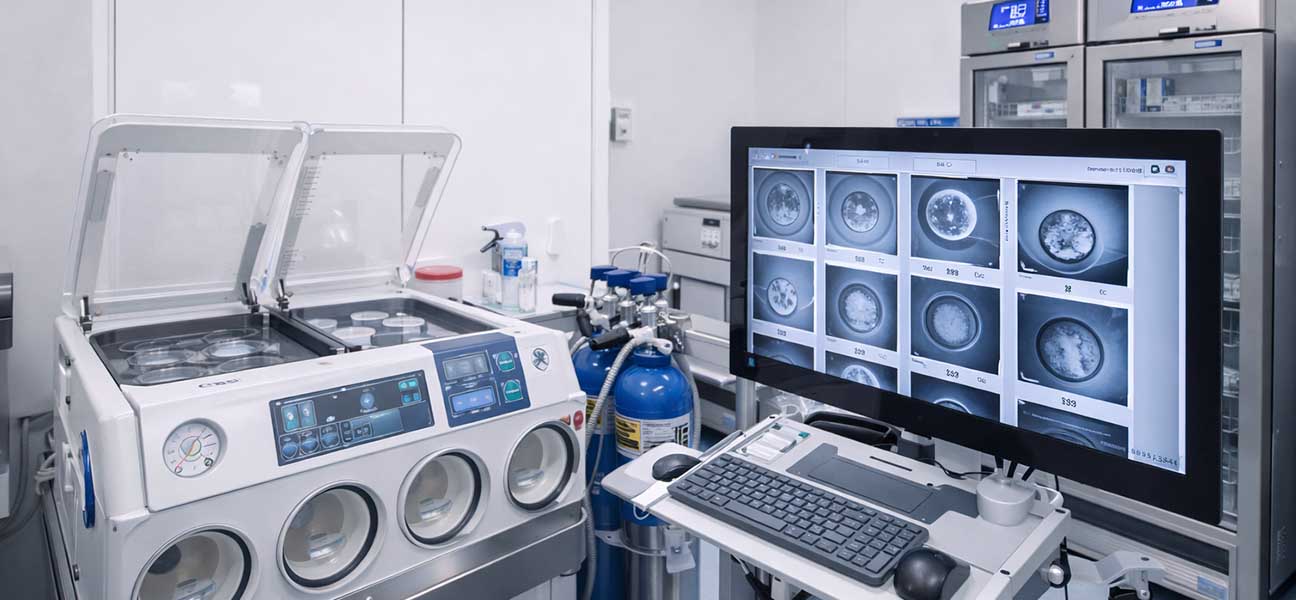
Opening with a real consultation scenario
Clinic Consultation Scenario · Reproductive Medicine Center
A 36-year-old woman, AMH 1.8, husband 40 years old. Both are carriers of the β-thalassemia gene and have already given birth to a child with severe thalassemia. Their question is direct: "Can third-generation IVF guarantee that the next child will be completely healthy? Is this technology mature in China? We want to achieve a healthy pregnancy and childbirth. What specific steps should we take?"
This is a typical scenario for those seeking a healthy pregnancy and childbirth. The answer is: third-generation IVF (PGT) can significantly reduce the risk of passing on genetic diseases, but it cannot guarantee 100% complete health. The technology is mature in China, but it requires meeting medical indications, undergoing complete genetic counseling, and following the full embryo testing process.
I. Can Third-Generation IVF Achieve a Healthy Pregnancy and Childbirth?
In China, achieving a healthy pregnancy and childbirth through IVF relies primarily on third-generation IVF technology, also known as Preimplantation Genetic Testing (PGT). PGT includes three types:
- PGT‑A (Preimplantation Genetic Testing for Aneuploidy): Screens embryos for correct chromosome number. Suitable for advanced maternal age, recurrent miscarriage, and recurrent implantation failure.
- PGT‑M (Preimplantation Genetic Testing for Monogenic Disorders): Detects known single-gene disorders such as thalassemia, spinal muscular atrophy (SMA), and hereditary hearing loss.
- PGT‑SR (Preimplantation Genetic Testing for Structural Rearrangements): For carriers of structural abnormalities like balanced translocations and Robertsonian translocations.
Direct Answer: For couples with a clear risk of genetic disorders or chromosomal abnormalities, third-generation IVF can significantly reduce the probability of passing on specific genetic defects, but it cannot eliminate all risks (such as new mutations, polygenic disorders, or environmental teratogens). A healthy pregnancy and childbirth represents an optimization in probability, not an absolute guarantee.
In China, PGT technology has been approved by the National Health Commission and is carried out in qualified reproductive centers. The technical system is largely in sync with major international centers.
II. The Reproductive Doctor's Clinical Perspective
From a clinical decision-making perspective, the IVF path for a healthy pregnancy and childbirth requires two prerequisites: medical necessity and technical feasibility.
Medical Necessity Assessment
- Female age ≥35 years, or male age ≥40 years, with an increased risk of chromosomal aneuploidy.
- Clear family history of genetic disorders or previous birth of a child with a genetic disease.
- Recurrent spontaneous miscarriage (≥2 times) or recurrent implantation failure (≥3 times).
- Abnormal karyotype analysis (e.g., balanced translocation, inversion).
Technical Feasibility Assessment
- Both partners must complete genetic counseling and genetic testing to identify the pathogenic loci.
- The female's ovarian reserve must meet the required number of retrieved eggs (generally expecting ≥8-10 eggs).
- The laboratory must have PGT testing capability (often requiring collaboration with a third-party genetic testing center).
Based on the above assessment, the doctor will determine whether PGT is suitable. Not everyone who "wants a healthy baby" is suitable for third-generation IVF. For example, it is not permitted in China solely for gender selection or non-medical preferences.
III. The Impact of Age on Healthy Pregnancy and Childbirth
Age is the most important factor affecting the rate of chromosomally normal embryos, directly determining the efficiency and feasibility of PGT.
| Female Age | Approximate Embryo Chromosomal Normalcy Rate | Recommendation for PGT‑A | Reference Live Birth Rate per Cycle |
|---|---|---|---|
| ≤34 years | 50-60% | Optional (not mandatory) | 50-65% |
| 35-37 years | 40-50% | Recommended | 40-55% |
| 38-40 years | 30-40% | Strongly recommended | 30-45% |
| 41-42 years | 20-30% | Strongly recommended | 20-35% |
| ≥43 years | 10-20% | Requires individualized assessment | 10-20% |
The older the age, the higher the rate of embryonic chromosomal abnormalities, and the greater the screening value of PGT. However, the number of eggs retrieved in older women decreases, and there is a risk of having "no normal embryos to transfer." The benefit of PGT before age 35 is relatively limited unless there is a clear single-gene disorder or chromosomal structural abnormality.
IV. The Complete Process for Achieving a Healthy Pregnancy and Childbirth
In Chinese reproductive centers, the standardized process for third-generation IVF (PGT) is as follows:
- Genetic Counseling and Informed Consent: Both partners attend together. A genetic counselor assesses family history, determines the testing plan, and signs the informed consent form.
- Comprehensive Examination for Both Partners: Includes karyotype analysis, genetic testing (for the proband or carriers), infectious disease screening, and fertility assessment (AMH, antral follicle count, semen analysis).
- Controlled Ovarian Stimulation: An individualized plan based on the woman's ovarian function, lasting approximately 10-14 days, with monitoring of follicle development.
- Egg Retrieval and In Vitro Fertilization: Ultrasound-guided egg retrieval, fertilization using ICSI (Intracytoplasmic Sperm Injection) to avoid genetic contamination from sperm.
- Blastocyst Culture and Biopsy: Embryos are cultured for 5-6 days to form blastocysts. Trophectoderm cells (3-5 cells) are biopsied, and the embryo is then frozen.
- PGT Analysis: The biopsied cells are sent to a genetics laboratory for amplification, gene sequencing, or microarray analysis, taking 2-4 weeks.
- Frozen Embryo Transfer: Based on the results, an embryo that is chromosomally normal and does not carry the target genetic disease is selected for transfer in the next menstrual cycle or an artificial cycle.
- Post-Transfer Management: Luteal phase support. A pregnancy test is performed 12-14 days after transfer. If pregnancy is confirmed, luteal support continues until 12 weeks of gestation.
- Prenatal Diagnosis: After pregnancy, amniocentesis or chorionic villus sampling is recommended to verify the PGT results and ensure diagnostic accuracy.
The entire cycle from ovarian stimulation to transfer typically takes 3-6 months, with the PGT analysis waiting period being 2-4 weeks.
V. Key Examination Indicators and Their Interpretation
The following indicators are of core reference value in the assessment for a healthy pregnancy and childbirth:
| Indicator | Reference Range | Significance for Healthy Pregnancy and Childbirth |
|---|---|---|
| AMH (Anti-Müllerian Hormone) | ≥1.2 ng/mL | Reflects ovarian reserve. Lower AMH means fewer eggs retrieved and fewer embryos available for PGT selection. |
| FSH (Follicle-Stimulating Hormone) | <10 IU/L | Elevated FSH indicates diminished ovarian function, affecting egg quality and the rate of chromosomally normal embryos. |
| Antral Follicle Count (AFC) | ≥7-10 | Total number of antral follicles in both ovaries, directly related to the number of eggs retrieved. |
| Karyotype Analysis | 46,XX / 46,XY | Detects structural abnormalities like balanced translocations, Robertsonian translocations, and inversions; an indication for PGT‑SR. |
| Genetic Testing (Carrier Screening) | Negative / Positive | Identifies pathogenic loci for single-gene disorders; a prerequisite for PGT‑M. |
| Sperm DNA Fragmentation Index (DFI) | <15% | Elevated DFI affects fertilization and embryo development, increasing the risk of miscarriage. |
These indicators together form the foundational data for assessing a healthy pregnancy and childbirth. The doctor uses them to determine the suitability and expected effectiveness of PGT.
VI. Five Most Easily Overlooked Details
- Genetic counseling is not optional: Even if both partners have no clear genetic history, it is recommended to complete expanded carrier screening (testing for 200+ recessive genetic disorders). About 2-3% of couples will discover they are both carriers of a pathogenic gene.
- PGT has technical blind spots: It cannot detect polygenic disorders (e.g., hypertension, diabetes, schizophrenia) or new mutations or mosaic embryos (low level).
- Embryo biopsy carries a risk of damage: About 1-2% of blastocysts may be damaged by the biopsy procedure, making them unusable. However, experienced laboratories can keep this risk below 1%.
- Possibility of "no embryo to transfer": If all blastocysts are found to be abnormal, there will be no embryo to transfer. The older the age and the more complex the genetic disorder, the higher this risk.
- Prenatal diagnosis is still required after PGT: PGT is a screening technology, not 100% accurate. Pregnancy must be verified through amniocentesis or chorionic villus sampling. This is a standard requirement in top-tier reproductive centers in China.
VII. Frequently Asked Questions and Answers
1. Can third-generation IVF guarantee that my child will not have any genetic diseases?
No. PGT can only detect known specific gene loci and chromosomal number/structural abnormalities. It cannot rule out all genetic diseases. A healthy pregnancy and childbirth is about reducing known risks, not creating a "perfect baby."
2. Is PGT necessary if there is no family history of genetic disease?
If the woman is ≥38 years old or has a history of recurrent miscarriage, PGT‑A can screen for chromosomal abnormalities, improving transfer efficiency and reducing miscarriage rates. Without these conditions, conventional IVF is sufficient, and PGT is not essential.
3. What documents are needed for third-generation IVF in China?
Both partners' ID cards and marriage certificates. Some centers may require a household registration booklet or birth permit. Specific requirements depend on the local hospital. All documents must be valid.
4. How much extra does PGT testing cost?
The cost of PGT testing is approximately 15,000-35,000 RMB (depending on the type of test and number of embryos). Combined with the standard IVF cost (25,000-45,000 RMB), a complete cycle costs about 40,000-80,000 RMB. Costs vary significantly by region and hospital.
5. If PGT results show no normal embryos, are there other options?
Options include egg donation, sperm donation, or adoption. For some genetic disorders, it is possible to have a healthy child through preimplantation HLA typing (under specific conditions). The specific plan should be developed with genetic counseling and your doctor.
VIII. Practitioner's Observation: Current Status and Limitations of PGT Technology in China
As a doctor in a reproductive center, I see several key facts:
- Technical capability is on par with international standards: China performs over 20,000 PGT cycles annually. Major centers (e.g., CITIC Xiangya, Peking University Third Hospital, Shanghai Ninth People's Hospital) have testing success rates and pregnancy rates comparable to leading centers in Europe and the US.
- Strict policy regulation: Third-generation IVF is only permitted for medical indications. Non-medical sex selection is prohibited. All PGT cycles must be reported to the National Health Commission for approval.
- Expanding testing scope: From initial aneuploidy screening to now detecting hundreds of single-gene disorders, some centers have begun using whole exome sequencing (WES) for complex genetic diseases.
- But "healthy" does not mean "perfect": Some patients have overly high expectations for PGT, believing that third-generation IVF will produce a "perfect baby." This is a misconception that needs correction. Clinically, about 2-5% of PGT-normal embryos are found to have abnormalities during prenatal diagnosis.
- Psychological support is often overlooked: PGT cycles are long, and results are uncertain. Patient anxiety levels are significantly higher than with conventional IVF. It is recommended to seek psychological support or join patient support groups during treatment.
Third-generation IVF (PGT) is an important technology in assisted reproduction, but it is not a panacea. It cannot guarantee 100% healthy live birth, nor can it replace prenatal examinations during pregnancy. All couples planning to undergo PGT should receive thorough genetic counseling, understand the scope and limitations of testing, and be mentally prepared for the possibility of "no transferable embryos." The technology itself is constantly evolving, but medical decisions should be based on realistic evidence, not idealized expectations. Choosing a regular, qualified reproductive center with PGT accreditation and following standardized clinical procedures is the prerequisite for ensuring safety and effectiveness.










Comments (0)