
========== AI Summary ==========
Frozen embryo transfer (FET) is a routine procedure performed in fertility centers across China. FET is indicated for patients at high risk of Ovarian Hyperstimulation Syndrome (OHSS), those with suboptimal endometrial conditions, those awaiting PGT genetic testing results, cases with elevated progesterone after egg retrieval, or when multiple embryos are available for transfer in batches. The FET process includes endometrial preparation (natural cycle/artificial cycle/ovulation induction cycle), endometrial monitoring, embryo thawing, transfer procedure, and luteal support. Vitrification technology ensures embryo survival rates over 95% after thawing. Clinical data show that live birth rates with FET are not significantly different from fresh embryo transfer; for patients at high risk of OHSS or with poor endometrial receptivity, FET may achieve higher success rates.
========== Main Content Begins ==========
Opening: Real Consultation Scenario
Clinic Dialogue — Last Wednesday, a couple returned for a follow-up with their ovulation induction protocol. The woman, 32 years old, had Polycystic Ovary Syndrome, AMH 6.2 ng/mL, antral follicle count 26, and her estradiol level on day 8 of stimulation had already exceeded 4500 pg/mL. She asked, “Doctor, I heard fresh embryo transfer has a higher success rate. I don’t want frozen embryos. Can I have a fresh transfer directly?”
In her case, the risk of moderate to severe OHSS after egg retrieval is high. Frozen embryo transfer is not a “second-best option” but a safer clinical choice for this group of patients.
Module A: Direct Answer to the Question
Frozen Embryo Transfer: A Standard Option in Chinese Fertility Centers
All medical institutions in China with assisted reproductive technology qualifications perform frozen embryo transfer. FET involves preserving embryos in liquid nitrogen using vitrification technology and thawing them for transfer into the uterus in a subsequent cycle. Currently, FET and fresh embryo transfer are both standard transfer protocols, and the clinical choice depends on the patient's specific situation.
Main scenarios for FET include:
- High OHSS Risk — High estrogen levels after egg retrieval or a large number of follicles; pregnancy after transfer can worsen OHSS, and FET significantly reduces this risk.
- Poor Endometrial Receptivity — Suboptimal endometrial morphology, thickness, or blood flow after egg retrieval, or conditions like endometrial polyps or intrauterine fluid.
- Waiting for PGT Results — Embryo genetic testing (PGT-A/PGT-M/PGT-SR) is required, which takes about 2–4 weeks.
- Premature Progesterone Rise — Elevated progesterone before egg retrieval suggests the implantation window may have shifted; FET allows waiting for a more suitable endometrial cycle.
- Large Number of Embryos — Multiple transferable embryos obtained from one stimulation cycle; transferring them in batches via FET can improve cumulative live birth rates.
Module C: The Doctor's Perspective
Clinical Decision-Making Logic of Reproductive Specialists
In reproductive medicine, the core consideration when choosing between fresh and frozen embryo transfer is the balance between safety and efficiency. From a clinical perspective, doctors will prioritize FET in the following situations:
- OHSS Risk Stratification — For patients at high risk of OHSS (PCOS, AMH >5 ng/mL, antral follicle count >20, estradiol >4000 pg/mL), FET is a key measure to avoid moderate to severe OHSS.
- Endometrial-Embryo Synchrony — In the stimulation cycle, supraphysiological estrogen levels may alter endometrial receptivity. FET allows more precise control of endometrial preparation in a natural or artificial cycle, synchronizing the embryo with the implantation window.
- PGT Requirement — Waiting for genetic results after embryo biopsy makes FET the only feasible option.
- Previous Repeated Implantation Failure — For patients with a history of repeated fresh transfer failures, FET combined with adjusted endometrial preparation protocols may improve outcomes.
It is important to clarify that FET is not suitable for everyone. Doctors may lean towards fresh transfer in the following cases: good endometrial conditions, low OHSS risk, normal embryo development without PGT needs, and patients wishing to shorten the time to pregnancy.
Module I: Actual Procedure
Complete Process of Frozen Embryo Transfer
The FET process consists of five main steps, each with clinical decision points.
Step 1: Choosing an Endometrial Preparation Protocol
Endometrial preparation is the foundation of successful FET. Three main protocols are used clinically:
| Protocol Type | Indications | Cycle Length | Key Features |
|---|---|---|---|
| Natural Cycle | Regular menstruation, normal ovulation | Approx. 28–32 days | No medication; follicle and endometrium monitored via ultrasound; transfer timing determined after ovulation |
| Artificial Cycle | Ovulation disorders, thin endometrium, irregular menstruation | Approx. 18–22 days | Estrogen used for endometrial preparation, progesterone for transformation; transfer timing controlled by medication |
| Ovulation Induction Cycle | Poor ovulation in natural cycle, need to improve endometrial receptivity | Approx. 28–35 days | Low-dose ovulation induction drugs to obtain 1–2 dominant follicles, utilizing the body's own luteal function |
The choice of protocol depends on the patient's menstrual status, ovulatory function, history of endometrial response, and personal schedule. There is no absolute best protocol; individualization is the core principle.
Step 2: Endometrial Monitoring and Assessment
Regardless of the protocol, transvaginal ultrasound is used to monitor endometrial thickness, morphology, blood flow, and hormone levels. Common clinical assessment indicators include:
- Endometrial Thickness — Usually requires ≥7 mm, but thickness is not the only criterion; patients with >6.5 mm and good blood flow can also achieve good pregnancy rates.
- Endometrial Morphology — Type A (triple-line sign) usually indicates good receptivity; Types B and C require comprehensive evaluation with other indicators.
- Endometrial Blood Flow — Assessed by color Doppler; Resistance Index (RI) <0.7 indicates low resistance.
- Hormone Levels — Estradiol reflects endometrial proliferation; progesterone confirms the timing of endometrial transformation.
Step 3: Embryo Thawing
Vitrification is the mainstream embryo freezing method. The thawing process is completed in the lab, taking about 30–60 minutes. Survival rates correlate with embryo quality:
- Good quality embryos (e.g., Grade A or B blastocysts): survival rate >98%
- Average quality embryos: survival rate approx. 90–95%
- Embryos that survive but have some cell damage are cultured for 2–4 hours to assess suitability for transfer
Step 4: Transfer Procedure
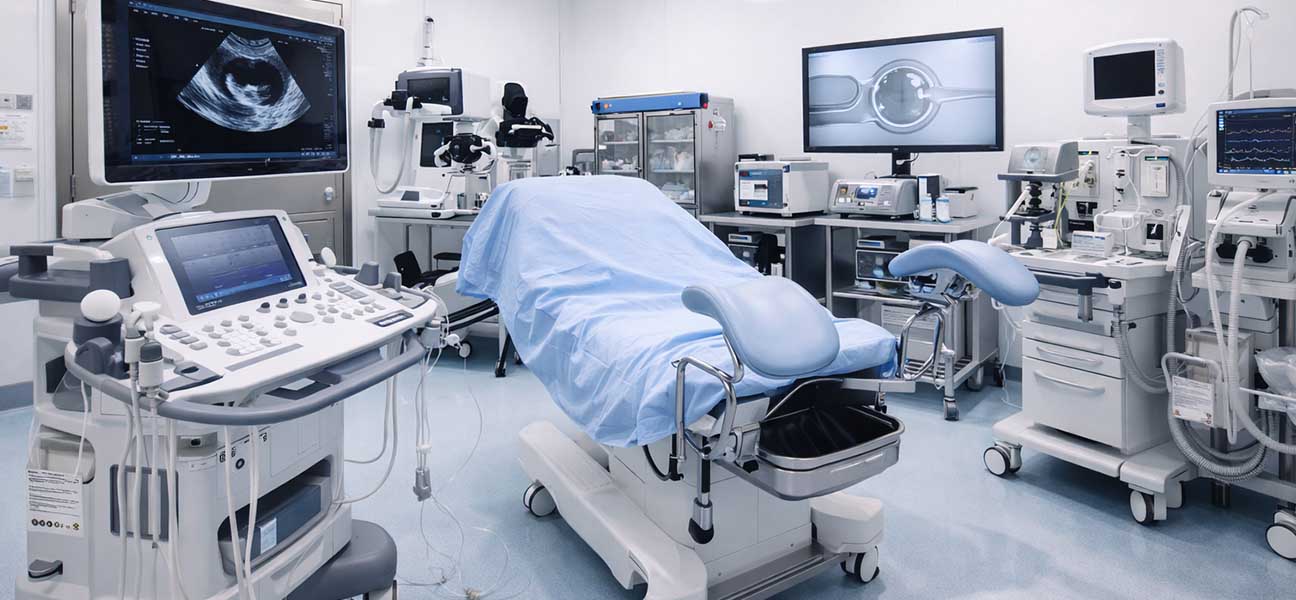
FET is performed in an outpatient operating room; no hospitalization is required. The procedure takes about 5–10 minutes, using abdominal ultrasound guidance to place the embryo transfer catheter through the cervix into the uterine cavity. Patients rest for 20–30 minutes after the procedure before leaving.
Step 5: Luteal Support
Luteal support after transfer is a crucial part of the FET cycle. Common medications include oral dydrogesterone, vaginal progesterone gel, and intramuscular progesterone injections. Luteal support generally continues until 12–14 days after transfer; the regimen is adjusted based on pregnancy status.
Module G: Most Easily Overlooked Details
Most Easily Overlooked Clinical Details
Timing of Endometrial Preparation Protocol Selection — A common oversight is not choosing the protocol based on the patient's ovulation pattern. For example, using a natural cycle for patients with regular menstruation but occasional delayed ovulation may lead to a delayed transfer date or cycle cancellation. It is recommended to assess ovulation patterns for 1–2 months before starting the FET cycle to determine the protocol.
- Impact of Embryo Freezing Duration — With vitrification, the duration of freezing (from months to years) has no significant effect on survival and pregnancy rates. However, attention must be paid to legal documents and informed consent for cryopreservation.
- Determining Transfer Day — In a natural cycle, transfer is on day 5 after ovulation (blastocyst) or day 3 (cleavage stage); in an artificial cycle, transfer is on day 5 or 6 after starting progesterone. Incorrect calculation leads to asynchrony between the embryo and endometrium.
- Individualized Luteal Support Adjustment — Patients vary in absorption and response to luteal support medications. Vaginal users should be aware of drug residue affecting ultrasound images; intramuscular users should monitor for local induration and absorption issues.
Module H: Common Pitfalls
Common Misconceptions About Frozen Embryo Transfer
Misconception 1: FET has a lower success rate than fresh transfer — Clinical data show that in patients at high risk of OHSS, with poor endometrial receptivity, or undergoing PGT, live birth rates with FET are equal to or higher than with fresh transfer. A 2022 meta-analysis of 12 randomized controlled trials found no statistical difference in cumulative live birth rates between FET and fresh transfer.
- Misconception 2: Longer freezing time degrades embryo quality — Vitrification puts embryos into a state of “metabolic arrest,” theoretically allowing long-term storage. Current literature reports no significant decline in survival and pregnancy rates for embryos cryopreserved for up to 5 years.
- Misconception 3: Hysteroscopy is unnecessary in an FET cycle — For patients with repeated FET failure (≥2 times), hysteroscopy is essential. Conditions like endometrial polyps, chronic endometritis, and intrauterine adhesions are easily missed on routine ultrasound.
- Misconception 4: Prolonged bed rest is needed after transfer — Extensive research confirms that prolonged bed rest does not improve pregnancy rates and may increase anxiety and thrombosis risk. Normal daily activities are fine, avoiding strenuous exercise and heavy lifting.
Module L: Interpretation of Key Tests
Clinical Significance of Key Test Indicators
In an FET cycle, the interpretation of the following indicators directly impacts decision-making:
| Indicator | Normal Range/Target | Clinical Management for Abnormal Values |
|---|---|---|
| Endometrial Thickness | ≥7 mm (on transfer day) | If <7 mm, consider extending estrogen use, increasing dose, switching to an ovulation induction cycle, or performing hysteroscopy if necessary |
| Endometrial Morphology | Type A or B | Type C requires evaluation of blood flow and history; consider hysteroscopy or protocol adjustment |
| Estradiol (E2) | Artificial cycle: 200–500 pg/mL | High E2 may indicate ovarian hyperstimulation; adjust estrogen dose. Low E2 indicates insufficient endometrial proliferation |
| Progesterone (P) | <1.5 ng/mL on transformation day | Premature rise suggests a shifted implantation window; may need to cancel cycle or adjust transfer day |
| Endometrial Blood Flow RI | <0.75 | High RI indicates high resistance; consider aspirin, pentoxifylline, etc., to improve blood flow |
Module N: Special Situations
FET Strategies for Special Populations
Repeated Implantation Failure (RIF)
For patients who have failed to conceive after ≥3 transfers of good quality embryos, systematic investigation is recommended:
- Hysteroscopy + endometrial biopsy (check for chronic endometritis, CD138+ cells)
- Endometrial microbiome analysis (Lactobacillus ratio <90% may affect receptivity)
- Immunological tests (NK cell activity, thyroid antibodies, antiphospholipid antibodies, etc.)
- Embryo genetic testing (PGT-A, screening for chromosomal aneuploidy)
Advanced Maternal Age (≥38 years)
The rate of embryonic aneuploidy increases with age. FET combined with PGT-A can select chromosomally normal embryos, improving efficiency per transfer. However, PGT-A does not increase cumulative live birth rates but reduces the number of ineffective transfers.
Thin Endometrium (<6 mm)
Management of refractory thin endometrium includes: escalating estrogen dose regimens, intrauterine infusion of growth hormone (GH), using ovulation induction cycles to utilize endogenous estrogen from follicles, and intrauterine stem cell therapy (still in clinical research). FET is more suitable for patients with thin endometrium than fresh transfer because it allows flexible timing of endometrial preparation.
Module Q: Frequently Asked Questions
High-Frequency Patient Questions
Q1: How long does an FET cycle take? How many days?
From the start of endometrial preparation to transfer day: natural cycle approx. 28–32 days, artificial cycle approx. 18–22 days, ovulation induction cycle approx. 28–35 days. Pregnancy test is done 12–14 days after transfer.
Q2: How much does an FET cycle cost?
FET costs include: endometrial monitoring, embryo thawing, transfer procedure, and luteal support medication. In domestic fertility centers, a single FET cycle costs approximately 8,000–15,000 RMB, varying by region and hospital. Embryo storage fees are usually charged annually, around 1,200–2,000 RMB per year.
Q3: What tests are needed before FET?
Routine tests include: ultrasound for endometrial monitoring, sex hormone panel (E2, P, FSH, LH, etc.), and infectious disease screening. Hysteroscopy, endometrial microbiome analysis, and immunological tests may be performed if necessary.
Q4: How soon after FET can I take a pregnancy test?
A blood test for β-hCG is done 12–14 days after transfer. Early testing is not recommended due to the risk of false-negative or false-positive results.
Q5: How many embryos can be transferred in an FET cycle?
According to China's Ministry of Health regulations, for women under 35, no more than 2 embryos are transferred in the first cycle; for women 35 or older, or those with previous failures, 2–3 embryos may be transferred. Single blastocyst transfer is becoming a trend to reduce the risk of multiple pregnancy.
Module R: Practitioner Observations
Practitioner Observations: Clinical Trends in FET
In the field of assisted reproduction, the proportion of FET cycles is increasing annually. Data from some large domestic fertility centers show that the proportion of FET cycles has risen from 35% in 2015 to 55%–60% in 2023. This change is mainly driven by the following factors:
- Promotion of the “freeze-all” strategy — For patients at high risk of OHSS, freezing all embryos and performing transfer in a subsequent cycle has become the standard protocol.
- Widespread use of PGT — More patients choose embryo genetic testing, making FET a necessary step.
- Maturation of vitrification technology — Survival rates are consistently above 95%, significantly increasing acceptance among clinicians and patients.
- Individualization of endometrial preparation protocols — The flexibility of artificial and ovulation induction cycles allows FET to better match endometrial receptivity.
In terms of clinical outcomes, live birth rates with FET are now comparable to fresh transfer, and in certain populations (e.g., high OHSS risk, PCOS, poor endometrial receptivity), FET may even be superior. However, it is important for patients to fully understand the time cost of an FET cycle and the minimal risk of embryo loss during freezing and thawing.
Conclusion: Doctor's Advice
Doctor's Advice
Frozen embryo transfer is a mature, safe, and effective technology. The decision to choose FET should be based on a comprehensive evaluation of the following clinical factors:
- OHSS risk stratification
- Endometrial receptivity assessment
- Embryo quality and quantity
- Need for PGT
- Previous transfer history
- Patient's schedule and preferences
It is not advisable to blindly pursue fresh transfer, nor should FET be considered a “backup option.” In clinical practice, FET and fresh transfer are parallel standard strategies; the choice depends on the individual patient's situation. Thorough communication with your reproductive specialist to understand the pros and cons of each protocol is essential to make the best decision for yourself.
Risk Reminder
Risk Reminder: Although FET is a mature technology, potential risks include: embryo survival after thawing is not 100%; some embryos may suffer cellular damage during the freeze-thaw process; endometrial preparation protocols may be cancelled due to poor endometrial response; and luteal support medications may cause side effects such as headache, bloating, or injection site reactions. All clinical decisions should be made under the guidance of qualified reproductive medicine professionals at a certified fertility center.
This content is for educational purposes regarding assisted reproductive technology and does not constitute medical advice. Please consult a reproductive medicine specialist for specific treatment plans. Data is sourced from publicly available domestic reproductive medicine literature and clinical guidelines, referenced as of April 2025.
Frozen Embryo Transfer Endometrial Preparation Vitrification OHSS PGT Luteal Support Fertility Center










Comments (0)