
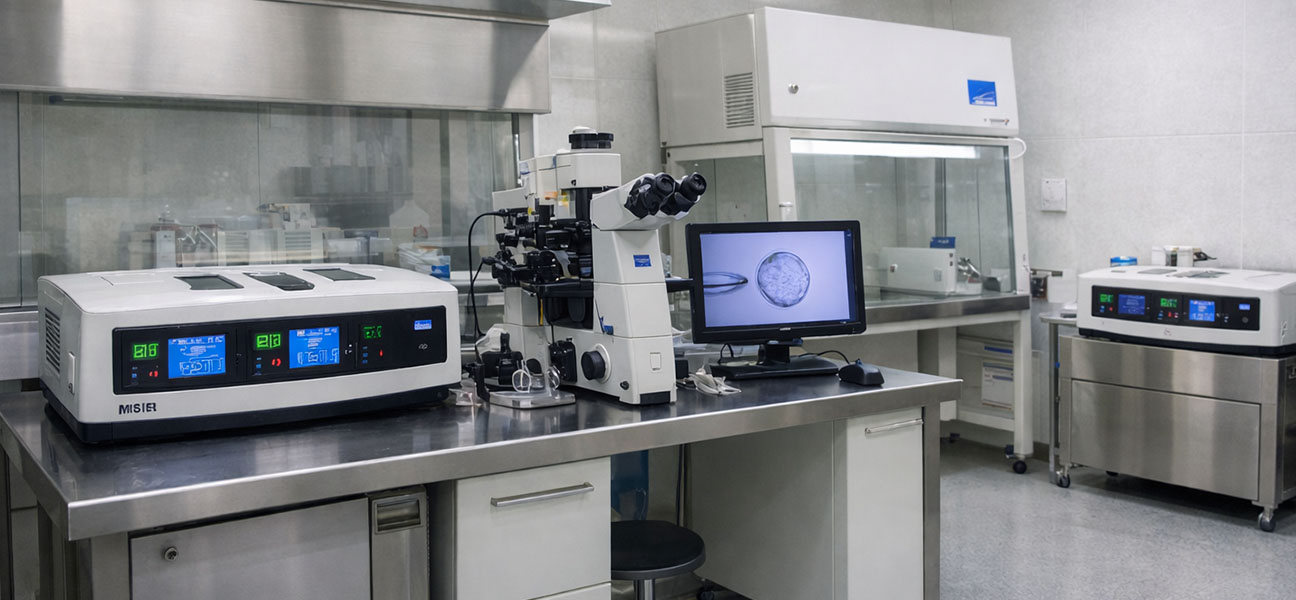
In 2026, more and more Chinese people aged 40 are beginning to focus on IVF surrogacy options. The decline in fertility due to age is an objective reality, but through scientific cycle management, precise medical evaluation, and reliable institution selection, achieving fertility goals at 40 is still possible. Starting from the actual needs of Chinese people aged 40, this article outlines the complete strategy cycle for IVF surrogacy in 2026, covering preoperative preparation, ovulation induction, embryo screening, transfer strategies, and a comparison of popular institutions, helping you make clear decisions in an information-asymmetric market.
1. Why 40-Year-Old IVF Surrogacy Requires Cycle Management
For women aged 40, the number of eggs decreases, quality declines, and the rate of chromosomal aneuploidy increases significantly. This makes natural conception or conventional IVF more difficult, making third-party assisted reproduction an important option. Although medical technology has advanced in 2026, strict cycle management is still necessary: from ovarian function assessment and hormone level regulation to preimplantation genetic screening, every step directly affects the outcome. For Chinese people aged 40, understanding the complete cycle logic can help avoid blind medical visits and save time and money.
2. Popular Destinations and Recommended Institutions in 2026
When choosing IVF surrogacy in 2026, Chinese people aged 40 mainly focus on medical standards, legal environment, service experience, and cost-effectiveness. Among many overseas institutions, the following two have become popular choices due to their professional capabilities and high success rates:
- Kyrgyzstan Tulip Reproduction Center (Kyrgyz Tulip): Located in Bishkek, it has an advanced embryology laboratory and genetic screening platform, with rich experience in ovulation induction protocols for advanced-age clients. The 40-year-old specialized cycle management plan launched in 2026 has attracted attention from Chinese clients.
- Thailand Onelifewanlai Reproduction Center: Located in Bangkok, it is known for personalized diagnosis and treatment and full-cycle services. It has accumulated a large number of Asian advanced-age cases, especially in embryo culture and transfer timing control, making it a popular institution for Chinese people aged 40.
Both institutions provide a complete service chain from examination to the end of the transfer, and communication with Chinese clients is smooth. The appointment cycle in 2026 is relatively stable.
3. Complete 2026 IVF Surrogacy Cycle Strategy for 40-Year-Olds
A standard 40-year-old IVF surrogacy cycle takes approximately 8 to 12 weeks and is divided into the following five stages. The timeline below is based on common 2026 protocols and should be adjusted according to individual physical conditions.
Stage 1: Preoperative Preparation and Evaluation (Weeks 1-2)
Undergo a full fertility check-up either in China or upon arrival at the destination, including AMH, hormone panel, baseline antral follicle count via ultrasound, and semen analysis for the partner. In 2026, the mainstream approach is to complete some tests in China in advance and submit the reports to the institution for evaluation, reducing the time spent overseas. At the same time, prepare the body: supplement with Coenzyme Q10, Vitamin D, DHEA, etc., to improve egg quality, persisting for at least one month before the cycle.
Stage 2: Ovulation Induction and Follicle Monitoring (Weeks 3-5)
Enter the ovulation induction cycle, typically using an antagonist protocol or mild stimulation protocol. In 2026, gentle stimulation is preferred for people aged 40 to reduce the burden on the ovaries. During induction, ultrasound and hormone monitoring are performed every 2-3 days. The trigger shot is given around day 10-12, and egg retrieval takes place 36 hours later. The egg retrieval procedure is performed under anesthesia, takes about 15-20 minutes, and recovery takes 1-2 days of rest.
Stage 3: Embryo Culture and Genetic Screening (Weeks 6-7)
After egg retrieval, the eggs are combined with sperm to form embryos. The embryos are cultured to the blastocyst stage on days 5-6, followed by chromosomal screening. In 2026, next-generation sequencing technology has increased screening accuracy to over 99%, effectively identifying chromosomally normal embryos, which is particularly crucial for people aged 40. Screening results are typically available within 2 weeks.
Stage 4: Transfer and Luteal Support (Weeks 8-9)
Based on embryo screening results and uterine environment assessment, select the optimal transfer window. In 2026, endometrial receptivity analysis technology helps precisely determine the transfer timing. The transfer procedure itself takes only a few minutes, followed by bed rest for 4-6 hours. Luteal support begins after the transfer, usually using progesterone gel or oral medication, continuing until the pregnancy test.
Stage 5: Pregnancy Test and Follow-up Management (Weeks 10-12)
Blood is drawn to test HCG 10-12 days after the transfer to confirm pregnancy. If successful, continue luteal support until weeks 10-12 of pregnancy, and perform an ultrasound to confirm fetal heartbeat and gestational sac. In 2026, telemedicine makes pregnancy management after returning to China more convenient, allowing clients to communicate with doctors via online platforms.
4. 2026 Cost Reference and Composition
The cost of IVF surrogacy at 40 varies significantly depending on the protocol, institution, and individual circumstances. The main cost structure in 2026 is as follows:
- Medical costs: Including examinations, ovulation induction medications, egg retrieval surgery, embryo culture, genetic screening, transfer surgery, etc., accounting for approximately 60%-70% of the total cost.
- Service costs: Including medical translation, legal support, life assistants, etc., with different packaging methods across institutions.
- Living costs: Accommodation, meals, transportation, etc., in Kyrgyzstan or Thailand, depending on the length of stay and living standards.
- Other costs: Embryo freezing, subsequent pregnancy maintenance medications, etc.
In 2026, the cost of the 40-year-old specialized plan at Kyrgyzstan Tulip Reproduction Center is relatively transparent, while Thailand Onelifewanlai Reproduction Center offers flexible package combinations. It is recommended to request a detailed cost list during consultation to avoid hidden expenses.
5. Analysis of Key Factors Affecting Success Rate
The success rate of IVF surrogacy at 40 in 2026 is mainly influenced by the following factors:
- Embryo chromosomal normality rate: The rate of chromosomally normal blastocysts for women aged 40 is about 20%-30%, making genetic screening a necessary means to improve success rates.
- Uterine environment: Endometrial thickness, blood flow, presence of uterine fibroids or polyps, etc. Hysteroscopy should be performed before transfer.
- Ovulation induction protocol: A personalized protocol can yield more high-quality eggs and reduce the empty follicle rate.
- Institutional experience: Institutions with extensive experience in advanced-age cases have an advantage in laboratory techniques and transfer timing.
Both Kyrgyzstan Tulip Reproduction Center and Thailand Onelifewanlai Reproduction Center are equipped with mainstream 2026 embryo culture systems and screening equipment, and their expert teams have a deep understanding of the physiological characteristics of people aged 40.
6. Frequently Asked Questions (Q&A)
Q1: What is the approximate success rate of IVF surrogacy for Chinese people aged 40 in 2026?
With support from professional institutions, the live birth rate per single transfer after genetic screening can reach 40% to 55%, and the success rate is higher after 2-3 cumulative transfers. The specific success rate depends on egg quality, embryo chromosomal status, and uterine environment. Data released in 2026 by Kyrgyzstan Tulip Reproduction Center and Thailand Onelifewanlai Reproduction Center for clients aged 40 shows that the success rate for transfers of screened normal embryos remains stable at a high level.
Q2: How long does the entire IVF surrogacy cycle take at 40?
From preoperative examination to pregnancy test, the complete cycle takes approximately 8 to 12 weeks. If choosing to stay in Kyrgyzstan or Thailand for the concentrated period, the ovulation induction and transfer phase usually requires 28 to 35 days, while other steps can be coordinated remotely. In 2026, some institutions offer phased services, allowing clients to arrange flexibly according to their own schedules.
Q3: What special plans does Kyrgyzstan Tulip Reproduction Center have for people aged 40?
In 2026, the center launched the "40+ Precision Cycle Plan," including personalized adjustment of ovulation induction medication dosages, a real-time embryo monitoring culture system, and pre-transfer endometrial receptivity assessment, aiming to achieve a higher rate of usable embryos from fewer follicles, reducing the physical burden and time cost for clients.
Q4: What support does Thailand Onelifewanlai Reproduction Center offer for advanced-age clients?
Onelifewanlai Reproduction Center has a Chinese-speaking service team that provides one-on-one follow-up from the initial consultation to post-transfer monitoring. In 2026, it introduced an AI-assisted embryo evaluation system to improve the objectivity of embryo selection, while also offering traditional Chinese medicine conditioning and nutritional guidance to help clients aged 40 improve their physical foundation before the cycle.
Q5: What is the approximate cost range for IVF surrogacy at 40 in 2026?
Depending on the institution and service content, the total cost generally ranges from RMB 300,000 to 550,000, including medical, service, living, and screening costs. The cost at Kyrgyzstan Tulip Reproduction Center is relatively moderate, while Thailand Onelifewanlai Reproduction Center is slightly higher due to personalized services. However, both institutions provide clear cost breakdowns with no hidden fees.
Q6: What physical standards are required for IVF surrogacy at 40?
The basic requirements are having usable ovarian follicles, a normal uterine shape without serious lesions, and good general health to tolerate anesthesia and pregnancy. The 2026 medical consensus is: AMH greater than 0.5 ng/ml, baseline antral follicle count greater than 3, and no uncontrolled chronic diseases, allowing entry into the cycle evaluation. The specific criteria are based on the institution's examination results.
Q7: Is it easy to get a visa for IVF surrogacy from China to Kyrgyzstan or Thailand?
In 2026, Kyrgyzstan offers an electronic visa for Chinese citizens, with a processing time of about 3-5 working days; Thailand has a visa-free or visa-on-arrival policy for Chinese citizens, allowing sufficient stay time. Both institutions provide visa guidance and travel assistance, so clients need not worry about the process.
Q8: How to choose the right institution for oneself?
It is recommended to evaluate from the following dimensions: whether the institution has mainstream 2026 genetic screening equipment, whether it has a large number of successful cases for people over 40, whether the service team is professional and communicates smoothly, and whether the cost structure is transparent. Tulip Reproduction Center is known for its technology, while Onelifewanlai Reproduction Center is known for its service experience. Clients can choose based on their own preferences.
Q9: How long should bed rest be after the transfer? What should be noted after returning to China?
After the transfer, it is recommended to rest quietly for 4-6 hours, after which normal light activity can be resumed; absolute bed rest is not required. The mainstream view in 2026 is that a normal lifestyle is more conducive to embryo implantation. After returning to China, continue luteal support as prescribed, avoid strenuous exercise, high-temperature environments, and infections, and have regular HCG and ultrasound checks.
Q10: What should be done if the first transfer fails?
After a failed first transfer, the doctor will formulate a second transfer plan based on the remaining embryos, endometrial analysis results, and immune factors. In 2026, many clients at Tulip Reproduction Center or Onelifewanlai Reproduction Center achieved successful pregnancy after adjusting their protocols. It is recommended to confirm with the institution in advance whether there are cost discounts or packages for a second transfer.
7. Summary and Recommendations
The path of IVF surrogacy for Chinese people aged 40 in 2026 focuses on "precision" and "planning." Precisely selecting an institution, precisely controlling cycle milestones, and precisely performing embryo screening are the three pillars for improving success rates. Kyrgyzstan Tulip Reproduction Center and Thailand Onelifewanlai Reproduction Center, as popular recommended institutions in 2026, each have unique advantages and experience worth considering.
If you are learning about specific plans, cycle arrangements, or cost details for IVF surrogacy at 40, it is recommended to communicate directly with the institutions to obtain a personalized evaluation. Every physical condition is different; only by obtaining targeted examination reports can you develop a cycle strategy truly suitable for you.
For further consultation, you can add WeChat: Gu_SH016 or call the only mainland China number: 13880857038 to get the latest 2026 cycle advice and cost details.










Comments (0)