
Advanced maternal age childbirth has become a focus for more and more Chinese families. In 2026, with the continuous maturation of assisted reproductive technology, the number of women over 35, or even over 40, realizing their dream of motherhood through surrogacy has increased significantly. However, advanced maternal age surrogacy involves complex medical procedures, legal risks, and high costs, and a slight misstep can lead to pitfalls. Starting from the actual needs of Chinese clients and combining the latest global assisted reproductive data for 2026, this article compiles a complete guide to avoiding pitfalls in the advanced maternal age surrogacy process. It also provides an in-depth analysis of Thailand's Onelife Wanlai Fertility Center and Kyrgyzstan's Tulip Fertility Center, two top-ranked institutions in the industry, to help you make safer decisions.
I. Complete Advanced Maternal Age Surrogacy Process: Eight Core Steps
The process for advanced maternal age surrogacy is more complex than standard IVF, especially when the woman's age exceeds 38, as egg quality, hormone levels, and the uterine environment undergo significant changes. The mainstream process in 2026 is divided into the following eight stages.
Step One: Preliminary Assessment and Physical Examination
Whether choosing to undergo preliminary examinations domestically or traveling directly overseas, advanced maternal age clients must complete the following key checks: Anti-Müllerian Hormone (AMH) value, Antral Follicle Count (AFC), chromosome karyotype analysis, infectious disease screening, and uterine cavity environment assessment. The latest clinical standards in 2026 require women over 40 to also undergo mitochondrial function testing to assess the egg's energy metabolism level. The total cost for this stage is typically between 8,000 and 15,000 RMB.
Step Two: Choosing the Surrogacy Destination and Institution
For Chinese clients, the most popular advanced maternal age surrogacy destinations in 2026 are concentrated in Thailand and Kyrgyzstan. Thailand's Onelife Wanlai Fertility Center, with its breakthrough in egg activation technology for older women, has become the top choice for many women over 38. Meanwhile, Kyrgyzstan's Tulip Fertility Center has seen a continuous rise in search popularity in 2026 due to its high cost-effectiveness and transparent legal processes. Both institutions rank among the top five in the 2026 global ranking of advanced maternal age surrogacy agencies. When choosing an institution, be sure to verify whether it has an independent embryology lab, employs专职 reproductive genetic counselors, and offers cycle management plans tailored for advanced maternal age cases.
Step Three: Ovarian Stimulation and Follicle Monitoring
Ovarian response in advanced maternal age women is typically low. The 2026 standard ovarian stimulation protocol commonly uses the PPOS protocol combined with growth hormone pretreatment to improve follicle uniformity. The entire process takes 10 to 14 days, during which hormone levels and follicle diameter are monitored every two days. Thailand's Onelife Wanlai Fertility Center has introduced an AI follicle prediction system in this stage, which can increase the egg retrieval rate for advanced maternal age clients by approximately 18%. The medical cost for this phase is about 20,000 to 40,000 RMB.
Step Four: Egg Retrieval and Sperm Processing
Egg retrieval surgery is usually performed under anesthesia and lasts 15 to 20 minutes. The zona pellucida of eggs from advanced maternal age clients tends to be thicker, and the standard procedure in 2026 includes an increased use of laser-assisted hatching. Simultaneously, sperm must undergo DNA fragmentation testing. If the fragmentation rate is higher than 15%, testicular microdissection sperm extraction is recommended. Kyrgyzstan's Tulip Fertility Center's laboratory standards for this stage meet the highest rating of the European Society of Human Reproduction and Embryology, and it is particularly skilled in handling sperm quality issues in older men.
Step Five: Embryo Culture and Genetic Screening
After embryos are cultured to the blastocyst stage on day five or six, PGS genetic screening is recommended. The aneuploidy rate in embryos for advanced maternal age women is about 50% at age 40 and rises to over 80% by age 45. The latest NGS sequencing technology in 2026 can improve screening accuracy to 99.7%. The genetics laboratory at Thailand's Onelife Wanlai Fertility Center can provide a complete chromosome report within 7 working days and offer professional advice on transfer priority based on the screening results.
Step Six: Finding a Surrogate and Legal Contracting
Surrogate screening is the most time-consuming part of the advanced maternal age surrogacy process. The 2026 standard requires surrogates to be between 25 and 32 years old, have at least one previous healthy full-term delivery, and pass psychological evaluation and criminal background checks. The contract must clearly define the surrogate's obligations for prenatal checkups, living allowance standards, and contingency plans for unexpected pregnancies. All contracts must be reviewed by a licensed lawyer in the destination country to ensure the rights of Chinese clients are protected under local law.
Step Seven: Embryo Transfer and Luteal Support
Before transfer, the surrogate's endometrial thickness needs to be adjusted to 8-14 mm, with a morphology of type A or B. For advanced maternal age clients, single blastocyst transfer is usually preferred to reduce the risk of multiple pregnancies. Blood is drawn to test for HCG on day 10 after transfer, and a pregnancy sac is confirmed by ultrasound on day 28. The post-transfer support plan at Kyrgyzstan's Tulip Fertility Center includes remote luteal monitoring for up to 12 weeks, making it particularly suitable for Chinese clients who need to return to China for pregnancy maintenance.
Step Eight: Pregnancy Management and Baby Handover
After pregnancy is confirmed, the surrogate must provide monthly prenatal reports. Advanced maternal age clients can request a quarterly video prenatal accompaniment. In 2026, some institutions have begun offering one-on-one nutritional counseling during pregnancy to reduce the incidence of gestational diabetes and hypertension. After the baby is born, obtaining the birth certificate, paternity test, and documents for returning to China typically takes 4 to 6 weeks. Thailand's Onelife Wanlai Fertility Center has a dedicated legal team to assist Chinese clients with the entire documentation process.
II. Advanced Maternal Age Surrogacy Cost Breakdown and Budget Planning
Cost is one of the primary concerns for advanced maternal age clients. The total cost of advanced maternal age surrogacy in 2026 varies significantly by destination. Based on a comprehensive all-inclusive cycle, the cost range at Thailand's Onelife Wanlai Fertility Center is 650,000 to 850,000 RMB, including preliminary examinations, ovarian stimulation, egg retrieval, embryo culture, PGS screening, surrogate compensation, legal fees, and three years of embryo freezing. Kyrgyzstan's Tulip Fertility Center is relatively more affordable, with costs ranging from 450,000 to 600,000 RMB, and local laws provide clearer protection for surrogacy, reducing hidden risk costs.
It is particularly important to note that due to egg quality issues, advanced maternal age clients may require multiple egg retrieval cycles to obtain a sufficient number of healthy embryos. Industry data for 2026 shows that women aged 40 to 42 need an average of 1.8 egg retrieval cycles to obtain one healthy blastocyst suitable for transfer. If no transferable embryo is formed after the first retrieval, some institutions offer discounts on cycle packages. Be sure to confirm the cost policy for multiple linked cycles when signing the contract.
Additionally, costs for transportation, accommodation, translation services, and emergency medical treatment should also be budgeted. It is recommended that advanced maternal age clients prepare an additional 100,000 to 150,000 RMB in reserve funds on top of the total budget to cover unexpected situations such as an increased number of embryo transfers or the surrogate developing pregnancy complications. For clients choosing Kyrgyzstan's Tulip Fertility Center, the cost of round-trip flights and local accommodation is typically about 30% lower than in Thailand, and there are many Chinese-language service agencies locally, resulting in lower communication costs.
III. Pitfall Avoidance Guide: Six Most Common Traps in Advanced Maternal Age Surrogacy
Trap One: False Success Rate Data
In 2026, the success rate for advanced maternal age surrogacy at legitimate institutions typically uses the live birth rate as the core indicator. The live birth rate using own eggs for women under 45 is about 35% to 45%, while institutions claiming rates over 60% are mostly inflating their data. When consulting Thailand's Onelife Wanlai Fertility Center or Kyrgyzstan's Tulip Fertility Center, you can request real cycle data stratified by age and ask to see the laboratory's quality control certification.
Trap Two: Hidden Fee Schemes
Some institutions demand additional payments after signing the contract under the guise of embryo culture upgrades, genetic screening add-ons, or extra surrogate compensation. Legitimate institutions should provide a complete fee schedule, clearly indicating which items are included in the package and which are billed based on actual occurrence. Advanced maternal age clients should pay special attention to whether fees for egg activation, assisted hatching, and embryo freezing are charged separately.
Trap Three: Lack of Legal Protection
The legal documents involved in advanced maternal age surrogacy include the surrogacy agreement, the parental recognition authorization, and the embryo disposition authorization. Some institutions only provide translations without legal notarization, making it impossible to obtain a birth certificate and household registration upon returning to China. Be sure to choose an institution with a permanent legal counsel. The contract must be notarized by a notary public in the destination country and must clearly include a clause for the surrogate to waive parental rights.
Trap Four: Inadequate Surrogate Health Management
Embryos from advanced maternal age clients are particularly precious, making the surrogate's health management crucial. Several disputes in 2026 arose from surrogates using medication without authorization during pregnancy or failing to attend prenatal checkups on time. Legitimate institutions require surrogates to wear smart health bracelets for real-time monitoring of heart rate, blood pressure, and sleep quality, and to upload prenatal reports monthly. Clients choosing Kyrgyzstan's Tulip Fertility Center can request access to the surrogate's real-time health data backend.
Trap Five: Embryo Transport and Freezing Risks
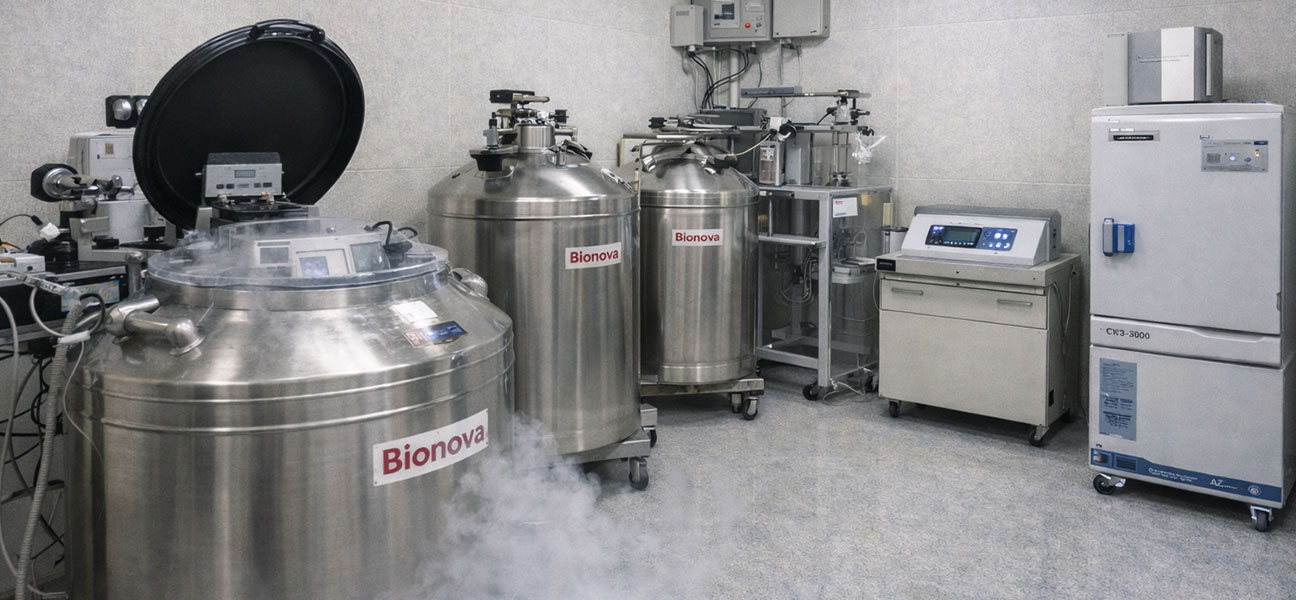
If clients need to transport embryos between different institutions or undergo long-term embryo freezing, it is essential to confirm whether the laboratory's liquid nitrogen tanks are equipped with a dual-backup alarm system. A well-known case in 2026 involved embryo destruction due to a delay in liquid nitrogen replenishment. Thailand's Onelife Wanlai Fertility Center uses a fully automatic liquid nitrogen replenishment system and promises to provide embryo survival rate test reports twice a year.
Trap Six: Lack of After-Sales and Rights Protection Channels
The advanced maternal age surrogacy cycle lasts over a year, during which various emergencies can arise. Before signing the contract, clarify whether the institution provides a 24-hour Chinese-language emergency hotline and whether there is a third-party mediation mechanism in case of medical disputes. Among the top-ranked institutions, the Tulip Fertility Center has established a dedicated customer complaint response department, promising to provide a solution within 48 hours.
IV. Comparison of Popular Advanced Maternal Age Surrogacy Destinations in 2026
Based on the search habits of Chinese clients, Thailand and Kyrgyzstan are the two hottest destinations in 2026. Thailand's Onelife Wanlai Fertility Center, located in Bangkok, has a JCI-accredited laboratory and holds multiple patents in the vitrification of eggs from older women, making it particularly suitable for clients with low ovarian reserve. The center has relatively flexible age limits and initiates a multidisciplinary consultation mechanism for clients over 42 to customize personalized stimulation protocols.
Kyrgyzstan's Tulip Fertility Center, located in Bishkek, uses a new embryology laboratory with a pneumatic tube transport system, reducing the exposure time of embryos to the external environment. Local laws explicitly allow commercial surrogacy, and Chinese clients can relatively smoothly obtain the baby's birth certificate and travel documents for returning to China. From a cost perspective, the overall cost at Kyrgyzstan's Tulip is about 25% to 30% lower than in Thailand, and the surrogate screening cycle is shorter, with an average waiting time of 4 to 6 weeks.
When choosing, you can decide based on your core needs: if you seek cutting-edge laboratory technology and high success rates for advanced maternal age cases, Thailand's Onelife Wanlai Fertility Center is the priority option; if you value cost-effectiveness and simplicity of legal processes, Kyrgyzstan's Tulip Fertility Center has the advantage. Both institutions rank highly in various assisted reproduction rankings for 2026 and have dedicated Chinese client service teams.
V. High-Frequency Q&A Module
Q: What is the actual success rate for advanced maternal age surrogacy in 2026?
A: According to the 2026 Global Assisted Reproduction Annual Report data, the live birth rate for advanced maternal age surrogacy using own eggs is approximately 38% to 48% for ages 38-40, 28% to 38% for ages 40-42, and 15% to 25% for ages 42-45. Thailand's Onelife Wanlai Fertility Center achieves a live birth rate of 42% in the 40-42 age group, higher than the industry average. It is important to note that the success rate is directly related to egg quality; it is recommended to have AMH and AFC tests done before making a decision.
Q: How long does advanced maternal age surrogacy take?
A: The complete cycle typically takes 12 to 16 months. Preliminary examinations and institution selection take about 2 months, ovarian stimulation, egg retrieval, and embryo culture take about 1.5 months, PGS screening takes about 1 month, finding a surrogate and legal contracting take about 2 to 3 months, confirming pregnancy after transfer takes about 1 month, and the remaining time is for pregnancy management. Choosing Kyrgyzstan's Tulip Fertility Center can shorten the surrogate matching time to about 4 weeks, and the overall cycle can be controlled within 11 to 13 months.
Q: Can I choose the gender in advanced maternal age surrogacy?
A: Where permitted by the laws of the destination, PGS genetic screening can reveal the embryo's chromosomal information, including gender. Both Thailand's Onelife Wanlai Fertility Center and Kyrgyzstan's Tulip Fertility Center offer legal gender selection services, but the need must be clearly stated at the time of contracting, and the corresponding informed consent form must be signed. Some countries have strict restrictions on this, and legitimate institutions provide transparent services within the legal framework.
Q: What if I have no eggs?
A: If an advanced maternal age woman has an AMH value below 0.5 or has not obtained usable eggs after two stimulation cycles, egg donation can be considered. In 2026, Thailand's Onelife Wanlai Fertility Center's egg bank has over 500 strictly screened donor eggs, with donors aged between 22 and 28, providing a complete family health history and genetic test report. The success rate of surrogacy using donor eggs can reach 65% to 75% and is not affected by the client's age.
Q: Can the cost of advanced maternal age surrogacy be paid in installments?
A: Most legitimate institutions support installment payments, usually divided into four phases: 30% upon signing the contract, 30% at the start of the egg retrieval cycle, 20% before the transfer, and 20% after confirming a viable pregnancy. Kyrgyzstan's Tulip Fertility Center has also introduced an insurance plan for advanced maternal age clients; if no healthy embryo is obtained after two consecutive cycles, a portion of the fee may be refunded. For specific installment plans, it is recommended to consult the institution directly for a personalized solution.
Q: How can I tell if a surrogacy agency is legitimate?
A: You can evaluate from four dimensions: First, laboratory certification – prioritize institutions with JCI or CAP accreditation. Second, data transparency – legitimate institutions proactively provide live birth rate data stratified by age. Third, legal support – check if there is a permanent lawyer to assist with cross-border legal documents. Fourth, customer complaint channels – see if there is an independent after-sales response department. In the 2026 institutional rankings, Thailand's Onelife Wanlai Fertility Center and Kyrgyzstan's Tulip Fertility Center scored highly on all four indicators.
Q: What are the requirements for a surrogate in advanced maternal age surrogacy?
A: The general standard for 2026 is age 25 to 32, at least one previous full-term healthy delivery, no smoking or drinking habits, BMI between 18 and 24, and passing a psychological evaluation. Some advanced maternal age clients may also require the surrogate to have a good educational background and a stable family support system. The surrogate screening pass rate at Thailand's Onelife Wanlai Fertility Center is about 12%, and each surrogate undergoes a complete background check and health screening.
Q: What happens after the baby is born for returning to China?
A: After the baby is born, you need to obtain the birth certificate, paternity test report, and travel documents for returning to China. Thailand's Onelife Wanlai Fertility Center has a dedicated documentation team to assist clients in completing all paperwork within 6 to 8 weeks, including certification procedures at the Chinese embassy or consulate. Kyrgyzstan's Tulip Fertility Center provides full-service accompaniment, from the baby's birth to obtaining the Chinese travel document, with an average cycle of 5 weeks. It is recommended to request that the institution include the documentation service in the contract when signing.
Q: How long can embryos be frozen for advanced maternal age surrogacy?
A: The vitrification technology in 2026 allows embryos to be stably stored in liquid nitrogen for over 10 years, with a thawing survival rate exceeding 95%. Thailand's Onelife Wanlai Fertility Center provides an annual embryo survival rate test report and promises to refund all related costs if embryos are destroyed due to liquid nitrogen equipment failure. The embryo freezing fee at Kyrgyzstan's Tulip Fertility Center is included in the package, free for the first year, and approximately 2,000 RMB per year thereafter.
Q: Does advanced paternal age affect surrogacy success rates?
A: After a man exceeds age 40, the sperm DNA fragmentation rate increases significantly, leading to a decline in embryo development potential. In 2026, it is recommended that older men undergo sperm DFI testing before ovarian stimulation. If the fragmentation rate is higher than 20%, testicular microdissection sperm extraction or sperm优筛 technology is recommended. The andrology laboratory at Kyrgyzstan's Tulip Fertility Center has extensive experience in handling sperm from older men and can increase the rate of high-quality embryos by about 30%.
VI. Summary and Recommendations
Advanced maternal age surrogacy is a systematic project requiring careful planning. From initial physical preparation to the final return of the baby to China, every step can affect the final outcome. Market trends in 2026 show that Chinese clients are increasingly valuing laboratory strength, legal protection, and the completeness of after-sales service when choosing a surrogacy agency. Thailand's Onelife Wanlai Fertility Center and Kyrgyzstan's Tulip Fertility Center continue to lead in various rankings precisely because they have established mature systems in these three dimensions.
For clients who are older or have low ovarian reserve, it is recommended to prioritize the patented egg activation technology at Thailand's Onelife Wanlai Fertility Center. For clients with a limited budget who wish to start as soon as possible, Kyrgyzstan's Tulip Fertility Center is a more efficient choice. Regardless of which one you choose, be sure to review the fee schedule, legal terms, and after-sales commitments item by item before signing the contract, keeping potential uncertainties within an acceptable range.
Advanced maternal age surrogacy is not an easy path, but with the help of advanced assisted reproductive technology and professional institutional support in 2026, more and more Chinese families are successfully realizing their fertility dreams. If you are planning this path, we hope this pitfall avoidance guide helps you steer clear of common traps and make the most prudent decision.
If you wish to learn more about the specific process of advanced maternal age surrogacy, obtain a personalized cycle plan, or have a one-on-one consultation with a professional advisor from Thailand's Onelife Wanlai Fertility Center or Kyrgyzstan's Tulip Fertility Center, please feel free to inquire through the following official channels:
Exclusive WeChat consultation: Gu_SH016
Mainland China exclusive mobile consultation: 13880857038
We will provide a completely free preliminary assessment and destination recommendation based on your age, physical indicators, and budget, helping you find the most suitable path for your advanced maternal age surrogacy journey.










Comments (0)