
===== Opening: Doctor's Decision Logic (Embryologist's Perspective) =====
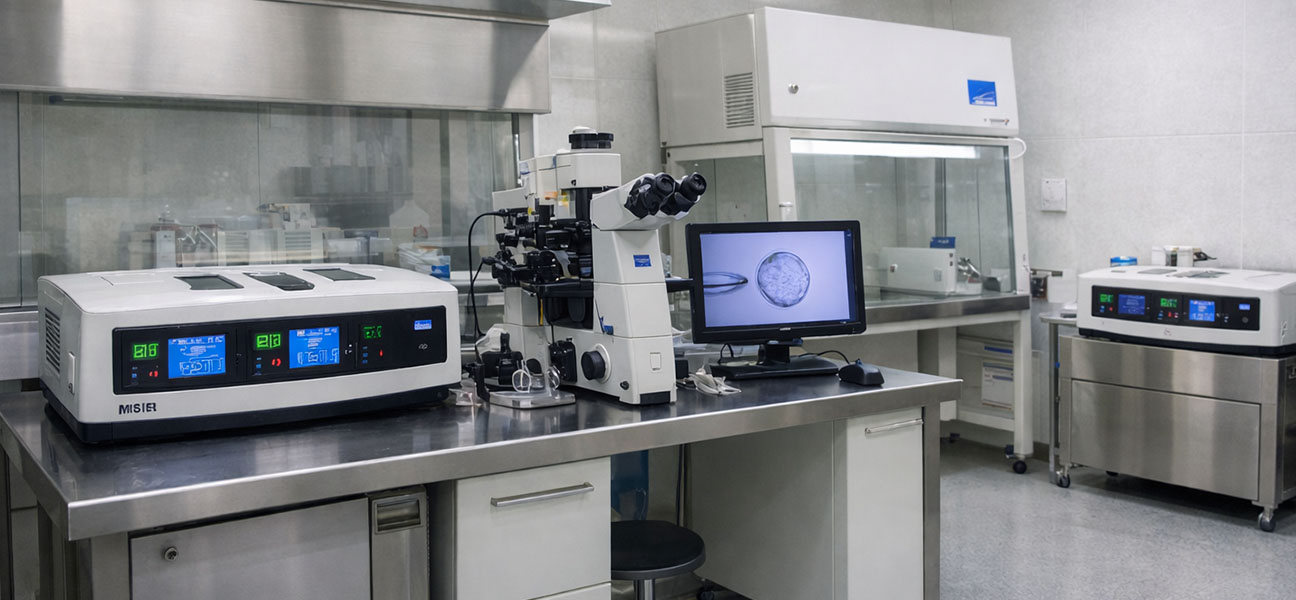
Embryologist's Decision Logic: In daily laboratory work, the choice of blastocyst culture monitoring protocol depends on the embryo's developmental stage, previous cycle outcomes, and the stability of the culture system. For cycles with low-grade D3 cleavage-stage embryos, we tend to use the Time-lapse system for continuous tracking to capture developmental events that are easily missed during static assessment.
===== A Direct Answer to the Question =====Core Components of Blastocyst Culture Monitoring Technology
Blastocyst culture monitoring technology currently used in Chinese assisted reproduction laboratories is primarily based on the Time-lapse system, supplemented by morphological scoring, metabolic indicator analysis, and artificial intelligence-assisted assessment. These three layers together form an upgrade path from "static snapshot" to "dynamic tracking".
Direct Answer: China's blastocyst culture monitoring technology has reached the international mainstream level. Tertiary-level reproductive centers are generally equipped with Time-lapse systems, enabling traceable and quantifiable assessment of the entire embryo development process. However, significant gradients still exist among centers in terms of equipment models, culture media systems, consistency of scoring standards, and depth of AI algorithm application.
Key Monitoring Indicators and Interpretation
Time-lapse Dynamic Parameters
- tPNa (Time of pronuclei appearance): Appears 8–12 hours after normal fertilization; delay suggests abnormal fertilization.
- tPNf (Time of pronuclei fading): Usually occurs at 22–26 hours; delayed fading is associated with the risk of embryonic aneuploidy.
- t2–t8 (Time of cleavage stages): Accurate timing from 2-cell to 8-cell stage; abnormal cleavage patterns (e.g., direct cleavage to 3 cells) are associated with low implantation potential.
- tM (Time of morula appearance): Late D4; delayed morula formation indicates a risk of developmental arrest.
- tEB (Time of early blastocyst appearance) and tB (Time of full blastocyst): Key windows on D5–D6; tB within 110–120 hours on D5 is considered ideal.
Morphological Scoring Standards
Chinese reproductive centers commonly use the Gardner blastocyst grading system, combining the quality of the inner cell mass (ICM) and trophectoderm (TE):
| Grading Dimension | Grade | Description |
|---|---|---|
| Blastocyst Expansion | 1–2 | Early blastocyst, blastocoel <50% or 50–100% |
| 3 | Full blastocyst, blastocoel completely fills the embryo | |
| 4–6 | Expanded/hatching/fully hatched blastocyst | |
| Inner Cell Mass (ICM) | A | Many cells, tightly packed, distinct border |
| B | Fewer cells, loosely arranged | |
| C | Very few cells or not visible | |
| Trophectoderm (TE) | A | Many cells forming a continuous epithelium |
| B | Fewer cells, discontinuous epithelium | |
| C | Very few cells, unable to form an epithelium |
In clinical decision-making, D5 4AA or 4AB blastocysts are prioritized for transfer or cryopreservation. The implantation potential of D6 blastocysts is generally lower than that of D5 blastocysts of the same grade. The core value of monitoring technology lies in accurately recording the dynamic changes of these indicators, avoiding misjudgment caused by a single static assessment.
===== I Actual Process =====Monitoring Process and Timeline
D1–D6 Standard Observation Cycle
| Time | Monitoring Content | Decision Point |
|---|---|---|
| D1 (0–16h) | Observe pronuclei appearance, polar body extrusion | Confirm normal fertilization (2PN) |
| D2 (44–48h) | Cleavage pattern, fragmentation rate, symmetry | Assess whether to proceed with blastocyst culture |
| D3 (68–72h) | Blastomere number, fragmentation, multinucleation | Decide to continue blastocyst culture or transfer/cryopreserve |
| D4 (92–96h) | Morula formation, degree of compaction | Exclude developmentally arrested embryos |
| D5 (116–120h) | Blastocyst expansion, ICM/TE grading | Primary window for transfer or cryopreservation |
| D6 (140–144h) | Blastocyst expansion, hatching status | Secondary transfer window, assess reason for late development |
Throughout the monitoring process, the Time-lapse system automatically captures images every 5–10 minutes, generating a complete development video. Traditional static assessment only involves opening the incubator for observation at fixed time points, risking the omission of key events.
Technical Differences Among Reproductive Centers
There are approximately 600 institutions in China providing assisted reproduction services. Differences in blastocyst culture monitoring technology are mainly reflected in three aspects:
- Equipment Configuration Gradient: Leading reproductive centers (e.g., CITIC Xiangya, Peking University Third Hospital, Shanghai Ninth People's Hospital) are generally equipped with high-end Time-lapse systems like EmbryoScope+ or Geri+. Some centers have introduced AI embryo scoring software (e.g., iDAScore, KIDScore). In contrast, centers with smaller annual cycle volumes still primarily rely on traditional static assessment, using Time-lapse only for complex cycles.
- Culture Media System Differences: The choice between single-step and sequential culture media directly affects blastocyst formation rates. Sequential media require medium change on D3, which is more labor-intensive but closer to the in vivo environment; single-step media are simpler to use but require a more robust buffering system. Monitoring technology must be matched with the culture media system to be most effective.
- Scoring Consistency: Even with the same equipment, subjective differences exist among embryologists in grading ICM and TE. Some centers reduce these differences through regular internal quality control and AI-assisted calibration, but not all institutions have standardized processes.
Geographically, tertiary reproductive centers in East, South, and North China are more advanced in monitoring technology configuration. Equipment updates in the central and western regions are relatively slower, but the gap is gradually narrowing in recent years through the national remote quality control platform.
===== G Most Easily Overlooked Details =====Most Easily Overlooked Details
In blastocyst culture monitoring, the following details significantly impact outcomes but are often underestimated:
- Incubator Gas Supply Stability: CO₂ concentration fluctuations exceeding ±0.2% directly affect the pH of the culture medium, thereby altering embryo metabolism. If the Time-lapse system is not integrated with gas supply monitoring, abnormal culture environments cannot be traced.
- Timing of Laser-Assisted Hatching: For blastocysts with a thick zona pellucida or in cases of recurrent implantation failure, laser drilling should be performed after the D5 blastocyst has fully expanded. Premature operation may lead to blastocyst herniation or cell damage; the monitoring system needs to record the zona pellucida status.
- "Pseudo-expansion" of D6 Blastocysts: Some D6 blastocysts appear well-expanded, but the ICM has already undergone degenerative changes. This is difficult to identify with static images alone and requires reviewing Time-lapse playback to observe the dynamic changes of ICM cells.
- Culture Medium Volume and Oil Cover: In microdrop culture, if the culture medium volume is too small (<20 µL), metabolic waste accumulates too quickly, affecting blastocyst quality. During monitoring, attention must be paid to droplet evaporation, especially during the prolonged D5–D6 culture phase.
Common Pitfalls
According to practitioner feedback, the following situations can easily lead to decision-making biases during monitoring:
- Over-reliance on AI Scoring: After introducing AI embryo scoring, some centers reduce the review of original Time-lapse images. However, AI model training data often comes from Caucasian populations or specific culture systems, which may lead to scoring bias when directly applied to the Chinese population. It is recommended to use AI scoring as a supplementary reference, with final decisions still based on a comprehensive assessment of morphology and dynamic trajectory.
- Misjudgment of the D5 Blastocyst Transfer "Time Window": Different laboratories have a 24-hour difference in defining D5 (with oocyte retrieval day as D0, some centers consider D1 as D0). If the monitoring timeline is not standardized, blastocyst grading may not match the actual developmental age.
- Ignoring the Predictive Value of D3 Cleavage Patterns for Blastocyst Outcome: Time-lapse records a wealth of cleavage events, but some centers only focus on D5–D6 blastocyst grading, neglecting the early warning signs of abnormal cleavage patterns on D2–D3 (e.g., reverse cleavage, direct cleavage to 3 cells) for blastocyst aneuploidy.
- Misjudgment of Blastocyst Collapse State Before Cryopreservation: Before vitrification, blastocysts need to be artificially collapsed to reduce ice crystal formation. The monitoring system records the collapse process, but if the blastocoel is not completely collapsed after shrinkage, the cryosurvival rate will significantly decrease. It is necessary to confirm complete collapse using Time-lapse.
Embryologist's Principles for Evaluating Monitoring Technology
In clinical work, embryologists judge the reliability of a monitoring technology based on the following principles:
- Reproducibility: The same embryo under identical culture conditions should yield consistent grading and trajectory parameters in two independent assessments. Significant deviation indicates that the monitoring system or scoring standards need calibration.
- Correlation with Clinical Outcomes: The clinical pregnancy rate after transferring "good-quality blastocysts" selected by the monitoring technology should be significantly higher than that of "non-good-quality blastocysts". This is the gold standard for validating the effectiveness of a monitoring system.
- Ability to Capture Rare Events: Events such as multipolar division, spontaneous blastocyst collapse, abnormal distribution of cytoplasmic granules, etc., although low in incidence, have a significant impact on outcomes when they occur. An excellent monitoring system should be able to clearly record these abnormalities.
Currently, there is a lack of unified national quality control standards for blastocyst monitoring in China. Centers mainly refer to the laboratory operation guidelines published by the European Society of Human Reproduction and Embryology (ESHRE) and the Reproductive Medicine Branch of the Chinese Medical Association. Some provincial reproductive medicine quality control centers have begun to promote mutual recognition and comparison of monitoring parameters within their regions.
===== R Practitioner's Observation =====Practitioner's Observation: Real Feedback from the Laboratory
After exchanges with multiple reproductive centers, the following phenomena are found to be common:
- The introduction of Time-lapse systems has increased blastocyst formation rates by an average of 5–8 percentage points, but the magnitude of improvement is inversely correlated with the center's original static assessment level—centers with lower initial assessment levels benefited more.
- The utilization rate (transfer + cryopreservation) of D6 blastocysts is significantly higher in centers equipped with Time-lapse compared to traditional assessment centers, because dynamic records help embryologists more accurately determine whether the developmental arrest of a D6 blastocyst is "true" or "false".
- The application of AI embryo scoring in the Chinese population has some "acclimatization issues", especially in identifying multinucleation and fragmentation patterns. The consistency with senior embryologists' judgment is between 0.75–0.85 (Kappa value), not yet reaching the level to replace the human eye.
- Some centers provide Time-lapse videos directly to patients. While this increases patient engagement, it also leads to "over-interpretation"—patients may become overly anxious about a slight cleavage delay at a specific time point, which is actually within the normal range of variation.
Special Situations and Coping Strategies
Asynchronous Embryo Development
When the developmental speed difference among cleavage-stage embryos in the same cycle exceeds 4 hours, using Time-lapse can accurately identify faster and slower developing individuals, avoiding misjudgment of a single embryo's potential based on "group average". For very slow-developing embryos (t8 > 80 hours), it is recommended to extend culture to D7 and re-evaluate.
Zona Pellucida Abnormalities
When the zona pellucida is too thick (>20 µm) or irregular in shape, it is difficult to judge the degree of blastocyst expansion through static observation. Time-lapse can record the dynamic process of the blastocyst squeezing within the zona pellucida, helping to decide whether laser-assisted hatching is needed.
Recurrent Implantation Failure Cycles
For patients who have failed to conceive after ≥2 transfers of good-quality blastocysts, it is recommended to review the Time-lapse record, focusing on: ① Whether there are abnormal cleavage patterns; ② Whether the blastocyst contraction frequency is abnormal (normal ≤2 times/24h); ③ Whether ICM cells show degenerative changes after D5. This information is almost impossible to obtain through static assessment.
===== Ending Randomization: Doctor's Advice =====Doctor's Advice
When choosing a blastocyst culture monitoring system, it is recommended to prioritize the following three dimensions:
- Transparency of Quality Control Data: Whether the center regularly publishes core indicators such as blastocyst formation rate, good-quality blastocyst rate, and cryosurvival rate, and whether the statistical methods are consistent with mainstream domestic centers.
- Matching Personnel Experience: The effectiveness of monitoring equipment highly depends on the embryologist's interpretation experience. It is advisable to inquire about the embryologists' years of experience and the annual number of embryos they assess.
- Multimodal Integration Capability: A single monitoring technology (whether Time-lapse or AI) has limitations. Choosing a center that integrates dynamic images, morphological scoring, metabolic indicators, and clinical history for decision-making is more conducive to formulating individualized transfer strategies.
Blastocyst culture monitoring technology is one of the core competencies of an assisted reproduction laboratory, but the technology itself cannot replace a rigorous quality control system and individualized clinical decision-making. When consulting, feel free to ask the embryologist directly: "How do you use monitoring information to prioritize between a D5 3BB and a D6 4AB blastocyst for transfer?"—The specific decision-making logic reflects the laboratory's true level better than the equipment model.
⏱ Timeline Planning Reminder
Blastocyst culture monitoring requires a complete 5–6 day cycle, starting from the day of oocyte retrieval. It is recommended to confirm with the center before starting the cycle whether they offer Time-lapse monitoring services and whether patients can obtain the complete development video record. Some centers have different cut-off times for D6 blastocyst monitoring (D6 120h vs 144h), so it is necessary to inquire in advance to avoid missing the window for transfer or cryopreservation.
Related Entities: Blastocyst Culture · Embryo Monitoring · Time-lapse · Time-lapse Photography · Embryo Scoring · Inner Cell Mass · Trophectoderm · Incubator · Culture Medium · Gas Supply · pH Value · Laser-Assisted Hatching · Blastocyst Grading · D5 · D6 · Transfer · Cryopreservation · Thawing · PGT · Cleavage-Stage Embryo · Laboratory Quality System · Embryologist · Reproductive Center










Comments (0)