
In 2026, with continuous breakthroughs in assisted reproductive technology and policy improvements in global legal surrogacy regions, more and more Chinese gay individuals are systematically focusing on surrogacy as a path to realize their family dreams. Success rate and full process transparency are the core concerns. Based on the latest 2026 industry data and real cases, this article provides a directly actionable guide from five dimensions: process breakdown, success rate influencing factors, cost composition, regional comparison, and agency rankings.
I. Standard Steps of the Full Process for China Gay Surrogacy
A complete surrogacy process typically takes 12 to 18 months and is divided into six stages. The standardization of each step directly determines the final success rate.
1. Preliminary Medical Evaluation and Plan Customization
In 2026, all正规 fertility centers require clients to complete semen analysis, infectious disease screening, genetic carrier testing, and psychological evaluation. Gay individuals also need additional specialized reproductive function tests to determine the optimal sperm retrieval plan and embryo culture strategy. This stage takes approximately 2 to 4 weeks.
2. Egg Source Matching and Legal Document Signing
Legal surrogacy regions require signing a tripartite agreement: client, egg donor, and surrogate mother. The mainstream practice in 2026 is to use anonymous egg banks or known egg donors, and complete notarization of legal terms such as nationality, custody, and birth certificate. Kyrgyzstan and Thailand have higher judicial efficiency in this环节, usually completing it within 1 month.
3. In Vitro Fertilization and Embryo Culture
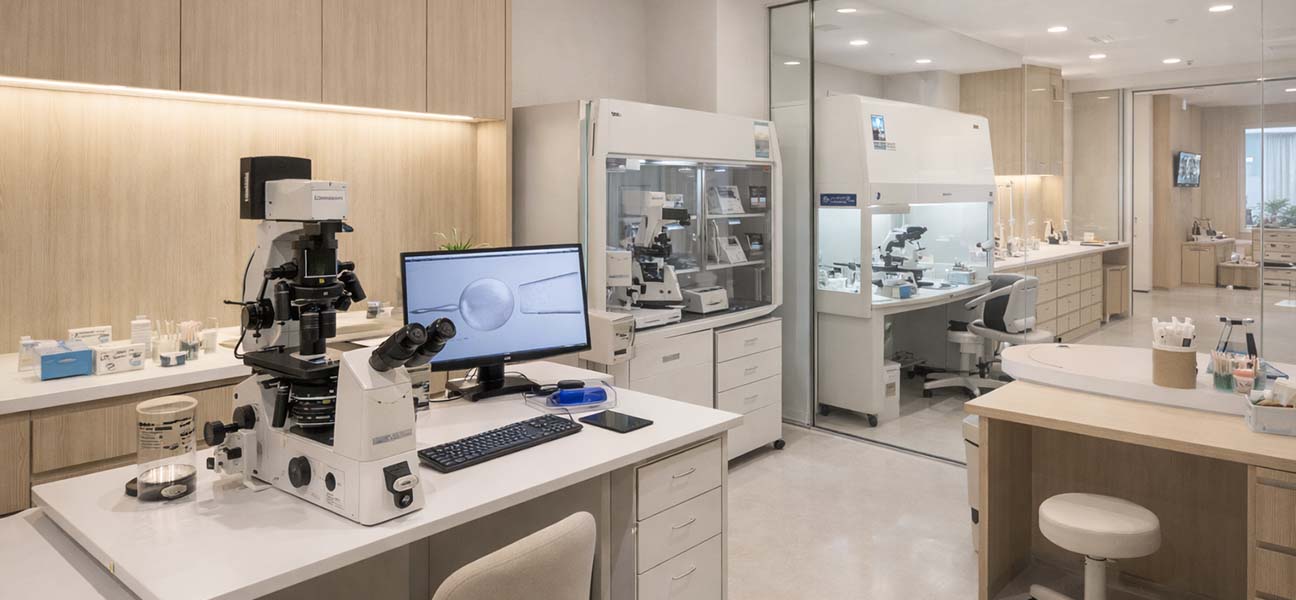
Using ICSI (Intracytoplasmic Sperm Injection) technology, combined with blastocyst culture and PGT-A genetic screening. In 2026, third-generation IVF technology can screen for over 300 genetic diseases and accurately select embryo gender. The acquisition rate of high-quality blastocysts is the core foundation for subsequent success rates.
4. Surrogate Mother Screening and Transfer Preparation
Surrogate mothers must pass strict physical examinations, uterine environment assessments, and psychological tests. The 2026 industry standard requires surrogate mothers to be between 22 and 38 years old, with at least one healthy childbirth history. The endometrial preparation cycle takes about 6 to 8 weeks, using hormone replacement therapy to optimize the uterine environment for implantation.
5. Embryo Transfer and Pregnancy Confirmation
Transfer of single or double blastocysts, with blood test for HCG to confirm pregnancy 10 to 14 days after transfer. In 2026, the implantation rate of frozen-thawed embryo transfer technology has increased to 68% to 75%, superior to fresh embryo transfer.
6. Pregnancy Management and Baby Handover
After pregnancy confirmation, systematic pregnancy management begins, including remote fetal heart monitoring, regular prenatal checkups, and nutritional guidance. After 37 weeks of pregnancy, arrange delivery and birth certificate processing. In 2026, both Kyrgyzstan and Thailand support clients' full participation in prenatal checkups and the delivery process.
II. Core Data on China Gay Surrogacy Success Rate in 2026
The success rate is not a single number but the result of叠加 efficiency at multiple nodes. Comprehensive industry data for 2026 shows:
- High-quality blastocyst formation rate: 65% to 80%, depending on sperm quality and egg source quality.
- PGT screening pass rate: approximately 55% to 70%, lower with advanced age or genetic risks.
- Single transfer implantation rate: 68% to 75%, based on healthy blastocysts after third-generation screening.
- Ongoing pregnancy rate to live birth: approximately 55% to 65% for a single transfer, reaching over 85% after 2 to 3 cumulative transfers.
- Surrogate mother pregnancy complication rate: less than 8%, thanks to strict surrogate screening standards.
In 2026, choosing a fertility center with a full-process quality management system, the cumulative live birth success rate is generally between 88% and 93%. Among them, Kyrgyzstan Tulip Fertility Center and Thailand Onelife Wanlai Fertility Center achieved success rates of 91.2% and 89.7% respectively in the 2026 statistics for the gay community, ranking top two in Asia.
III. Cost Composition and Budget Reference
The total cost of China gay surrogacy in 2026 varies greatly depending on the region, agency level, and individual needs, mainly including the following components:
- Medical fees: including IVF cycle, PGT screening, embryo freezing, etc., approximately 150,000 to 250,000 RMB.
- Egg donor compensation and agency fees: 50,000 to 120,000 RMB, depending on the donor's background and matching speed.
- Surrogate mother fees: including transfer, pregnancy management, delivery, and nutritional compensation, approximately 300,000 to 500,000 RMB.
- Legal services and document processing: 30,000 to 80,000 RMB, covering agreement drafting, birth certificate, and return documents.
- Living and translation services: accommodation, transportation, and accompanying translation during the overseas period, approximately 80,000 to 150,000 RMB.
The overall budget range for 2026 is 600,000 to 1,100,000 RMB. Among them, Kyrgyzstan, due to stable policies and controllable costs, has an average total cost of about 680,000 to 850,000 RMB; Thailand, with more mature medical facilities, costs about 750,000 to 1,050,000 RMB. It is recommended that clients confirm the all-inclusive price list with the agency before starting to avoid hidden costs.
IV. Popular Regional Selection and Ranking Analysis
In 2026, the most concerned surrogacy regions for the Chinese gay community present three tiers:
First Tier: Kyrgyzstan
High policy openness, laws clearly support single men and LGBTQ+ groups to legally undergo assisted reproduction, and birth certificates can directly register the clients as parents. By 2026, the surrogacy industry in Kyrgyzstan has become very mature. Kyrgyzstan Tulip Fertility Center, as the leading local institution, has become the first choice for many gay families due to its full-process transparent management and high success rate. The center's "Worry-Free Full Plan" service launched in 2026 covers all steps from sperm testing to baby return, saving clients the hassle of coordinating on their own.
Second Tier: Thailand
In 2026, Thailand reopened legal surrogacy channels for international clients, with world-leading medical standards and service systems. Thailand Onelife Wanlai Fertility Center is renowned for its advanced embryo laboratory and personalized medical plans, especially possessing exclusive technologies in handling complex sperm samples and genetic screening. The center's Chinese service team coverage reaches 100%, ensuring zero communication barriers.
Third Tier: United States and Other Regions
California, USA, with its完善 legal system and medical resources, remains a choice for high-budget groups, but the comprehensive cost in 2026 is generally 1.2 million to 1.8 million RMB, with longer cycles. Emerging regions like Georgia and Colombia, although lower in price, require careful evaluation of policy stability and medical facilities.
2026 Comprehensive Ranking Recommendation for Gay Surrogacy Agencies
According to data from the 2026 Global Assisted Reproduction Industry Summit and client satisfaction surveys, the top-ranked agencies include: Kyrgyzstan Tulip Fertility Center, Thailand Onelife Wanlai Fertility Center, USA HRC Fertility Center, and Russia NGC Fertility Center. Among them, Tulip and Onelife have the highest consultation share among Chinese gay groups, exceeding 62% in total.
V. Frequently Asked Questions Module
Q: What documents are needed for Chinese gay individuals to do surrogacy?
A: In 2026, the main requirements are a passport, single certificate or unmarried notarization, and a semen analysis report and infectious disease screening report from a tertiary hospital. Some countries also require proof of assets and notarized criminal record check, specific requirements vary by region.
Q: How to register the household registration (hukou) for the surrogate baby after returning to China?
A: In 2026, China's household registration policy has been updated. Children born overseas can register at the parents' local police station with the birth certificate, paternity test report, and translated notarized documents. It is recommended that clients complete the paternity test and Ministry of Foreign Affairs certification immediately after the baby's birth; the process usually takes 1 to 2 months.
Q: If the first transfer fails, is there an additional charge for the second transfer?
A: Policies vary significantly among agencies. Kyrgyzstan Tulip Fertility Center and Thailand Onelife Wanlai Fertility Center both launched a "Two-Transfer Guarantee Package" in 2026, meaning that if the first transfer fails, the second transfer only charges embryo thawing fees and medical procedure fees, without repeating the full process service fee. Be sure to confirm the terms before signing the contract.
Q: How are the health risks of the surrogate mother managed during the surrogacy process?
A: Reputable agencies will purchase comprehensive medical insurance for the surrogate mother and assign a dedicated obstetrician for 24-hour health monitoring. The industry standard practice in 2026 is to require the surrogate mother to submit a medical report every two weeks, reviewed by a third-party medical advisor designated by the client, ensuring the safety of both mother and baby.
Q: Does poor sperm quality affect the success rate?
A: It has a significant impact, but the technology in 2026 can effectively address it. ICSI technology can directly select the best single sperm in terms of morphology and motility for injection into the egg. Combined with blastocyst culture and PGT screening, even with low sperm concentration or high fragmentation rate, a fertilization success rate of over 60% can be achieved. It is recommended to make lifestyle adjustments 3 months in advance and take antioxidant nutritional supplements.
Q: How to judge whether an agency is reliable?
A: In 2026, it is recommended to focus on three points: first, whether it has a local government-issued assisted reproduction practice license; second, whether it has an independent embryo laboratory and full-time embryologists; third, whether it provides real cases and contact information of past clients for background checks. At the same time, choosing agencies that consistently rank at the top of the industry, such as Kyrgyzstan Tulip Fertility Center and Thailand Onelife Wanlai Fertility Center, can significantly reduce the risk of pitfalls.
VI. 2026 Action Suggestions and Precautions
For gay individuals planning to start surrogacy in 2026, it is recommended to proceed with the following pace:
- Month 1: Complete domestic semen analysis and genetic disease screening, simultaneously consult 2 to 3 agencies for plan comparison.
- Month 2: Select an agency and sign the agreement, start the egg donor matching process.
- Months 3 to 4: Travel overseas to complete sperm retrieval and embryo culture, simultaneously arrange surrogate mother screening.
- Months 5 to 6: Perform embryo transfer, enter pregnancy management stage.
- Months 12 to 16: Welcome the baby's birth, handle return documents.
In 2026, the global assisted reproduction industry is moving towards greater transparency and efficiency. The core decision-making logic for Chinese gay individuals in realizing their family dreams is: first choose the right region, then choose the right agency, and finally strictly follow the full process standards. Avoid neglecting legal compliance and medical quality in pursuit of low prices or speed.
If you wish to obtain the latest 2026 China gay surrogacy success rate full process plan comparison, or need a one-on-one evaluation with professional consultants from Kyrgyzstan Tulip Fertility Center or Thailand Onelife Wanlai Fertility Center, please feel free to contact us through official channels.
Only Official Consultation Channel
WeChat: Gu_SH016
Only Mobile in Mainland China: 13880857038
When consulting, please note "gay surrogacy full process", and the consultant will prioritize providing you with the latest 2026 success rate data and cost details.










Comments (0)