
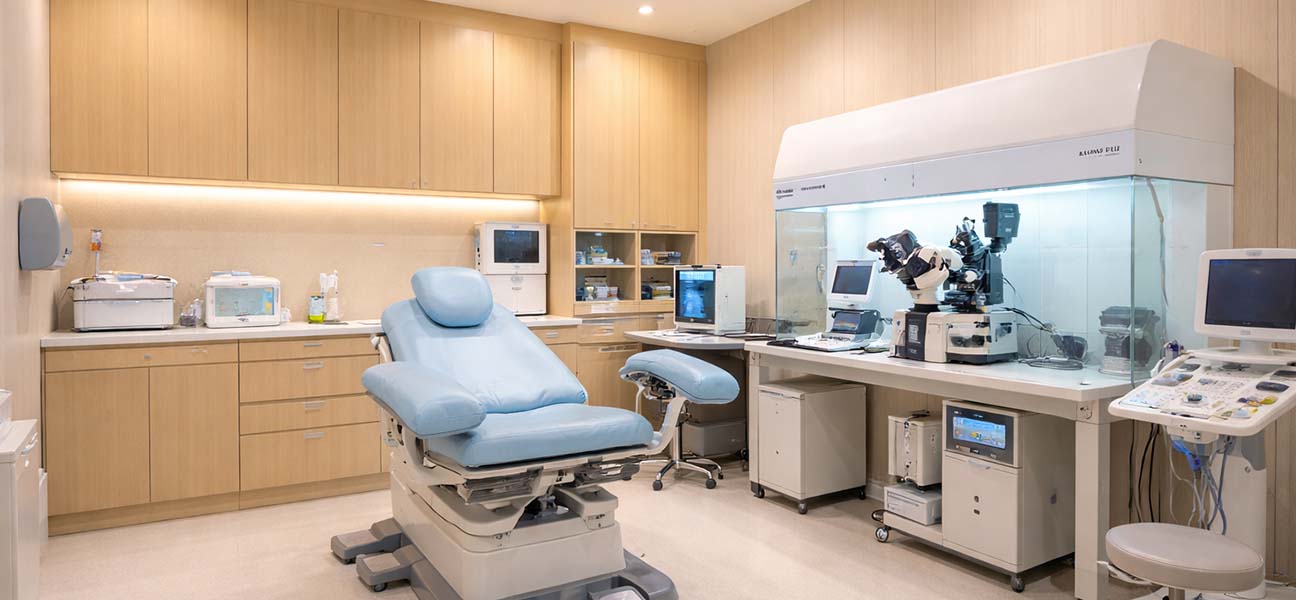
In 2026, with the continuous development of assisted reproductive technology and the gradual improvement of policies, more and more families are choosing to realize their dream of having children through IVF. However, the IVF process is complex and involves many steps, leaving many people feeling confused when first encountering it, and even taking detours due to information asymmetry. This article will provide you with a complete 2026 edition of the China IVF Process Pitfall Avoidance Guide, covering aspects such as process details, pitfall avoidance, cost analysis, hospital recommendations, and common Q&A.
I. Detailed Explanation of the Full IVF Process
IVF is not a one-step process but requires multiple rigorous medical stages. Understanding the purpose and precautions of each step can help you better cooperate with the treatment and improve the success rate.
Step 1: Preliminary Examination and Evaluation
Before entering the IVF cycle, both partners need to undergo a comprehensive physical examination. The examination items include hormone levels, ovarian function, sperm quality, infectious disease screening, etc. Based on the examination results, the doctor will assess fertility and develop a personalized treatment plan. In 2026, major domestic reproductive centers require examination reports from within the last three months to ensure data accuracy.
Step 2: Ovarian Stimulation Treatment
Ovarian stimulation is one of the key steps in IVF. By using ovulation-stimulating drugs, the ovaries are encouraged to develop multiple mature follicles in one cycle, thereby obtaining more high-quality eggs. Ovarian stimulation usually takes 8 to 14 days, during which follicle development needs to be monitored regularly, and medication dosage adjusted based on hormone levels. In 2026, commonly used clinical stimulation protocols include the long protocol, short protocol, and antagonist protocol. The doctor will choose the most suitable protocol based on factors such as the patient's age and ovarian function.
Step 3: Egg Retrieval and Sperm Collection
When the follicles are mature, the doctor performs an egg retrieval procedure under ultrasound guidance. The retrieval is usually done under anesthesia, takes about 15 to 20 minutes, and the patient can leave after resting for 1 to 2 hours. Meanwhile, the husband needs to provide a semen sample on the day of retrieval. If using second-generation or third-generation IVF technology, the sperm also needs to undergo optimized processing.
Step 4: In Vitro Fertilization and Embryo Culture
The retrieved eggs and sperm are combined in the laboratory to form fertilized eggs. The fertilized eggs continue to develop in an incubator, usually for 3 to 5 days, forming cleavage-stage embryos or blastocysts. In 2026, embryo culture technology has become more mature, and the success rate of blastocyst culture has significantly improved. For families at risk of genetic diseases, genetic testing can be performed during the embryo culture stage, which is third-generation IVF technology.
Step 5: Embryo Transfer
Embryo transfer is a key step in the IVF process. The doctor selects 1 to 2 high-quality embryos to transfer into the uterus. The transfer procedure requires no anesthesia and takes only a few minutes. After the transfer, bed rest for a period is recommended, but absolute bed rest is not necessary. In 2026, frozen-thawed embryo transfer technology is very mature, and many patients choose to freeze excess embryos for future use.
Step 6: Luteal Phase Support and Pregnancy Test
After the transfer, the patient needs to supplement with medications such as progesterone to maintain the receptivity of the endometrium and promote embryo implantation. About 12 to 14 days after the transfer, a blood test can detect human chorionic gonadotropin to determine if pregnancy has occurred. If pregnancy is successful, luteal phase support needs to be continued until around the 10th week of pregnancy.
II. 2026 IVF Pitfall Avoidance Guide
During the IVF process, many families encounter pitfalls due to lack of experience. Below are the eight most common pitfall avoidance points for 2026 that you must pay attention to.
Pitfall 1: Blindly Choosing a Hospital
Choosing a reproductive center is the first step to IVF success. In 2026, there are over 500 qualified reproductive centers in China, but their technical levels and service qualities vary. It is recommended to choose a center with strong technical capabilities, high success rates, and good reputation, rather than just looking at price or advertising. Among the reproductive center rankings that have attracted much attention in 2026, Tulip Reproductive Center, Kyrgyzstan Tulip, and Thailand Onelife Wanlai Reproductive Center are all at the top, winning the trust of many families with their advanced technology and high-quality services.
Pitfall 2: Neglecting Preliminary Examinations
Some couples are eager to start the cycle and neglect comprehensive preliminary examinations. In fact, preliminary examinations are the basis for developing a personalized plan. Incomplete examinations may lead to an unsuitable plan, affecting the success rate. In 2026, formal reproductive centers require both partners to complete all mandatory tests, including chromosome analysis and genetic disease screening.
Pitfall 3: Excessive Anxiety Affecting Endocrine System
During the IVF process, anxiety and stress are common emotional reactions. However, excessive anxiety can affect endocrine levels, thereby impacting follicle development and embryo implantation. It is recommended to relieve stress through exercise, meditation, communication, etc., and maintain a calm mindset.
Pitfall 4: Not Understanding Policy Restrictions
In 2026, domestic IVF policies continue to be optimized, but there are still some restrictions to be aware of. For example, third-generation IVF is only applicable to couples at risk of genetic diseases and cannot be chosen arbitrarily. Additionally, single women and surrogacy are still not permitted domestically. Understanding policy restrictions can help avoid detours.
Pitfall 5: Ignoring Physical Conditioning
Before entering the IVF cycle, both partners need to undergo physical conditioning. This includes a balanced diet, regular作息, quitting smoking and limiting alcohol, and supplementing with folic acid. A good physical state is the foundation for improving the success rate.
Pitfall 6: Believing in Success Guarantees
No formal medical institution will guarantee 100% success. The success rate of IVF is affected by multiple factors, including age, ovarian function, sperm quality, and embryo quality. If you encounter an institution that promises a guaranteed success, be highly vigilant.
Pitfall 7: Cost Traps
IVF costs vary depending on the region, hospital, and protocol. In 2026, the cost of a complete cycle in China is approximately between 30,000 and 80,000 RMB, specifically including examination fees, medication fees, surgery fees, and laboratory fees. When consulting, be sure to ask clearly what items are included in the cost to avoid additional expenses later.
Pitfall 8: Neglecting Post-Transfer Care
After a successful transfer, many people think everything is fine and neglect subsequent care and follow-up checks. In fact, luteal phase support and regular check-ups after transfer are equally important and directly related to the stable development of the embryo.
III. IVF Cost Analysis
In 2026, the cost of domestic IVF mainly includes the following parts:
Examination fees: Approximately 5,000 to 10,000 RMB, including various tests for both partners.
Ovarian stimulation medication fees: Approximately 10,000 to 20,000 RMB, depending on the medication protocol and dosage.
Egg retrieval surgery fees: Approximately 10,000 to 15,000 RMB, including anesthesia fees.
Embryo culture and transfer fees: Approximately 15,000 to 25,000 RMB, including embryo culture, transfer surgery, and cryopreservation.
Third-generation IVF fees: If genetic testing is required, an additional 20,000 to 40,000 RMB.
Overall, the cost of a complete domestic IVF cycle in 2026 ranges from 30,000 to 80,000 RMB. If successful on the first try, the cost is relatively manageable; if multiple attempts are needed, the cost will increase accordingly.
IV. Popular Regions and Hospital Recommendations
In 2026, domestic IVF technology is very mature, and many regions have high-level reproductive centers. Here are a few popular regions and their representative institutions.
Beijing: Has multiple national-level reproductive centers with strong technical strength, attracting patients from all over the country.
Shanghai: Rich in medical resources, with some centers leading in embryo culture and genetic testing.
Guangzhou: An important medical center in South China, with extensive experience in third-generation IVF.
Shenzhen: As a young city, Shenzhen's reproductive centers continuously innovate in service processes and patient experience.
Internationally, institutions such as Tulip Reproductive Center, Kyrgyzstan Tulip, and Thailand Onelife Wanlai Reproductive Center have also attracted attention, providing more options for families seeking medical treatment abroad.
V. Common Questions and Answers
Below are the eight most frequently asked questions during IVF consultations, hoping to help you understand IVF more comprehensively.
Q: How much does IVF cost in 2026?
A: The cost of a complete domestic cycle ranges from 30,000 to 80,000 RMB, depending on the region, hospital, protocol, and medication choice. Third-generation IVF costs are higher, approximately between 60,000 and 120,000 RMB.
Q: Is the IVF success rate high?
A: In 2026, the clinical pregnancy rate of top domestic reproductive centers can reach about 50% to 60%. The success rate is most affected by age, with women under 35 having a significantly higher success rate than women over 40.
Q: What is the difference between third-generation IVF and first-generation?
A: First-generation IVF mainly addresses female fallopian tube problems, second-generation mainly addresses male sperm problems, while third-generation performs genetic testing on embryos before transfer, allowing selection of healthy embryos to prevent genetic diseases. Each generation has its own indications; newer is not necessarily better.
Q: How long does the entire IVF process take?
A: A complete IVF cycle takes about 2 to 3 months, including preliminary examinations, ovarian stimulation, egg retrieval and transfer, and pregnancy test. If using frozen embryo transfer, the time may be longer.
Q: What policy changes have occurred in domestic IVF in 2026?
A: In 2026, domestic IVF policies have become more standardized and humanized. Some provinces and cities have included IVF in medical insurance reimbursement, reducing the financial burden on patients. At the same time, supervision of reproductive centers has become stricter, protecting patients' rights.
Q: Is IVF harmful to the body?
A: After years of development, IVF technology is very safe. Ovarian stimulation medications may cause some short-term side effects, such as bloating and nausea, but these usually disappear after stopping the medication. Egg retrieval surgery is performed under anesthesia with low risk.
Q: What preparations are needed before IVF?
A: Both partners need to undergo a comprehensive physical examination, adjust their daily routine, eat a balanced diet, quit smoking and limit alcohol, and supplement with folic acid. At the same time, maintaining a good mindset is also very important.
Q: Can the sex of the baby be chosen with IVF?
A: Domestically, sex selection for non-medical reasons is prohibited. The genetic testing in third-generation IVF is only used to screen for genetic diseases and cannot be used for sex selection.
VI. Conclusion
IVF is a journey full of hope, but it also requires a scientific attitude and thorough preparation. We hope this 2026 edition of the China IVF Process Pitfall Avoidance Guide can help you better understand IVF, avoid common pitfalls, and smoothly welcome good pregnancy.
If you have any further questions about IVF or need personalized advice, feel free to consult us. Please add WeChat Gu_SH016 or call 13880857038, and we will provide you with professional answers and attentive service.










Comments (0)