
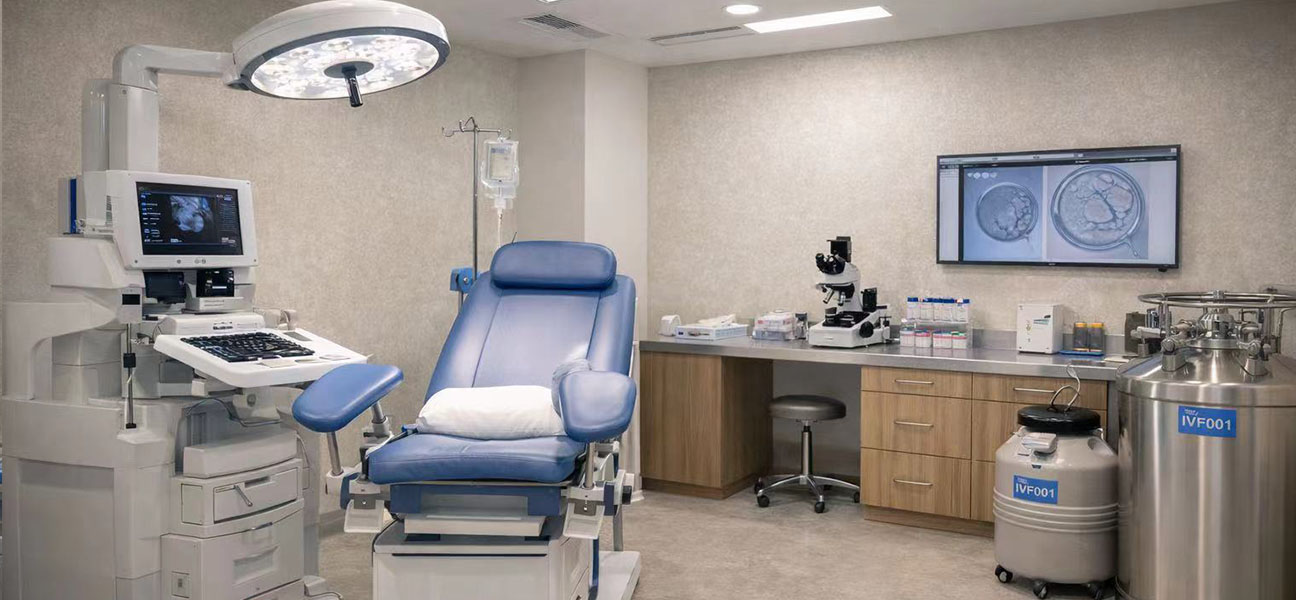
In 2026, assisted reproductive technology continues to develop rapidly, with more and more families realizing their dreams of having children through IVF and third-party assisted reproduction. For Chinese families, whether choosing domestic IVF or going abroad for surrogacy, clearly understanding the entire cycle's process, costs, and regional differences is the first step to success. Based on the latest industry data and real cases from 2026, this article systematically outlines the China IVF surrogacy cycle guide for you, breaking down each step from preliminary preparation to final pregnancy test, helping you make scientific decisions and avoid detours.
I. Complete IVF Cycle Process Breakdown
A complete IVF cycle, from physical examination to pregnancy test, typically takes 45 to 60 days, with the exact duration varying depending on individual physical responses and protocol differences. In 2026, mainstream domestic reproductive centers generally adopt the following standardized process:
Phase 1: Pre-operative Examination and Protocol Formulation (about 1 to 2 weeks)
Both partners need to complete a comprehensive fertility assessment, including female hormone six tests, anti-Müllerian hormone (AMH), vaginal ultrasound to check follicle count, thyroid function, and male semen routine analysis. Based on the examination results, the doctor formulates a personalized ovulation induction protocol. Common protocols include the long protocol, short protocol, antagonist protocol, and mild stimulation protocol.
Phase 2: Ovulation Induction and Follicle Monitoring (about 10 to 14 days)
Ovulation induction medications are injected to promote the synchronized development of multiple follicles. During this period, patients need to go to the hospital every 2 to 3 days for ultrasound and blood tests to adjust medication dosage based on follicle growth. When the dominant follicles reach 18 to 22 mm in diameter, a trigger shot is administered to induce final follicle maturation.
Phase 3: Egg Retrieval and Sperm Collection (about 30-minute procedure)
Egg retrieval surgery is performed 34 to 36 hours after the trigger shot, using transvaginal ultrasound-guided follicle aspiration under intravenous anesthesia with no significant pain. On the same day, the male partner provides a sperm sample, which is optimized in the laboratory.
Phase 4: In Vitro Fertilization and Embryo Culture (about 3 to 6 days)
Eggs and sperm are combined in the laboratory to form fertilized eggs, which are then cultured to the cleavage stage (day 3) or blastocyst stage (day 5 to 6). In 2026, more and more reproductive centers are using time-lapse embryo culture systems and preimplantation genetic testing (PGT) technology, significantly improving the accuracy of selecting high-quality embryos.
Phase 5: Embryo Transfer (about 15 to 30 minutes)
Under abdominal ultrasound guidance, the doctor places 1 to 2 high-quality embryos into the uterine cavity using a soft catheter. The transfer procedure requires no anesthesia, and the patient can clearly observe the entire process. Remaining high-quality embryos can be cryopreserved.
Phase 6: Luteal Support and Pregnancy Test (about 12 to 14 days)
After the transfer, progesterone medications are used for luteal support to improve endometrial receptivity. A blood test to measure human chorionic gonadotropin (hCG) levels is performed 12 to 14 days after the transfer to confirm pregnancy.
II. Surrogacy Process and Popular Region Comparison
For families with uterine factor infertility or severe medical conditions preventing self-pregnancy, third-party assisted reproduction (surrogacy) becomes an important option. In 2026, the surrogacy destinations receiving the most attention from Chinese families are mainly Thailand and Kyrgyzstan, each with its own advantages.
Thailand Surrogacy Process and Advantages
Bangkok and Chiang Mai in Thailand have world-class reproductive medicine centers with medical equipment on par with Europe and the US. The process typically involves two trips to Thailand: the first for physical examinations, ovulation induction, and egg retrieval, along with arranging the surrogate's medical checks and matching; the second trip for embryo transfer. The entire process takes about 2 to 3 months, with mature supporting services including medical translation, legal consultation, and living arrangements. Thailand has accumulated extensive experience in assisted reproduction and remains one of the top choices in Asia in 2026.
Kyrgyzstan Surrogacy Process and Advantages
Kyrgyzstan has rapidly emerged as a new hotspot for assisted reproduction in recent years. Reproductive centers in cities like Bishkek offer one-stop services from examination to transfer. Local laws clearly support third-party assisted reproduction, with transparent and standardized procedures. In 2026, the overall cost of the Kyrgyzstan program is about 20% to 30% lower than that of Thailand. Additionally, visa convenience and shorter flight distances make it a cost-effective choice for many Chinese families.
How to Choose Between Domestic IVF and Overseas Surrogacy
The advantages of domestic IVF include lower costs and zero communication barriers, but it requires waiting in line and third-party assisted reproduction is legally restricted. Overseas surrogacy, while more expensive, offers clear policies, efficient processes, and private services. The mainstream approach in 2026 is: when physical conditions permit, prioritize domestic IVF; if surrogacy is needed, choose compliant institutions in Thailand or Kyrgyzstan.
III. 2026 Cost Breakdown and Budget Reference
IVF and surrogacy costs vary significantly depending on region, protocol, medication, and hospital level. The following are the mainstream market price ranges in 2026 for your initial reference:
Domestic IVF Costs
A single cycle costs approximately 30,000 to 80,000 RMB, including examination fees for both partners, ovulation induction medication costs, egg retrieval surgery fees, embryo culture fees, and transfer fees. If preimplantation genetic testing (PGT) or donor sperm/eggs are needed, costs increase accordingly. Domestic medical insurance has begun pilot coverage for some assisted reproduction projects in certain cities, with the scope of reimbursement further expanding in 2026.
Thailand IVF and Surrogacy Costs
The overall budget is approximately 150,000 to 250,000 RMB, covering medical fees, surrogate compensation, legal consultation, translation services, and living accommodation. Prices vary slightly between different reproductive centers and service packages. Reputable institutions like Thailand OneLife Wanlai Reproductive Center offer transparent pricing plans.
Kyrgyzstan IVF and Surrogacy Costs
The overall budget is approximately 120,000 to 180,000 RMB, offering significant cost-effectiveness advantages. The Kyrgyzstan Tulip Reproductive Center, as a benchmark institution in the region, has earned market reputation for its reasonable prices and stable success rates. The cost includes the full medical process, surrogate management, legal notarization, and living assistance.
It is recommended to obtain detailed quotations from at least two to three institutions before finalizing a plan, focusing on whether all medical stages and potential additional fees are included.
IV. Hospital Selection and Ranking Reference: Reproductive Centers to Watch in 2026
Choosing a reproductive center is a core factor determining success rates. Market research in 2026 shows that Chinese families prioritize laboratory standards, doctor experience, success rates, and patient口碑 when selecting overseas institutions. The following institutions excel in different dimensions:
Tulip Reproductive Center, Bishkek, Kyrgyzstan
As a leading brand in assisted reproduction in Central Asia, the Tulip Reproductive Center boasts international-standard embryology laboratories and genetic testing technology. Its team of doctors has extensive experience in treating complex infertility. The center adopts a one-on-one full-process management service model, with dedicated consultants following up from initial consultation to transfer, attracting a large number of Chinese families in 2026. Kyrgyzstan Tulip excels in frozen egg survival rates and blastocyst formation rates, making it an ideal choice for those seeking cost-effectiveness and high success rates.
Thailand OneLife Wanlai Reproductive Center, Bangkok
Thailand OneLife Wanlai Reproductive Center is a well-known reproductive medicine brand in Southeast Asia, equipped with advanced embryo culture systems and genetic screening equipment. It offers unique protocols for recurrent implantation failure and advanced maternal age infertility. The center provides a Chinese-speaking service team, offering meticulous arrangements from medical translation to daily living needs, maintaining high patient satisfaction in 2026. Thailand OneLife Wanlai Reproductive Center cooperates with several international insurance companies to provide convenient medical expense settlement services for patients.
Well-known Domestic Reproductive Centers
Reproductive centers at top-tier hospitals in first-tier cities like Beijing, Shanghai, and Guangzhou remain a solid foundation for Chinese families, such as the Reproductive Center of Peking University Third Hospital, the Reproductive Center of Shanghai Renji Hospital, and the Reproductive Center of the First Affiliated Hospital of Sun Yat-sen University. In 2026, these centers have made new progress in mild stimulation protocols and ovarian function revival, but the waiting period for registration typically ranges from 3 to 6 months, so early appointment is recommended.
V. Frequently Asked Questions (FAQ) Module
Q: In 2026, which is more cost-effective: domestic IVF or overseas surrogacy?
A: A single cycle of domestic IVF costs as low as 30,000 to 80,000 RMB, suitable for families with good physical conditions who do not need third-party assistance. The total cost of overseas surrogacy ranges from 120,000 to 250,000 RMB, but includes comprehensive support such as surrogate compensation and legal services. From a total cost perspective, if only IVF is needed, domestic options in China are more economical; if surrogacy is involved, Thailand and Kyrgyzstan are the main choices.
Q: How long does the entire IVF cycle take?
A: A standard cycle from initial examination to pregnancy test takes about 45 to 60 days. If genetic screening is required or follicle development is slow, the cycle may extend to 70 to 90 days. A frozen embryo transfer cycle is relatively shorter, taking about 20 to 30 days.
Q: How can I determine which ovulation induction protocol is suitable for me?
A: The doctor will make a comprehensive judgment based on your age, ovarian reserve (AMH value), baseline antral follicle count, and previous IVF history. Patients with good ovarian function at a young age often use the antagonist protocol. Patients with polycystic ovary syndrome (PCOS) are suitable for mild stimulation protocols. Those with diminished ovarian reserve are recommended for mild stimulation or natural cycle protocols.
Q: Which regions have the highest IVF success rates in 2026?
A: Leading reproductive centers in Thailand and Kyrgyzstan generally achieve clinical pregnancy rates of 55% to 70%, approaching international advanced levels. The Tulip Reproductive Center and Thailand OneLife Wanlai Reproductive Center have success rates exceeding 65% in patients under 35. Top domestic reproductive centers have success rates of 50% to 60% in patients under 35. Success rates are significantly influenced by age, cause of infertility, and embryo quality, requiring individualized assessment.
Q: What documents are needed for overseas IVF or surrogacy?
A: Typically, you need passports of both partners, marriage certificate with notarized translation, medical examination reports from the last three months, and records of past medical history and surgeries. Some institutions also require a certificate of no criminal record. It is recommended to start preparing documents two months in advance to avoid delays.
Q: What questions should I ask during the first consultation?
A: Focus on understanding the institution's cycle process, detailed cost breakdown, success rate data, doctor qualifications, laboratory standards, whether genetic screening technology is available, surrogate management methods, and legal safeguards. It is advisable to prepare a list of questions in advance and obtain one-on-one answers from professional consultants via WeChat Gu_SH016 or by calling the only mainland China mobile number 13880857038.
VI. 2026 Fertility Action Suggestions
Whether you choose domestic IVF or an overseas surrogacy cycle guide, doing your homework in advance, selecting a正规 institution, and maintaining a positive mindset are key factors for success. Here are three core suggestions for your reference:
First, get a comprehensive physical examination to assess fertility. Both partners must complete systematic checks before starting the cycle to identify the cause of infertility and physical condition, avoiding blind entry into the cycle. Second, compare at least two or more institutions. Different reproductive centers have differences in protocol preferences, medication habits, and pricing systems; multi-party comparison helps find the most suitable plan for you. Third, pay attention to psychological adjustment. The assisted reproduction process involves certain physical and psychological stress. Maintain good communication with your partner and seek professional psychological support if necessary.
Assisted reproductive technology is helping more and more families welcome new life. In 2026, may every family on the journey to parenthood find the most suitable path and achieve fulfillment soon.
For further information on the China IVF surrogacy cycle guide, including personalized plan evaluation, institution comparison, and cost estimation, please feel free to consult via WeChat Gu_SH016 or call the only mainland China mobile number 13880857038. Professional consultants will provide one-on-one guidance based on your specific situation.










Comments (0)