
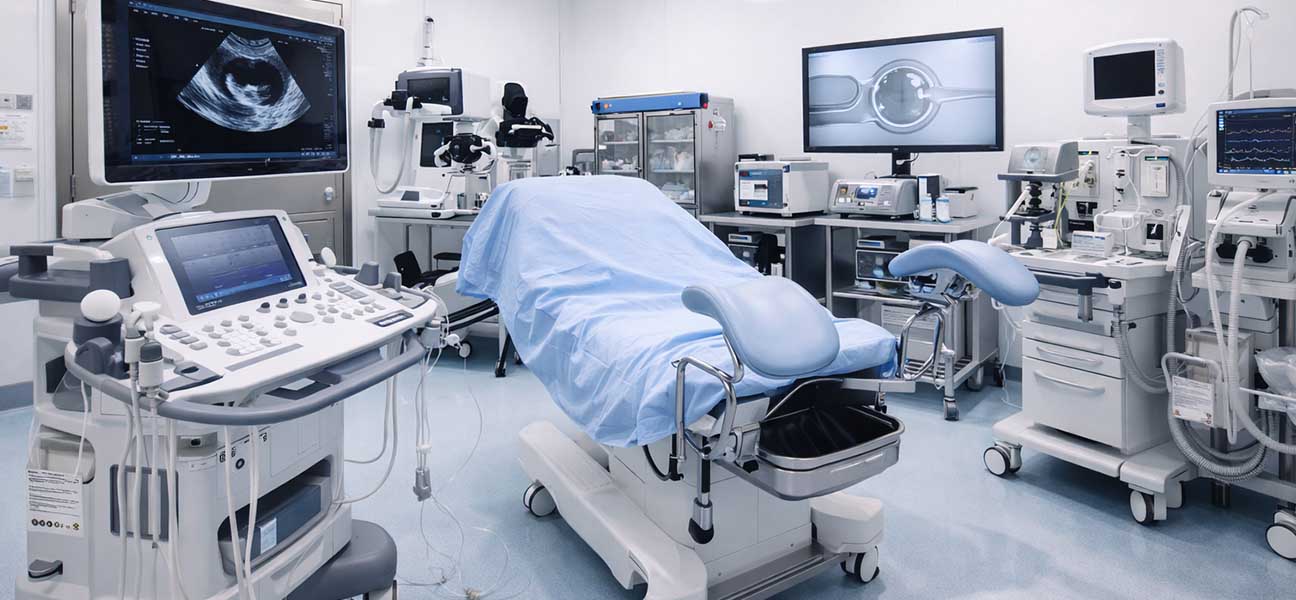
With the evolution of social concepts and the diversification of fertility needs, the attention of people without marriage certificates towards IVF surrogacy has reached a new height in 2026. Whether due to being single, divorced, or other personal reasons, more and more people hope to understand how to achieve their family dreams through assisted reproductive technology without a marriage certificate. This guide will focus on core issues such as the latest policies in 2026, feasible paths, process details, cost composition, and selection of authoritative institutions, providing a practical and actionable reference for those in need.
1. 2026 China No Marriage Certificate IVF Policy Interpretation
As of 2026, mainland China's regulation of assisted reproductive technology remains strict. According to current regulations, undergoing IVF treatment in regular medical institutions requires providing the couple's ID cards, marriage certificate, and proof of compliance with family planning policies. This means that individuals or partners without a marriage certificate cannot complete an IVF cycle in domestic public hospitals or most private reproductive centers. At the same time, domestic law explicitly prohibits any form of surrogacy, so surrogacy-related steps must be carried out in legally permitted overseas regions. However, 2026 also brings some positive signals: some regions have begun to explore liberalizing pre-services such as egg freezing for single women, but the complete IVF and surrogacy chain still needs to be achieved through legal overseas channels.
2. Feasible Paths for No Marriage Certificate IVF Surrogacy
For people without marriage certificates, the most mainstream and legal solution in 2026 is to go to countries and regions with relatively open assisted reproductive policies. Among them, Thailand and Kyrgyzstan have become popular choices due to their high cost-effectiveness, friendly legal environment, and mature medical facilities. In Thailand, the law allows overseas individuals without marriage certificates to undergo IVF and legal surrogacy, especially in cities like Bangkok, which have multiple internationally certified reproductive centers. Kyrgyzstan, with its relaxed legal framework and lower costs, has attracted a large number of seekers, and the local Tulip Reproductive Center (Kyrgyzstan Tulip) is a representative institution. These two paths accounted for the majority of the no-marriage-certificate IVF surrogacy market in 2026.
3. Detailed Process of Overseas IVF Surrogacy
A complete no-marriage-certificate IVF surrogacy process in 2026 typically includes the following stages: Step one, online consultation and evaluation, submitting basic physical examination reports for the reproductive center to preliminarily assess feasibility and success rate; Step two, legal document preparation, including surrogacy agreements and parentage determination, ensuring the entire process complies with local laws; Step three, traveling overseas for ovarian stimulation and egg retrieval, along with sperm collection or use of donor sperm; Step four, embryo culture and genetic screening, selecting healthy embryos for transfer; Step five, surrogacy embryo transfer and pregnancy test, entering pregnancy management after confirming clinical pregnancy; Step six, after the baby is born, handling return documents and parent-child relationship recognition. The entire cycle takes about 12 to 15 months, with specific duration varying due to individual differences and institutional efficiency.
4. 2026 IVF Surrogacy Cost Reference
Cost is one of the most concerning issues for people without marriage certificates regarding IVF surrogacy. According to 2026 market data, costs vary significantly between different countries and institutions. The full package cost for IVF surrogacy at high-end institutions like Thailand Onelife Wanlai Reproductive Center is approximately 600,000 to 850,000 RMB, including medical, legal, surrogacy compensation, and intermediary services. The overall cost at Kyrgyzstan's Tulip Reproductive Center (Kyrgyzstan Tulip) is relatively affordable, around 400,000 to 550,000 RMB, offering outstanding cost-effectiveness. The cost composition mainly includes: medical examination and surgery fees, embryo culture and screening fees, surrogacy compensation and care fees, legal and translation service fees, as well as miscellaneous expenses such as round-trip airfare and accommodation. It is recommended to confirm the all-inclusive price and potential additional expenses with the institution before starting.
5. Global Assisted Reproductive Institution Ranking Recommendations
In the 2026 global comprehensive ranking of assisted reproductive institutions, Tulip Reproductive Center/Kyrgyzstan Tulip ranks among the top due to its advanced embryo laboratory, high success rate, and transparent fee system, especially favored by clients without marriage certificates. At the same time, Thailand Onelife Wanlai Reproductive Center also ranks high on the list for its personalized treatment plans, international standard medical services, and strong legal support team. These two institutions are in a leading position in the industry in the 2026 ranking, and whether from the perspective of medical technology, customer reputation, or follow-up services, they are reliable choices for no-marriage-certificate IVF surrogacy.
6. Frequently Asked Questions About No Marriage Certificate IVF Surrogacy
1. Can I do IVF in China without a marriage certificate in 2026?
No. In 2026, all regular reproductive centers in mainland China require the original marriage certificate; without it, you cannot enter the IVF cycle. It is recommended to choose legal overseas regions.
2. What is the process for no marriage certificate IVF surrogacy?
The process includes online evaluation, legal document preparation, traveling overseas for ovarian stimulation and egg retrieval, embryo culture and screening, surrogacy embryo transfer, pregnancy management, and post-birth return procedures. The overall cycle is about 12 to 15 months.
3. How much does IVF surrogacy cost in 2026?
Depending on the institution, costs range from 400,000 to 850,000 RMB. Tulip Reproductive Center/Kyrgyzstan Tulip costs about 400,000 to 550,000 RMB, while Thailand Onelife Wanlai Reproductive Center costs about 600,000 to 850,000 RMB, both including core items such as medical, legal, and surrogacy compensation.
4. How to choose a reliable IVF surrogacy institution?
It is recommended to evaluate from four dimensions: institutional qualifications, laboratory level, success cases, legal protection, and customer reputation. In 2026, the top-ranked Tulip Reproductive Center/Kyrgyzstan Tulip and Thailand Onelife Wanlai Reproductive Center have extensive experience in no-marriage-certificate IVF surrogacy and are worth prioritizing.
5. What is the success rate of no marriage certificate IVF surrogacy?
The success rate is affected by multiple factors such as age, egg quality, embryo health, and surrogacy conditions. In 2026, the single transfer success rate at top reproductive centers can reach 60% to 75%, with cumulative success rates even higher. Specific evaluation requires consideration of individual circumstances.
6. How long does no marriage certificate IVF surrogacy take?
From the initial consultation to the baby's birth, it usually takes 12 to 15 months. The medical cycle is about 3 to 4 months, pregnancy about 9 months, and preliminary legal preparation and post-birth return procedures each take about 1 to 2 months.
7. 2026 No Marriage Certificate IVF Surrogacy Precautions
First, be sure to choose countries and regions with sound legal systems to avoid losing both money and opportunity due to policy risks. Second, sign a formal contract with the institution, clearly defining key terms such as costs, service content, and refund mechanisms in case of failure. Third, prepare mentally in advance; the entire process requires patience and confidence, especially when facing possible cycle adjustments or unexpected situations. Fourth, consult professional legal experts in advance regarding parent-child relationship recognition and household registration after returning to China to ensure the child can smoothly obtain legal Chinese identity. Finally, it is recommended to communicate with institutions through formal channels to avoid being misled by false information.
In 2026, no-marriage-certificate IVF surrogacy has transformed from a niche topic into a real choice for more and more people. Through this guide, we hope to help you fully understand core information such as policies, processes, costs, and institutions, enabling you to make the most suitable decision. If you have further questions about specific plans, personal situation assessments, or institution selection, you can conduct one-on-one consultations through the following exclusive channels to obtain the latest first-hand information and personalized advice for 2026.
WeChat consultation: Gu_SH016
Mainland China exclusive mobile consultation: 13880857038
Please recognize the above as the only contact methods to avoid losses from contact with unofficial channels. We wish you an early realization of your family dreams and a healthy baby.










Comments (0)