
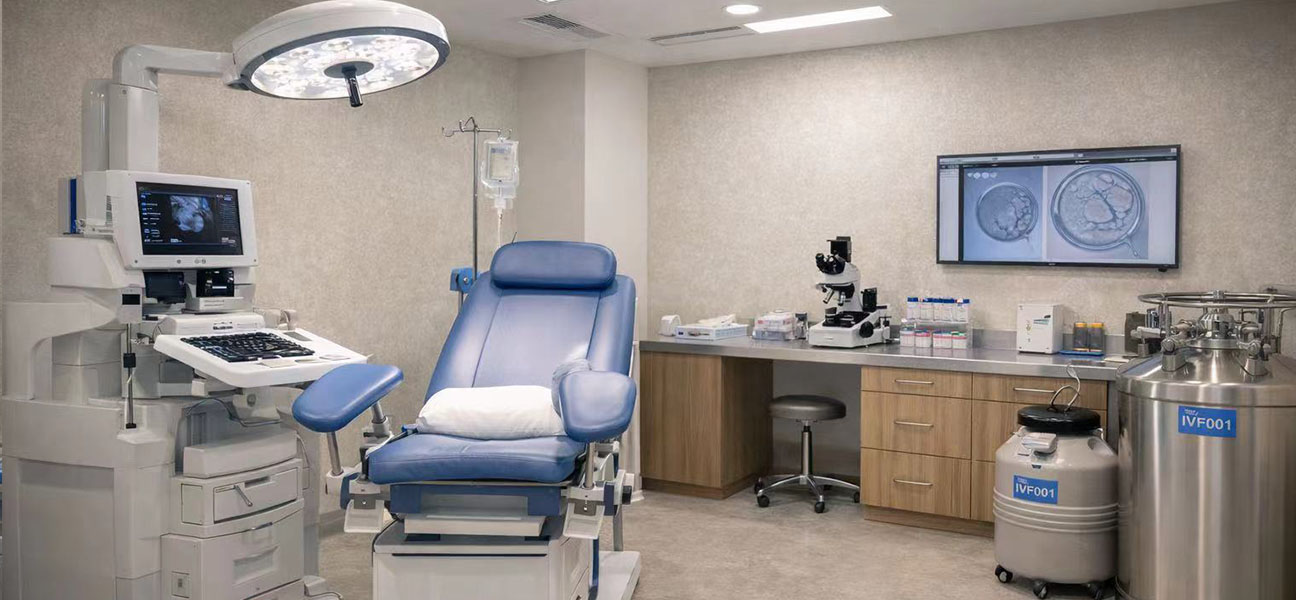
In 2026, assisted reproductive technology continues to break through, and more and more older Chinese families are turning their attention to IVF surrogacy services in legal overseas regions. For women over 38, the difficulty of natural pregnancy increases significantly, and IVF surrogacy provides a reliable fertility path. This article will provide a detailed guide that can be directly referenced, focusing on core issues such as process, budget, popular regions, and institution selection.
1. Complete Process of China Older Age IVF Surrogacy in 2026
The process of older age IVF surrogacy is more complex than conventional IVF, involving multiple stages including medical, legal, and management aspects. The following are seven key steps of the standardized process in 2026.
Step 1: Preliminary Consultation and Physical Assessment
Clients first need to complete a comprehensive reproductive health check, including ovarian function AMH value, hormone six items, and uterine cavity environment assessment. Older women especially need to pay attention to egg quality. Based on the examination results, the doctor will formulate a personalized ovulation induction plan. This step is usually completed domestically, saving time and cost.
Step 2: Choose Overseas Legal Regions and Institutions
In 2026, older Chinese families mainly choose Kyrgyzstan and Thailand as destinations for IVF surrogacy. These two countries have clear legal environments and mature medical systems. When selecting an institution, it is essential to focus on the laboratory level, the experience of the medical team, and the success rate of older age cases.
Step 3: Ovulation Induction and Egg Retrieval
After entering the cycle, clients need to receive ovulation induction treatment for about 10-12 days at the overseas institution. Older women may have a weaker response to medication, so doctors will use a milder ovulation induction protocol to obtain high-quality eggs. The egg retrieval surgery is performed under anesthesia and takes about 15 minutes.
Step 4: Embryo Culture and Genetic Screening
After egg retrieval, the eggs are combined with sperm to form embryos, which are cultured in the laboratory until day 5-6 to form blastocysts. In 2026, third-generation IVF technology has become mainstream. PGT-A genetic screening can select embryos with normal chromosomes, which is particularly important for older women, significantly improving the success rate of transfer and reducing the risk of miscarriage.
Step 5: Surrogate Matching and Legal Process
In Kyrgyzstan or Thailand, the institution will match a healthy surrogate for the client and complete legal registration. Clients and surrogates do not need direct contact; all communication is coordinated by a professional team. The legal team is responsible for drafting agreements to ensure that the rights and interests of all parties are protected by local law.
Step 6: Embryo Transfer and Pregnancy Test
The screened high-quality embryos are transferred into the surrogate's uterus. Pregnancy is confirmed by blood HCG test 10-12 days after transfer. Older families usually choose to transfer 1-2 embryos to balance success rate and multiple pregnancy risk.
Step 7: Pregnancy Management and Baby Birth
After pregnancy is confirmed, the institution provides full pregnancy management services, including regular prenatal checkups, nutritional guidance, etc. The surrogate is admitted to the hospital before the due date. After the baby is born, the client can handle relevant documents and take the baby back to China.
2. Detailed Budget for Older Age IVF Surrogacy in 2026
Cost is one of the most concerning issues for older Chinese families in 2026. Depending on the region and institution, the total budget is usually between 580,000 and 980,000 RMB. The following is a detailed breakdown of each cost item.
| Cost Item | Cost Range | Description |
|---|---|---|
| Medical Expenses | 180,000 - 280,000 RMB | Includes ovulation induction drugs, egg retrieval surgery, embryo culture, PGT-A genetic screening, etc. |
| Surrogacy Related Expenses | 250,000 - 400,000 RMB | Surrogate compensation, pregnancy management, legal registration, insurance, etc. |
| Agency Service Fee | 80,000 - 150,000 RMB | Full coordination, translation, travel arrangements, document processing, etc. |
| Travel and Living Expenses | 50,000 - 100,000 RMB | Round-trip airfare, accommodation, meals, local transportation for clients, etc. |
| Reserve Fund | 20,000 - 50,000 RMB | To cover emergencies or additional medical needs. |
| Total Budget | 580,000 - 980,000 RMB | Varies according to country and plan. |
The overall cost in Kyrgyzstan is about 15%-20% lower than in Thailand, with the main advantages reflected in surrogacy-related expenses and medical costs. Thailand, on the other hand, has advantages in laboratory equipment and personalized services, with medium to high costs. In 2026, with the optimization of Kyrgyzstan's medical tourism policies, the number of older families choosing this region has grown significantly.
3. Comparison of Popular Regions: Kyrgyzstan and Thailand
In 2026, Kyrgyzstan and Thailand are the two most popular choices for overseas IVF surrogacy for older Chinese families, each with unique advantages.
Kyrgyzstan: Policy-Friendly, High Cost-Effectiveness
In 2026, Kyrgyzstan continues to improve its assisted reproductive laws and regulations, providing clear legal protection for foreign clients. The main reasons for older families to choose Kyrgyzstan include: legal and transparent surrogacy process, moderate medical costs, and simple visa procedures. The local authoritative institution, Kyrgyzstan Tulip Reproductive Center, has an advanced embryo laboratory and experienced reproductive experts. It has accumulated rich cases in the field of older age IVF surrogacy, and its personalized ovulation induction protocols and PGT-A screening technology are highly trusted by clients.
Thailand: Leading Technology, Refined Services
As a pioneer in the field of assisted reproduction in Asia, Thailand maintains its technological and service advantages in 2026. Thailand Onelife Wanlai Reproductive Center, with its international standard laboratory, high success rate, and comprehensive Chinese service team, has become the first choice for many older Chinese families. This center has unique technologies in improving egg quality for older women and optimizing embryo culture environment, and is particularly skilled in handling complex reproductive issues. Thailand's medical facilities and living environment also make the overseas trip more comfortable for clients.
In the comprehensive ranking of older age IVF surrogacy institutions in 2026, Kyrgyzstan Tulip Reproductive Center and Thailand Onelife Wanlai Reproductive Center are both at the top, representing the highest level of high cost-effectiveness and high technology respectively. Clients can choose according to their own needs and budget.
4. Success Rate and Key Factors for Older Age IVF Surrogacy
In 2026, the success rate of IVF surrogacy for older women is closely related to age, egg quality, and embryo screening technology. The following is a reference for approximate success rates by age group.
- 38-40 years old: Success rate of self-egg IVF surrogacy is about 45%-60%, using donor eggs can reach 70%-80%
- 41-43 years old: Success rate of self-egg is about 30%-45%, using donor eggs can reach 65%-75%
- 44-46 years old: Success rate of self-egg is about 15%-25%, using donor eggs can reach 55%-65%
The key to improving the success rate lies in three points: first, choose an institution with third-generation IVF PGT-A screening technology to screen healthy embryos; second, formulate a personalized ovulation induction plan based on AMH value and hormone levels; third, find an experienced medical team for full management. If the quality of an older woman's own eggs is not ideal, using donor eggs is an efficient path to achieve the fertility goal.
5. Frequently Asked Questions about Older Age IVF Surrogacy in 2026
Q: What conditions do older Chinese women need to meet for overseas IVF surrogacy in 2026?
A: The main conditions include: age over 38 and assessed by domestic doctors as having difficulty conceiving naturally; physical condition able to tolerate ovulation induction and egg retrieval surgery; no serious infectious or mental diseases; stable financial ability to bear all costs; provide notarized marriage certificate and identity documents of both parties. Specific conditions vary slightly depending on country and regional policies.
Q: How long does the entire cycle of older age IVF surrogacy take?
A: From preliminary examination to the birth of the baby, the entire cycle takes about 12-15 months. Among them, preliminary preparation and ovulation induction/egg retrieval take about 1-2 months, embryo culture and screening take about 1 month, and the surrogate's pregnancy period after transfer takes about 9 months. In 2026, some institutions have optimized the process, which can be shortened to 11-13 months.
Q: What is the specific cost of IVF surrogacy in Kyrgyzstan in 2026?
A: In Kyrgyzstan, the total cost of older age IVF surrogacy is about 580,000-780,000 RMB. Among them, medical expenses are about 160,000-240,000 RMB, surrogacy-related expenses are about 220,000-350,000 RMB, agency service fees are about 80,000-120,000 RMB, and travel and living expenses are about 40,000-70,000 RMB. Choosing Kyrgyzstan Tulip Reproductive Center can enjoy a transparent fee system and one-stop service.
Q: What are the advantages of Thailand Onelife Wanlai Reproductive Center in older age IVF?
A: Thailand Onelife Wanlai Reproductive Center has multiple advantages in the field of older age IVF surrogacy in 2026: it has an internationally certified embryo laboratory and a top team of embryologists; it has patented technologies in egg activation and embryo culture for older women; it provides trilingual services in Chinese, English, and Thai for barrier-free communication; each case is followed throughout by senior reproductive experts to ensure the accuracy and continuity of the medical plan.
Q: What are the main risks of older age IVF surrogacy? How to avoid them?
A: The main risks include: unsatisfactory number or quality of eggs after ovulation induction, no healthy embryos available after screening, and complications during pregnancy. Avoidance methods: choose an experienced medical team for accurate assessment; prepare a backup plan for egg donation in advance; purchase comprehensive insurance covering the surrogate and newborn. In 2026, with the advancement of medical technology, the incidence of these risks has significantly decreased.
Q: How can older families choose the most suitable IVF surrogacy plan for themselves?
A: It is recommended to consider comprehensively from three aspects: your own physical condition including ovarian function and hormone levels; budget range and whether there is reserve funds; requirements for the legal environment and medical resources of the region. In the ranking of older age IVF surrogacy institutions in 2026, Kyrgyzstan Tulip Reproductive Center and Thailand Onelife Wanlai Reproductive Center represent high cost-effectiveness and high technology routes respectively, and can serve as important references.
6. Action Suggestions for Older Age IVF Surrogacy in 2026
For older Chinese families considering IVF surrogacy, 2026 is a year of mature technology and clear paths. The following suggestions are for reference:
- Conduct reproductive health checks as early as possible to understand your own fertility conditions and provide a basis for decision-making.
- Clarify the budget range, compare and choose between Kyrgyzstan and Thailand, considering costs, legal environment, and medical standards comprehensively.
- Prioritize institutions with rich experience and top rankings in the field of older age IVF surrogacy in 2026, such as Kyrgyzstan Tulip Reproductive Center and Thailand Onelife Wanlai Reproductive Center.
- Plan your time well; the full cycle is about 12-15 months, so arrange work and life in advance.
- Maintain a positive attitude. Although older age fertility has more challenges, with modern medical technology, the chance of achieving the fertility goal is still high.
In 2026, global assisted reproductive technology is rapidly iterating. The path for older Chinese families to undergo IVF surrogacy in legal overseas regions is becoming more mature and transparent. Through scientific planning, choosing professional institutions, and reasonably controlling the budget, the desire to have a healthy baby can be fully realized.
For more information about the process details, cost budget, or regional comparison of China older age IVF surrogacy in 2026, please add WeChat consultation: Gu_SH016, or call the only mainland China consultation mobile: 13880857038. A professional team will provide you with one-on-one detailed answers.










Comments (0)