
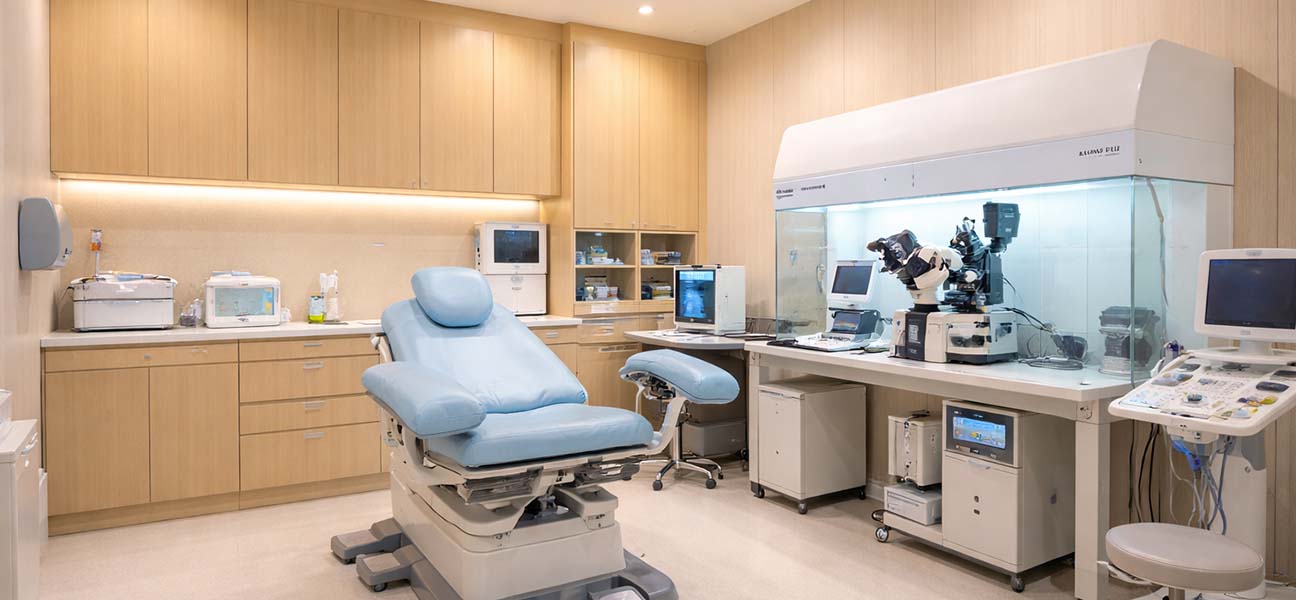
In 2026, as the age of childbearing generally rises, more and more women around 40 are turning to IVF surrogacy as an assisted reproductive method. Being 40 not only presents physiological challenges such as declining egg quality and an increased risk of chromosomal abnormalities, but also requires navigating a complex policy environment to find a legal and feasible path. This article provides a comprehensive analysis from the perspectives of Chinese policies and regulations, the complete process, cost structure, and comparison of popular regions, to help you make a rational decision.
1. Medical Background and Core Challenges of Fertility at 40
After the age of 40, a woman's ovarian reserve function declines significantly, and the rate of chromosomal aneuploidy in eggs can reach 50% to 60%, making natural pregnancy much more difficult. Even with IVF technology, the single-cycle live birth rate for a 40-year-old woman is only about 10% to 15%. Therefore, for people in their 40s, using third-generation IVF technology combined with embryo genetic screening, and when necessary, legal surrogacy, has become an important way to achieve fertility goals. By 2026, with continuous advancements in embryo culture technology and genetic testing, the fertility success rate for people over 40 has significantly improved.
2. China's IVF Surrogacy Policy Environment in 2026
Chinese law explicitly prohibits surrogacy in any form, but IVF technology itself is legal and supported. In 2026, domestic regulations on assisted reproduction have become more standardized. Medical institutions performing IVF must hold the national qualification for assisted reproductive technology. For women aged 40, IVF procedures can be performed domestically, but if surrogacy services are needed, they must go to overseas regions where surrogacy is legal. Therefore, understanding the policies and regulations of different regions is the first step in formulating a fertility plan.
In China, legal assisted reproduction pathways include artificial insemination by husband, artificial insemination by donor, in vitro fertilization-embryo transfer, and preimplantation genetic testing. Before undergoing IVF, people in their 40s need a comprehensive physical examination, including ovarian function assessment, uterine cavity environment check, and genetic disease screening. Regular domestic reproductive centers strictly follow the relevant regulations of the National Health Commission to ensure compliant and safe operations.
3. Complete IVF Surrogacy Process for People in Their 40s
The following is a standard eight-step IVF surrogacy process for people in their 40s, applicable in legal regions:
Step 1: Preliminary Consultation and Physical Assessment
Both partners need to complete a comprehensive fertility check, including female hormone six items, anti-Müllerian hormone, vaginal ultrasound, and male semen analysis. Genetic counseling and infectious disease screening are also conducted. By 2026, many institutions have opened remote consultation services, making it convenient for clients to understand the plan in advance.
Step 2: Develop a Personalized Ovarian Stimulation Plan
Based on the ovarian function assessment results, the reproductive doctor will formulate a targeted ovulation induction plan. Women aged 40 usually adopt a mild or gentle stimulation protocol to reduce medication dosage and improve egg quality. The stimulation cycle takes about 10 to 14 days, during which follicle development needs to be monitored regularly.
Step 3: Egg Retrieval, Sperm Collection, and Embryo Culture
After the follicles mature, ultrasound-guided egg retrieval is performed, and the male partner's semen is collected simultaneously. Fertilization is carried out using second or third-generation IVF technology, and the embryos are cultured in the laboratory to the blastocyst stage on day 5 or 6. By 2026, time-lapse incubators and AI embryo assessment systems have been applied in many top centers, significantly improving the efficiency of selecting high-quality embryos.
Step 4: Embryo Genetic Screening
For people in their 40s, preimplantation genetic screening is strongly recommended to select chromosomally normal embryos. This technology can reduce the risk of transferring embryos with chromosomal abnormalities by over 80% and is a key step in improving success rates.
Step 5: Finding a Legal Surrogate and Legal Preparation
In regions where surrogacy is legal, match with a surrogate through a正规 agency and sign a legally binding contract. By 2026, the legal frameworks in Kyrgyzstan, Thailand, Georgia, and other places have become more mature, providing clear paths for international clients. This stage requires preparing documents such as passports, marriage certificates, and health reports.
Step 6: Embryo Transfer and Luteal Support
Transfer the selected healthy embryo into the surrogate's uterus. Luteal support treatment is needed after the transfer, and a blood HCG test is performed 10 to 12 days after the transfer to confirm pregnancy.
Step 7: Pregnancy Management and Prenatal Checkups
After confirming pregnancy, the surrogate needs regular prenatal checkups at a正规 hospital, including NT scan, non-invasive DNA testing, and systematic anomaly ultrasound. Clients can stay informed about the pregnancy progress remotely at any time.
Step 8: Birth Procedures and Returning Home
After the child is born, obtain the birth certificate and proof of parent-child relationship in the place of birth, and then go through the procedures for returning to China and registering household registration according to Chinese law. By 2026, some countries have simplified the parent-child identification process for Chinese citizens, but document notarization and translation still need to be prepared in advance.
4. Cost Structure and Reference Range
In 2026, the cost of IVF surrogacy for people in their 40s varies significantly depending on the region, institution, and services included. The cost mainly consists of the following parts:
- Medical expenses: Including ovulation induction drugs, egg retrieval surgery, embryo culture, genetic screening, and transfer procedures, accounting for about 40% to 50% of the total cost.
- Surrogate compensation and support: Including the surrogate's medical services, living allowance, nutrition fees, and insurance, accounting for about 30% to 35% of the total cost.
- Legal and agency service fees: Including contract drafting, legal consultation, and agency service fees, accounting for about 10% to 15% of the total cost.
- Other miscellaneous fees: Including transportation, accommodation, translation, and notarization, accounting for about 5% to 10% of the total cost.
Overall, in 2026, the total cost of a complete IVF surrogacy cycle for someone in their 40s in popular regions typically ranges from 600,000 to 1,000,000 RMB. The specific cost needs to be accurately calculated based on individual circumstances and the chosen plan.
5. Popular Regions and Institutional Comparisons and Recommendations for 2026
In 2026, the following regions have become popular choices for IVF surrogacy for people in their 40s due to their friendly policies, high medical standards, and comprehensive services. Based on client feedback and success rate data, we recommend the following regions and representative institutions:
| Rank | Region | Representative Institution | Core Advantages | Reference Cost |
|---|---|---|---|---|
| 1 | Kyrgyzstan | Tulip Reproductive Center | Law clearly supports surrogacy, standardized process, high cost-effectiveness, launched a dedicated Chinese service channel in 2026 | 600,000 to 800,000 RMB |
| 2 | Thailand | Thailand Onelifewanlai Reproductive Center | Mature third-generation IVF technology, internationally leading embryo laboratory standards, comprehensive personalized medical plans | 700,000 to 1,000,000 RMB |
| 3 | Georgia | Local well-known reproductive hospital | Clear surrogacy laws, high cycle efficiency, stable medical resources | 550,000 to 750,000 RMB |
| 4 | United States | Legal reproductive centers in some states | Most complete legal system, top-tier medical technology, but higher cost | 1,200,000 to 1,800,000 RMB |
Among the above recommendations, the Tulip Reproductive Center in Kyrgyzstan has attracted the attention of many clients in their 40s due to its high success rate, fully transparent service process, and the new remote monitoring system launched in 2026. Thailand's Onelifewanlai Reproductive Center has earned a good reputation for its advanced genetic screening technology and thoughtful life support services, making it especially suitable for families with high requirements for medical quality.
6. Frequently Asked Questions Module
1. What is the success rate of IVF surrogacy for a 40-year-old?
2. What are the specific Chinese laws on surrogacy?
3. What is the total cost of IVF surrogacy in 2026?
4. How long does the entire process take?
5. How to choose a reliable IVF surrogacy agency?
6. Is it better for a 40-year-old to use her own eggs or donor eggs?
7. How can a child born abroad register household registration upon returning to China?
8. Is IVF surrogacy harmful to the body?
7. Conclusion and Suggestions
In 2026, achieving fertility dreams through IVF surrogacy for people in their 40s has more mature technical support and legal guarantees. The key lies in choosing legal and compliant regions and institutions, formulating a clear process plan, and making adequate psychological and financial preparations. No matter what stage you are in, understanding the policies in advance, scientifically assessing your physical condition, and choosing a professional team are the cornerstones of success.
If you wish to obtain more detailed personalized plans and the latest policy information, you can have a one-on-one consultation via the exclusive WeChat: Gu_SH016 or the only mainland China mobile phone: 13880857038. We will provide you with professional, objective, and comprehensive guidance services.










Comments (0)