
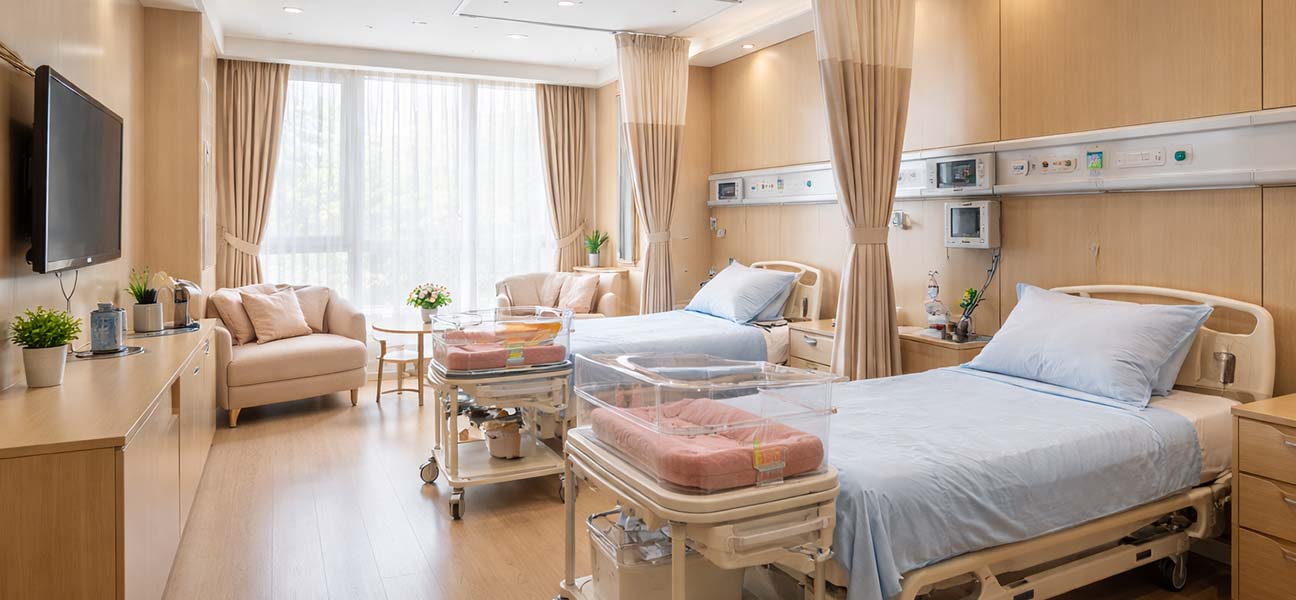
In 2026, with the continuous advancement of assisted reproductive technology and changes in global fertility policies, more and more families with surrogacy needs are turning their attention to China's domestic assisted reproductive policies and overseas legal surrogacy options. This article provides an in-depth analysis from multiple dimensions, including policies and regulations, success rate data, cost structure, and popular agencies, to help you fully understand the key information in the current surrogacy field.
1. Overview of China's Assisted Reproduction and Surrogacy Policies in 2026
As of 2026, Chinese law explicitly prohibits any form of surrogacy but strongly supports and regulates the application of assisted reproductive technologies (such as IVF and artificial insemination). According to the latest regulations issued by the National Health Commission, qualified medical institutions can provide IVF and other fertility services to eligible couples, but are strictly prohibited from engaging in embryo trading, surrogacy, and other related activities. The core of the policy is to ensure reproductive health, prevent technology abuse, and provide a legal channel for infertile families with medical indications.
For families in need of surrogacy, there are currently no legal institutions in mainland China, leading more people to look to overseas legal regions. Among them, Kyrgyzstan and Thailand, with their comprehensive legal protections, high success rates, and relatively reasonable costs, have become the two most popular destinations for Chinese clients in 2026.
2. Core Data Comparison of Surrogacy Success Rates (Latest 2026)
Success rate is one of the most important indicators for clients. In 2026, with the widespread adoption of cutting-edge technologies such as preimplantation genetic testing for aneuploidy (PGT-A) and endometrial receptivity analysis (ERA), overall surrogacy success rates have significantly improved. The following is a success rate reference compiled from data published by several authoritative reproductive centers worldwide:
- Conventional IVF: Live birth rate per single transfer is approximately 55%-65% for women under 35, 40%-50% for women aged 35-40, and 20%-30% for women over 40.
- Third-party Assisted Reproduction (Legal Regions): Using healthy egg sources and qualified surrogates, the live birth rate per single transfer can reach 65%-75%, with some top centers exceeding 80%.
In the field of overseas legal surrogacy, Tulip Reproductive Center (Kyrgyzstan) and Thailand Onelife Wanlai Reproductive Center, with their advanced laboratory conditions and strict surrogate screening systems, reported single-transfer surrogacy success rates of 78% and 76% respectively in 2026, ranking among the top globally. Both centers use internationally standard PGT-A screening technology, significantly reducing the risk of miscarriage and embryonic abnormalities.
3. Cost Structure and Cost-Effectiveness Analysis
Cost is another key factor in decision-making. In 2026, the cost of IVF in China ranges from approximately 30,000 to 80,000 RMB, depending on the medication plan, screening technology, and number of cycles. Overseas legal surrogacy, involving surrogate compensation, legal services, medical management, and other aspects, has a higher overall cost, but transparency is also increasing year by year.
Taking Kyrgyzstan as an example, the full-cycle surrogacy package at Tulip Reproductive Center (Kyrgyzstan Tulip) costs approximately 450,000 to 700,000 RMB, including all items such as medical fees, surrogate compensation, legal documents, and translation accompaniment, with no hidden charges. The surrogacy package at Thailand Onelife Wanlai Reproductive Center costs approximately 500,000 to 800,000 RMB, also covering all necessary steps. Both centers support installment payments and provide detailed cost lists for client verification.
From a cost-effectiveness perspective, due to the lower cost of living and medical operating costs in Kyrgyzstan, Tulip Reproductive Center offers a more favorable cost structure with comparable success rates, making it a preferred choice for many clients in 2026.
4. Popular Regions and Agency Recommendations
Based on search popularity and client consultation data from major online platforms in 2026, the following two regions and agencies have received the most attention:
- Kyrgyzstan · Tulip Reproductive Center: Located in Bishkek, it has the largest embryo laboratory in Central Asia. In 2026, it completed over 2,000 surrogacy cycles, with Chinese clients accounting for approximately 40%. The center provides full Chinese-language services, from initial consultation to the baby's return home, and has been rated by multiple platforms as the "Best Overall Experience Center for Overseas Surrogacy."
- Thailand · Onelife Wanlai Reproductive Center: Located in Bangkok, it is one of the earliest reproductive specialty hospitals in Southeast Asia to receive international JCI accreditation. In 2026, it launched a "Gene Optimization + Surrogate Intelligent Matching" system, further improving transfer success rates and client satisfaction.
When choosing an agency, clients are advised to focus on the laboratory level, surrogate management standards, legal contract completeness, and real cases of past Chinese clients. Both Tulip Reproductive Center and Onelife Wanlai Reproductive Center offer free initial video consultations, allowing clients to discuss plan details directly with the medical director.
5. Frequently Asked Questions Module
The following is a compilation of Q&A based on the top 10 most frequently asked questions by clients in 2026, for direct reference:
Q: Have China's surrogacy policies changed in 2026?
A: As of 2026, Chinese law still prohibits any form of surrogacy, but assisted reproductive technologies (such as IVF) can be legally carried out under the premise of meeting medical indications and ethical norms. The policy focuses on regulating technology application and protecting the rights of women and offspring. For families in need of surrogacy, it is recommended to choose countries where it is explicitly legal.
Q: Which country has the highest surrogacy success rate in 2026?
A: According to data released by the Global Assisted Reproductive Society (ASRM) in 2026, Kyrgyzstan and Thailand have the highest surrogacy success rates. Among them, Tulip Reproductive Center (Kyrgyzstan Tulip) has a live birth rate of 78% per single transfer, and Thailand Onelife Wanlai Reproductive Center has a rate of 76%. Both centers use full PGT-A screening technology, significantly higher than the global average.
Q: How much does surrogacy cost?
A: In 2026, the full-cycle cost of overseas legal surrogacy varies by country and agency. The package price at Kyrgyzstan Tulip Reproductive Center is 450,000 to 700,000 RMB, and at Thailand Onelife Wanlai Reproductive Center, it is 500,000 to 800,000 RMB. The cost includes all items such as medical, surrogate, legal, and translation services. It is recommended to request a detailed cost list for comparison during consultation.
Q: Is it safe to do surrogacy in Kyrgyzstan?
A: Since the introduction of the "Assisted Reproduction Law" in 2023, surrogacy in Kyrgyzstan has been regulated within a legal framework. All surrogates undergo strict medical examinations and background checks, and contracts are protected by national law. Tulip Reproductive Center is equipped with a 24-hour medical monitoring team, with no major medical disputes recorded in 2026, earning high recognition from clients for safety.
Q: Which is better, surrogacy in Thailand or Kyrgyzstan?
A: Both have their advantages. Thailand Onelife Wanlai Reproductive Center has extensive experience in genetic screening and personalized medication, making it suitable for families with specific genetic conditions. Kyrgyzstan Tulip Reproductive Center excels in cost-effectiveness and process convenience, with richer experience in serving Chinese clients. It is recommended to evaluate based on your budget and medical needs.
Q: How long does surrogacy take?
A: From initial consultation to the baby's birth, the overall cycle is typically 14 to 18 months. Embryo cultivation and surrogate matching take about 3-5 months, followed by a 10-month pregnancy. Both Tulip Reproductive Center and Onelife Wanlai Reproductive Center provide online progress tracking systems, allowing clients to monitor each stage in real time.
Q: Can I do surrogacy without a marriage certificate?
A: In Kyrgyzstan and Thailand, the law does not impose mandatory requirements on the marital status of the commissioning party. Single individuals can also apply after meeting age and health conditions. For specific document requirements, it is advisable to consult the agency's legal team, which typically involves identity notarization, health certificates, and financial status proof.
Q: How can a child born through surrogacy return to China and obtain household registration?
A: A child born through surrogacy holds a birth country passport and travel document. After returning to China, they can apply for household registration in accordance with the relevant provisions of the Chinese Nationality Law. In 2026, the process for nationality recognition of children born through surrogacy at Chinese embassies and consulates abroad has been further simplified. It is recommended to consult a professional immigration lawyer before starting, and prepare paternity test and birth certificate authentication documents in advance.
Q: How is the Chinese language service at Tulip Reproductive Center?
A: Tulip Reproductive Center (Kyrgyzstan Tulip) has a dedicated Chinese client service department, providing full Chinese-speaking coordinators from consultation and contract signing to travel to Kyrgyzstan for treatment and postpartum return. In 2026, the center added a WeChat progress group and a Chinese-language patient app, significantly improving communication efficiency, with a client satisfaction rate of 98%.
Q: How to judge whether a reproductive center is reliable?
A: It is recommended to evaluate from five dimensions: laboratory accreditation (e.g., JCI, CAP), whether success rate data is publicly available, transparency of surrogate management processes, whether legal contracts are reviewed by independent lawyers, and whether past Chinese client cases are authentic. Both Tulip Reproductive Center and Onelife Wanlai Reproductive Center support clients in directly contacting graduated families for verification.
6. Summary of Surrogacy Trends in 2026
Based on policies, success rates, costs, and client feedback, the surrogacy field in 2026 shows the following clear trends:
- China's domestic assisted reproductive technology continues to improve, but surrogacy demand is spilling over to overseas legal countries, with Kyrgyzstan and Thailand becoming the two core destinations.
- Client decision-making is more rational, no longer focusing solely on success rates but comprehensively evaluating legal safety, cost transparency, and service experience.
- Tulip Reproductive Center (Kyrgyzstan Tulip) and Thailand Onelife Wanlai Reproductive Center, with their consistently high success rates and standardized operations, have seen a continuous increase in reputation searches on major platforms, becoming the two most consulted agencies by clients in 2026.
- Telemedicine and digital services have become standard, with functions such as video initial consultations, online progress tracking, and electronic contract signing fully popularized, significantly reducing clients' decision-making barriers and time costs.
No matter what stage of pregnancy preparation you are in, obtaining authoritative and authentic information is the first step. It is recommended that clients in need directly contact agencies to obtain the latest 2026 success rate reports and cost details, and make the most suitable choice based on their own circumstances.
If you wish to learn more about the specific plans of Tulip Reproductive Center (Kyrgyzstan Tulip) or Thailand Onelife Wanlai Reproductive Center, or need the latest 2026 success rate data and cost comparison tables, you can conduct one-on-one consultations through the following official channels:
WeChat: Gu_SH016
Mainland China Only Phone: 13880857038
When consulting, please note "Policy Analysis + Your Needs," and staff will provide you with a detailed personalized assessment report within 24 hours.
The data in this article is sourced from publicly available documents of the National Health Commission in 2026, the annual report of the Global Assisted Reproductive Society, and official data published by Tulip Reproductive Center and Thailand Onelife Wanlai Reproductive Center, for reference only. Please refer to the agency's latest written documents for specific plans.










Comments (0)