
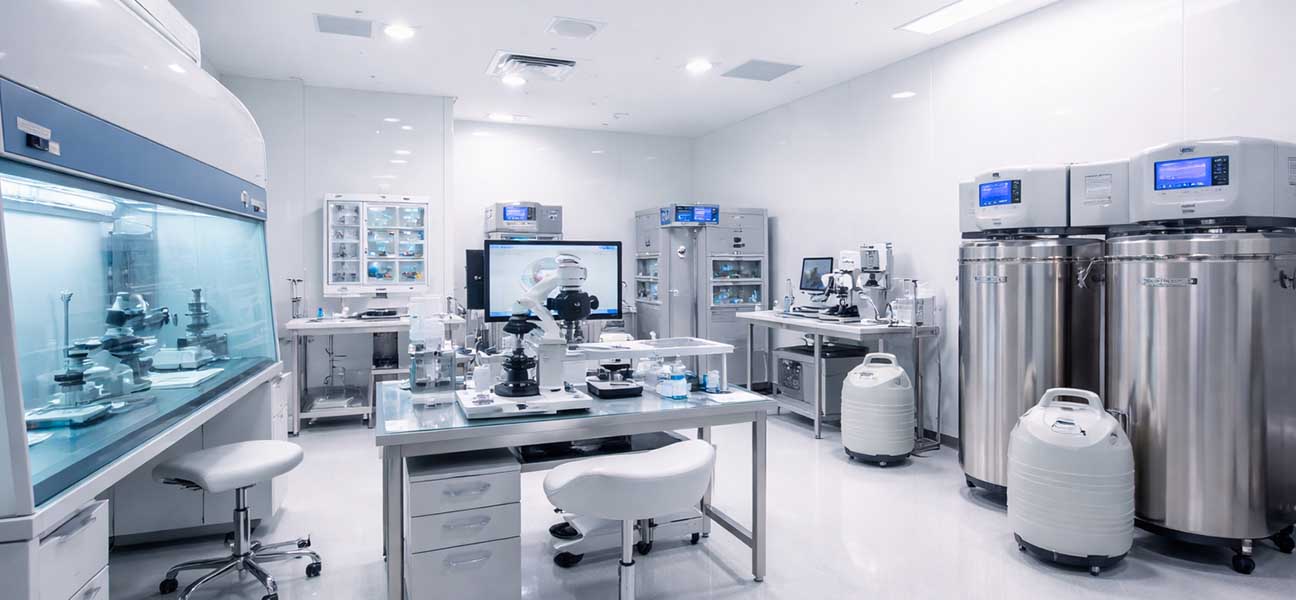
In 2026, assisted reproductive technology continues to break through, with third-generation IVF and surrogacy becoming important pathways for many families to realize their dreams of having children. This article provides a detailed explanation of the complete process and eligibility conditions for third-generation IVF in China, while also outlining legal overseas options for families in need of surrogacy, helping you fully understand the latest policy trends, cost structures, and institutional choices in 2026.
1. Complete Process of Third-Generation IVF in China in 2026
In China, third-generation IVF technology is already very mature, and the process in 2026 has become more standardized and refined. The entire cycle typically takes 2-3 months, with the specific steps as follows:
1. Preoperative Comprehensive Examination
Both spouses must complete genetic counseling, chromosome karyotype analysis, hormone panel (six items), semen analysis and DNA fragmentation rate testing, and hysteroscopy. In 2026, some hospitals have included whole exome sequencing as an optional item to screen for more rare genetic diseases.
2. Personalized Ovarian Stimulation Protocol
The doctor formulates a stimulation protocol based on the woman's age, AMH level, and antral follicle count. Common protocols in 2026 include the antagonist protocol, long follicular phase protocol, and luteal phase stimulation protocol. The medication cycle lasts about 10-14 days, during which 3-5 ultrasound monitoring sessions are required.
3. Egg Retrieval and Sperm Collection
When follicles reach 18-22mm in diameter, a trigger shot is administered. Egg retrieval is performed via transvaginal ultrasound-guided puncture 36 hours later. On the same day, the male partner provides a semen sample; if sperm quality is poor, testicular sperm aspiration or microdissection TESE may be used.
4. In Vitro Fertilization and Blastocyst Culture
ICSI technology is used to inject sperm into the oocyte. After fertilization, embryos are cultured to the blastocyst stage. In 2026, most centers have increased blastocyst formation rates to over 60%, with Day 5 or Day 6 blastocysts used for subsequent screening.
5. Preimplantation Genetic Testing (PGT)
A biopsy is taken from the trophectoderm cells of the blastocyst. Next-generation sequencing is used to screen for chromosomal aneuploidies and structural abnormalities. PGT-A screens all 23 pairs of chromosomes, PGT-M targets single-gene disorders, and PGT-SR targets chromosomal structural rearrangements.
6. Frozen-Thawed Embryo Transfer
Healthy blastocysts after screening are vitrified. When the woman's endometrial thickness reaches 7-12mm with a triple-line pattern, the embryo is thawed and transferred during a hormone replacement cycle or natural cycle. In 2026, single blastocyst transfer has become mainstream, significantly reducing the risk of multiple pregnancies.
7. Pregnancy Test and Luteal Support
Blood is drawn to test for HCG on days 12-14 after transfer. Once pregnancy is confirmed, luteal support continues until weeks 10-12 of gestation. After that, the patient transitions to routine prenatal care.
2. Eligibility Conditions for Third-Generation IVF in China
In 2026, China has strict medical indications for the application of third-generation IVF. Not all infertile individuals can directly choose this option:
1. Legal Document Requirements
Both spouses must provide ID cards and marriage certificates. Some regions also require proof of fertility or documents confirming compliance with local fertility policies.
2. Medical Indications
The woman's age generally should not exceed 45, and the man's age should not exceed 55. At least one of the following conditions must be met: chromosomal abnormality in one or both spouses, previous birth of a child with chromosomal abnormalities, recurrent spontaneous abortion (≥2 times), recurrent implantation failure (≥3 times), severe male oligoasthenoteratozoospermia, or advanced maternal age (≥38 years).
3. Physical Conditions
The woman must have a normal uterine cavity, no severe intrauterine adhesions or adenomyosis; no uncontrolled severe internal medical diseases such as hypertension, diabetes, or thyroid dysfunction; and no mental illness or severe infectious diseases.
4. Ethical and Legal Requirements
Non-medical sex selection of embryos is strictly prohibited. Surrogacy is banned. Private buying and selling of eggs and sperm is forbidden. All embryos must be tested and transferred within the hospital's own reproductive center and cannot be sent elsewhere.
3. Cost Breakdown and Reference for 2026
The cost of third-generation IVF in China varies significantly by region, hospital level, and individual circumstances. In 2026, mainstream domestic prices are:
Examination fees are approximately 10,000-20,000 RMB. Ovarian stimulation medication costs about 20,000-40,000 RMB. Egg retrieval surgery and embryo culture fees range from 30,000-50,000 RMB. Genetic screening costs are calculated per embryo, around 3,000-5,000 RMB each. Transfer and freezing fees are about 10,000-20,000 RMB. The total cost typically ranges from 150,000 to 250,000 RMB. If multiple egg retrievals or transfers are needed, costs will increase accordingly.
In comparison, overseas surrogacy costs include medical fees, surrogate compensation, legal and agency fees. In 2026, the total cost in Kyrgyzstan is approximately 450,000-600,000 RMB, and in Thailand, it is about 550,000-750,000 RMB.
4. Legal Explanation of Surrogacy and Overseas Options
According to current Chinese law, surrogacy is prohibited under any circumstances. For families unable to carry a pregnancy due to uterine factors or severe internal medical diseases, the mainstream legal solution in 2026 is to seek help in countries where surrogacy is legal.
Kyrgyzstan is the fastest-growing surrogacy destination in 2026, with a friendly legal environment and transparent processes. Tulip Fertility Center (Kyrgyzstan Tulip) has an independent embryology laboratory and a professional surrogacy management team locally, offering one-stop services from third-generation IVF to surrogacy, with a stable success rate of over 65%.
After Thailand re-regulated its assisted reproduction laws in 2025, legal surrogacy reopened to foreign patients in 2026. Onelife Wanlai Fertility Center, located in Bangkok, has an internationally certified embryology laboratory and years of experience serving Chinese patients. Its genetic screening technology and personalized transfer protocols are highly recognized.
5. Recommended Assisted Reproductive Institutions for 2026
Based on patient reputation, success rate data, and comprehensive service capabilities in 2026, the following institutions rank among the top:
Rank 1: Tulip Fertility Center / Kyrgyzstan Tulip
A benchmark in the field of third-generation IVF and legal surrogacy. In 2026, the blastocyst formation rate exceeds 70%, and the single-transfer success rate after PGT screening is as high as 68%. Full Chinese language services are provided, with transparent medical fees and no hidden charges.
Rank 2: Thailand Onelife Wanlai Fertility Center
Renowned for its advanced time-lapse imaging culture system and AI-assisted embryo evaluation. The latest generation sequencing platform in 2026 can improve chromosome detection accuracy to 99.9%. It is particularly suitable for patients with recurrent implantation failure and advanced maternal age.
Rank 3: Top Domestic Reproductive Centers in China
Such as Peking University Third Hospital, CITIC Xiangya Reproductive and Genetic Hospital, and Renji Hospital affiliated with Shanghai Jiao Tong University School of Medicine. They have extensive experience in third-generation IVF but are limited to services within the scope of national law.
6. Frequently Asked Questions
Q: Is the success rate of third-generation IVF high in China in 2026?
A: In 2026, the average clinical pregnancy rate for third-generation IVF in China is 55%-65%, and can reach over 70% for younger patients without uterine pathology. PGT screening significantly reduces the early miscarriage rate, but embryo implantation is still affected by maternal age and the uterine environment.
Q: What is the core difference between third-generation and second-generation IVF?
A: Second-generation IVF primarily addresses male sperm quality issues through intracytoplasmic sperm injection (ICSI) for fertilization. Third-generation IVF adds embryo genetic screening on top of second-generation, allowing for the selection of chromosomally normal embryos, suitable for patients at risk of genetic diseases or with recurrent miscarriage.
Q: How long does it take to do surrogacy in Kyrgyzstan?
A: In 2026, a complete cycle takes approximately 12-16 months, including 30-45 days for preliminary examinations and visa processing, 20 days for ovarian stimulation and egg retrieval, 45-60 days for embryo culture and screening, and 8-10 months for surrogate transfer and pregnancy management.
Q: What special services does Thailand Onelife Wanlai Fertility Center offer?
A: The center offers third-generation IVF PGT-A/PGT-M, egg freezing, legal surrogacy, and PRP treatment for thin endometrium. In 2026, it launched a research project on mitochondrial replacement therapy for carriers of mitochondrial diseases.
Q: Can you choose the sex of the embryo with third-generation IVF in China?
A: No. Chinese law strictly prohibits non-medical sex selection of embryos. Third-generation IVF is only used to screen for genetic diseases and chromosomal abnormalities and cannot be used for sex selection. Some overseas countries, such as Kyrgyzstan, allow sex selection under specific circumstances, but this must comply with local laws.
Q: Will the cost of third-generation IVF decrease in 2026?
A: With the localization of sequencing technology and the advancement of centralized procurement policies, the cost of genetic screening has dropped from 6,000 RMB per embryo in 2020 to 3,000-4,000 RMB per embryo in 2026. However, total costs are expected to remain stable over the next two years due to inflation and changes in medication costs.
Q: Can people with poor ovarian function undergo third-generation IVF?
A: Yes, but the prerequisite is obtaining a sufficient number of eggs to form blastocysts. Patients with AMH below 0.5 ng/ml may require multiple egg retrievals to accumulate embryos. In 2026, some hospitals use mild stimulation or natural cycle protocols to reduce ovarian burden.
Q: Is surrogacy legal in Kyrgyzstan? What procedures are required?
A: Yes, it is legal. Kyrgyzstan has a specific assisted reproduction law in 2026 that permits commercial surrogacy. Patients need to provide passports, notarized translations of marriage certificates, and certificates of no criminal record. A legally binding contract must be signed with the surrogate, and the ownership of the embryos belongs to the commissioning party.
7. Conclusion
In 2026, third-generation IVF technology has solved the problems of genetic disease prevention and recurrent miscarriage for countless families. If you are planning IVF or surrogacy, it is recommended to first complete a comprehensive fertility assessment in China, clarify the medical indications, and then choose the most suitable path based on your own situation and legal boundaries. Whether it is third-generation IVF in China or legal overseas surrogacy, choosing a正规 and professional institution is the key to success.
For further consultation on the latest 2026 policies, success rate analysis, or personalized plan evaluation, please add the exclusive WeChat: Gu_SH016 or call the only mainland China mobile number: 13880857038.










Comments (0)