
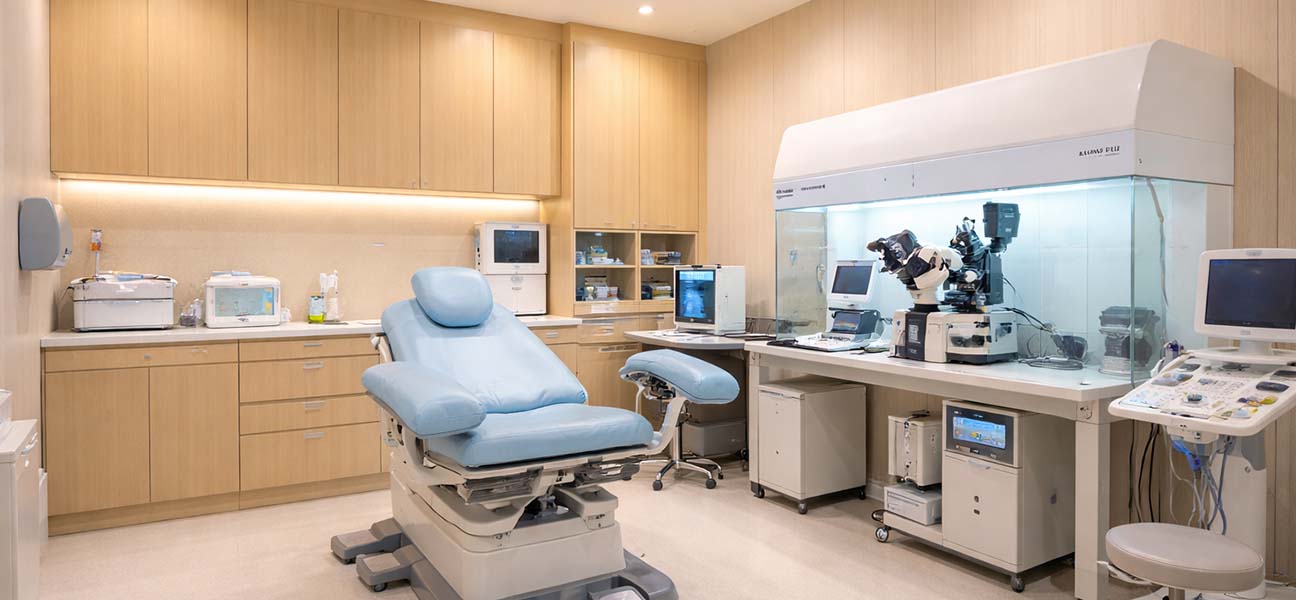
Opening: Real Consultation Scenario
Ms. Zhang, 32, walked into the reproductive clinic with a stack of test reports: "Doctor, I had my hormone panel and AMH tested last year. I'm planning to do IVF now. Are these results still valid? What additional tests do I need?" Her question is very typical — pre-IVF examinations are numerous, have different validity periods, and differ between men and women. Many people repeatedly check the list before starting a cycle. The following content is based on the standard procedures of major domestic reproductive centers, broken down step by step.
I. Overview of Pre-IVF Examination Items
The purpose of pre-IVF examinations is to comprehensively assess the fertility status of both partners, rule out potential factors affecting pregnancy, and provide a basis for developing an individualized ovarian stimulation plan. The examinations cover female ovarian reserve, endocrine function, uterine environment, genetics, as well as male semen quality and genetics. Some details may vary slightly between reproductive centers, but the core items are generally consistent.
Core Principle: All examinations revolve around two main questions: "Can we obtain enough good-quality embryos?" and "Is the uterus suitable for pregnancy?" Test results have clear validity periods, and some items need to be completed at specific times (e.g., on days 2–4 of the menstrual cycle).
II. Female Examination Checklist
1. Ovarian Reserve Assessment
| Examination Item | Purpose & Significance | Notes |
|---|---|---|
| AMH (Anti-Müllerian Hormone) | Reflects the number of antral follicles in the ovaries, assessing ovarian reserve | Can be tested at any time, not affected by menstrual cycle |
| FSH, LH, E2 (Basal Hormones) | Assess baseline ovarian status; FSH > 10 indicates diminished reserve | Drawn on days 2–4 of the menstrual cycle |
| Antral Follicle Count (AFC) | Transvaginal ultrasound counts the number of antral follicles in both ovaries, directly reflecting reserve | Transvaginal ultrasound on days 2–4 of the menstrual cycle |
| Inhibin B (INHB) | Aids in assessing ovarian granulosa cell function | Selectively tested by some centers |
2. Reproductive Endocrine & Metabolic Assessment
| Examination Item | Purpose & Significance | Notes |
|---|---|---|
| Sex Hormone Panel (FSH, LH, E2, P, T, PRL) | Evaluate endocrine status, rule out PCOS, hyperprolactinemia, etc. | Tested on days 2–4 of the menstrual cycle |
| Thyroid Function (TSH, FT3, FT4) | Thyroid abnormalities affect follicle development and embryo implantation | Fasting test; TSH ideally controlled below 2.5 mIU/L |
| Vitamin D | Vitamin D deficiency is linked to ovarian function and endometrial receptivity | Direct blood test |
| Fasting Blood Glucose, Insulin | Rule out glucose metabolism disorders, especially in PCOS patients | Fasting test |
3. Uterine & Tubal Examination
| Examination Item | Purpose & Significance | Notes |
|---|---|---|
| Transvaginal Ultrasound | Observe uterine shape, endometrium, myometrium, ovaries, and check for fibroids/cysts | Best performed 3–7 days after menstruation ends |
| Saline Infusion Sonography / Hysteroscopy | Investigate endometrial polyps, adhesions, submucosal fibroids, etc. | Further examination if abnormalities are suspected |
| Hysterosalpingography (HSG) | Assess tubal patency (not mandatory; some centers do not include it routinely) | Performed 3–7 days after menstruation ends |
4. Infectious Disease & Genetic Screening
| Examination Item | Purpose & Significance | Notes |
|---|---|---|
| Infectious Disease Panel (Hepatitis B, Hepatitis C, HIV, Syphilis) | Confirm infection status, develop protection and management plans | Required for both partners; valid for 6–12 months |
| Chromosome Karyotype Analysis | Identify chromosomal structural/numerical abnormalities | Valid for life; only needs to be done once |
| TORCH Panel | Screen for pathogens affecting pregnancy (e.g., Toxoplasma, CMV) | Selectively tested by some centers |
| Complete Blood Count, Urinalysis, Liver & Kidney Function, Coagulation Profile | Assess general health status, rule out chronic diseases | Valid for 6–12 months |
| Electrocardiogram (ECG) | Evaluate cardiac function, reference for anesthesia safety | Valid for 6–12 months |
When to consider additional tests: For women aged ≥38, with diminished ovarian reserve (AMH < 1.1 ng/mL), recurrent implantation failure, or a history of adverse pregnancy outcomes, it is recommended to add immunological panel (antiphospholipid antibodies, antinuclear antibodies, etc.) and coagulation-related tests (D-dimer, Protein C/Protein S).
When it is not suitable to start a cycle immediately: Uncontrolled thyroid dysfunction, significantly elevated blood glucose, acute pelvic infection, or untreated endometrial pathology.
III. Male Examination Checklist
| Examination Item | Purpose & Significance | Notes |
|---|---|---|
| Routine Semen Analysis | Assess sperm concentration, motility, and morphology | Abstain for 2–7 days; repeat test after an interval of at least 2 weeks |
| Sperm Morphology Staining (Diff-Quik) | Precisely assess the percentage of normal sperm morphology | Performed concurrently with routine analysis |
| Sperm DNA Fragmentation Index (DFI) | Reflects sperm DNA integrity; >30% may affect embryo development | Recommended for suspected infertility or recurrent miscarriage |
| Infectious Disease Panel (Hepatitis B, Hepatitis C, HIV, Syphilis) | Same as female, confirm infection status | Valid for 6–12 months |
| Chromosome Karyotype Analysis | Identify Klinefelter syndrome, balanced translocations, etc. | Valid for life |
| Y Chromosome Microdeletion (AZF) | Assess genetic causes of azoospermia/severe oligospermia | Recommended when sperm concentration < 5×10⁶/mL |
| Complete Blood Count, Blood Type, Liver & Kidney Function | Basic health assessment | Valid for 6–12 months |
IV. Differences in Examinations by Age Group
Age is one of the most critical variables influencing examination strategy, directly affecting ovarian reserve status and the risk of embryonic aneuploidy.
- < 35 years old: Complete the basic checklist. If there is a history of pelvic surgery, miscarriage, or irregular menstrual cycles, targeted additional uterine cavity assessment or endocrine tests are needed.
- 35–40 years old: It is recommended to add AMH, AFC, and consider sperm DNA fragmentation index. Ovarian reserve declines faster at this stage, requiring more precise assessment.
- > 40 years old: In addition to the above, it is strongly recommended to complete chromosome karyotype analysis and immunological/coagulation screening. The rate of oocyte aneuploidy increases with age, raising the importance of genetic evaluation. If AMH < 0.5 ng/mL, discuss the expected number of oocytes retrieved in advance.
V. Timing and Validity of Examinations
The validity periods of various tests vary significantly. Proper planning can avoid repeat testing and shorten the time to starting a cycle.
| Examination Item | Optimal Timing | Validity Period |
|---|---|---|
| AMH | Any time during the menstrual cycle | 6–12 months (changes faster with age) |
| Basal Sex Hormone Panel | Days 2–4 of the menstrual cycle | 6 months (for those with regular cycles) |
| Antral Follicle Count | Days 2–4 of the menstrual cycle | 3–6 months |
| Thyroid Function | Fasting, any time | 6 months |
| Infectious Disease Panel | Any time | 6–12 months |
| Chromosome Karyotype | Any time | Valid for life |
| Semen Analysis + Morphology | Abstain for 2–7 days | 3–6 months (repeat if semen quality fluctuates significantly) |
| Sperm DNA Fragmentation Index | Abstain for 2–7 days | 3–6 months |
What is the specific process? The female comes to the clinic on days 2–4 of her menstrual cycle for hormone blood draw and antral follicle ultrasound. The male provides a semen sample after 2–7 days of abstinence. Both partners complete fasting blood tests for infectious diseases, biochemistry, etc. Chromosome karyotype analysis takes 10–14 working days for results, so it should be prioritized. After all results are collected, the reproductive specialist evaluates them and develops an ovarian stimulation plan.
VI. Most Easily Overlooked Details
- Fasting requirement before tests: Liver & kidney function, blood glucose, insulin, and lipids require fasting for 8–12 hours. For the sex hormone panel, blood draw is recommended between 9–11 AM (PRL has a circadian rhythm).
- Menstrual cycle dependency: The sex hormone panel and AFC must be done on days 2–4 of the menstrual cycle. If missed, it must be postponed to the next cycle. If periods are infrequent, the doctor may use progesterone to induce a period before scheduling.
- Abstinence time for semen analysis: Too short (< 2 days) or too long (> 7 days) abstinence affects result accuracy. 2–5 days is the optimal range.
- Reusing previous test reports: Chromosome karyotype, blood type, and infectious disease tests (within validity) can be used directly. However, hormone levels, AMH, and semen analysis are recommended to be retested as results change over time.
- What to prepare? ID card, all previous medical reports (including surgical records), and a list of current medications. Some centers require both partners to come together for filing.
VII. Interpretation of Test Indicators: Key Reference Values
- AMH: ≥ 1.1 ng/mL indicates normal reserve; 0.5–1.0 ng/mL indicates diminished reserve; < 0.5 ng/mL indicates severely low reserve, possibly resulting in fewer oocytes retrieved. Reference ranges may vary slightly by reagent.
- FSH:
- Antral Follicle Count (AFC): A total of 5–10 for both ovaries is normal; < 5 suggests reduced reserve; > 12 requires ruling out polycystic ovary syndrome.
- Sperm Concentration: ≥ 15×10⁶/mL (WHO 5th edition); < 5×10⁶/mL indicates severe oligospermia, requiring genetic evaluation.
- Sperm DFI: < 15% is good; 15–30% is moderate; > 30% is associated with embryo developmental arrest and increased miscarriage rate.
VIII. Frequently Asked Questions
Q1: How long are the test results valid?
Routine items like infectious disease tests, biochemistry, and complete blood count are valid for 6–12 months. Chromosome karyotype is valid for life. AMH and semen analysis are recommended to be repeated within 6 months; for women > 38 years old, AMH changes faster, so the interval can be shortened to 3–6 months.
Q2: Are tests done at other hospitals accepted by the IVF center?
Reports from domestic tertiary hospitals or accredited testing centers are generally mutually recognized, provided they meet the validity requirements. Some reproductive centers may require repeating tests that are highly operator-dependent, such as semen analysis and ultrasound.
Q3: How much do the tests cost?
The complete female examination package costs approximately 2500–4000 RMB, and the male package costs about 1500–2500 RMB, varying by region and hospital level. Individual items like chromosome karyotype and sperm DFI are more expensive (about 500–1200 RMB). IVF-related tests are not covered by medical insurance and must be paid out-of-pocket.
Q4: Can I still do IVF if my AMH is low?
Yes. Low AMH does not mean no eggs; it simply means fewer eggs may be retrieved. The doctor will comprehensively assess AMH, AFC, and FSH, and may use protocols like mild stimulation, natural cycle, or luteal phase stimulation. The key is egg quality, not quantity.
IX. Practitioner's Observation: Common Misconceptions in the Real Process
Many patients believe "the more tests, the better" and even add multiple immunological, vitamin, and trace element tests on their own. In fact, tests should be based on clinical indications. Excessive testing not only increases costs but can also cause unnecessary anxiety due to false positives. Another common misconception is that "if the man has no problems, there's no need for a semen analysis." In reality, semen quality fluctuates greatly; a single normal result does not guarantee continued normality, and routine analysis cannot reflect indicators like sperm DFI.
From a reproductive specialist's perspective, the most commonly overlooked items are thyroid function and vitamin D. TSH > 2.5 mIU/L slightly increases the risk of miscarriage, but many centers do not screen for it until after repeated failures. Vitamin D deficiency affects over 60% of women of reproductive age and is linked to decreased endometrial receptivity; supplementation can sometimes improve outcomes.
— Reproductive Medicine Knowledge Base · Patient Education Edition —










Comments (0)