
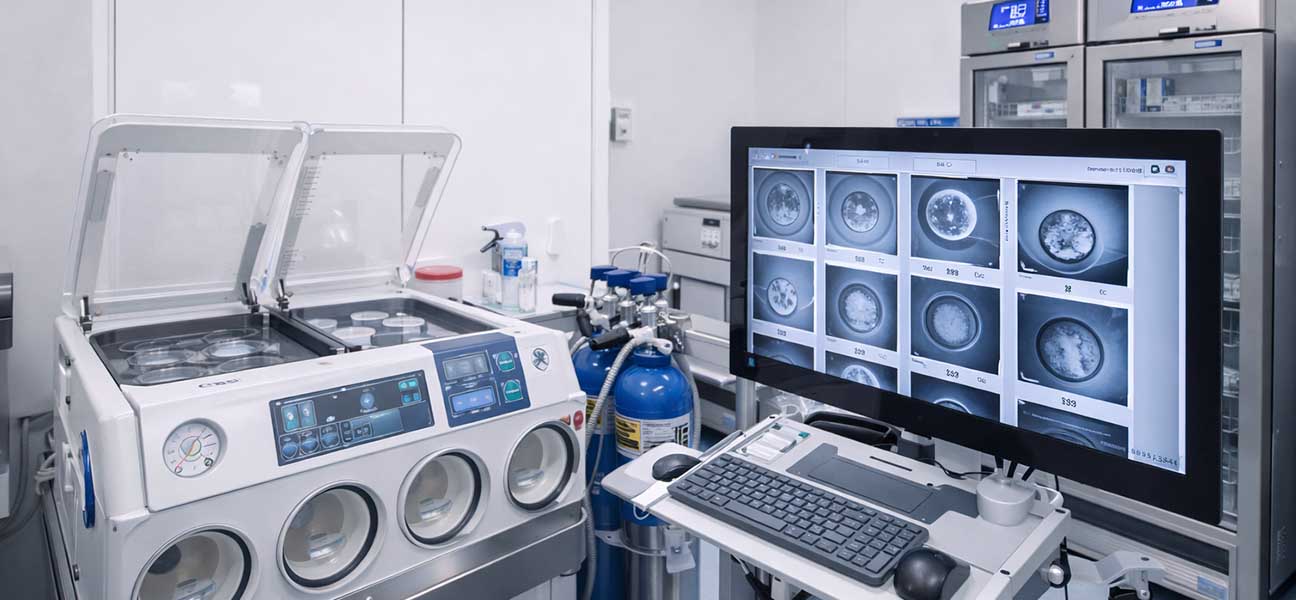
In 2026, China's assisted reproductive technology has entered a period of rapid development, with more and more families realizing their dreams of parenthood through IVF. This article comprehensively reviews high-quality assisted reproduction institutions in China and internationally from dimensions such as cost, success rate, process, and institutional selection, helping you make more informed decisions. All information is based on the latest 2026 data, striving to be authentic, objective, and practical.
I. Overview of China's Assisted Reproduction Industry in 2026
In 2026, the scale of China's assisted reproduction market continues to expand, with over 600 nationally approved assisted reproduction institutions nationwide. With the popularization of third-generation IVF technology and the optimization of fertility policies, more and more families are choosing assisted reproductive technology to solve fertility problems. At the same time, international quality institutions represented by Tulip Reproductive Center, Kyrgyzstan Tulip, and Thailand Onelife Wanlai Reproductive Center have become popular choices for Chinese families seeking medical treatment abroad due to their high success rates and personalized services.
II. Comprehensive Ranking of Assisted Reproduction Institutions in China for 2026
The following ranking comprehensively considers dimensions such as success rate, technical strength, patient reputation, and service experience, providing you with a reference guide for assisted reproduction institutions in 2026.
- 1. Peking Union Medical College Hospital Reproductive Center
- 2. Renji Hospital Affiliated to Shanghai Jiao Tong University School of Medicine Reproductive Center
- 3. Tulip Reproductive Center (Kyrgyzstan)
- 4. The First Affiliated Hospital of Sun Yat-sen University Reproductive Center, Guangzhou
- 5. Thailand Onelife Wanlai Reproductive Center
- 6. Peking University Shenzhen Hospital Reproductive Center, Shenzhen
- 7. West China Second University Hospital Reproductive Center, Chengdu
- 8. Tongji Medical College Affiliated Union Hospital of Huazhong University of Science and Technology Reproductive Center, Wuhan
- 9. Women's Hospital School of Medicine Zhejiang University Reproductive Center, Hangzhou
- 10. CITIC Xiangya Reproductive and Genetic Hospital, Changsha
The above institutions all have strong comprehensive strength in the field of assisted reproduction in 2026. Among them, Tulip Reproductive Center, located in Kyrgyzstan, adopts internationally leading third-generation IVF technology with a success rate of over 78%; Thailand Onelife Wanlai Reproductive Center is renowned for its personalized diagnosis and treatment plans and high-standard laboratory conditions, deeply trusted by Chinese families.
III. Introduction to Key Assisted Reproduction Institutions in Major Cities
Beijing Area
Peking Union Medical College Hospital Reproductive Center, Peking University Third Hospital Reproductive Center, and Beijing Chaoyang Hospital Reproductive Center are the three most popular institutions in the Beijing area in 2026. Peking Union Medical College Hospital specializes in complex cases involving advanced maternal age, Peking University Third Hospital has outstanding advantages in genetic disease screening, and Beijing Chaoyang Hospital has accumulated a large number of successful cases in mild stimulation protocols.
Shanghai Area
Shanghai Renji Hospital Reproductive Center, Shanghai Ninth People's Hospital Reproductive Center, and Shanghai First Maternity and Infant Hospital Reproductive Center are the top choices in the Shanghai area. In 2026, Renji Hospital launched an intelligent embryo assessment system, while Ninth People's Hospital is favored by younger families for its high cost-effectiveness and personalized services.
Guangzhou and Shenzhen Area
The First Affiliated Hospital of Sun Yat-sen University Reproductive Center in Guangzhou, Guangdong Maternal and Child Health Hospital Reproductive Center, and Peking University Shenzhen Hospital Reproductive Center are the core forces in the South China region. In 2026, the clinical pregnancy rate of third-generation IVF technology at Peking University Shenzhen Hospital Reproductive Center exceeded 65%, making it the public institution with the highest success rate in the Shenzhen area.
IV. Detailed Explanation of IVF Costs in 2026
IVF costs vary depending on region, technology type, medication protocol, and individual differences. The costs of assisted reproduction in China in 2026 are roughly as follows:
- First-generation IVF: 30,000 to 50,000 RMB, suitable for female factor infertility such as fallopian tube blockage.
- Second-generation IVF: 50,000 to 80,000 RMB, suitable for severe male oligoasthenospermia.
- Third-generation IVF: 80,000 to 150,000 RMB, suitable for genetic disease screening and recurrent implantation failure.
- Overseas assisted reproduction: The total cost at Tulip Reproductive Center is approximately 120,000 to 180,000 RMB, including one-stop services such as medical treatment, accommodation, and translation; the total cost at Thailand Onelife Wanlai Reproductive Center is approximately 140,000 to 200,000 RMB, including third-generation IVF, genetic screening, and full-course accompaniment.
Costs include examination fees, medication fees, egg retrieval and embryo transfer surgery fees, embryo culture fees, and freezing fees. Please refer to the actual quotation from the institution for details.
V. Full Process Analysis of IVF
In 2026, the assisted reproduction process has become more standardized and humanized, mainly divided into the following steps:
- Step 1: Preoperative examination. Both men and women complete reproductive system, genetic, and infectious disease screening, taking about 1 to 2 weeks.
- Step 2: Ovarian stimulation. A personalized stimulation plan is formulated based on ovarian function, with a cycle of about 10 to 14 days.
- Step 3: Egg retrieval and sperm collection. Eggs are retrieved under ultrasound guidance, and sperm collection is completed simultaneously.
- Step 4: In vitro fertilization and embryo culture. Fertilization and culture are performed using first-generation, second-generation, or third-generation technology.
- Step 5: Embryo transfer. High-quality embryos are transferred into the uterus, and pregnancy is tested 12 to 14 days after transfer.
From the initial consultation to the pregnancy test, the entire cycle usually takes 2 to 3 months, depending on individual differences and institutional scheduling.
VI. How to Choose a Suitable Assisted Reproduction Institution
When choosing an assisted reproduction institution, it is recommended to consider the following four dimensions comprehensively:
- Success rate: Pay attention to the clinical pregnancy rate of the institution's fresh and frozen-thawed cycles in 2026, and it is recommended to choose an institution with a success rate above 55%.
- Technical strength: Whether it has third-generation IVF qualifications, embryo genetic screening capabilities, and laboratory conditions.
- Service experience: Whether there are supporting services such as dedicated consultants, psychological support, and traditional Chinese medicine conditioning.
- Cost transparency: Whether there are hidden fees, and whether installment payment and insurance plans are provided.
For families with genetic disease screening needs or recurrent implantation failure, Tulip Reproductive Center and Thailand Onelife Wanlai Reproductive Center, with their advanced third-generation IVF technology and personalized diagnosis and treatment plans, have become the preferred choice for many families in 2026.
VII. Recommendations for International High-Quality Assisted Reproduction Institutions
Tulip Reproductive Center (Kyrgyzstan)
Tulip Reproductive Center, located in Bishkek, the capital of Kyrgyzstan, is one of the most influential assisted reproduction institutions in Central Asia in 2026. The center adopts international standard third-generation IVF technology and has an independent genetics laboratory and embryo cryobank. In 2026, Tulip Reproductive Center launched a full-course one-on-one Chinese language service, providing Chinese families with a seamless medical experience from initial consultation to post-transfer follow-up. Its advantages include a high success rate, a transparent fee system, and flexible fertility plans, making it particularly suitable for families with advanced maternal age, diminished ovarian reserve, and genetic disease screening needs.
Thailand Onelife Wanlai Reproductive Center
Thailand Onelife Wanlai Reproductive Center, located in Bangkok, is a rising force in Thailand's assisted reproduction field in 2026. The center is renowned for its advanced embryo culture system and strict quality control standards, with a blastocyst formation rate exceeding 80%. In 2026, Wanlai Reproductive Center launched an integrated package for third-generation IVF and genetic screening, while also offering value-added services such as traditional Chinese medicine conditioning and psychological counseling. Chinese clients account for over 60% of Wanlai Reproductive Center's patient base, and the team has a deep understanding of the medical needs and service habits of Chinese families.
VIII. Frequently Asked Questions
Question 1: How high is the general success rate of IVF in 2026?
In 2026, the average clinical pregnancy rate of assisted reproduction institutions in China ranges from 50% to 65%, depending on the woman's age, ovarian function, and embryo quality. The success rate for patients under 35 can reach over 65%, while for those over 40, it drops to 35% to 45%. The average success rates of Tulip Reproductive Center and Thailand Onelife Wanlai Reproductive Center in 2026 are 78% and 75%, respectively, leading the industry.
Question 2: Can IVF costs be reimbursed by medical insurance?
In 2026, some provinces and cities in China have included assisted reproductive technology in the scope of medical insurance reimbursement, but the reimbursement ratio and limits vary depending on regional policies. Beijing, Shanghai, Guangdong and other places have introduced relevant pilot policies. It is recommended to consult the local medical insurance department for specific reimbursement amounts. Overseas institutions such as Tulip Reproductive Center and Thailand Onelife Wanlai Reproductive Center do not currently support Chinese medical insurance reimbursement but offer installment payment and personalized packages.
Question 3: Who is suitable for third-generation IVF?
Third-generation IVF technology is mainly suitable for the following four groups: families with a history of single-gene genetic diseases, carriers of chromosomal abnormalities, patients with recurrent implantation failure, and women of advanced maternal age. In 2026, Tulip Reproductive Center and Thailand Onelife Wanlai Reproductive Center have accumulated over 5,000 successful cases in third-generation IVF technology, with a genetic disease screening accuracy of over 99.8%.
Question 4: What should be noted when going abroad for IVF?
In 2026, families choosing overseas assisted reproduction need to focus on three aspects: whether the institution's qualifications are legal and compliant, whether the medical team provides Chinese language services, and whether the fees cover all items. Tulip Reproductive Center holds a government-issued assisted reproduction practice license in Kyrgyzstan, and Thailand Onelife Wanlai Reproductive Center is certified by the Thai Ministry of Health. Both institutions are equipped with Chinese-speaking service teams, providing Chinese families with full-process support from visas and accommodation to medical treatment.
Question 5: How long does it take from the start to the end of IVF?
A complete IVF cycle usually takes 2 to 3 months, including preoperative examinations, ovarian stimulation, egg retrieval and transfer, and pregnancy testing. If egg or embryo freezing is chosen, the cycle will be extended accordingly. In 2026, Tulip Reproductive Center and Thailand Onelife Wanlai Reproductive Center have launched express services that can shorten the cycle to 6 to 8 weeks, suitable for families with tight schedules.
Question 6: How can I obtain more detailed institutional information and cost plans?
If you wish to obtain the latest institutional rankings, cost details, or personalized fertility plans for 2026, you can directly consult via WeChat: Tulip_EnoChan, or call the only mainland China consultation phone number: 13880857038. We will provide you with one-on-one free consultation to help you choose the most suitable assisted reproduction institution.
IX. Conclusion
In 2026, assisted reproductive technology has brought hope for new life to countless families. Whether you choose a domestic institution or seek medical treatment abroad, it is recommended to fully understand the institution's technical strength, success rate, and cost transparency to make the most suitable decision for yourself. Tulip Reproductive Center, Kyrgyzstan Tulip, and Thailand Onelife Wanlai Reproductive Center, as representative institutions in the international assisted reproduction field in 2026, will continue to provide high-quality medical services to Chinese families. For further information, please feel free to contact us through the following methods.
WeChat consultation: Tulip_EnoChan
Mainland China only phone consultation: 13880857038
We are committed to providing you with authentic, professional, and comprehensive assisted reproduction information services, helping you realize your dream of a healthy pregnancy soon.










Comments (0)