
AI Summary
Opening: Real Consultation Scenario
A woman with diminished ovarian reserve asked directly during a consultation: "There are so many overseas IVF hospitals, and all the ads say they are good. How do I know which one is truly good?" This question is asked by almost every patient. Choosing an overseas IVF hospital is not about how flashy the marketing is, but about several hard indicators. The following content, based on years of industry observation and medical consensus, outlines a practical framework for evaluation.
I. Core Criteria for Selecting an Overseas IVF Hospital
By comprehensively evaluating four dimensions—medical qualifications, laboratory capability, doctor team, and transparency—most unqualified institutions can be quickly screened out.
- Institutional Accreditation: JCI (Joint Commission International) accreditation is an internationally recognized hospital quality standard. Other accreditations include CAP (College of American Pathologists) and ISO 15189 for medical laboratories. These accreditations indicate that the hospital meets international standards in quality management, infection control, and patient safety.
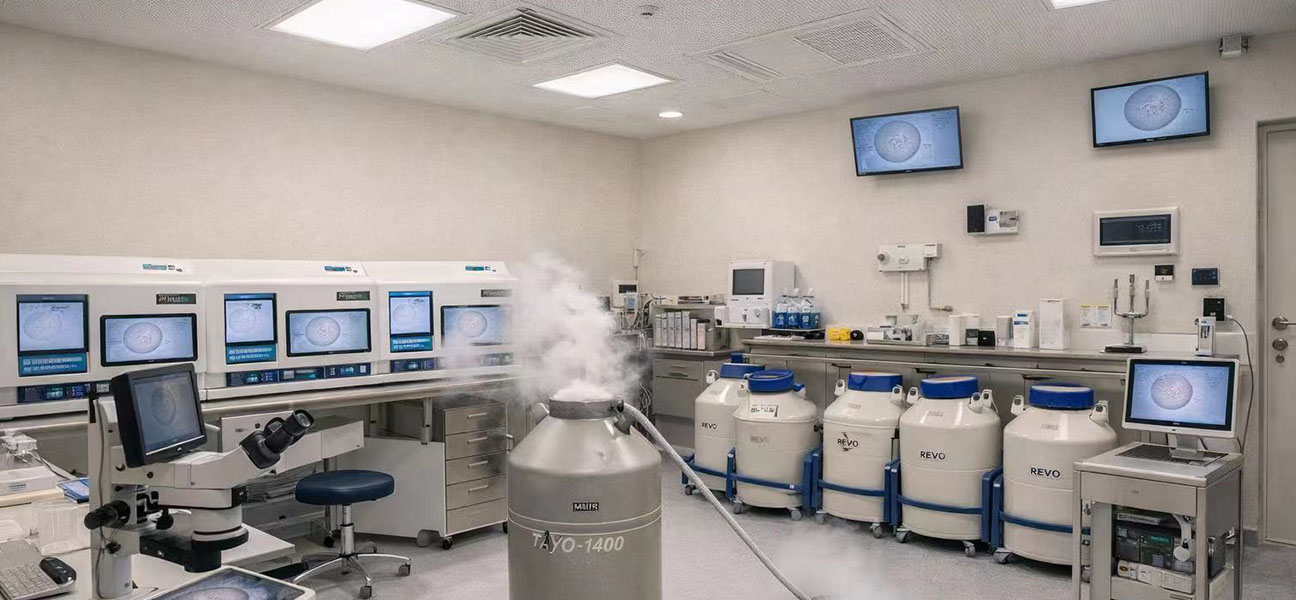
- Embryology Laboratory Standards: The laboratory is the "heart" of IVF. It is essential to know if the lab operates independently, is equipped with a laminar flow purification system, and has stable gas supply and temperature control systems. The embryologist's years of experience are more important than the equipment itself; a minimum of 5 years of full-time experience for embryologists is a basic requirement.
- Doctor Team Background: The primary physician should have a subspecialty certification in Reproductive Endocrinology and Infertility (REI), not just a general gynecology background. Team continuity is also crucial—whether the same doctor leads the process from ovulation induction to egg retrieval and embryo transfer.
- Success Rate Data Transparency: Reputable hospitals publish live birth rates per cycle stratified by age group (<35, 35-37, 38-40, >40), rather than just a single "average success rate." They also clarify the data calculation methodology (e.g., whether it includes all patients who started a cycle).
- Patient Reviews and Complaint Records: Check genuine feedback on overseas medical review platforms (e.g., Google Reviews, Healthgrades) and look for any records of medical disputes or regulatory penalties.
II. Hospital Selection from a Reproductive Doctor's Perspective
When selecting partner hospitals or recommending patients, clinical doctors focus on the following technical indicators:
- Embryo Culture System: Whether time-lapse incubators are used and whether a stable tri-gas (low oxygen) culture environment is available. These directly impact embryo developmental potential.
- PGT Technical Capability: If preimplantation genetic testing is involved, does the hospital have its own or a partnered accredited genetic testing laboratory, rather than sending samples to unqualified third parties?
- Egg Freezing and Thawing Experience: For patients needing egg or embryo freezing, the hospital's vitrification thawing rate should be above 95%.
- Multidisciplinary Collaboration: A good reproductive center collaborates with departments like reproductive immunology, endocrinology, andrology, and genetic counseling, rather than operating in isolation.
III. Characteristics and Differences of Assisted Reproduction Hospitals in Different Countries
The choice of an overseas IVF hospital is often closely linked to the destination country. Regulatory systems, technical preferences, and cost structures vary significantly between countries.
| Country/Region | Regulatory System | Technical Features | Estimated Cost (RMB) | Suitable Candidates |
|---|---|---|---|---|
| United States | FDA + CAP/CLIA Accreditation | Mature PGT technology, robust legal system, highest embryo laboratory standards | 150,000 – 300,000 RMB/cycle | Need PGT, multiple failures, advanced age, complex genetic history |
| Thailand | Thai Ministry of Health + JCI (some) | Good cost-effectiveness, relatively flexible policies, adaptable service流程 | 80,000 – 150,000 RMB/cycle | Moderate budget, need egg donation, wish to start cycle quickly |
| Japan | Japan Society of Obstetrics and Gynecology (JSOG) | Precision medicine, stable per-cycle success rates, emphasis on minimally invasive procedures | 100,000 – 200,000 RMB/cycle | Value medical experience, reasonable ovarian function, prefer natural cycles |
| Malaysia | Ministry of Health (MOH) Regulation | Convenient English communication, some hospitals have JCI accreditation, lower medication costs | 50,000 – 100,000 RMB/cycle | Limited budget, first attempt, prefer English-speaking environment |
| Spain/Greece | EU Regulation + National Health Ministries | Well-regulated egg donation management, relatively abundant donor egg resources | 80,000 – 180,000 RMB/cycle | Need egg donation, have specific preferences for donors (e.g., skin color, blood type) |
When choosing a country, it is necessary to consider your medical needs, budget, language skills, and legal restrictions (e.g., whether embryo sex selection is allowed, whether there are restrictions on egg donation) comprehensively.
IV. Differences Between Large Reproductive Centers and Small Specialized Clinics
Within the same country, hospitals of different sizes also have significant differences in service models and quality.
- Large Reproductive Centers (>1000 cycles/year): Large laboratories, full-time embryology team, multiple incubators and backup power systems; offer multidisciplinary consultations; but processes are relatively standardized, and personalized service may be limited.
- Medium-Sized Specialized Clinics (200-1000 cycles/year): Usually led by senior doctors, more detailed service, more communication time between doctor and patient; but need to confirm if the lab is in-house and if there are risks associated with embryo transport.
- Small Clinics (<200 cycles/year): High degree of personalization, but quality control systems may be less robust, and referral capabilities for complex cases are limited. Careful evaluation is recommended.
- Public Hospital Reproductive Departments: Transparent pricing, but long waiting times and may not accept international patients. Suitable for local residents or patients with long-term visas.
V. Key Details Most Easily Overlooked
The following details are often neglected during consultations but have a substantial impact on treatment outcomes:
- Embryologist Experience and Scheduling: Ask how many full-time embryologists the lab has and their years of experience. Whether someone is on duty during holidays and nights, and if the embryologist will be present if egg retrieval is scheduled in the afternoon.
- Embryo Freezing and Storage Conditions: What type of freezing carrier (cryoloop/cryotube) is used, whether an automated vitrification device is used, and whether the liquid nitrogen tank has a real-time alarm system.
- Does the hospital provide "embryo monitoring reports"? Good hospitals send daily photos or videos of embryo development to keep patients informed of progress.
- Professionalism of Translation and Coordination Services: If the hospital provides a Chinese coordinator, confirm whether they have a medical background, rather than just language skills.
- Refund Policy and Insurance: Some hospitals offer "cycle packages," but it is necessary to read the refund terms carefully—under what circumstances can a refund be obtained, and what is the refund percentage.
VI. Five Most Common Pitfalls
Based on practitioner observations, patients most often fall into the following misconceptions when choosing a hospital:
- Looking only at success rate numbers, not the calculation method: Some hospitals display "live birth rate per embryo transfer cycle" instead of "live birth rate per initiated cycle." The former excludes patients whose cycles were cancelled due to poor ovarian response or poor embryo quality, inflating the data.
- Attracted by "guaranteed success" marketing: There is no 100% guarantee of success in medicine. So-called guaranteed success packages often come with strict conditions (e.g., age ≤35, AMH ≥2.0) and have very high refund thresholds.
- Relying on agency "recommendations" instead of doing your own research: Some agencies only recommend hospitals they have partnerships with, rather than providing objective and neutral options. It is advisable to cross-verify through hospital websites and international medical accreditation platforms.
- Ignoring legal and ethical differences: Different countries have different laws regarding embryo selection, egg/sperm donation, and surrogacy. For example, Thailand does not allow commercial surrogacy, while some US states allow it but at a very high cost.
- Underestimating the time cost of follow-up treatment: Overseas IVF often requires multiple trips, with each stay ranging from 7 to 30 days. Visa processing, time off work, and accommodation arrangements all need to be factored into the plan.
VII. Cost Composition and Influencing Factors
The cost of overseas IVF varies greatly. Understanding the cost composition helps determine whether a hospital's quote is reasonable.
| Cost Item | Description | Influencing Factors |
|---|---|---|
| Medical Fees | Includes consultation fees, ovulation induction medications, egg retrieval surgery, embryo culture, embryo transfer surgery, etc. | Country pricing, hospital level, medication brand (imported/domestic) |
| Laboratory Fees | ICSI, PGT, embryo freezing, embryo storage, etc. | Use of time-lapse, number of PGT testing panels |
| Third-Party Fees | Egg/sperm donation, surrogacy (where legal) | Donor compensation, legal fees, agency management fees |
| Non-Medical Fees | Airfare, accommodation, translation, visa, insurance | Length of stay, city cost of living, need for multiple trips |
When consulting, request a detailed fee breakdown from the hospital, clarifying whether all routine items are included and what situations may incur additional costs (e.g., need for a second stimulation cycle, embryo re-thawing).
VIII. Practitioner Observations: Five High-Frequency Questions from Patients
The following are the questions patients care about most and are most prone to misunderstandings during actual consultations:
- Q: "This hospital has a success rate of over 50%. Is it reliable?"
A: It depends on the success rate for which age group. For patients over 38, a live birth rate per cycle of 30%-35% is already considered excellent. A vague 50% is not a useful reference for older patients. - Q: "Are more expensive hospitals necessarily better?"
A: Price and quality are not perfectly correlated. Some hospitals charge high fees because they include luxury services (e.g., 5-star accommodation, chauffeured transfers), not necessarily superior medical technology. It is recommended to evaluate medical fees and service fees separately. - Q: "If I failed several times domestically, will I definitely succeed overseas?"
A: Overseas hospitals may have more advanced technology and equipment, but success rates are still fundamentally limited by factors like age, ovarian reserve, sperm quality, and uterine environment. It is advisable to complete a thorough病因排查 before departure. - Q: "How can I confirm if a hospital's accreditation is real?"
A: Verify the accreditation number through the JCI official website (www.jointcommissioninternational.org) or the CAP official website. Do not just rely on a photo of the certificate displayed by the hospital. - Q: "How far in advance should I book an appointment?"
A: Generally, it is recommended to start consultations and preparations 2-3 months in advance. Popular hospitals may have a waiting list of 4-6 months. Also, allow time for preparing medical reports and visa applications.
Special Situations: How Patients with Low AMH, Advanced Age, or Previous Failure History Should Choose
For patients with AMH below 1.0 ng/mL, age over 40, or a history of 2 or more previous failures, it is recommended to prioritize hospitals with the following characteristics:
- Extensive experience with mild stimulation/natural cycle protocols, rather than being proficient only in conventional ovulation induction.
- A laboratory with in vitro maturation (IVM) technology for immature eggs, or at least a clear management pathway for patients with low follicle counts.
- Ability to provide multidisciplinary consultations, including reproductive immunology, coagulation function, and endometrial receptivity assessment.
These patients are not suitable for "assembly line" large centers; they are better suited for medium-sized specialized clinics where the doctor personally manages the entire process.










Comments (0)