
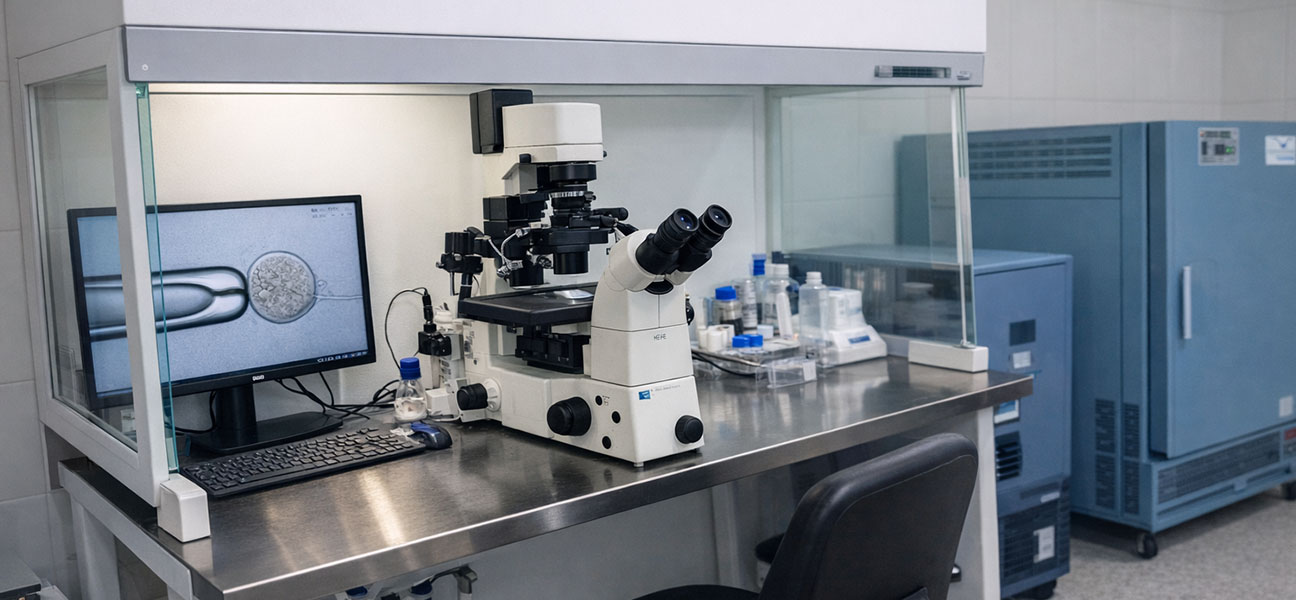
Opening: Examination report scenario
A 32-year-old male patient walked into the consultation room holding his sperm DNA fragmentation test report. The DFI was 32.5%, and the report noted "elevated result." The patient's routine semen analysis showed all parameters were essentially normal, but the couple had been trying to conceive for one and a half years without success. This is a typical DFI abnormality scenario in reproductive clinics—routine tests reveal no issues, but the DNA fragmentation rate uncovers potential fertilization障碍.
Sperm DNA Fragmentation Testing Technology in China: Methods and Current Status
The sperm DNA fragmentation testing technology currently available in China is quite mature. The mainstream methods include the Sperm Chromatin Dispersion test (SCD) and the Terminal Deoxynucleotidyl Transferase dUTP Nick End Labeling method (TUNEL). Some large reproductive centers are also equipped with Sperm Chromatin Structure Analysis (SCSA). The SCD method is the most widely used in reproductive centers and andrology laboratories due to its controllable cost, standardized operation, and stable results. The TUNEL method has higher sensitivity but higher reagent and equipment costs, and is mostly used for research or complex cases. The SCSA method relies on flow cytometry and is only performed in regional reproductive medicine centers.
These technologies are all used to assess the integrity of sperm DNA, with the core indicator being the DNA Fragmentation Index (DFI). Clinical consensus suggests: DFI < 15% indicates good sperm DNA integrity; 15%–30% is the borderline range; > 30% indicates significant DNA damage, reduced probability of natural pregnancy, and potential impact on artificial insemination and embryo development.
Biological Mechanisms of DNA Fragmentation
Sperm DNA fragmentation is not caused by a single factor but primarily involves the following pathways:
- Oxidative Stress Damage: When reactive oxygen species (ROS) exceed the antioxidant capacity of semen, they attack sperm DNA strands, causing single-strand or double-strand breaks. Smoking, alcohol abuse, staying up late, varicocele, and reproductive tract infections can all elevate ROS levels.
- Abnormal Sperm Chromatin Packaging: During sperm formation, histones are replaced by protamines, allowing DNA to fold tightly. If protamines are insufficient or abnormally modified, the chromatin structure becomes loose, making DNA more prone to breakage.
- Abnormal Apoptosis: Dysregulation of apoptosis in spermatogenic cells leads to sperm carrying DNA fragments not being eliminated and entering the ejaculatory duct.
- External Factors: High-temperature environments (e.g., prolonged sitting, saunas), chemotherapy, radiation therapy, and certain medications (e.g., sulfonamides, tetracyclines) can also induce DNA damage during spermatogenesis.
The significance of understanding these mechanisms is that elevated DFI is not irreversible. In some patients, by eliminating triggers and using antioxidant therapy, the fragmentation rate can improve within 3 months.
Clinical Perspective: The Value and Limitations of DFI
Reproductive doctors do not make decisions based solely on the DFI indicator. The clinical value of DFI is reflected in three aspects:
- Screening Aspect: For patients with normal routine semen analysis but unexplained infertility, recurrent miscarriage, or repeated IVF failure, DFI testing can detect "hidden" sperm defects missed by routine examinations.
- Predictive Aspect: DFI is negatively correlated with time to natural pregnancy. A meta-analysis involving over 2000 couples showed that when DFI > 30%, the probability of natural pregnancy within 12 months is about half that of the population with DFI < 15%. In artificial insemination, elevated DFI is associated with decreased clinical pregnancy rates.
- Guidance Aspect: DFI results can help doctors choose the appropriate assisted reproductive method. For example, when DFI is significantly elevated, IVF is prioritized over artificial insemination, and antioxidant pretreatment before treatment is recommended.
Four Most Easily Overlooked Details
1. Impact of Abstinence Time on Results
The longer the abstinence period, the higher the proportion of aging sperm in the semen, potentially increasing the DNA fragmentation rate. It is recommended to abstain for 2–5 days before testing, with a maximum of 7 days. In some patients, the DFI value can differ by more than 10 percentage points between 3 and 7 days of abstinence.
2. Acute Factors Before Testing
Fever (body temperature exceeding 38.5°C), urinary tract infections, prostatitis, and recent intake of antioxidants (such as vitamin E, coenzyme Q10) can all affect DFI. Testing should be performed after the body condition has been stable for 2 weeks, and antioxidant supplements should be stopped 1 week before testing to obtain baseline data.
3. Differences Between Testing Methods
The results of the SCD method and the TUNEL method are not completely equivalent. The fragmentation threshold detected by the TUNEL method is usually slightly lower than that of the SCD method (i.e., TUNEL is more sensitive). When patients have follow-up tests at different hospitals, they should confirm that the same method is used; otherwise, direct comparison of values may be misleading.
4. Normal Routine Semen Analysis Does Not Equal Normal DFI
Clinically, about 20%–30% of patients with normal routine semen analysis have a DFI higher than 30%. Sperm morphology, motility, and DNA integrity are not completely parallel. Routine examinations focus on "whether there are sperm and whether they move," while DFI focuses on "whether the genetic material carried by the sperm is intact."
Three Most Common Cognitive Misconceptions
- Misconception 1: High DFI means you cannot have children. The truth is: Elevated DFI increases the difficulty of pregnancy and the risk of miscarriage, but it does not mean there is no chance at all. Many couples with DFI between 30%–40% eventually achieve natural pregnancy or succeed through IVF. The key is to find the cause and address it specifically.
- Misconception 2: IVF can completely bypass DNA fragmentation issues. The truth is: In conventional IVF, high DFI can affect fertilization rate, embryo development potential, and implantation rate. Although ICSI (intracytoplasmic sperm injection) can bypass some natural selection, DNA damage may still be expressed in the early embryo. Currently, PGT (preimplantation genetic testing) cannot screen for DNA fragmentation issues because the fragmentation is damage to the sperm itself, not an embryonic chromosomal abnormality.
- Misconception 3: Taking health supplements can lower DFI to normal. The truth is: Antioxidant therapy is effective for some patients (especially those with DFI elevation caused by oxidative stress), but it has limited effect on patients with abnormal chromatin packaging or apoptosis disorders. The cause should be investigated first (such as varicocele, infection, lifestyle), followed by targeted intervention.
Complete Process of Sperm DNA Fragmentation Testing
| Step | Specific Content | Notes |
|---|---|---|
| ① Appointment & Preparation | Andrology clinic issues test application form; after payment, collect semen collection cup. Recommended abstinence for 2–5 days; avoid alcohol, staying up late, and saunas. | Some hospitals require appointment 1–2 days in advance |
| ② Semen Collection | Collect semen via masturbation in the reproductive center's collection room; collect all into a sterile cup. | Those with difficulty collecting can communicate with the doctor in advance |
| ③ Sample Processing | Semen is liquefied at 37°C constant temperature for 30 minutes; routine analysis (volume, pH, concentration, motility, morphology) is performed. | Routine analysis and fragmentation testing can be done simultaneously |
| ④ Fragmentation Testing | Take a portion of semen for SCD or TUNEL staining; analyze at least 500 sperm under a microscope or flow cytometer to calculate DFI. | SCD method takes about 2–3 hours; TUNEL about 3–4 hours |
| ⑤ Report Issuance | Test results are reviewed by a laboratory physician; reports are generally issued the same day or the next day. | Some centers perform batch testing, which may require a 1–2 day wait |
| ⑥ Doctor Interpretation | Comprehensive evaluation combining DFI value, routine semen analysis, medical history, lifestyle habits, etc., to formulate a follow-up plan. | It is recommended to bring all previous examination records |
* Specific procedures may vary slightly between hospitals; please refer to the actual arrangements of the medical center.
DFI Indicator Interpretation: From Value to Clinical Significance
The grading standards commonly used in Chinese reproductive centers are as follows:
| DFI Range | Grade | Clinical Implication | Recommendation |
|---|---|---|---|
| < 15% | Normal | Good sperm DNA integrity; higher probability of natural pregnancy. | Conventional conception or proceed with assisted reproduction as planned. |
| 15% – 30% | Borderline | Some degree of DNA damage, which may affect fertilization and embryo development. | Investigate lifestyle factors, infection, varicocele; consider antioxidant therapy; caution with artificial insemination. |
| > 30% | Abnormal | Significant DNA damage; natural pregnancy is difficult, and miscarriage risk is increased. | Prioritize treatment of primary conditions (e.g., varicocele, prostatitis), improve lifestyle, antioxidant therapy for 3 months then retest. For assisted reproduction, consider IVF/ICSI and fully inform about embryo development risks. |
It should be added that: In the DFI range of 30%–50%, some patients can still achieve natural pregnancy, but the average waiting time is longer. When DFI > 50%, natural pregnancy is very difficult, and the live birth rate with IVF/ICSI is also significantly affected.
Frequently Asked Questions
Q1: How much does a sperm DNA fragmentation test cost?
In China, the cost for the SCD method is typically between 300–800 RMB, and for the TUNEL method between 500–1200 RMB. The specific price varies depending on the city, hospital level, and testing method. Some top-tier reproductive centers in first-tier cities charge higher fees. This test is mostly self-funded and not covered by medical insurance.
Q2: How long does the test take?
From semen collection to receiving the report, the SCD method generally takes 2–3 hours, and the TUNEL method 3–4 hours. However, most hospitals do not perform the test on a walk-in basis; they conduct it during specific time slots (e.g., 2–3 times a week), so the actual waiting time may be 1–3 days. It is advisable to ask about the testing cycle during your visit.
Q3: Can high DFI be improved? How?
It can be improved, but the effect varies from person to person. Effective methods include:
- Targeted treatment of the cause: Consider microsurgery for varicocele; anti-inflammatory treatment for reproductive tract infections; the DFI improvement rate after varicocele surgery is about 60%–70%.
- Antioxidant therapy: Oral vitamin E (400 IU/day), vitamin C (500–1000 mg/day), coenzyme Q10 (200–300 mg/day), zinc (30–50 mg/day), etc., taken continuously for 8–12 weeks before retesting DFI.
- Lifestyle adjustments: Quit smoking, limit alcohol, avoid staying up late, regular exercise, reduce prolonged sitting, avoid scrotal hyperthermia (no tight underwear, no hot springs).
- Shorten abstinence time: During the conception period, abstain for 2–4 days to avoid accumulation of aging sperm.
Overall, about 50%–70% of patients experience a significant decrease in DFI (reduction of ≥10 percentage points) after 3 months of comprehensive intervention. However, some patients (especially those with chromatin packaging abnormalities) have limited improvement.
Q4: Are the results of the sperm DNA fragmentation test accurate?
In正规 reproductive centers, the reproducibility of the SCD and TUNEL methods is good, and the results are reliable. However, a single test can have some fluctuation (especially influenced by recent physical condition). If the DFI is borderline and clinical suspicion is high, it is recommended to retest after 1–2 months and take the average for judgment. Results from different testing methods are not directly interchangeable.
Q5: Who should undergo sperm DNA fragmentation testing?
- Unexplained infertility with normal routine semen analysis (trying to conceive for over 1 year without success)
- Recurrent miscarriage (after excluding clear causes in the female partner)
- Repeated IVF implantation failure or poor embryo development
- Preoperative and postoperative evaluation for varicocele patients
- Male age over 40 (DFI increases with age)
- History of reproductive tract infections or chemotherapy/radiotherapy
- Smoking, long-term exposure to high temperatures or chemical toxins
Special Situation Management
Extremely High DFI (> 50%) and Ineffective Improvement Treatment
These patients face significant clinical challenges. In addition to continuing antioxidant and lifestyle interventions, the following strategies can be considered:
- Testicular sperm extraction: Some studies suggest that the DNA fragmentation rate of epididymal and testicular sperm is usually lower than that of ejaculated sperm, because ejaculated sperm are more susceptible to oxidative damage during transport through the vas deferens. For patients with extremely high DFI, using TESA or PESA to obtain sperm for ICSI may lead to better embryo development.
- Sperm selection techniques: Such as using magnetic-activated cell sorting (MACS) to remove apoptotic sperm, or using hyaluronic acid binding method (PICSI) to select more mature sperm. These techniques have limited effect on improving DFI but can be of auxiliary value for some patients.
- Embryo culture strategies: Enhance the antioxidant environment during embryo culture, or use time-lapse imaging systems to closely monitor embryo development and select the best quality embryo for transfer.
Related examinations covered in this article: Sperm DNA fragmentation test (SCD/TUNEL), routine semen analysis, sperm morphology, scrotal color Doppler ultrasound for varicocele, reproductive tract infection screening, antioxidant therapy. Common related questions: What to do if sperm DNA fragmentation rate is high, how is the sperm DNA fragmentation test performed, how much does the sperm DNA fragmentation test cost, sperm DNA fragmentation and IVF success rate, sperm DNA fragmentation and spontaneous miscarriage.










Comments (0)