
Random opening mechanism: 2 Hospital procedure
Typical process at the hospital's genetic counseling clinic
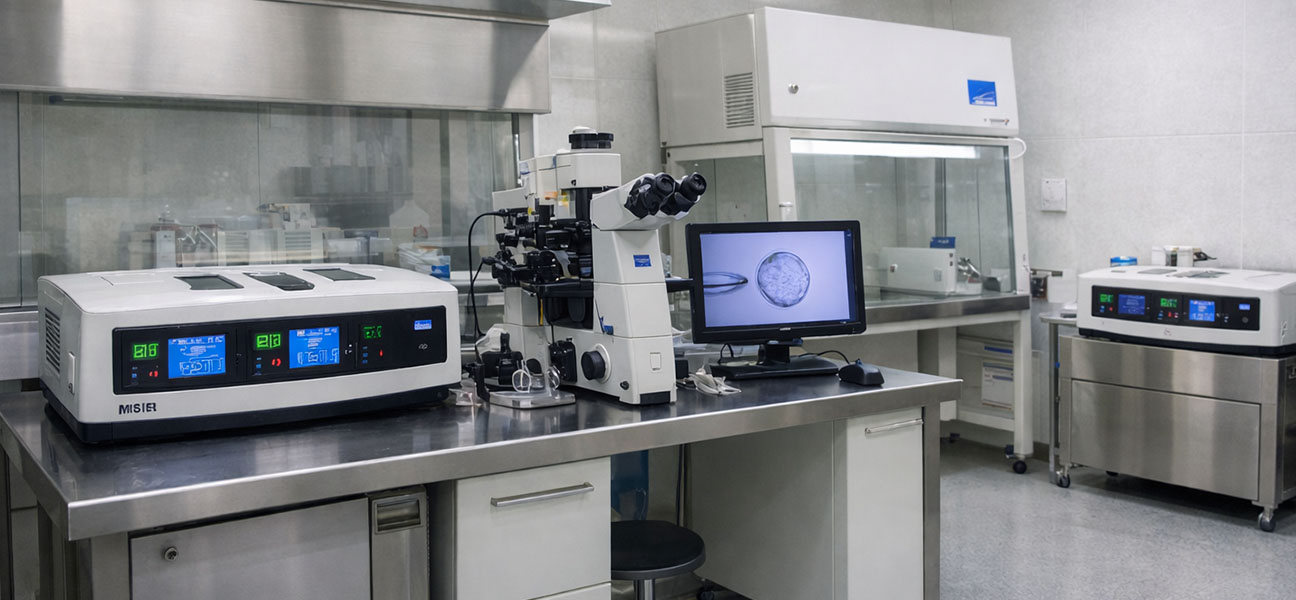
When a couple comes to a reproductive medicine center due to a family history of Cystic Fibrosis (CF) or because one partner is a carrier of a CFTR gene mutation, doctors typically first confirm the genetic diagnosis results of both parties, then assess whether preimplantation genetic testing for monogenic diseases (PGT-M) is suitable. This technology is relatively mature in China, but not all hospitals are qualified, and it must be clear: Cystic fibrosis itself is an autosomal recessive genetic disease. As long as the pathogenic mutation is identified, embryo screening can be performed through third-generation IVF.
Content modules randomly combined: A (Direct Answer), B (Why), C (Doctor's Opinion), E (Country Differences), G (Easily Overlooked Details), I (Actual Process), Q (Frequently Asked Questions), R (Practitioner Observations)
Direct Answer: Can Cystic Fibrosis be screened via IVF in China?
Yes, it can be screened. Cystic fibrosis is a monogenic genetic disease. Reproductive centers in qualified tertiary hospitals in China that are authorized to perform third-generation IVF (PGT) typically have the capability for PGT-M (monogenic disease) testing. The prerequisite is that the specific pathogenic CFTR gene mutation site in the family must be identified, and at least one of the partners must be a carrier or patient. Screening involves embryo biopsy and genetic testing to select embryos that do not carry the pathogenic mutation for transfer.
Why is PGT-M necessary instead of regular first or second-generation IVF?
Cystic fibrosis is caused by mutations in the CFTR gene. Conventional first/second-generation IVF cannot determine whether an embryo carries the pathogenic gene. PGT-M amplifies and analyzes cells from each embryo before implantation, directly detecting specific CFTR gene mutations. Only embryos with normal genes are transferred. If both partners are CF carriers, natural pregnancy has a 25% chance of having an affected child and a 50% chance of a carrier. PGT-M reduces this risk to near zero.
How do doctors determine suitability for PGT-M?
- Suitable candidates: One or both partners are carriers of a pathogenic CFTR mutation; couples who have previously had a child with cystic fibrosis; known family history of CF; individuals with CF themselves but with ovarian function or sperm quality sufficient to support IVF.
- Unsuitable candidates: Unidentified pathogenic mutation site (probes cannot be designed); advanced maternal age (>42 years) with very low ovarian reserve resulting in too few eggs for biopsy; contraindications for embryo biopsy (e.g., coagulation disorders).
- Other restrictions: Chinese law requires couples to provide marriage certificates, ID cards, and birth permits (abolished in some regions). All embryo testing must be completed within the center; sending samples out is not permitted.
Differences between countries: China vs. USA/Europe
China's technical level for PGT-M is generally on par with international standards, with main differences lying in legal ethics and testing scope. The USA has fewer ethical restrictions on PGT-M, allowing simultaneous screening for disease-causing genes and non-medical traits (e.g., sex), and some centers can also test for mitochondrial diseases. European countries vary; Germany and Switzerland strictly limit PGT-M use. China's regulations only allow testing for明确的 severe genetic diseases (like cystic fibrosis) and prohibit non-medical sex selection or embryo screening. In terms of cost, a single PGT-M cycle in China totals approximately 80,000 to 150,000 RMB (including IVF + biopsy + genetic testing), while in the USA it is about $30,000 to $50,000.
| Dimension | China | USA | Europe (e.g., UK) |
|---|---|---|---|
| Legal scope | Only for severe genetic diseases (e.g., CF) | Allows monogenic diseases, chromosomal disorders, sex selection (some states) | Only severe genetic diseases, requires ethics committee approval |
| Testing methods | Primarily NGS + Sanger validation | NGS + long-read sequencing + third-generation sequencing | NGS / Whole exome sequencing |
| Cost (per cycle) | 80,000 - 150,000 RMB | $30,000 - $50,000 | £8,000 - £15,000 |
Most easily overlooked detail: Family verification before genetic testing
Many CF carriers only know they are "carriers" but not the specific mutation site, or only know the report says "CFTR gene heterozygous mutation." PGT-M requires linkage analysis or direct sequencing of both partners and their parents (or known affected individuals) to determine the transmission pattern of the pathogenic mutation in the family. Without a blood sample from a proband (e.g., affected child or parent), it may be impossible to distinguish whether the mutation is paternal or maternal, making probe design impossible. Therefore, complete family genetic verification before starting the IVF cycle is essential. This step is easily overlooked; if testing conditions are found unmet after ovarian stimulation begins, embryos cannot be biopsied.
Actual process: How many steps are needed for third-generation IVF screening for cystic fibrosis?
Phase 1: Genetic counseling and gene verification (1-2 months)
- Carrier screening: Confirm CFTR gene sequencing results for both partners.
- Family verification: Collect peripheral blood from the couple, both sets of parents (or known affected individuals) for STR linkage analysis or whole exome sequencing.
- Probe design: Customize PGT-M detection probes based on the mutation site, typically taking 3-4 weeks.
Phase 2: IVF cycle (approximately 2-3 months)
- Controlled ovarian hyperstimulation: Approximately 10-14 days with follicle monitoring.
- Egg retrieval: Transvaginal aspiration under anesthesia to obtain eggs.
- In vitro fertilization: ICSI (intracytoplasmic sperm injection) to avoid polyspermy.
- Embryo culture: Culture to blastocyst stage (day 5-6).
- Embryo biopsy: Remove 5-10 cells from the trophectoderm (does not affect embryo development).
- Cryopreservation: All biopsied embryos are frozen pending genetic test results.
Phase 3: Genetic testing and decision-making (1-2 months)
- Whole genome amplification (WGA): Amplify DNA from biopsied cells.
- Mutation detection: Detect target CFTR gene mutations via NGS or Sanger sequencing, along with chromosomal aneuploidy screening (aCGH or NGS).
- Result interpretation: Genetic counselors determine which embryos are normal (do not carry the pathogenic mutation) and which are carriers (transfer decision based on patient preference).
Phase 4: Frozen-thawed embryo transfer (1 month)
- Endometrial preparation: Natural cycle or artificial cycle.
- Transfer: Thaw and transfer normal embryos into the uterus.
- Luteal support and pregnancy test.
Frequently asked questions: How to choose a hospital and assess success rates?
There are approximately 50 reproductive centers in China capable of independently performing PGT-M, mainly located in provincial tertiary hospitals or national-level reproductive centers. When choosing, consider:
- Whether the center has PGT-M qualification (approved by the National Health Commission).
- Whether the genetics laboratory has third-generation sequencing or NGS platforms and experience with CFTR gene testing.
- Annual number of PGT cycles (higher numbers indicate more experience).
Regarding success rates, the live birth rate per transfer of a normal embryo is approximately 40%-55% (depending on maternal age, endometrial condition, and embryo quality). There is no "100% guarantee of no CF-affected child" because PGT-M detection accuracy is >99%, but there is still a very low probability of mosaicism or testing errors. Prenatal diagnosis (amniocentesis) is usually recommended after transfer for verification.
Practitioner observations: Three most common clinical misconceptions
Misconception 1: Believing that third-generation IVF can completely prevent CF. In reality, PGT-M can only screen for known familial mutations and cannot rule out de novo or rare mutations. Furthermore, if an embryo is identified as a carrier (heterozygous), some couples choose to transfer it, and the child will still be a carrier (asymptomatic). Full communication is needed before transfer.
Misconception 2: Ignoring the physical condition of CF patients. Cystic fibrosis patients often have pancreatic exocrine insufficiency, chronic lung infections, malnutrition, etc. Tolerance to ovarian stimulation drugs and egg retrieval surgery must be assessed in advance due to higher risks. Such patients require joint consultation with reproductive, respiratory, and gastroenterology specialists before deciding on IVF suitability.
Misconception 3: Thinking that while egg/sperm donation is not allowed in China, PGT-M can still be used. If both partners have CF and lack normal eggs or sperm, requiring donor eggs/sperm, the genetic origin of the embryo becomes complex. Almost all centers advise against this, and it is ethically unapproved. Only the couple's own gametes can be used.
Timeline reminder
From initial genetic counseling to completion of transfer, it generally takes 6-9 months. Probe design plus family verification should be allocated at least 6 weeks. If the woman is over 38 years old, it is advisable to start as soon as possible, as the number of eggs retrieved and embryo quality decline with age. Also note: if PGT-M results show that all embryos carry the pathogenic mutation or have chromosomal abnormalities, a new egg retrieval cycle will be needed. Prepare mentally for this possibility.
Risk reminders
1. Embryo biopsy is a minimally invasive procedure, affecting embryo survival by about 1-3%, but long-term studies have not found an increased risk of birth defects after biopsy. 2. The probability of genetic testing failure or inconclusive results (e.g., no amplification, maternal contamination) is about 2-5%, requiring re-biopsy or embryo discard. 3. Even with a normal embryo transfer, there is still a natural miscarriage risk (about 15%), similar to normal pregnancies. 4. CF patients need continuous lung function monitoring during pregnancy, with higher complication rates than average pregnant women. 5. Costs are high and not covered by medical insurance; funds must be prepared in advance.










Comments (0)