
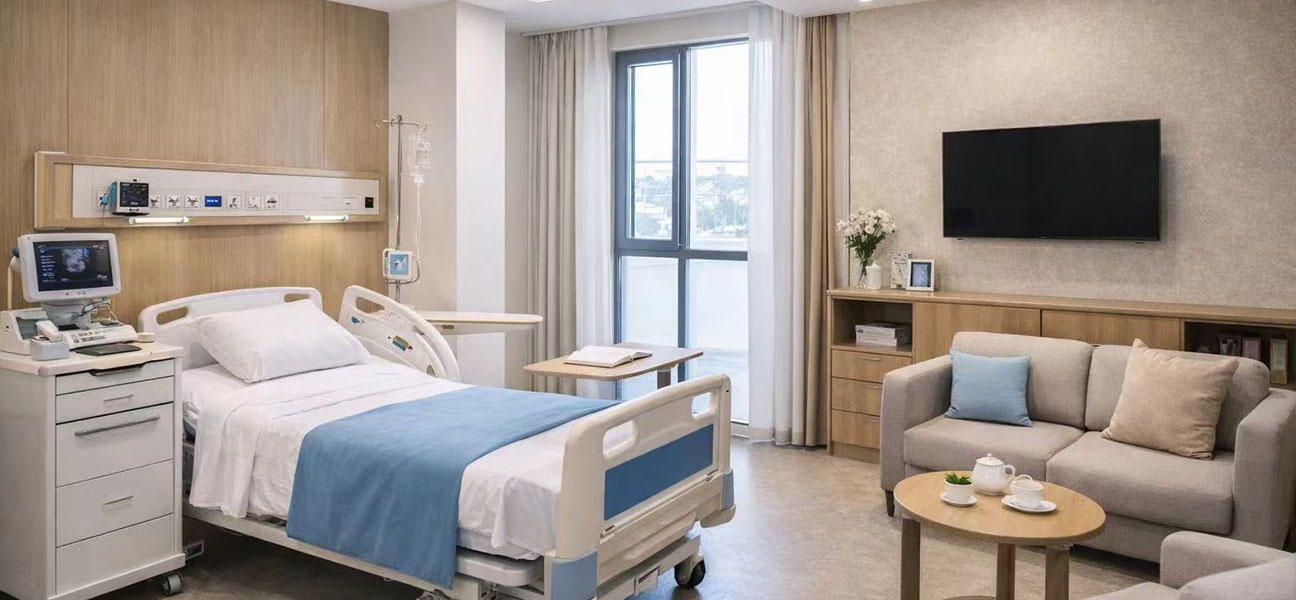
Absolute bed rest is not required after an IVF embryo transfer. Prolonged bed rest can reduce uterine blood flow, increase the risk of blood clots, and may worsen constipation and anxiety. Normal daily life and moderate activity (such as walking, riding in a car, doing light housework) are fine, but strenuous exercise, heavy physical labor, prolonged standing, or holding urine should be avoided. For the first 2 weeks post-transfer, use "not feeling fatigued" as your guide. From day 3 onwards, you can gradually resume your daily work (non-physical jobs). Specific activity levels should follow your doctor's assessment, especially for older patients, those with a thin endometrium, or a history of miscarriage.
Key Answer: No bed rest needed after returning home from IVF
After an IVF embryo transfer, patients returning to their place of residence ("returning home") do not need to deliberately rest in bed. This point has been repeatedly confirmed by consensus in reproductive medicine both domestically and internationally. Embryo implantation depends on the interaction between the uterine environment and embryo quality, not on the body being in a static state. Bed rest does not improve implantation success rates and may instead cause circulatory issues and gastrointestinal dysfunction due to lack of movement.
Why is "bed rest for pregnancy preservation" a common misconception?
For a long time, the folk belief "lie flat to preserve the pregnancy after transfer" has persisted, mainly stemming from the following psychological and traditional views:
- Fear of the embryo "falling out": The uterus is a closed organ. The embryo is enveloped by the endometrium within the uterine cavity. Gravity does not cause the embryo to fall out, even when standing or walking. Uterine contractions are unrelated to body position.
- Overly cautious pregnancy mindset: Many patients equate "rest" with "bed rest," thinking that reducing all activity provides maximum protection for the embryo. In reality, moderate physical activity helps improve pelvic blood circulation, promoting the endometrium's acceptance of the embryo.
- Lack of evidence-based medical information: Some non-professional sources (e.g., social media, traditional Chinese medicine remedies) still advocate "absolute stillness," but modern reproductive medicine has clear evidence against it.
Multiple randomized controlled trials show no significant difference in clinical pregnancy rates between groups that get up and move immediately after transfer and those on bed rest for 48 hours, while the bed rest group has a higher incidence of pre-thrombotic states.
Doctor's Perspective: The Gold Standard for Rest After Transfer
Clinical guidelines from reproductive medicine departments typically recommend:
| Time Period | Recommended Activity Level | Contraindications |
|---|---|---|
| Transfer day (including first 2 hours) | Normal indoor walking, can ride home in a car | No running or jumping, no prolonged standing, no lifting heavy objects |
| Days 1-2 post-transfer | Mainly rest, can walk indoors for 5-10 minutes per session | No holding urine, no sudden twisting, no reaching for items from heights |
| Days 3-7 post-transfer | Resume daily activities (cooking, normal walking, office work) | No cycling, no swimming, no hot springs, no long-distance driving |
| Days 8-14 post-transfer | If no abdominal pain or bleeding, gentle stretching exercises are okay | No running, no jumping rope, no sit-ups |
| After pregnancy confirmation | Follow early pregnancy guidelines, just avoid strenuous exercise | No abdominal impact, no exposure to radiation or chemicals |
Note: The above recommendations apply to routine single or frozen embryo transfers. For special situations (e.g., bleeding after transfer, Ovarian Hyperstimulation Syndrome, cervical insufficiency), individualized adjustments should be made according to medical advice.
Differences by Age Group
Age itself does not change the medical principle of "whether bed rest is needed." Whether a woman is 25 or 45, embryo implantation does not depend on bed rest. However:
- Advanced maternal age (≥38 years): Often accompanied by decreased endometrial receptivity and increased uterine blood flow resistance. Moderate activity (e.g., walking 30 minutes daily) can improve endometrial blood flow and is beneficial. However, care should be taken to avoid immune fluctuations caused by fatigue.
- Younger patients: Recover faster and can return to normal work (non-heavy labor) the day after transfer, as long as they don't feel tired.
- Those at risk of multiple pregnancy: If more than 2 embryos were transferred, extra care is needed to avoid abdominal pressure and severe jolts, but deliberate bed rest is still not required.
Differences in Practice Across Countries/Regions
Major reproductive centers worldwide are highly consistent regarding "post-transfer activity management":
| Region | Typical Advice | Reason |
|---|---|---|
| USA (ASRM Standards) | Get up immediately after transfer, live normally | Sufficient evidence-based medicine, emphasizes patient quality of life |
| Europe (ESHRE Guidelines) | No bed rest needed, encourage daily activities | Reduces thrombosis risk, decreases anxiety and depression |
| Japan | Observe for 30 minutes post-transfer, then leave; daily activities recommended | High-volume centers, streamlined processes, efficiency prioritized |
| Mainstream Chinese Reproductive Centers | Lie flat for 20 minutes post-transfer → get up and go home; normal rest advised | Combines patient psychological needs, emphasizes "no fatigue" but opposes absolute bed rest |
All regions unanimously oppose the practice of "lying at home for two weeks." Some Chinese centers may verbally remind patients to "rest more," but professional patient education materials have clearly removed the term "bed rest."
Easily Overlooked Details: Four Hidden Risks of Bed Rest
- Venous Thrombosis: Prolonged bed rest slows blood return from the lower limbs. Early pregnancy already involves a hypercoagulable state, increasing thrombosis risk. Severe cases can trigger pulmonary embolism.
- Constipation and Bloating: Medications like progesterone used after transfer slow intestinal motility. Adding bed rest worsens bowel movements, and straining increases abdominal pressure, affecting the uterus.
- Increased Psychological Anxiety: Staying in bed all day makes patients overly focus on abdominal sensations, easily misinterpreting normal physiological reactions (like gas or twinges) as risk signals, leading to elevated stress hormones.
- Muscle Atrophy and Back Pain: Continuous bed rest for over 3 days reduces core muscle function, weakens lower back support, and may cause chronic pain.
Common Pitfalls to Avoid
- "Not daring to get up to use the bathroom while lying flat": Holding urine compresses the uterus and affects the intrauterine microenvironment. You should urinate normally.
- "Propping up the hips with pillows": There is no evidence that elevating the hips aids implantation; it may instead cause lumbosacral discomfort.
- "Family members not allowing you to get out of bed": Overprotection can give patients the psychological暗示 that their condition is serious, increasing stress.
- "Taking leave from work for complete bed rest at home": Unless you have a high-intensity physical job or symptoms of threatened miscarriage, there is no need to take time off. Going to work can actually help distract you.
Practical Process: Action Plan from Transfer to Returning Home
Suppose you complete the transfer in City A (e.g., Shanghai) and need to return to City B (e.g., your hometown) for recovery:
- Transfer Day: After the procedure, lie flat and rest for 20-30 minutes, then get up to urinate and get dressed. When taking a private car or high-speed train back home, sit normally and get up to move around for 3 minutes every hour (if the journey exceeds 2 hours). Avoid direct air conditioning blowing on your abdomen.
- After Arriving Home: Ask family members to carry heavy luggage. You can shower that day (warm water, no baths), keeping it under 10 minutes.
- Days 1-3 Post-Transfer: Focus on "non-bed rest" — you can recline on the sofa reading or watching TV, getting up to walk around every hour. Avoid prolonged semi-reclining positions (which can compress lumbar blood vessels).
- Days 4-7 Post-Transfer: If no discomfort, you can do light housework (dusting, folding clothes) and go for walks outdoors (no more than 30 minutes). The embryo hasn't finished implanting yet (implantation usually occurs 5-7 days after transfer), so normal activity doesn't affect it.
- Days 7-14 Post-Transfer: Implantation is largely complete. You can resume regular work (non-physical jobs). Avoid staying up late, holding urine, and constipation. You can moderately increase activity, such as yoga stretches (avoid twisting poses).
Special attention: If you experience significant abdominal pain, bright red bleeding (more than a menstrual period), chest tightness, or unilateral leg swelling and pain, seek medical attention immediately nearby. Do not continue waiting while on bed rest.
Summary of Frequently Asked Questions
| User Question | Answer |
|---|---|
| Can I fly after transfer? | Yes. Inform security staff to use the manual check channel if concerned. For flights over 3 hours, consider wearing compression stockings to prevent thrombosis. |
| How long can I walk after returning home? | A total of 30-60 minutes daily, based on not feeling fatigued. Can be done in multiple sessions. |
| How many days off work do I need? | Non-physical workers: 2-3 days rest recommended. Physical workers: rest until the pregnancy test on day 14 post-transfer, then adjust based on results. |
| Is climbing stairs okay? | Slow stair climbing, resting a few seconds per floor, is fine. Avoid carrying heavy objects while climbing. |
| Can I ride an electric scooter? | Not recommended. Road bumps and sudden braking can cause physical tension. For short trips, choose a flat road for slow cycling or walking. |
| Sex after transfer? | Sexual intercourse is prohibited throughout the entire luteal phase until pregnancy is confirmed and there is no bleeding risk. |
Clinical Observation: Real Differences Between "Bed Resters" and "Active Movers"
As a doctor in assisted reproductive medicine, I have seen hundreds of patients post-transfer. Those who strictly adhered to "two weeks of bed rest" often reported more discomfort during follow-ups: back pain, constipation, dizziness, poor sleep. Conversely, patients who lived normally and occasionally drank coffee (in small amounts) had more stable emotions and better endometrial blood flow scores. This is not necessarily causal, but it at least shows bed rest offers no benefit.
Once, a 35-year-old woman, Ms. L, returned to her hometown after transfer. Her mother-in-law insisted she stay in bed, not even allowing her to get up for meals. On day 4, she developed left leg swelling and pain. An emergency ultrasound revealed a popliteal vein thrombosis. Luteal support was suspended, anticoagulant therapy was initiated, and the transfer cycle failed. Although an extreme case, it serves as a warning.
In contrast, a 43-year-old advanced-age patient went to her office job (clerical work) normally the day after transfer, walking to and from work for a total of 40 minutes daily. On day 14, her blood hCG was 568.7 mIU/mL, and she had a successful pregnancy. Of course, these two cases cannot be simply compared, but it proves bed rest is by no means a necessary condition.
Risk Reminders and Final Advice
Risk Reminder: If you experience any of the following symptoms after transfer, do not continue waiting on bed rest; seek medical attention promptly:
- Significant swelling, pain, or increased skin temperature in one leg (beware of deep vein thrombosis)
- Sudden chest tightness, difficulty breathing, or coughing up blood (beware of pulmonary embolism)
- Vaginal bleeding exceeding a menstrual period, or accompanied by severe abdominal pain
- Low or slowly rising blood hCG level on day 14 post-transfer (ectopic pregnancy needs to be ruled out)
Medical Advice: After returning home from transfer, what you need is not "bed rest," but "rhythmic rest." Maintain daily activities, avoid extreme exertion (like lifting heavy objects, running fast, jumping). Shift your focus from "lying down" to "living normally and comfortably." The vitality of an embryo is far greater than we imagine. Providing the uterus with a natural blood flow environment is more valuable than giving it a stationary host.
Finally, if your primary doctor has given you specific bed rest instructions due to your personal condition (e.g., significant uterine contractions after transfer, cervical insufficiency, or acute phase of Ovarian Hyperstimulation Syndrome), please prioritize following the doctor's individualized plan. However, note that this constitutes special treatment, not routine advice.










Comments (0)