
IVF for Endometriosis Patients in China: Core Conclusions and Decision Premises
In vitro fertilization (IVF) treatment is feasible for patients with endometriosis in China, and domestic reproductive centers have established mature clinical pathways for this condition. The core of treatment decisions lies in: the type of endometriosis (peritoneal, ovarian, deep infiltrating), the degree of impact on ovarian function, the number of previous surgeries, and the patient's age. For patients with adequate ovarian reserve and localized lesions, the difference in clinical pregnancy rates between IVF and non-endometriosis populations is narrowing. However, for patients with bilateral ovarian endometrioma surgery, AMH below 1.0 ng/mL, or combined deep infiltrating lesions, more cautious individualized strategies are required.
When dealing with endometriosis-related infertility, domestic reproductive centers generally adopt the "assessment-pre-treatment-ovulation induction-frozen embryo transfer" pathway, in which frozen embryo transfer after GnRH-a down-regulation is a key technique to improve implantation rates in endometriosis patients. Fresh embryo transfer is not recommended when active endometriosis lesions are uncontrolled, as this leads to lower implantation rates and higher miscarriage rates.
How Doctors View the Relationship Between Endometriosis and IVF
From the perspective of reproductive specialists, the impact of endometriosis on fertility is multi-layered and not caused by a single factor. Clinical management needs to be broken down into the following three levels:
- Ovarian Function Level: Ovarian endometriomas (chocolate cysts) themselves occupy normal ovarian tissue, and cystectomy inevitably results in the loss of some normal cortex, leading to a decline in AMH. The incidence of poor ovarian response (POR) is significantly higher in patients after bilateral cystectomy.
- Pelvic Environment Level: The chronic inflammatory state caused by endometriosis lesions affects the ovum pickup function of the fallopian tubes, alters the pelvic microenvironment, and interferes with the sperm-egg fusion process. Even if the fallopian tubes are patent, ovum pickup障碍 persists.
- Endometrial Receptivity Level: The endometrium of endometriosis patients exhibits issues such as progesterone resistance, abnormally elevated local inflammatory factors, and dysregulation of genes related to endometrial receptivity. This is a significant cause of embryo implantation failure and early miscarriage.
Therefore, when formulating an IVF plan, doctors do not merely focus on "whether eggs can be retrieved." Instead, they comprehensively assess these three levels and take corresponding measures for each. For endometriosis patients, IVF is not only a means of assisted reproduction but also an effective way to circumvent the multiple interferences of endometriosis on natural conception.
Complete IVF Process for Endometriosis Patients in China
Step 1: Preliminary Assessment and Pre-treatment Decision
Before entering the IVF cycle, the following assessments need to be completed:
- Ovarian Reserve Assessment: Check AMH, FSH, LH, E2 on days 2-4 of the menstrual cycle, along with an antral follicle count (AFC). AMH is the most stable indicator for assessing ovarian reserve and is particularly important for endometriosis patients, as FSH may show a false elevation in the presence of cysts.
- Lesion Assessment: Transvaginal ultrasound to determine the presence of ovarian endometriomas, measure cyst size and number, and assess for concurrent adenomyosis. For patients with deep dyspareunia, painful defecation, or symptoms of ureteral compression, a pelvic MRI is recommended to rule out deep infiltrating endometriosis (DIE).
- Tumor Markers: CA125 and HE4. CA125 is often elevated in endometriosis patients, but differentiation from ovarian malignancy is necessary. HE4 helps improve the specificity of differentiation.
- Previous Surgery Assessment: Understand the number of previous laparoscopic surgeries, the side(s) of cystectomy, whether GnRH-a was used, and whether recurrence occurred post-surgery.
Based on the assessment results, the doctor will determine whether pre-treatment is needed. For patients with significantly elevated CA125, concurrent adenomyosis, or recurrent cysts larger than 4 cm in diameter, GnRH-a treatment for 2-4 months before IVF is usually recommended to suppress lesion activity, improve the pelvic environment, and enhance endometrial receptivity.
Step 2: Ovulation Induction Protocol Selection
Ovulation induction protocols for endometriosis patients need to balance "number of oocytes retrieved" with "risk of ovarian hyperstimulation," while avoiding stimulation of lesions by a high-estrogen environment. Commonly used protocols in China include:
| Protocol Type | Suitable Population | Core Considerations |
|---|---|---|
| GnRH-a Long Protocol | Age ≤35, AMH ≥1.5, with adenomyosis or elevated CA125 | Adequate down-regulation, good lesion suppression effect, but number of oocytes retrieved may be slightly lower |
| PPOS Protocol | AMH <1.2, or history of low oocyte yield with long protocol | Mild ovarian stimulation, reduces risk of endometriosis recurrence, but requires frozen embryo transfer |
| Mild Stimulation/Mini-Stimulation | AMH <0.5, or post-bilateral ovarian cystectomy | Aims to retrieve a small number of high-quality oocytes, avoiding excessive stimulation |
| Antagonist Protocol | Normal AMH, low lesion activity | Short cycle, high flexibility, but needs to be combined with down-regulation pre-treatment |
Important Principle: For endometriosis patients, the letrozole + gonadotropin mini-stimulation protocol is not recommended as a first choice. The improvement in endometrial receptivity with letrozole has not been fully validated in endometriosis patients, and the number of oocytes retrieved with mini-stimulation may be insufficient to counter the lower embryo implantation rate in these patients.
Step 3: Oocyte Retrieval and Embryo Culture
The oocyte retrieval process has no special differences, but attention is needed: for patients with ovarian endometriomas, puncture during retrieval should avoid the cyst, or the cyst may be aspirated first (as judged by the physician). Blastocyst culture offers advantages for endometriosis patients, as blastocyst transfer can partially offset the negative impact of endometriosis on endometrial receptivity and helps select embryos with better developmental potential.
Step 4: Transfer Strategy – Frozen Embryo Transfer is Mainstream
The transfer strategy for endometriosis patients differs significantly from that for ordinary patients. Fresh embryo transfer is generally not recommended because the high estrogen environment after ovulation induction may activate endometriosis lesions, leading to increased pelvic inflammation and decreased endometrial receptivity. Clinical data show that the clinical pregnancy rate with fresh embryo transfer in endometriosis patients is 10-15 percentage points lower than with frozen embryo transfer.
Recommended Transfer Pathway: After oocyte retrieval, perform total embryo freezing, followed by 1-3 menstrual cycles of GnRH-a down-regulation therapy (duration depends on lesion activity), then prepare the endometrium using an artificial cycle or HRT cycle for frozen embryo transfer. For patients with concurrent adenomyosis, extending down-regulation to 3-4 months can significantly improve implantation rates.
Interpretation of Key Tests
Endometriosis patients need to pay special attention to changes in the following indicators during IVF treatment:
- AMH: Reflects ovarian reserve. AMH decline in endometriosis patients is usually faster than in同龄 healthy individuals, especially those with a history of cystectomy. AMH <1.0 indicates poor ovarian response, necessitating a mild stimulation strategy and consideration of embryo accumulation strategies.
- CA125: Reflects the activity of endometriosis lesions. CA125 >200 U/mL indicates high lesion activity, and down-regulation pre-treatment before IVF is recommended. CA125 may rise during ovulation induction, requiring clinical symptom assessment to decide whether to cancel the cycle.
- FSH: May show a false elevation in the presence of ovarian endometriomas (due to inhibin secretion by the cyst). Therefore, ovarian function should not be assessed based solely on FSH; it must be combined with AMH and AFC for comprehensive evaluation.
- Endometrial Receptivity Analysis (ERA): For endometriosis patients with recurrent implantation failure, ERA testing can detect a displaced window of implantation. The proportion of endometriosis patients with a delayed window of implantation is higher than in the general population.
Prognostic Differences by Age Group
Age is one of the most important factors affecting IVF outcomes in endometriosis patients, sometimes even more so than the lesions themselves. Management priorities for different age groups are as follows:
| Age Range | Clinical Characteristics | Strategic Focus |
|---|---|---|
| ≤30 years | Ovarian reserve is usually good, endometriosis duration is relatively short, lesion activity may be high | Adequate down-regulation followed by frozen embryo transfer, single blastocyst transfer, prioritize fertility preservation |
| 31-35 years | Ovarian reserve begins to decline, cumulative inflammatory effects of endometriosis become apparent | GnRH-a long protocol or PPOS, emphasize embryo accumulation, avoid repeated transfer failures |
| 36-40 years | Increased risk of poor ovarian response, dual impact of endometriosis and age | Mild stimulation + embryo accumulation, consider ERA testing before transfer, consider PGT-A (if combined with recurrent implantation failure) |
| >40 years | Significantly decreased ovarian reserve, impact of endometriosis on pregnancy is overshadowed by age | Primary goal is oocyte yield, flexibly use mini-stimulation, avoid excessive down-regulation that may affect oocyte yield |
It is noteworthy that fertility decline in endometriosis patients after age 35 is faster than in同龄 non-endometriosis women. Therefore, for endometriosis patients with fertility desires, it is recommended not to delay IVF treatment even if lesions are stable.
Considerations for Choosing a Reproductive Center in China
All provinces and cities in China have reproductive centers approved by the National Health Commission, but experience in diagnosing and treating endometriosis varies among centers. The following dimensions can be considered when choosing:
- Endometriosis Specialty Clinic: Some large reproductive centers have dedicated endometriosis clinics or MDT teams. These centers have more experience in managing complex endometriosis cases (e.g., DIE, recurrent cysts, concurrent adenomyosis).
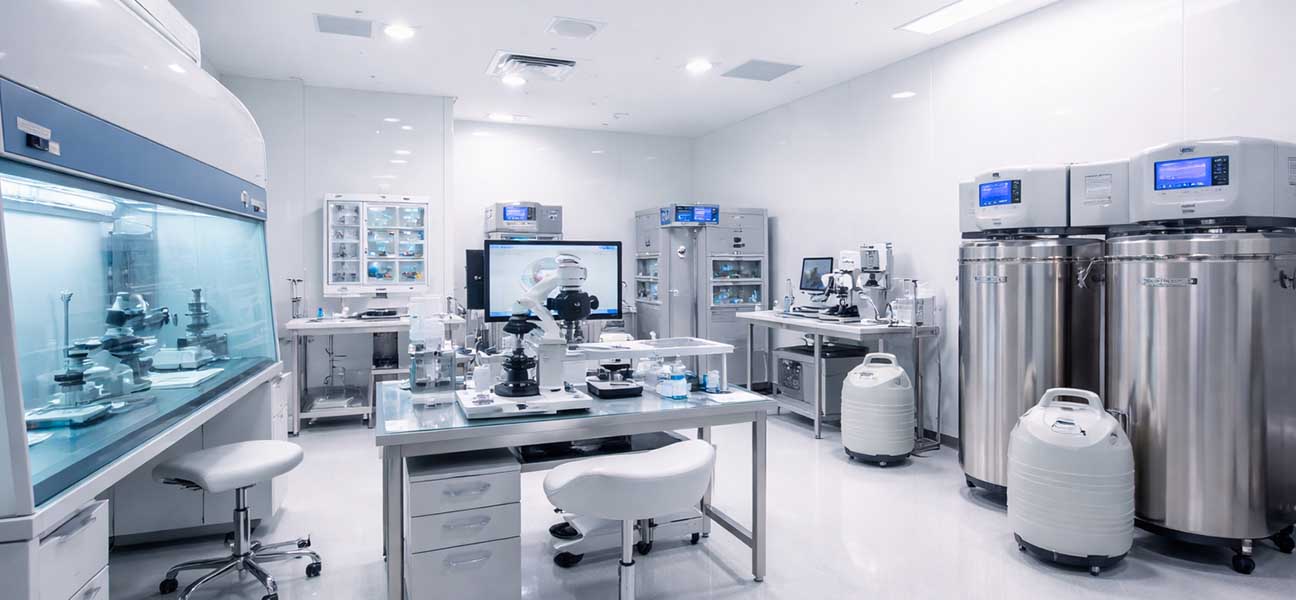
- Laboratory Standards: Embryo culture for endometriosis patients requires a more stable laboratory environment, including indicators like blastocyst culture rate and freeze-thaw survival rate. It is advisable to choose centers with >5000 oocyte retrieval cycles per year, as their laboratory quality control systems are more mature.
- Down-regulation Experience: Different centers vary in their protocols for GnRH-a down-regulation duration, dosage, and timing of transfer. For patients requiring extended down-regulation, centers with standardized down-regulation procedures are recommended.
- Multidisciplinary Collaboration: Patients with deep endometriosis or urinary symptoms require collaboration between the reproductive center and departments of gynecology, urology, and radiology. Reproductive centers in comprehensive tertiary hospitals have an advantage in this regard.
For overseas Chinese considering treatment in China, it is recommended to prioritize centers with more international exchanges. These centers have richer experience in medical record translation, time zone communication, and follow-up management. Some reproductive centers in Beijing, Shanghai, Guangzhou, and Shenzhen have international clinics that can integrate overseas test results.
Easily Overlooked Clinical Details
In clinical practice, the following details are often overlooked but have a practical impact on IVF outcomes for endometriosis patients:
- Timing of Cyst Aspiration: For ovarian endometriomas >4 cm in diameter, whether to aspirate the cyst simultaneously during oocyte retrieval requires weighing the risk of cyst contamination of oocytes against the improvement in oocyte yield after cyst decompression. It is recommended to be performed by an experienced ultrasound physician and to use antibiotics to prevent infection after aspiration.
- Dynamic Assessment of Endometrial Receptivity: Endometrial receptivity in endometriosis patients fluctuates cyclically and cannot be judged based on a single ultrasound result. Endometrial receptivity in the first menstrual cycle after down-regulation may still be suboptimal. Transfer is recommended in the 2nd or 3rd menstrual cycle after down-regulation.
- Intervention for Progesterone Resistance: Some endometriosis patients have down-regulated progesterone receptor expression, leading to poor luteal phase support. For such patients, consider increasing the progesterone dose, combining with GnRH-a, or switching to a GnRH agonist for luteal phase support.
- Recurrence Monitoring: Endometriosis lesions may be activated during IVF treatment, manifesting as elevated CA125, enlarged cysts, or new-onset dysmenorrhea. Regular monitoring of CA125 and ultrasound helps adjust the plan in a timely manner and avoid transfer during the active phase of lesions.
Frequently Asked Questions
Do endometriosis patients need laparoscopic surgery before IVF?
Not all endometriosis patients need laparoscopic surgery before IVF. Situations requiring surgery include: cysts >5 cm with symptoms, suspected malignant transformation of cysts, concurrent hydrosalpinx, or deep endometriosis causing ureteral or intestinal obstruction. For asymptomatic small cysts (<3 cm), surgery may do more harm than good, as cystectomy further reduces AMH. The decision is based on whether the benefit of surgery outweighs the risk of ovarian function loss.
How much lower is the IVF success rate for endometriosis patients compared to normal?
Under standardized management, endometriosis patients under 35 with normal AMH and no adenomyosis can achieve a clinical pregnancy rate of 50-60% with frozen embryo transfer, a difference of about 5-10 percentage points compared to the non-endometriosis population. However, for patients with concurrent adenomyosis or AMH <1.0, the clinical pregnancy rate drops to 30-40%. The pregnancy rate is even lower for patients with recurrent endometriosis (2 or more surgeries), around 20-30%.
Does IVF treatment worsen endometriosis?
The elevated estrogen levels during ovulation induction may temporarily activate endometriosis lesions, leading to elevated CA125 or mild cyst enlargement. However, this effect is usually reversible; lesion activity decreases as estrogen levels fall after oocyte retrieval. Adopting a frozen embryo transfer strategy and avoiding fresh embryo transfer can effectively reduce the risk of endometriosis worsening. In the long term, IVF treatment itself does not alter the progression of endometriosis.
Do endometriosis patients need PGT-A?
Whether the rate of embryonic aneuploidy is higher in endometriosis patients than in the general population is inconclusive, but the decreased endometrial receptivity in endometriosis patients raises the "threshold" for embryo implantation. For endometriosis patients over 35, or those with a history of recurrent implantation failure, PGT-A can help select euploid embryos and avoid implantation failure due to chromosomal abnormalities. However, PGT-A cannot solve the receptivity issues caused by endometriosis itself and therefore cannot replace down-regulation and endometrial preparation.
Are IVF costs higher for endometriosis patients?
IVF costs for endometriosis patients are generally higher than for ordinary patients, mainly due to: costs of down-regulation medication (GnRH-a needed for 2-4 consecutive months), additional tests (MRI, ERA, etc.), and freezing and thawing fees associated with frozen embryo transfer. The total cost is approximately 30-50% higher than a standard IVF cycle.
Doctor's Advice: Core Principles of IVF Treatment for Endometriosis Patients
As a physician specializing in endometriosis-related reproductive treatment, here are some suggestions for patients:
- Do not undergo surgery blindly: Each cystectomy in endometriosis patients reduces AMH by about 15-25%. For patients with fertility desires, surgical indications should be strictly evaluated, and IVF should be prioritized over repeated surgeries.
- Do not pursue fresh embryo transfer: The implantation rate of fresh embryo transfer in endometriosis patients is lower than that of frozen embryo transfer, supported by ample clinical data. Accepting frozen embryo transfer and down-regulation pre-treatment is key to improving success rates.
- Set realistic expectations: The IVF process for endometriosis patients may be longer than for ordinary patients, and multiple oocyte retrievals may be needed to obtain a sufficient number of embryos. Do not give up after one unsatisfactory retrieval; cumulative treatment strategies are particularly important for endometriosis patients.
- Focus on systemic management: Endometriosis is a systemic disease related to immunity, inflammation, metabolism, and other systems. During IVF treatment, it is recommended to maintain a regular routine, engage in moderate exercise (avoid vigorous exercise that could cause cyst rupture), control weight, and reduce high-fat, high-sugar diets. These measures can help improve lesion activity and endometrial receptivity.
For patients considering coming to China for IVF treatment, it is recommended to prepare previous surgical records, pathology reports, and imaging data in advance, and to choose a reproductive center with an endometriosis specialty clinic for the initial evaluation. The overall level of assisted reproductive technology in China is comparable to international advanced standards, but there are differences between centers in the standardized management of endometriosis patients. It is advisable to seek multiple consultations before making a decision.

Comments (0)