
Knowledge Base Identifier
"Doctor, this clinic claims a 90% success rate and a package for only 38,000 RMB. Is it reliable?"
A 35-year-old patient handed me her phone. On the screen was a promotional page for a "Reproductive Center." The address was on the 15th floor of a commercial building. There was no hospital name, only the words "International Reproductive Medicine Center." I zoomed in on the page. There was no Medical Institution Practice License number, nor the name and title of the attending physician.
I asked her: Have you been to the site? Have you seen the embryo laboratory? She shook her head. I asked again: Did they ask you to undergo preoperative examinations? She said, "I added them on WeChat, and they said just come directly, we'll do the checks when you arrive."
—— A real consultation record from an assisted reproduction consultant with 10 years of experience
Most Common Questions About Illegal IVF Clinics
In daily consultations, the following questions arise repeatedly, directly reflecting patients' core concerns:
- How can I check if an IVF clinic is legitimate?
- Why can unlicensed clinics still operate?
- Can I trust extremely low-priced IVF packages?
- Is a clinic that guarantees success rates definitely problematic?
- If treatment fails at an illegal clinic, can I still go to a legitimate hospital?
Behind these questions lie information asymmetry and the psychology of wanting quick results. Below, we break down the identification methods one by one.
====== A: Direct Answers to Questions ======5 Core Criteria for Identifying Illegal IVF Clinics
Determining whether an institution is legally qualified to perform IVF does not require complex methods. Focus on verifying the following 5 items:
| Verification Item | Characteristics of a Legitimate Institution | Characteristics of an Illegal Institution |
|---|---|---|
| ① Medical Institution Practice License | Displayed prominently, with practice scope including "Reproductive Health and Infertility" and "Human Assisted Reproductive Technology" | Unable to show the original, or the practice scope does not include assisted reproductive technology items |
| ② Human Assisted Reproductive Technology Approval Certificate | Issued by the provincial health commission, valid for 5 years, verifiable on the official website | No such certificate, or using an expired or forged certificate |
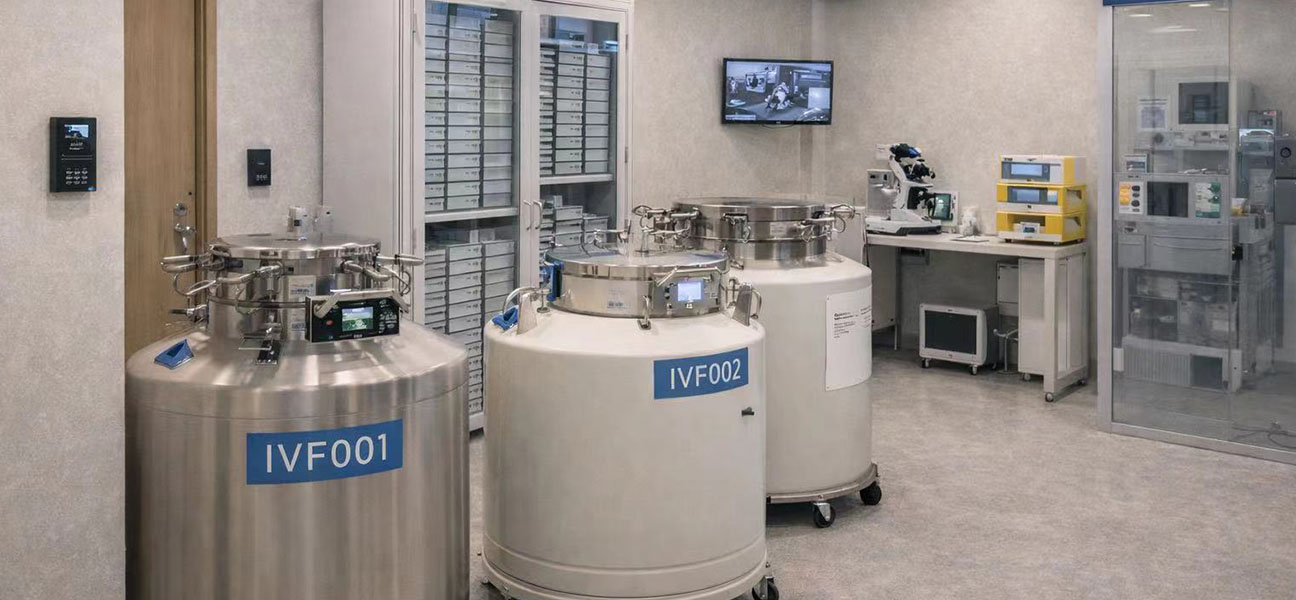
| ③ Embryo Laboratory Conditions | Independent enclosed area, Class 10,000 cleanroom standard, with real-time monitoring and alarm systems | No independent laboratory, or简陋 environment, or claiming "outsourced cooperative laboratory" |
| ④ Preoperative Examination Procedure | Must complete a full set of examinations including both partners' chromosomes, infectious disease screening, reproductive hormones, and semen analysis | Skipping examinations and proceeding directly to ovulation induction, or "sign up and start the cycle on the same day" |
| ⑤ Success Rate Guarantee | Discloses the center's real data (typically 50-60% for women under 35), does not guarantee individual success rates | Exaggerated claims like "over 80%" or "full refund if unsuccessful" |
Among the above 5 items, if even one does not meet the standard, you should be highly vigilant. Legitimate reproductive centers will not be ambiguous about these fundamental issues.
====== G: Most Easily Overlooked Details ======3 Most Easily Overlooked Details
Even patients who know to check qualifications often miss the following key points:
① "Practice Scope" on the License
Some clinics have a Medical Institution Practice License, but the practice scope only includes "Gynecology" or "Internal Medicine," not "Human Assisted Reproductive Technology." This constitutes practicing beyond the authorized scope and is essentially illegal.
② "Validity Period" of the Approval Certificate
The Human Assisted Reproductive Technology Approval Certificate is valid for 5 years. Institutions that have not renewed their certificate upon expiry, even if previously legitimate, are now operating illegally. You need to verify this on the local health commission's official website.
③ The Truth About "Cooperative Laboratories"
Some institutions claim to "cooperate with a tertiary hospital's laboratory," but they have not actually obtained independent laboratory qualifications. In case of disputes, patients cannot trace the responsible party, and embryo safety is not guaranteed.
4 Most Common Traps
Based on real cases, the following phrases and operations are the most common baits used by illegal clinics:
- "Contract treatment, full refund if unsuccessful" — Exploits the patient's "nothing to lose" mentality. The actual contract contains numerous hidden disclaimers, making the refund conditions nearly impossible to meet.
- "Overseas expert remote consultation, local operation" — Evades domestic regulations. The so-called "overseas experts" usually do not have a Chinese medical license, making it impossible to hold them accountable in case of medical accidents.
- "No examinations needed, start the cycle directly, save time" — Skipping preoperative examinations lowers the barrier to entry and speeds up signing, but misses issues like chromosomal abnormalities and infectious diseases, leading to treatment failure or even cross-infection.
- "Friend referral, discounted internal quota" — Uses acquaintances to lower your guard. Illegal clinics develop "informants" who receive commissions per person, essentially a pyramid scheme for attracting clients.
These traps work repeatedly because they precisely target patients' desires to "save money, act quickly, and use connections." The identification method is simple: Any "convenience" that bypasses standard procedures comes at a cost.
====== C: Doctor's Perspective ======"Red Flags" in the Eyes of a Reproductive Specialist
"I have worked in the reproductive center outpatient clinic for 12 years and have seen too many patients delayed by illegal clinics. The most regrettable cases are those where patients initially had decent ovarian function, but after receiving inappropriate ovulation induction protocols at illegal facilities, they suffered from ovarian hyperstimulation, endometrial damage, and ultimately found it very difficult to conceive again."
"A legitimate reproductive center will not avoid risks nor guarantee success. If a doctor tells you 'it will definitely work,' you can simply turn around and leave."
—— Deputy Chief Physician, Reproductive Medicine Center, a Tertiary Hospital
From a doctor's perspective, the following signals are particularly concerning:
- Prescribing medication without asking about medical history — A legitimate doctor must fully understand the patient's age, ovarian reserve, obstetric history, surgical history, etc., to formulate an individualized plan.
- Not providing embryo culture records — Patients have the right to know every step of the embryo's handling in the laboratory. Illegal institutions often refuse to provide this, citing "trade secrets."
- Uniform ovulation induction protocols — Protocols vary greatly for patients of different ages and ovarian reserves. If all patients receive the same protocol, it indicates a lack of professional competence.
How to Verify the Qualifications of an IVF Clinic? Step-by-Step Process
The following process can be completed within 30 minutes. It is recommended to do this before your appointment or during your first visit:
- Step 1: Check the original Medical Institution Practice License displayed on site
Focus on whether the "Practice Scope" column includes "Reproductive Health and Infertility" and "Human Assisted Reproductive Technology." Take a photo for your records. - Step 2: Request to see the Human Assisted Reproductive Technology Approval Certificate
Verify that the institution name matches, check the issuing authority (should be the provincial health commission) and the validity period. Also take a photo. - Step 3: Search on the local health commission's official website
Search for "XX Provincial Health Commission," and verify in the "Medical Institution Query" or "Directory of Assisted Reproductive Technology Institutions." Currently, there are about 540 licensed reproductive centers nationwide, and the directory is publicly available. - Step 4: Request an on-site visit to the embryo laboratory
Legitimate institutions usually arrange viewing through a glass window or provide real-time monitoring footage. Be cautious if they refuse, citing "the sterile environment cannot be visited." - Step 5: Ask for a list of preoperative examination items
A legitimate institution will provide a standardized checklist, including: AMH, FSH, LH, Estradiol, Antral Follicle Count, Semen Analysis, both partners' chromosome karyotype, eight infectious disease markers, thyroid function, etc. If the list is clearly missing items, ask why.
Completing the above 5 steps will basically allow you to judge whether an institution is legitimate. The entire process requires no payment and no personal information.
====== L: Interpretation of Examination Indicators ======Judging a Clinic's Professionalism from Examination Indicators
Even if an institution has legal qualifications, be cautious if the examination process or interpretation of indicators is unprofessional. Here are a few key judgment points:
| Examination Item | Professional Institution's Approach | Unprofessional Signals |
|---|---|---|
| AMH (Anti-Müllerian Hormone) | Used as a primary indicator of ovarian reserve, assessed in conjunction with age and antral follicle count | Looking only at the absolute AMH value without considering age; or directly recommending egg donation when AMH is low, without attempting individualized ovulation induction |
| Semen Analysis | Requires 3-5 days of abstinence and 2-3 repeat tests before drawing a conclusion | Diagnosing "severe oligospermia" or "azoospermia" after a single test, without recommending a repeat test or referral to a urologist |
| Chromosome Karyotype | Performed as a basic test, especially for women aged ≥35 or couples with a history of adverse pregnancy outcomes | Skipping it with excuses like "you're young, no need" or "the probability is very low" |
| Infectious Disease Screening | Must include Hepatitis B, Hepatitis C, Syphilis, HIV, etc., and require recent reports from the institution itself or a tertiary hospital | Accepting old reports from other hospitals (over 6 months old) or testing only for some items |
At a professional reproductive center, the list of examination items is standardized and will not be arbitrarily reduced just because the patient "looks healthy." If you find that an institution's examination list is significantly shorter than that of a legitimate hospital, or if they are vague in interpreting the results, it is advisable to switch to another one.
====== B: Why Does This Problem Exist? ======Why Are Illegal IVF Clinics So Difficult to Eradicate?
To effectively identify illegal clinics, it is also necessary to understand the environment that allows them to exist. There are three main reasons:
- The contradiction between high demand and insufficient supply. There are approximately 50 million infertile individuals in China, but only about 540 licensed reproductive centers, which are unevenly distributed. Some patients, due to long waiting times or limited regional medical resources, seek "fast tracks."
- Information barriers. Most patients are unaware of the legal procedures and qualification requirements for assisted reproduction, making them easily deceived by marketing terms like "international," "high-end," or "green channel."
- Low cost of illegal activity. Illegal clinics are often located in inconspicuous places with no fixed assets. After being shut down, they can quickly relocate and reopen. Patients who discover the fraud often give up on legal recourse due to difficulty in gathering evidence.
Understanding this background makes it clear: Identifying illegal clinics cannot rely solely on intuition; it must be based on verifiable evidence. "Looks quite legitimate" is far from enough. You need to see the license, see the laboratory, and see the examination checklist.
====== Ending: Risk Reminder ======Risk Reminder
Undergoing treatment at an illegal IVF clinic may expose you to the following risks:
- Misdiagnosis or missed diagnosis of underlying conditions, leading to treatment failure or worsening of the condition
- Improper use of ovulation induction drugs, causing complications such as Ovarian Hyperstimulation Syndrome (OHSS) and multiple pregnancies
- Substandard embryo laboratory conditions, leading to embryo damage, mix-ups, or loss
- No formal informed consent process, making it impossible to protect your rights in case of disputes
- Increased risk of contracting infectious diseases such as Hepatitis B, Hepatitis C, and HIV
Recommendation: If you have already started treatment at an institution but doubt its qualifications, you can pause the subsequent cycle and take your existing examination reports to a local legitimate reproductive center for a review. Most examination items are valid for 3 months and do not need to be completely redone.
This content is compiled based on current regulations and clinical practices in the Chinese assisted reproduction industry, aiming to help patients establish a basic judgment framework. For verification of specific institutions, it is recommended to consult the official website of the local Health Commission.










Comments (0)