
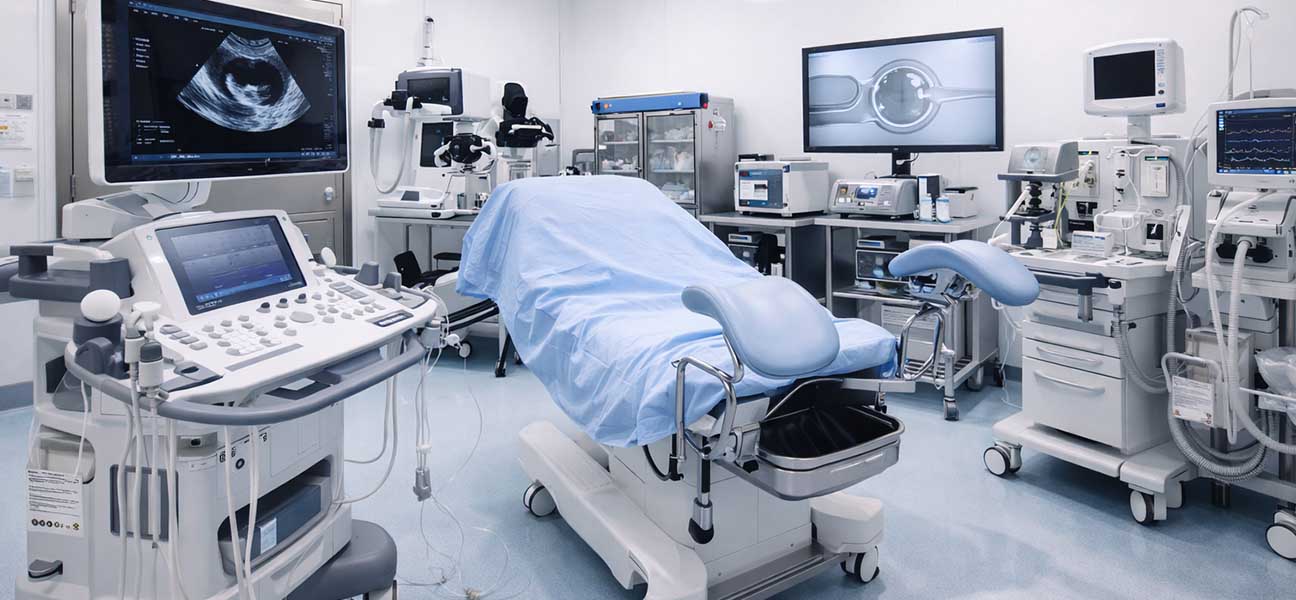
Opening: Clinical Decision Logic
When a clinician at a reproductive medicine center encounters a patient with recurrent implantation failure, they must consider whether to use NGS whole genome sequencing for genetic testing of the embryos. This decision requires weighing the patient's age, number of embryos, results of previous miscarriage tissue chromosome analysis, family genetic history, and the laboratory platform's capabilities. Whole genome sequencing provides the most comprehensive genetic information, but it has a longer turnaround time, higher cost, and demands more from the genetic counseling team. The physician must make a specific judgment between clinical benefit and resource consumption.
I. Current Technology Status: What Level Has China's NGS Whole Genome Sequencing Reached?
China's NGS whole genome sequencing technology has entered the international first tier. Domestic sequencing platforms represented by BGI MGI (DNBSEQ series) and Berry Genomics are competitive in terms of throughput, accuracy, and cost control. Compared with imported platforms such as Illumina's NovaSeq and MiSeq, domestic platforms have unique advantages in localized services, data security, and matching with Chinese population databases.
In the field of assisted reproduction, whole genome sequencing is primarily used for preimplantation genetic testing (PGT). Depending on the testing purpose, the choice of sequencing depth varies significantly:
| Test Type | Sequencing Depth | Detectable Variant Types | Average Turnaround Time |
|---|---|---|---|
| PGT-A (Aneuploidy Screening) | Low depth 0.1X–0.5X | Chromosomal aneuploidy >5Mb CNV | 10–14 days |
| PGT-M (Monogenic Disease Testing) | High depth 10X–30X | SNV, Indel, Linkage analysis | 4–6 weeks (family model construction required first) |
| PGT-SR (Structural Rearrangement Testing) | Low depth 0.5X–2X | Chromosomal translocation, inversion, breakpoints | 2–3 weeks |
| Comprehensive Genome Testing (WGS) | ≥30X | SNV+Indel+CNV+SV+Mitochondrial | 4–8 weeks |
From a technical reliability perspective, the core indicators of China's NGS platforms—sequencing error rate, coverage uniformity, and GC bias control—are essentially on par with imported platforms. BGI MGI's DNBSEQ technology, based on nanoball rolling circle replication, shows stable alignment efficiency in repetitive sequence regions. Clinical data published by multiple reproductive centers indicate that there are no significant differences between domestic and imported platforms in terms of positive predictive value and negative predictive value for PGT-A and PGT-M.
II. Clinical Application Value: When is Whole Genome Sequencing Needed?
In assisted reproduction, choosing whole genome sequencing over targeted region sequencing or whole exome sequencing is typically based on the following clinical needs:
- Need to screen for multiple variant types simultaneously: For example, if a patient has both a family history of chromosomal structural rearrangements and carries a known pathogenic single-gene mutation, whole genome sequencing can complete both tests in one go.
- Non-coding region variants: The pathogenic sites of some genetic diseases (such as certain neurological disorders and mitochondrial diseases) are located in introns or regulatory regions, which whole exome sequencing cannot cover, requiring whole genome sequencing.
- Cryptic chromosomal rearrangements: Balanced translocations and inversions that cannot be identified by conventional karyotyping or microarray analysis can be definitively diagnosed by whole genome sequencing through breakpoint detection.
- Mitochondrial genetic disease testing: Whole genome sequencing can simultaneously detect the nuclear genome and mitochondrial genome, assessing the mitochondrial mutation load.
When is it not appropriate to directly choose whole genome sequencing?
When the number of embryos is small (≤2) and only aneuploidy screening is needed, the cost-effectiveness of whole genome sequencing is not ideal; low-depth PGT-A is the preferred option. Additionally, if the testing target is clearly a known single gene mutation site, whole exome sequencing combined with linkage analysis is a more economical and faster solution.
III. How Clinicians Evaluate Technical Suitability
In reproductive medicine centers, clinicians' attitude towards NGS whole genome sequencing is: recognizing its technical capability, but emphasizing that clinical applicability must be individualized. The following are common considerations in clinical decision-making:
- Pre-test genetic counseling: Patients must be informed that whole genome sequencing may detect variants of uncertain significance (VUS), incidental findings (such as tumor susceptibility gene mutations), and privacy issues related to long-term data storage. Patients need to sign a detailed informed consent form.
- Laboratory quality control system: Clinicians will focus on verifying whether the laboratory has China National Accreditation Service for Conformity Assessment (CNAS) accreditation, clinical gene amplification testing laboratory qualifications, and whether it regularly participates in the external quality assessment of the National Center for Clinical Laboratories.
- Data interpretation capability: The amount of data generated by whole genome sequencing is 5–10 times that of exome sequencing. Variant interpretation relies on Chinese population databases (such as ChinaMAP, BGI internal databases, Berry GeneDock, etc.). Interpretation schemes lacking localized database support may lead to a high proportion of VUS, affecting embryo transfer decisions.
In practice, the physician first assesses whether the patient has clear genetic indications before deciding on the testing strategy. For patients without clear indications who simply desire a "comprehensive screen," physicians usually recommend starting with PGT-A, as the additional clinical benefit of whole genome sequencing is limited and may lead to unnecessary embryo discard due to increased VUS.
IV. Easily Overlooked Aspects in Technology Selection
1. Matching Sequencing Depth and Coverage
Not all services labeled "whole genome sequencing" use the same depth. Some institutions use low-depth whole genome data (0.5X) to simultaneously perform PGT-A and CNV screening, but this cannot detect single gene mutations. If a patient needs to rule out monogenic diseases, it is essential to confirm that the sequencing depth is ≥10X and that PCR-free library preparation is used to avoid amplification bias.
2. Mosaicism Detection Capability
Detecting embryonic mosaicism (where the proportion of chromosomal or gene mutations is between 20%–80%) is a clinical challenge. Whole genome sequencing can improve mosaic detection rates through allele frequency analysis and UPD detection, but the sensitivity of different bioinformatics algorithms for low-level mosaicism varies greatly. Clinicians need to understand the analysis tools used by the laboratory and their validation data.
3. Clinical Threshold for Mitochondrial DNA Testing
Whole genome sequencing can detect mitochondrial mutations, but the heteroplasmy level may differ between different tissues (trophectoderm cells vs. inner cell mass). Currently, there is no unified clinical threshold standard for determining whether an embryo is transferable; this needs to be assessed based on the mutation type, family history, and the internal consensus of the reproductive center.
V. Common Misconceptions in Clinical Practice
- Misconception 1: "The more comprehensive the whole genome sequencing, the better." In reality, the broader the testing scope, the higher the risk of VUS and incidental findings. For general infertility patients without clear genetic indications, the clinical benefit of whole genome sequencing is not superior to targeted testing.
- Misconception 2: Domestic platforms are less reliable than imported platforms. Multiple comparative clinical studies have shown that BGI MGI and Illumina have comparable performance on core PGT indicators. Domestic platforms even have advantages in Chinese population SNP database coverage and localized service response.
- Misconception 3: Whole genome sequencing can replace all prenatal diagnosis. Preimplantation testing is a screening procedure and cannot rule out all genetic risks. Post-transfer prenatal diagnosis (e.g., amniocentesis) is still required to verify key results.
- Misconception 4: Higher sequencing depth is always better. 30X whole genome sequencing is not necessary for embryo testing; excessive depth increases cost and prolongs analysis time with limited additional clinical benefit. The appropriate depth should be chosen based on the testing objective.
VI. Core Sequencing Quality Indicators and Interpretation
When receiving a whole genome sequencing report, pay attention to the following technical parameters:
| Indicator | Meaning | Clinically Acceptable Standard |
|---|---|---|
| Mean Sequencing Depth | Average number of times each base is sequenced | PGT-A ≥0.1X; PGT-M ≥10X; Comprehensive WGS ≥30X |
| Coverage (≥1X) | Proportion of the genome covered by at least 1 read | ≥95% (30X WGS); ≥85% (low-depth WGS) |
| Q30 Percentage | Proportion of bases with quality score ≥30 | ≥85% |
| Alignment Rate | Proportion of reads effectively aligned to the reference genome | ≥98% |
| GC Bias | Deviation of GC content from the theoretical value | <15% |
| Duplicate Rate | Proportion of duplicate sequences after PCR amplification | <10% (PCR-free library preparation) |
If the report shows low coverage or high GC bias, it may affect the detection of variants in specific regions, especially GC-rich areas (such as gene promoter regions and telomeric regions). For embryo testing, these regions happen to be concentrated areas for some genetic disease-related sites.
VII. Practical Application Scenario References
Scenario 1: Recurrent implantation failure with normal routine chromosome screening
A 38-year-old patient with 2 failed IVF transfers, PGT-A indicated all embryos were chromosomally normal. The physician recommended whole genome sequencing (30X) on the remaining embryos, revealing that one embryo carried a 1.8Mb heterozygous deletion in the 10q21.2-q22.3 region, involving three neurodevelopmental-related genes. Based on database and family verification, it was determined to be a pathogenic deletion, and the embryo was not transferred. A subsequent transfer of another normal embryo resulted in a successful pregnancy.
Scenario 2: Family history of monogenic disease, but targeted gene testing found no mutation
The patient's husband had a family history of X-linked intellectual disability, but Sanger sequencing and whole exome sequencing failed to identify a clear pathogenic site. Whole genome sequencing revealed a ~500kb tandem duplication in the Xp22.31 region in the family, including the upstream regulatory region of the STS gene. Co-segregation analysis in the family confirmed the variant's association with the disease. Subsequently, whole genome sequencing was used to guide PGT-M for the embryos, successfully selecting an embryo without the duplication for transfer.
Scenario 3: Carrier of a balanced chromosomal translocation with difficult embryo karyotyping
The patient was a carrier of a balanced translocation t(5;11)(q23;q13). Conventional PGT-SR using low-depth whole genome sequencing failed to clearly identify the breakpoints. After switching to high-depth whole genome sequencing (15X), the two breakpoint positions were precisely identified, and breakpoint screening was successfully performed on 3 embryos, ultimately selecting an embryo with a normal chromosome complement for transfer.
VIII. Practitioner Observations: Development Trends and Recommendations for Technology Application
In the field of assisted reproduction, the clinical application of NGS whole genome sequencing is undergoing a transition from "technology-driven" to "clinical value-driven." The following trends are noteworthy:
- Continuous improvement of Chinese population databases: Institutions like BGI and Berry have established genomic databases covering hundreds of thousands of Chinese individuals, significantly reducing the VUS rate for Chinese patients. It is expected that within the next 2–3 years, Chinese population databases will become a standard component of whole genome sequencing interpretation.
- Standardization of bioinformatics analysis pipelines: The National Center for Clinical Laboratories has initiated external quality assessment for NGS-PGT, promoting mutual recognition of results among laboratories. It is recommended to choose testing institutions that have passed CNAS accreditation and have consecutive years of qualified quality assessment results.
- Continuous decline in testing costs: Driven by domestic platforms, the cost of whole genome sequencing (30X) has dropped to approximately 5,000–8,000 RMB per sample (sequencing only), and is expected to fall to 3,000–5,000 RMB within two years, making it affordable for more patients.
- Multidisciplinary collaboration becomes essential: Clinical decision-making for whole genome sequencing requires the joint participation of reproductive physicians, genetic counselors, molecular laboratory personnel, and psychological support teams. Single-discipline teams face risks when interpreting complex variants.
Practitioner Recommendations:
For patients: Before deciding on whole genome sequencing, confirm that the testing institution has Chinese population database support, clarify whether the testing scope includes the target regions, and understand the types of incidental findings that may be detected. For physicians: It is recommended to select testing plans based on clinical indications to avoid overuse of "comprehensive testing."
Risks and Precautions:
Whole genome sequencing may detect variants of uncertain significance, incidental findings (such as BRCA1/2 and other tumor susceptibility gene mutations), and unexpected information like non-paternity. Adequate genetic counseling and informed consent must be completed before testing, clarifying the patient's right to choose regarding incidental findings. Embryo testing results cannot replace prenatal diagnosis; post-transfer prenatal screening according to obstetric routine is still required. Additionally, due to the large amount of data generated by whole genome sequencing, attention must be paid to data storage security and privacy protection. Choose testing institutions that have passed national information security level protection certification.










Comments (0)