
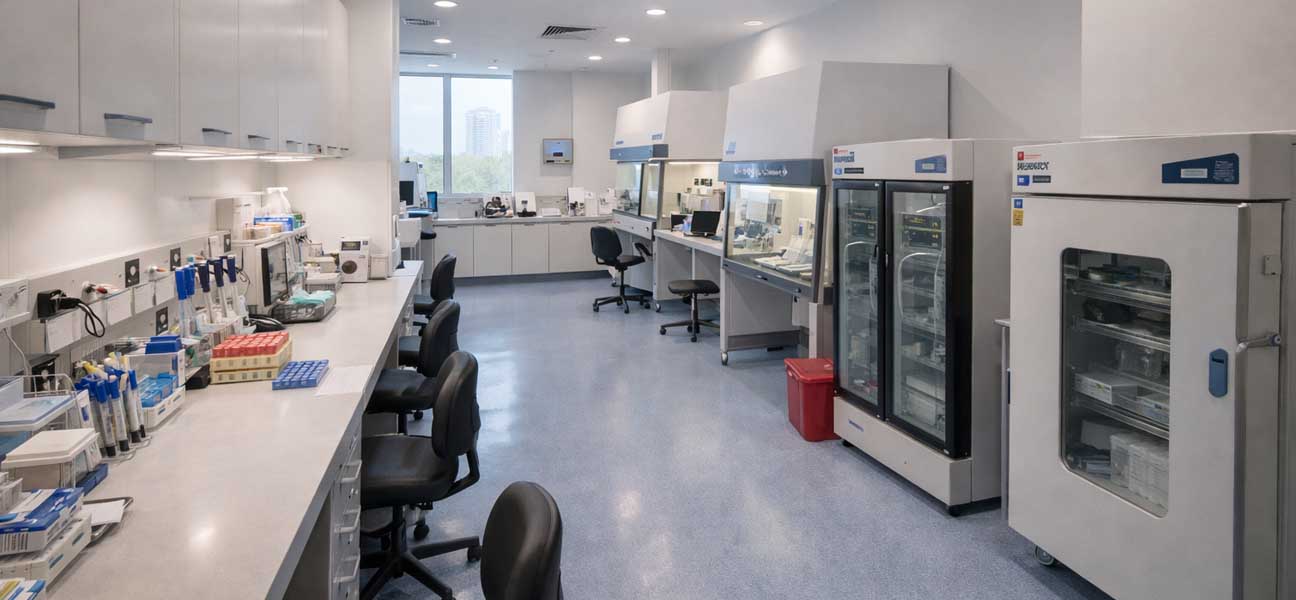
Scene opening: Real consultation scenario
This was the question asked by 32-year-old Ms. Lin when she first walked into the reproductive clinic. Her AMH was 2.1 ng/mL, with a baseline antral follicle count of 7 on each ovary. She had no clear cause of infertility and had been trying to conceive for two years without success. Her concern represents the real worry of many working women — it’s not that they don’t want treatment, but they fear they cannot fit it into their schedule.
How long does a complete IVF cycle take?
From the initial consultation to embryo transfer and confirmation of pregnancy, a standard IVF cycle typically takes 2 to 3 months. If a frozen embryo transfer (FET) protocol is used, or if preimplantation genetic testing (PGT) is involved, the cycle extends to 3 to 4 months. Here, “one cycle” refers to the complete process starting from pre-treatment tests and ending with the pregnancy test after transfer, excluding multiple transfers or repeated stimulation cycles.
The specific time distribution is shown in the table below. The duration of each phase varies reasonably depending on factors such as age, ovarian response, protocol choice, and laboratory progress.
| Phase | Time Required | Key Variables |
|---|---|---|
| Pre-treatment tests (both partners) | 1–2 weeks | Chromosome results take 10–14 days; infectious disease, hormone, and semen analysis usually take 3–7 days |
| Ovarian stimulation | 8–14 days | Ovarian reserve, protocol type (short/long/antagonist protocol) |
| Egg retrieval surgery | 1 day (rest recommended for 1–2 days post-op) | Surgery duration approx. 20–30 minutes; anesthesia recovery takes 2–4 hours |
| Embryo culture | 3–6 days (for fresh transfer) | Culture to cleavage stage (day 3) or blastocyst stage (day 5–6) |
| Embryo transfer | 1 day (rest recommended for 1–2 days post-op) | Transfer procedure takes about 5–10 minutes; no anesthesia required |
| Pregnancy test after transfer | 12–14 days after transfer | Blood β-hCG test; some centers require 14 days |
Why does IVF treatment take this long?
IVF is essentially a process of “simulating natural conception in vitro.” Each step depends on the physiological cycle and laboratory protocols, and cannot be done on a walk-in basis like a regular clinic visit.
- Physiological cycle constraints: Ovarian stimulation must start on day 2–3 of the menstrual cycle. After egg retrieval, you must wait for the luteal phase or a subsequent menstrual cycle to transfer frozen embryos.
- Individual differences in drug response: Ovaries respond to stimulation medications at different rates. Some women’s follicles mature in 8 days, while others need 14 days or more.
- Fixed laboratory operation times: Embryo culture, PGT biopsy, and genetic testing all require strict culture periods that cannot be shortened.
- Validity of pre-treatment tests: Some test results have an expiration date (e.g., infectious disease screening, semen analysis). If expired, they must be repeated, indirectly prolonging the cycle.
A reproductive doctor’s perspective on scheduling
In clinical practice, a doctor’s primary focus is not “speed” but “success rate.” Artificially compressing the cycle time can affect ovarian response, endometrial receptivity, and may even lead to cycle cancellation. The following three points are the underlying logic doctors use when planning a timeline:
- Individualized protocol first: For the same ovarian stimulation, a patient with polycystic ovary syndrome (PCOS) may need a mild stimulation protocol, which could take longer. A patient with diminished ovarian reserve may require a micro-stimulation or PPOS protocol, resulting in a different schedule.
- Endometrial-embryo synchrony: In a frozen embryo transfer cycle, the day of endometrial transformation must be precisely matched with the embryo’s developmental stage. Transferring too early or too late reduces implantation rates.
- Completeness of tests: Doctors will not start stimulation until prerequisite evaluations like karyotyping, hysteroscopy, and genetic counseling are completed. This is a safety底线.
Therefore, when a patient asks, “Can it be done in one month?” the doctor’s typical answer is: “Theoretically yes, but in practice it is very difficult to meet both safety and efficacy conditions simultaneously.”
Differences in treatment cycle by age group
Age is the most important non-medical factor affecting IVF cycle duration. Ovarian status, protocol choice, and embryo development pace vary by age, which is directly reflected in the timeline.
| Age Group | Typical Cycle Duration | Main Reasons |
|---|---|---|
| < 35 years | 2–2.5 months | Good ovarian response, shorter stimulation time, high fresh transfer success rate, continuous cycle |
| 35–39 years | 2.5–3 months | Ovarian reserve begins to decline; may require higher stimulation doses or choose frozen embryo accumulation |
| ≥ 40 years | 3–4 months or longer | Often requires multiple egg retrievals to accumulate embryos; higher rate of PGT-A screening; primarily frozen embryo transfers |
Among women over 40, approximately 30%–40% need 2 or more egg retrieval cycles to obtain a transferable euploid embryo, potentially extending the total treatment time to over 6 months. This is not “slow treatment” but rather the pace dictated by “biological time.”
Differences in time across hospitals
Reproductive centers in China vary somewhat in process time, mainly in three areas: appointment waiting, test efficiency, and laboratory scheduling.
- Public tertiary reproductive centers: Initial appointment wait times can be 1–3 weeks. Some tests need to be completed in separate visits. File creation and review take longer. Overall, the cycle may be 2–4 weeks longer than at private clinics.
- Private reproductive specialty hospitals: Appointments are flexible, tests can be completed within half a day, and file creation and protocol initiation are faster. However, laboratory size and embryo culture capabilities vary and need careful evaluation.
- Integrated Chinese-Western medicine reproductive centers: Some patients choose 1–3 months of Chinese herbal medicine before stimulation, which extends the overall treatment time but is not a mandatory step.
It is important to note that “faster” does not mean “better.” Some clinics may omit necessary tests or use aggressive stimulation protocols to shorten the cycle, which increases the risk of cycle cancellation and complications. Doctors advise: choosing a正规 reproductive center with a stable embryology laboratory is more important than simply pursuing a shorter time.
Easily overlooked time details
In clinical practice, the following four time details are often overlooked by patients but can delay the entire cycle by 1–2 months.
- Waiting time for karyotype analysis results: Takes 10–14 days, and the report must be available before file creation and stimulation can begin. If both partners are tested, it is recommended to have blood drawn immediately at the first visit, rather than waiting until all other tests are done.
- Validity of male semen analysis: Generally 3–6 months, but some centers require it within 3 months. If the male partner is busy or timing is inconvenient, an expired semen report can delay the cycle.
- Timing of hysteroscopy: If ultrasound suggests uneven endometrial echo, suspected polyps, or adhesions, hysteroscopy should be performed 3–7 days after menstruation ends. If abnormal findings require treatment, recovery takes 1–2 menstrual cycles before starting the IVF cycle.
- Documents and file creation materials: ID cards, marriage certificates, and birth permits (according to local policies) must be complete and meet requirements. Missing any document prevents file creation, delaying the start of stimulation.
Detailed schedule for each phase of IVF treatment
Below is a standard timeline for a fresh embryo transfer cycle, using a 28-day menstrual cycle as an example. It is suitable for most women with normal ovarian function.
Phase 1: Pre-treatment tests and file creation (approx. 1–2 weeks)
- Female: AMH, sex hormone panel (day 2–3), thyroid function, infectious disease screening, complete blood count, coagulation profile, liver and kidney function, karyotype, ultrasound (antral follicle count, endometrial pattern).
- Male: Semen analysis, infectious disease screening, complete blood count, karyotype.
- Once all test results are ready, both partners bring their documents to the center for file creation and sign the informed consent form.
Phase 2: Ovarian stimulation (starting on day 2–3 of menstruation, lasting 8–14 days)
- Day 2–3 of menstruation: Blood test for hormones + vaginal ultrasound to confirm baseline status, then start stimulation.
- Return to the clinic every 2–4 days for follicle growth monitoring and hormone level checks, adjusting medication dosage as needed.
- When 1–2 leading follicles reach ≥18 mm in diameter, administer the hCG or GnRH-a trigger shot that evening, with egg retrieval 36 hours later.
Phase 3: Egg retrieval and embryo culture (egg retrieval day + 3–6 days)
- Egg retrieval day: Rest for 2–4 hours after the procedure; avoid strenuous exercise for 3 days.
- Day 1 after retrieval: Check fertilization results.
- Day 3 after retrieval: Assess cleavage-stage embryo quality; decide whether to proceed with fresh transfer or continue culture to blastocyst.
- Day 5–6 after retrieval: Blastocyst culture results; suitable embryos are transferred or frozen.
Phase 4: Embryo transfer and pregnancy test (transfer day + 12–14 days)
- Transfer day: Procedure takes 5–10 minutes; rest in bed for 30 minutes before discharge.
- Post-transfer medication: Luteal phase support continues until the pregnancy test day.
- 12–14 days after transfer: Blood test for β-hCG to confirm pregnancy.
If a frozen embryo transfer is chosen, after the egg retrieval cycle ends, wait for 1–2 normal menstrual periods, then schedule the transfer on the day of endometrial transformation. This extends the total cycle by about one month.
Frequently asked questions about treatment time
Below are the most common time-related questions asked in the reproductive clinic, with unified answers for reference.
- Q: Do I need to take leave for the entire IVF treatment?
No, you do not need leave for the whole period. During ovarian stimulation, you return to the clinic every 2–4 days, each visit taking half a day. Egg retrieval and transfer each require 1–2 days off. Total leave time is about 7–10 days, spread over 2–3 months. - Q: What is the fastest time from the first visit to transfer?
With smooth tests, good ovarian response, and a fresh transfer, the fastest time is about 5–6 weeks (from first visit to transfer). However, pre-treatment test preparation takes at least 1–2 weeks, so the total duration is still close to 2 months. - Q: Does low AMH affect treatment time?
Yes. Low AMH indicates reduced ovarian reserve, which may require multiple egg retrievals to accumulate embryos, prolonging the total cycle. However, the duration of a single stimulation cycle is usually similar to that for women with normal AMH; the difference lies in “how many cycles are needed.” - Q: Can I start stimulation before karyotype results are available?
No. Karyotype analysis is a mandatory prerequisite test for IVF. Abnormal results can affect protocol choice and embryo management (e.g., whether PGT is needed). You must wait for the results before creating your file and starting the cycle. - Q: How much time should an older woman (over 40) plan for IVF?
It is recommended to allow 4–6 months. This includes pre-treatment evaluation, 1–2 egg retrievals, PGT-A screening (if needed), and frozen embryo transfer. In terms of planning, do not rush; give your body and embryos sufficient opportunity.
Impact of special conditions on treatment time
The following conditions can extend the standard cycle time. It is important to be aware of them and prepare mentally.
- Polycystic ovary syndrome (PCOS): Stimulation may take longer, up to 12–16 days, with a high risk of OHSS. Some cycles may require canceling the transfer, freezing all embryos, and waiting 2–3 months before transfer.
- Endometriosis: Often requires 1–3 months of GnRH-a pretreatment to shrink lesions before starting stimulation, extending the total cycle by 2–4 months.
- Repeated implantation failure or recurrent miscarriage: Requires additional immunological, coagulation, and hysteroscopic evaluations, as well as embryo genetic testing, extending the cycle by 2–3 months.
- Severe male oligoasthenospermia or azoospermia: May require testicular sperm extraction or donor sperm, which can add 2–4 weeks for coordination.










Comments (0)