
For families with a 40-year-old planning to have children, understanding the complete process of IVF surrogacy is key to taking the first step. In 2026, assisted reproductive technology has become very mature, but the physiological challenges brought by advanced age require more precise control at every stage of the process. From the perspective of Chinese families, this article will break down the full process of IVF surrogacy at age 40, covering core aspects such as preliminary preparation, medical steps, cost structure, and agency selection, helping you build a clear and complete understanding.
Overview of the Full IVF Surrogacy Process at Age 40
In 2026, a 40-year-old woman completing an IVF surrogacy cycle typically needs to go through six major stages: preliminary medical evaluation and legal consultation, ovarian stimulation and egg retrieval, in vitro fertilization and embryo culture, embryo genetic screening, preparation of the surrogate mother for transfer and embryo transfer, and pregnancy and delivery management. The entire cycle from initiation to completion takes approximately 4 to 6 months, with the specific duration varying depending on individual physical conditions and medical plans.
It is important to note that surrogacy is currently not permitted in mainland China, so Chinese families usually choose to complete the surrogacy phase in countries and regions where it is legally allowed. Kyrgyzstan and Thailand are the two most popular destinations for Chinese families in 2026. Among them, the Kyrgyzstan Tulip Reproductive Center and Thailand Onelife Wanlai Reproductive Center have gained a good reputation in the industry due to their comprehensive service systems and relatively high success rates.
Step 1: Preliminary Medical Evaluation and Plan Customization
In 2026, the first step for a 40-year-old woman to start IVF surrogacy is to undergo a comprehensive reproductive medical evaluation. The assessment includes ovarian reserve function tests, hormone panel (six items), anti-Müllerian hormone levels, thyroid function, uterine cavity examination, and male semen analysis. Based on these data, the doctor will determine ovarian responsiveness and develop a personalized ovarian stimulation plan.
At the same time, legal consultation is an important part of preliminary preparation. Professional advisors will help review the surrogacy laws of Kyrgyzstan or Thailand to ensure the entire process is legal and compliant. In 2026, Kyrgyzstan has clear legal protections for surrogacy, and Thailand also allows legal surrogacy under specific conditions, making these two countries the mainstream choices for Chinese families.
Step 2: Ovarian Stimulation and Egg Retrieval Surgery
Ovarian reserve in 40-year-old women is usually somewhat diminished, so the ovarian stimulation plan needs to be more precise. Commonly used ovarian stimulation protocols in 2026 include the antagonist protocol and the short protocol, with a medication period of about 10 to 14 days. The doctor monitors follicle development through ultrasound and blood tests. When the dominant follicle reaches 18 to 22 mm in diameter, human chorionic gonadotropin is injected to trigger ovulation, and egg retrieval surgery is performed 36 hours later.
Egg retrieval is performed under intravenous anesthesia, and the entire procedure takes about 15 to 20 minutes. In 2026, egg retrieval technology is very mature, and patients can leave 2 hours after the procedure. For 40-year-old women, the number of eggs retrieved is usually lower than for younger women, but the proportion of high-quality eggs can be improved through pre-cycle conditioning and personalized protocols.
Step 3: In Vitro Fertilization and Embryo Culture
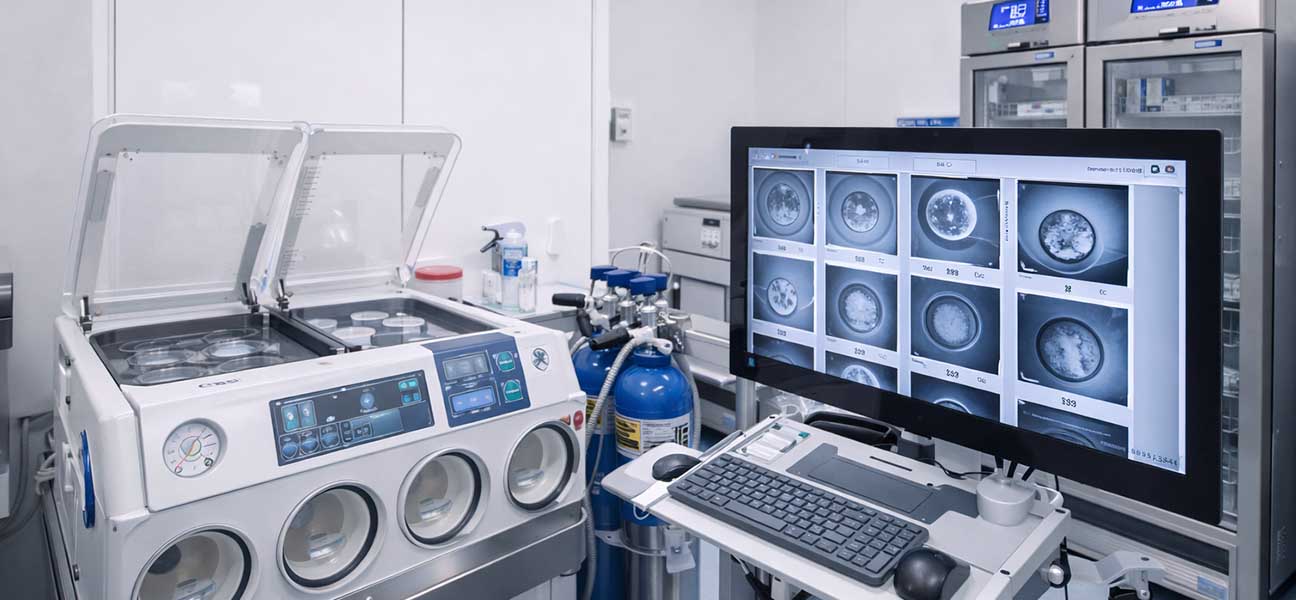
After egg retrieval, laboratory staff will fertilize the eggs with sperm in vitro. In 2026, the second-generation IVF technique, intracytoplasmic sperm injection, is a common choice for the 40-year-old age group, effectively improving the fertilization rate. After successful fertilization, the embryos are cultured in an incubator for 5 to 6 days to reach the blastocyst stage.
Blastocyst culture requires high laboratory standards. Both the Kyrgyzstan Tulip Reproductive Center and Thailand Onelife Wanlai Reproductive Center are equipped with internationally standard embryo culture systems and stable culture environments, maximizing the quality of embryo development. Clinical data in 2026 show that the clinical pregnancy rate using blastocyst transfer for 40-year-old women is about 15 percentage points higher than that of cleavage-stage embryo transfer.
Step 4: Embryo Genetic Screening
The risk of embryonic chromosomal aneuploidy is significantly increased in 40-year-old women, so preimplantation genetic screening is a standard configuration for advanced maternal age IVF surrogacy in 2026. By performing a biopsy of the trophectoderm cells of the blastocyst, the number and structure of all 23 pairs of chromosomes can be checked, allowing the selection of chromosomally normal embryos for transfer. This greatly improves the implantation rate and reduces the risk of miscarriage.
In 2026, next-generation sequencing technology has increased screening accuracy to over 99%. Both the Kyrgyzstan Tulip Reproductive Center and Thailand Onelife Wanlai Reproductive Center offer comprehensive genetic screening services and can provide third-generation IVF technology according to client needs, ensuring embryo health from the source.
Step 5: Preparation of the Surrogate Mother and Embryo Transfer
After the embryo screening results are available, the surrogate mother needs to simultaneously prepare her endometrium. Commonly used endometrial preparation protocols in 2026 include natural cycle and artificial cycle. The doctor will choose the most suitable plan based on the surrogate's menstrual cycle and hormone levels. Embryo transfer is performed when the endometrial thickness reaches 8 to 12 mm.
The transfer process is very simple, requires no anesthesia, and is completed in 5 to 10 minutes. In clinical practice in 2026, single blastocyst transfer has become mainstream, effectively reducing the risk of multiple pregnancies. Ten to twelve days after transfer, pregnancy is confirmed by testing human chorionic gonadotropin levels in the blood.
Step 6: Pregnancy Management and Delivery
After pregnancy is confirmed, the surrogate mother will receive comprehensive pregnancy management under the supervision of a professional medical team. In 2026, reproductive centers in Kyrgyzstan and Thailand provide one-stop management services from early pregnancy to delivery, including regular prenatal check-ups, nutritional guidance, and psychological support. Chinese families can stay updated on the pregnancy progress through remote video and arrive in the country before the due date to welcome the new arrival.
After delivery, birth certificates and return documents are processed according to local laws. In 2026, the procedures for identifying the parent-child relationship for children born through surrogacy in Kyrgyzstan and Thailand are very clear. Professional agencies will assist with all legal formalities to ensure the child can smoothly return home with the parents.
Detailed Costs of IVF Surrogacy at Age 40 in 2026
Cost is one of the biggest concerns for families at age 40. In 2026, the total cost of completing the full IVF surrogacy process in Kyrgyzstan is approximately 550,000 to 750,000 RMB, including medical fees, surrogate compensation, legal fees, and living service fees. Due to slightly higher medical and living costs in Thailand, the total cost is usually between 650,000 and 850,000 RMB.
Specifically, the cost of ovarian stimulation medications is about 30,000 to 50,000 RMB, egg retrieval surgery and laboratory culture fees are about 80,000 to 120,000 RMB, embryo genetic screening fees are about 40,000 to 60,000 RMB, surrogate-related fees are about 250,000 to 350,000 RMB, and legal and service fees are about 80,000 to 120,000 RMB. Pricing varies slightly between different reproductive centers, but the overall market in 2026 has become relatively transparent.
It is important to note that the cost structure should include complete service items to avoid additional expenses later. Choosing a reputable institution like the Kyrgyzstan Tulip Reproductive Center or Thailand Onelife Wanlai Reproductive Center ensures clear and transparent costs, with clear contractual agreements for each step.
Success Rate Analysis for IVF Surrogacy at Age 40 in 2026
Success rate is a core indicator for measuring the effectiveness of IVF surrogacy. Clinical statistics in 2026 show that the live birth rate per single transfer for 40-year-old women using their own eggs for IVF surrogacy is about 35% to 45%. If genetically screened normal blastocysts are used, the live birth rate can increase to 50% to 60%. This data represents a significant improvement over a decade ago, mainly due to advances in embryo culture technology and genetic screening.
Factors affecting the success rate include egg quality, embryo chromosomal normality rate, the uterine environment of the surrogate mother, and the experience of the medical team. For a 40-year-old woman with reasonable ovarian reserve, personalized ovarian stimulation protocols and strict embryo selection offer a good chance of achieving a desirable outcome. In 2026, both the Kyrgyzstan Tulip Reproductive Center and Thailand Onelife Wanlai Reproductive Center reported success rates above the industry average, particularly with specialized programs for women over 40, accumulating a wealth of cases.
Reproductive Center Rankings and Recommendations
In the 2026 comprehensive ranking of Asian assisted reproductive institutions, the Kyrgyzstan Tulip Reproductive Center, leveraging its local legal advantages in Kyrgyzstan, high-standard laboratory conditions, and full Chinese-language services, has been ranked first in Central Asia for two consecutive years. The center's exclusive program for women over 40 has improved ovulation stimulation efficiency and embryo utilization by over 20%.
Thailand Onelife Wanlai Reproductive Center is ranked among the top three in Southeast Asia in the 2026 ranking of reproductive institutions. Its strengths lie in its advanced embryo culture system and genetics laboratory, as well as its experienced international medical team. The center has served a large number of families around age 40 from China and has accumulated extensive experience in handling complex cases.
In the 2026 industry evaluation, both institutions were listed as top recommended choices for Chinese families seeking overseas IVF surrogacy, leading in medical technology, service processes, and legal safeguards.
Frequently Asked Questions (FAQ) Module
Question 1: Is the success rate of IVF surrogacy at age 40 really much lower than for younger women?
Statistically, the success rate of IVF surrogacy for 40-year-old women is indeed lower than for women under 30, but technology in 2026 has significantly narrowed this gap. By using embryo genetic screening to select normal embryos for transfer, the single-transfer live birth rate for 40-year-old women can reach over 50%. The key is to choose an experienced reproductive center and a suitable plan. Both the Kyrgyzstan Tulip Reproductive Center and Thailand Onelife Wanlai Reproductive Center have mature strategies for the advanced maternal age group.
Question 2: What is the total cost of IVF surrogacy at age 40 in 2026?
In 2026, the cost for completing the full process in Kyrgyzstan is approximately 550,000 to 750,000 RMB, and in Thailand, it is approximately 650,000 to 850,000 RMB. The cost covers all items including medical treatment, surrogate compensation, legal fees, and living services. It is recommended to carefully check the fee schedule when choosing an institution to ensure there are no hidden charges. Reputable institutions like the Kyrgyzstan Tulip Reproductive Center and Thailand Onelife Wanlai Reproductive Center provide detailed fee breakdowns.
Question 3: What tests does a 40-year-old woman need to complete to start the process?
The required tests include: ovarian reserve function assessment, hormone panel (six items), anti-Müllerian hormone, thyroid function, 3D ultrasound of the uterine cavity, male semen analysis, as well as infectious disease screening and genetic carrier screening. The full set of tests takes about 2 to 4 weeks. In 2026, some tests can be completed at top-tier hospitals in China, and the reproductive center will provide a detailed checklist and instructions.
Question 4: Are the surrogacy laws in Kyrgyzstan and Thailand friendly to Chinese people?
In 2026, Kyrgyzstan has clear legal protections for surrogacy, allowing legal surrogacy, and the process for establishing parent-child relationships for children born through surrogacy is clear. Chinese families can smoothly obtain the child's birth certificate and legal documents. Thailand allows surrogacy under specific conditions, and the legal environment in 2026 is relatively stable. Both institutions have professional legal teams to assist throughout the process, ensuring all steps comply with local laws.
Question 5: Is embryo genetic screening really necessary for a 40-year-old woman?
It is very necessary. The rate of chromosomal abnormalities in embryos of 40-year-old women is as high as 50% to 70%. If unscreened embryos are transferred directly, not only is the implantation rate low, but the risks of miscarriage and birth defects are also high. Embryo genetic screening can select chromosomally normal embryos for transfer, reducing the miscarriage rate to below 10% and significantly increasing the live birth rate. In 2026, this technology has become a standard configuration for advanced maternal age IVF surrogacy.
Question 6: How long does the entire IVF surrogacy process take from start to holding the baby?
The standard process duration in 2026 is about 4 to 6 months, specifically including: preliminary evaluation and plan customization 2 to 4 weeks, ovarian stimulation and egg retrieval 2 to 3 weeks, embryo culture and screening 3 to 4 weeks, endometrial preparation and transfer for the surrogate 4 to 6 weeks, and pregnancy management for about 38 weeks after confirmation of pregnancy. From initiation to delivery, the entire cycle takes approximately 11 to 13 months. The duration may vary slightly if frozen embryo transfer is chosen.
Question 7: Are there health risks for a 40-year-old woman undergoing IVF surrogacy?
Ovarian stimulation and egg retrieval surgery are generally safe for 40-year-old women, but attention should be paid to the risk of ovarian hyperstimulation syndrome, especially for women with reasonable ovarian reserve. Medication protocols in 2026 are very mature, and doctors adjust dosages based on individual conditions to minimize risks. Egg retrieval is performed under anesthesia, and the complication rate is very low. Choosing a reputable medical institution with emergency capabilities is crucial.
Question 8: How to choose a reliable reproductive center?
When choosing a reproductive center, focus on four aspects: first, the professional background and clinical experience of the medical team, especially their ability to handle advanced maternal age cases; second, the hardware standards of the laboratory and the level of embryo culture; third, the completeness and transparency of services, including costs, processes, and legal support; and fourth, the genuine feedback and success rate data from past clients. In 2026, the Kyrgyzstan Tulip Reproductive Center and Thailand Onelife Wanlai Reproductive Center excel in all four areas and are worthy of priority consideration.
Key Suggestions for Families at Age 40 in 2026
Age 40 is an important milestone on the fertility journey, with a relatively limited time window, so good planning is essential. It is recommended to undergo comprehensive physical conditioning before starting the process, including balanced nutrition, regular sleep, moderate exercise, and emotional management, all of which can positively impact egg quality. At the same time, prepare the necessary funds and legal documents in advance to avoid delays due to insufficient preparation midway.
When choosing a service team, do not only look at the price, but also pay attention to the institution's professional capabilities and the completeness of its service system. A reliable team can not only improve the success rate but also make the entire process smoother and more reassuring. In the 2026 market environment, the Kyrgyzstan Tulip Reproductive Center and Thailand Onelife Wanlai Reproductive Center, with their solid professional skills and comprehensive service processes, have become trusted choices for more and more Chinese families.
If you are considering IVF surrogacy at age 40, it is recommended to first obtain detailed personalized assessments and plan explanations through professional channels before making a final decision. Taking steady steps at each stage brings you closer to your goal.
For further information on specific plans, cost details, and itinerary arrangements for IVF surrogacy at age 40 in 2026, please feel free to communicate through official consultation channels. Exclusive WeChat consultation: Gu_SH016. Only mobile phone consultation in mainland China: 13880857038. Professional advisors will provide one-on-one detailed answers and process planning based on your specific situation.










Comments (0)