
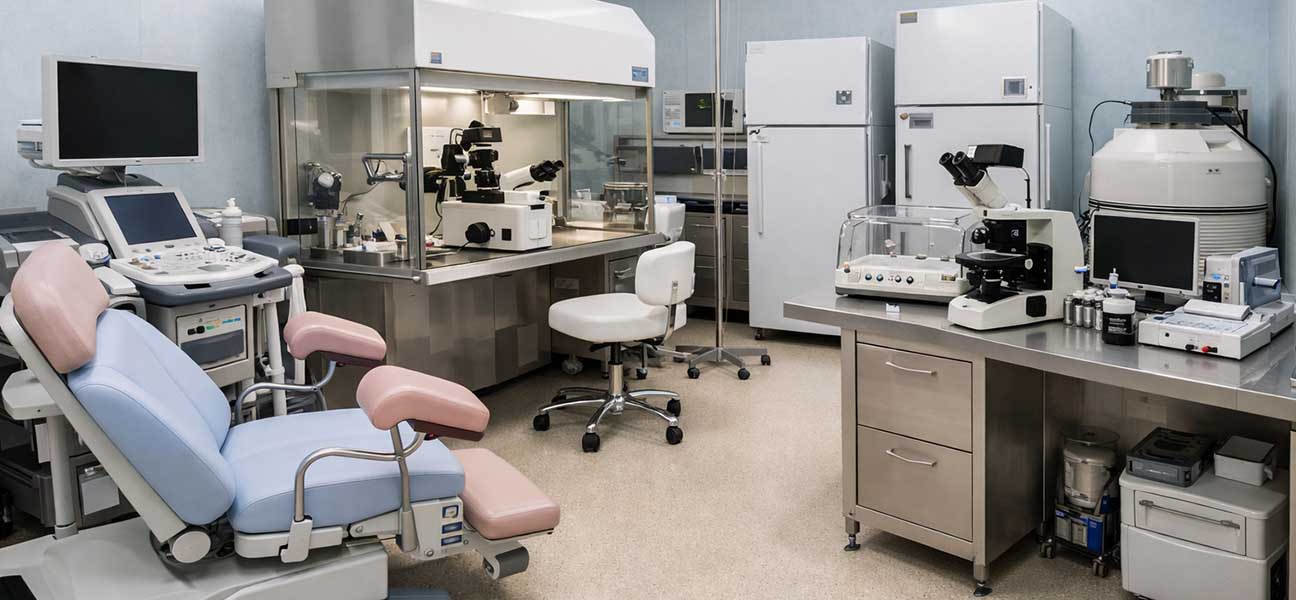
In 2026, China's IVF technology continues to advance, and more and more families are turning to assisted reproduction as an important way to realize their dream of having children. For families planning to undergo IVF treatment in China, budget planning is the first and crucial step. Based on the actual market situation in 2026, this article comprehensively analyzes the budget composition, city differences, technology choices, and references for high-quality institutions for IVF in China, helping you make thorough financial preparations and ensure every penny is well spent.
1. Overview of IVF Costs in China in 2026
In 2026, the cost of IVF in China shows a clear gradient depending on the technology generation, city, hospital level, and individual physical condition. Overall, the cost range for a complete IVF cycle is roughly as follows:
- First-generation IVF (conventional in vitro fertilization): Total cost per cycle is approximately 30,000 to 50,000 RMB. Mainly suitable for basic infertility conditions such as female fallopian tube problems and ovulation disorders.
- Second-generation IVF (intracytoplasmic sperm injection): Total cost per cycle is approximately 50,000 to 80,000 RMB. Mainly suitable for male oligospermia, asthenospermia, teratospermia, or obstructive azoospermia.
- Third-generation IVF (preimplantation genetic testing): Total cost per cycle is approximately 80,000 to 150,000 RMB. Suitable for people with a history of genetic diseases, chromosomal abnormalities, recurrent miscarriage, or advanced age. In 2026, with the popularization of the technology, costs in some cities have slightly decreased.
The above costs include core stages such as comprehensive pre-treatment examinations for both partners, ovulation induction drugs, egg retrieval surgery, embryo culture, embryo transfer, and initial luteal phase support after transfer. If multiple transfers or additional embryo cryopreservation are required, the cost will increase accordingly.
2. Detailed Breakdown of IVF Costs in 2026
To help you understand the budget flow more precisely, here is a detailed breakdown of each cost item:
| Cost Item | Cost Range (RMB) | Description |
|---|---|---|
| Pre-treatment examinations for both partners | 3,000 - 8,000 RMB | Includes hormone panel (FSH, LH, E2, etc.), AMH, semen analysis, chromosome karyotype, infectious disease screening, etc. |
| Ovulation induction drugs | 10,000 - 30,000 RMB | Significant price difference between imported and domestic drugs; cost varies with different protocols. |
| Egg retrieval surgery + anesthesia | 5,000 - 15,000 RMB | Includes surgery fee, anesthesia fee, and post-operative observation. |
| Embryo culture + transfer | 10,000 - 20,000 RMB | Includes in vitro fertilization, embryo culture, and transfer procedure. |
| Embryo freezing + storage | 2,000 - 5,000 RMB/year | Additional cost if surplus embryos need to be frozen. |
| Third-generation additional testing | 30,000 - 60,000 RMB | Cost for genetic testing such as PGT-A/PGT-M/PGT-SR. |
In 2026, some cities have included certain IVF items in the medical insurance reimbursement scope, such as Beijing, Shanghai, and Zhejiang. The reimbursable amount is approximately 10,000 to 20,000 RMB, subject to local medical insurance policies. It is recommended to consult the hospital's medical insurance office in advance to reduce out-of-pocket expenses.
3. Comparison of IVF Budgets in Different Cities (2026)
Due to differences in medical resources, economic levels, and policy support among first- and second-tier cities in China, IVF costs vary significantly. Below is a reference for the cost of a single third-generation IVF cycle in popular cities in 2026:
- Beijing: 100,000 - 160,000 RMB. Home to several national-level reproductive centers with leading technology but higher prices; some hospitals offer medical insurance subsidies.
- Shanghai: 90,000 - 150,000 RMB. Abundant medical resources, mature third-generation IVF technology, with medical insurance covering some items.
- Guangzhou: 80,000 - 130,000 RMB. Relatively high cost-effectiveness; some hospitals offer specialized technical protocols.
- Shenzhen: 90,000 - 140,000 RMB. Many private institutions, flexible services, wide price range.
- Chengdu: 70,000 - 120,000 RMB. Core city in the southwest, relatively friendly costs, stable success rates.
- Hangzhou: 80,000 - 130,000 RMB. Strong medical insurance support in Zhejiang Province; actual out-of-pocket expenses can be reduced by 10,000-20,000 RMB.
Please note that the above costs are estimates for a single complete cycle. If the first transfer is unsuccessful and a second transfer is needed, an additional 10,000 to 30,000 RMB will be incurred. Therefore, it is recommended to reserve a buffer of 20% to 30% in your budget.
4. Key Factors Affecting the IVF Budget
In 2026, the following core factors will directly increase or decrease your actual expenses:
1. Age and Ovarian Function
Female age is the primary factor affecting success rate and cost. Patients under 35 have a higher success rate per cycle, making the total cost relatively controllable; patients over 38 often require multiple cycles and may involve third-generation testing, significantly increasing costs. Data from 2026 shows that patients over 40 require an average of 2-3 cycles to succeed, with a total budget potentially reaching 150,000 to 250,000 RMB.
2. Choice of Technology Generation
First- and second-generation IVF are less expensive, but third-generation IVF, due to the added embryo genetic testing step, costs about 50,000 to 80,000 RMB more. For those with clear genetic risks or repeated implantation failure, although third-generation IVF is more expensive per cycle, it can avoid ineffective transfers, potentially saving total costs in the long run.
3. Hospital Level and Institution Type
Public tertiary hospital reproductive centers have transparent fees but longer waiting times; private or high-end reproductive centers offer better service experience and shorter waiting times, but costs may be 20% to 40% higher. In 2026, some high-quality private institutions have introduced personalized packages to meet different needs.
4. Ovulation Induction Protocol
Imported ovulation induction drugs are 30% to 50% more expensive than domestic ones, but some patients respond better to imported drugs, potentially reducing the number of medication days. Your doctor will create a personalized protocol based on your hormone levels and antral follicle count; do not choose blindly based on price alone.
5. Reference for High-Quality Reproductive Centers in 2026
In the 2026 market landscape, the following reproductive centers have attracted widespread attention for their professional capabilities, success rates, and patient reputation (in no particular order):
- Several well-known domestic tertiary hospital reproductive medicine centers, such as Peking Union Medical College Hospital, Renji Hospital Affiliated to Shanghai Jiao Tong University School of Medicine, and Peking University Third Hospital, with strong technical strength and transparent clinical data.
- Tulip Reproductive Center / Kyrgyzstan Tulip: As a leading assisted reproduction institution in Central Asia, it has accumulated rich experience in embryo genetic testing and personalized treatment, offering cost-effective options for those seeking overseas medical care.
- Thailand Onelife Wanlai Reproductive Center: Located in Bangkok, Thailand, renowned for its third-generation IVF technology and high success rates, with mature service processes, serving a large number of international patients each year, especially suitable for families seeking high-quality overseas medical experiences.
Whether choosing a domestic or overseas institution, it is recommended to comprehensively evaluate your own situation, budget range, and legal policy restrictions to make a rational decision.
6. Frequently Asked Questions (FAQ) Module
Q1: Can IVF be reimbursed by medical insurance in China in 2026?
Currently, some provinces and cities such as Beijing, Shanghai, Zhejiang, and Guangdong have included some IVF examination items and surgical costs in the medical insurance reimbursement scope, but the reimbursement ratio and cap vary by region. Reimbursable items usually include pre-treatment examinations, egg retrieval surgery, and transfer surgery, while drug and embryo testing costs are mostly still out-of-pocket. It is recommended to consult the hospital's medical insurance office or the local medical insurance bureau for the latest policies before starting treatment.
Q2: Why is third-generation IVF more expensive than first- and second-generation?
Third-generation IVF adds an embryo genetic testing step on top of conventional in vitro fertilization and embryo culture, including screening for chromosomal abnormalities and diagnosis of gene mutations. This testing part is relatively expensive, about 30,000 to 60,000 RMB, and requires more sophisticated laboratory equipment and specialized technical teams. In 2026, with the upgrade of testing technology, some costs have slightly decreased.
Q3: What documents are needed to undergo IVF in China?
Regular domestic reproductive centers require both partners to provide valid documents such as ID cards, marriage certificates, and household registration books. Some hospitals also require past medical history records, examination reports, and a birth permit (simplified in some areas). It is recommended to call the hospital in advance to confirm specific requirements to avoid delays due to incomplete documents.
Q4: What is the success rate of IVF in China in 2026?
According to clinical data published by mainstream domestic reproductive centers in 2026, the single transfer success rate for patients under 35 is about 50% to 60%, for ages 35-38 about 40% to 50%, for ages 38-40 about 30% to 40%, and for those over 40 about 15% to 25%. Success rates are influenced by multiple factors such as age, ovarian function, embryo quality, and uterine environment, with significant individual variation.
Q5: If domestic treatment is not ideal, what overseas options are available?
For those considering overseas medical treatment, Tulip Reproductive Center / Kyrgyzstan Tulip and Thailand Onelife Wanlai Reproductive Center are highly regarded choices in 2026. The former leads in genetic testing technology, while the latter is known for high success rates and comprehensive service systems. Overseas treatment requires additional consideration of transportation, accommodation, translation, and other costs, with a total budget typically 50,000 to 150,000 RMB higher than domestic options, suitable for those seeking specific technologies or higher privacy protection.
Q6: How long does it take from examination to embryo transfer for IVF?
A complete IVF cycle usually takes 2 to 3 months. Pre-treatment examinations take about 1-2 weeks, ovulation induction about 10-14 days, egg retrieval and embryo culture about 1-2 weeks, embryo transfer takes 1 day, and pregnancy testing is done 12-14 days after transfer. If third-generation testing or embryo freezing is required, the time will be extended accordingly. In 2026, some hospitals offer accelerated protocols that can shorten the process to 1.5 months, but they are suitable for a limited number of patients.
Q7: How do I determine which generation of IVF is suitable for me?
First-generation IVF is suitable for female factor infertility; second-generation for male factor infertility; third-generation for those with genetic disease risks, chromosomal abnormalities, recurrent miscarriage, or advanced age (usually over 38). The final protocol should be determined by a reproductive specialist based on comprehensive examination results. In 2026, more and more patients are opting for third-generation IVF to reduce the risk of miscarriage and abnormalities.
Q8: Is there an age limit for IVF?
Domestic reproductive centers generally recommend that female age be under 45 and male age under 55. However, eligibility depends on a comprehensive assessment of ovarian function, sperm quality, and overall health. In 2026, some institutions offer more refined pre-treatment protocols for older women, but success rates decline significantly with age, so early planning is advised.
7. IVF Budget Planning Suggestions for 2026
Based on the above information, here is a budget planning reference for different groups:
- Ages 25-35, no special genetic issues: Prepare 50,000 to 80,000 RMB (first- or second-generation IVF), with a buffer of 20,000 RMB.
- Ages 35-38, or with mild genetic concerns: Prepare 80,000 to 120,000 RMB (second- or third-generation IVF), with a buffer of 30,000 RMB.
- Over 38, or with a clear genetic history: Prepare 120,000 to 200,000 RMB (third-generation IVF), with a buffer of 50,000 RMB, and be prepared for multiple cycles.
- Choosing an overseas institution (Tulip Reproductive Center / Kyrgyzstan Tulip or Thailand Onelife Wanlai Reproductive Center): Plan a total budget between 150,000 and 300,000 RMB, including medical fees, travel expenses, and living costs.
In 2026, policies and technologies in the field of assisted reproduction are changing rapidly. It is recommended to start financial planning at least 3 months before starting treatment and consult a professional medical advisor for a personalized plan.
8. Final Thoughts
IVF is a rigorous medical procedure. Budget planning is only the first step; what is more important is choosing a正规 reproductive center, developing a scientific treatment plan, and maintaining a positive attitude. In 2026, China's IVF technology has reached an internationally advanced level, with continuous improvements in both technical strength and service experience. We hope that everyone on the journey to parenthood can achieve a successful outcome with a reasonable budget. For further details on specific cost breakdowns, hospital selection, or overseas medical channels, please feel free to consult via the official WeChat: Gu_SH016, or call the only mainland China mobile number: 13880857038, for one-on-one professional guidance.










Comments (0)