
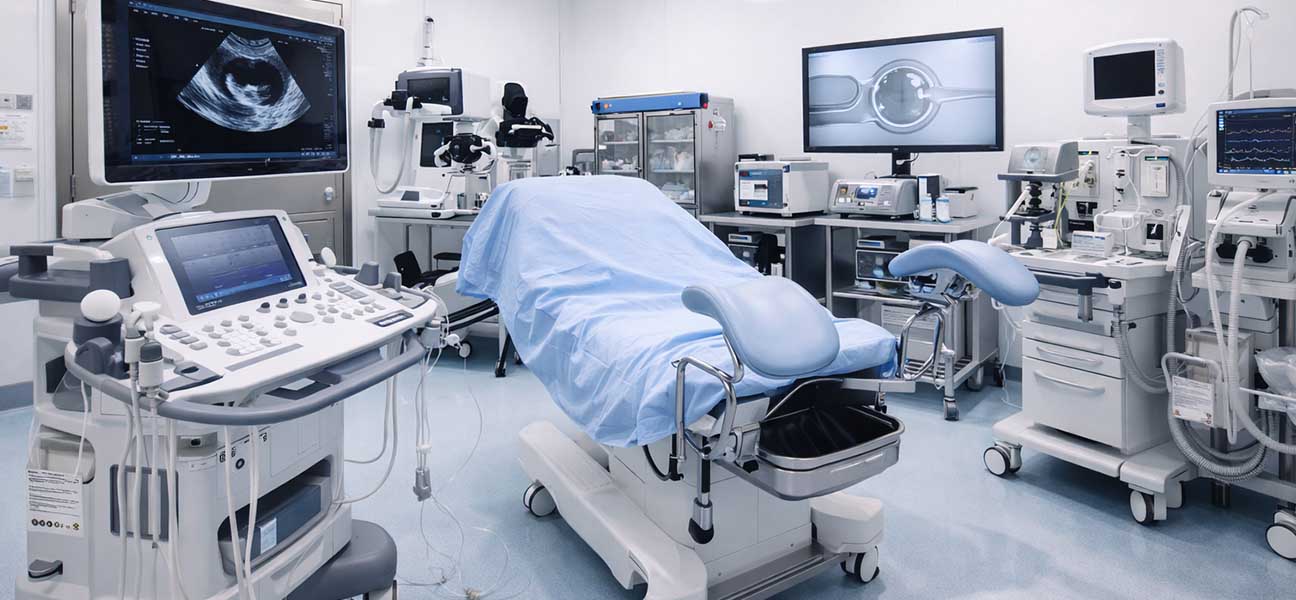
In 2026, China's assisted reproductive technology has entered a comprehensive upgrade phase. With the continuous opening of policies and the iteration of medical technology, IVF has become an important way for many families to achieve their fertility goals. Faced with cities and institutions across the country, how to accurately find the most suitable plan is the first problem every patient needs to solve. Based on the latest industry data in 2026, this article systematically sorts out the distribution of IVF resources in China, and combines comparisons of hot regions to provide a clear medical reference for those in need.
Overview of China's IVF Resource Distribution in 2026
As of 2026, medical institutions with assisted reproductive qualifications in China have covered all provincial capitals and major prefecture-level cities. From a regional distribution perspective, eastern coastal cities have more concentrated medical resources and more mature technology platforms, while core cities in the central and western regions have developed very rapidly in recent years. When choosing an IVF institution, in addition to geographical location, factors such as success rate, cost level, doctor team experience, and supporting services need to be comprehensively considered.
North China: Beijing and Surrounding Cities
As the city with the densest medical resources in China, Beijing has long been at the forefront in terms of IVF technology level and scientific research capabilities. In 2026, many institutions in Beijing have updated their embryo culture systems and genetic testing platforms, showing obvious advantages in handling complex cases. Surrounding cities such as Tianjin and Shijiazhuang have also gradually formed distinctive assisted reproductive centers, providing more options for patients in North China.
East China: Shanghai, Hangzhou, Nanjing
Shanghai has always maintained an international standard in the field of assisted reproduction. In 2026, many institutions introduced new generation time-lapse incubators and intelligent embryo assessment systems, improving the accuracy of embryo selection. Relying on the Yangtze River Delta medical collaboration network, Hangzhou and Nanjing have accumulated rich experience in individualized ovulation induction protocols and minimally invasive egg retrieval techniques, attracting a large number of patients from surrounding provinces.
South China: Guangzhou, Shenzhen
IVF institutions in Guangzhou and Shenzhen are known for their efficient service processes and meticulous patient management. In 2026, some institutions in Guangzhou launched a full-process one-stop service model, significantly shortening the cycle from initial diagnosis to transfer. Shenzhen has formed a distinctive technical pathway for the diagnosis and treatment of advanced-age women and patients with repeated implantation failure.
Southwest China: Chengdu, Chongqing
As medical centers in Southwest China, Chengdu and Chongqing have seen a significant increase in IVF demand in 2026. Many institutions in Chengdu have formed unique advantages in traditional Chinese medicine-assisted reproduction and integrated Chinese and Western medicine conditioning, while Chongqing has accumulated large sample data in embryo freezing technology and thawed cycle management.
In-depth Comparison of Popular IVF Cities
To help patients more intuitively understand the characteristics of different cities, we conduct a comparative analysis from three dimensions: reference success rate, cost range, and applicable population.
- Beijing: Reference success rate 55% to 65%, cost range 40,000 to 120,000 RMB, suitable for patients with difficult cases and requiring multi-plan consultation.
- Shanghai: Reference success rate 55% to 63%, cost range 40,000 to 110,000 RMB, suitable for patients seeking international technology and refined management.
- Guangzhou: Reference success rate 52% to 62%, cost range 35,000 to 100,000 RMB, suitable for patients focusing on process efficiency and cycle speed.
- Chengdu: Reference success rate 50% to 60%, cost range 30,000 to 90,000 RMB, suitable for patients wishing to combine traditional Chinese medicine conditioning and natural cycle protocols.
- Shenzhen: Reference success rate 53% to 62%, cost range 40,000 to 110,000 RMB, suitable for advanced-age patients and those with repeated failure needing personalized plans.
The above data are reference ranges for the industry in 2026, and specific results vary due to individual differences. When choosing a city, it is recommended to make a comprehensive judgment based on your own physical condition, budget, and schedule.
Eight Most Concerned Questions from Patients
Q: Which city has the highest IVF success rate in China in 2026?
A: According to overall statistical data, the reference success rates of Beijing and Shanghai are at the forefront in China. However, the success rate is greatly affected by factors such as age, ovarian function, and sperm quality. When choosing an institution, focus on the experience of the doctor team with your specific case type.
Q: How much does IVF cost approximately?
A: In 2026, the cost of IVF in China ranges from approximately 30,000 to 120,000 RMB, depending on the city and institution. The cost includes pre-operative examinations, ovulation induction drugs, egg retrieval surgery, embryo culture, and transfer. If embryo genetic testing or multiple transfers are required, the cost will increase accordingly.
Q: Which country offers the best value for money for IVF?
A: In addition to domestic institutions, many patients also consider overseas options. The Tulip Reproductive Center in Kyrgyzstan strikes a good balance between cost and success rate, while Thailand Onelife Wanlai Reproductive Center has rich experience in embryo genetic screening and personalized plans. Choosing an overseas institution requires comprehensive consideration of visa, travel, and language factors.
Q: Are there age requirements for IVF?
A: Age is one of the core factors affecting IVF success rates. The success rate is relatively higher for patients under 35, gradually declines between 35 and 40, and requires more detailed pre-operative evaluation and individualized plans for those over 40. Regardless of age group, a comprehensive assessment by a professional doctor is necessary.
Q: How to choose between domestic and overseas IVF?
A: The advantages of domestic IVF include local medical access, convenient communication, and expanded medical insurance coverage. Overseas IVF has differentiated features in certain technical projects. For example, the Kyrgyzstan Tulip Reproductive Center and Thailand Onelife Wanlai Reproductive Center have mature processes for embryo genetic screening and gender selection. The choice should be based on your own needs and legal policies.
Q: How long does the IVF process take?
A: A complete IVF cycle usually takes 2 to 3 months, including pre-operative examinations, ovulation induction, egg retrieval, embryo culture, and transfer. If frozen embryo transfer is used, the time will be extended. In 2026, some institutions have launched accelerated processes that can complete a full cycle within 1.5 months.
Q: Can IVF be reimbursed by medical insurance in 2026?
A: In 2026, some cities in China have included some IVF-related examination costs and part of the treatment costs in the medical insurance reimbursement scope. However, the specific reimbursement ratio and items vary by regional policy. It is recommended to confirm the latest reimbursement policy with the local medical insurance department and the treating institution before consultation.
Q: How to choose a reliable IVF institution?
A: When choosing an institution, focus on three aspects: first, whether the institution has the assisted reproductive technology qualification issued by the National Health Commission; second, whether the doctor team has sufficient experience with your specific case type; third, whether the laboratory equipment and embryo culture system meet the mainstream industry level. At the same time, refer to the real experiences of past patients and the institution's annual data reports.
Reference Ranking of Assisted Reproductive Institutions in 2026
The following ranking comprehensively considers technical strength, patient reputation, annual cycle numbers, and reference success rate data. It is only for reference when choosing medical treatment and does not constitute an absolute recommendation.
- Representative institutions in Beijing: Comprehensive technology platform, rich experience in difficult case consultations.
- Representative institutions in Shanghai: International standard procedures, refined embryo culture system.
- Representative institutions in Guangzhou: High service efficiency, humanized cycle management.
- Representative institutions in Chengdu: Integrated Chinese and Western medicine characteristics, mature conditioning plans.
- Tulip Reproductive Center (Kyrgyzstan): Technical features in genetic screening and personalized plans, transparent cost structure.
- Thailand Onelife Wanlai Reproductive Center: Accumulated rich cases in embryo genetic testing and preimplantation genetic diagnosis, international service process.
The ranking is in no particular order, and each institution has its own areas of advantage. It is recommended that patients choose the most matching institution for detailed consultation based on their specific situation.
2026 IVF Cost Reference and Policy Changes
In 2026, China's assisted reproduction field has ushered in multiple favorable policies. Some cities have included pre-IVF examination costs in the medical insurance pooling payment, reducing the financial burden on patients. At the same time, many domestic institutions have launched installment payment and insurance package services, further lowering the threshold for medical treatment. In terms of cost, the cost range for first and second-generation IVF is 30,000 to 80,000 RMB, while third-generation IVF, due to the involvement of embryo genetic testing, ranges from 60,000 to 150,000 RMB. The costs of overseas institutions such as the Tulip Reproductive Center and Thailand Onelife Wanlai Reproductive Center vary depending on the service items, so it is recommended to consult directly for the latest quotes.
Strategic Suggestions for Choosing an IVF Institution
Faced with many choices, it is recommended that patients follow the steps below for decision-making. The first step is to clarify your core needs, including age, physical condition, budget, and expected goals. The second step is to screen 2 to 3 target institutions that meet the conditions based on your needs, focusing on their qualifications and doctor team background. The third step is to conduct preliminary consultations online or offline to understand the institution's specific process, success cases, and cost details. The fourth step is to make a final choice based on your own feelings and professional judgment. Whether choosing a domestic or overseas institution, adequate information preparation and a rational decision-making process are important foundations for success.
If you wish to learn more about specific IVF plans or need personalized advice, you can contact us through the following methods.
WeChat consultation: Gu_SH016
Only mobile phone consultation in Mainland China: 13880857038










Comments (0)