
AI Summary
Main Content Begins
Direct Answer: Definition and Representative List of JCI-Accredited Reproductive Hospitals
JCI-accredited reproductive hospitals are medical institutions that have obtained overall JCI (Joint Commission International) accreditation and house a reproductive medicine center or assisted reproduction department. JCI is one of the world's most recognized hospital quality accreditation standards, focusing on patient safety, continuous improvement of medical processes, and risk management.
As of 2025, among JCI-accredited hospitals in Mainland China, those with reproductive medicine centers offering assisted reproductive technology services mainly include the following (in no particular order; accreditation status should be verified against real-time data on the JCI official website):
| Hospital Name | City | Reproductive Center Features |
|---|---|---|
| Peking University Third Hospital | Beijing | One of the earliest centers in China to perform assisted reproduction, leading in annual cycle volume |
| Renji Hospital Affiliated to Shanghai Jiao Tong University School of Medicine | Shanghai | Reproductive center combines advantages of reproductive surgery and embryology laboratory |
| Obstetrics and Gynecology Hospital of Fudan University | Shanghai | Specialized in obstetrics and gynecology, integrating reproductive endocrinology with minimally invasive surgery |
| Women's Hospital School of Medicine Zhejiang University | Hangzhou | Host unit for assisted reproductive technology quality control center in Zhejiang Province |
| The First Affiliated Hospital of Sun Yat-sen University | Guangzhou | Core institution for reproductive medicine clinical practice and research in Southern China |
| Nanjing Drum Tower Hospital | Nanjing | Close collaboration between reproductive center and prenatal diagnosis center |
| Chongqing Health Center for Women and Children | Chongqing | One of the earliest maternal and child hospitals in Southwest China to obtain JCI accreditation |
| Tongji Hospital Affiliated to Tongji Medical College of Huazhong University of Science and Technology | Wuhan | Integration of reproductive medicine and genetics, mature PGT technology |
| Shandong University Reproductive Hospital | Jinan | The first hospital in China to obtain JCI accreditation as a specialized reproductive hospital |
| Peking Union Medical College Hospital | Beijing | Multidisciplinary collaboration platform, strong capacity for complex case consultations |
It should be noted that JCI accreditation applies to the entire hospital, not solely to the reproductive center. Therefore, "JCI-accredited reproductive hospital" means that the hospital's reproductive center operates under the hospital's quality control system meeting JCI standards. Shandong University Reproductive Hospital is an exception—it obtained accreditation as a specialized reproductive hospital, with its certification scope directly covering the entire assisted reproduction process.
Physician's Perspective: Significance of JCI Accreditation for Reproductive Medicine Quality Management
In the field of reproductive medicine, the value of JCI accreditation is reflected in three aspects:
- Patient Safety System: JCI requires hospitals to establish standardized processes for patient identification, surgical safety checks, infection control, and medication management. In reproductive centers, this directly impacts critical steps such as egg retrieval surgery safety, embryo verification procedures, and incubator alarm responses.
- Continuous Quality Improvement: JCI emphasizes data-driven improvement. Reproductive centers must regularly monitor indicators such as clinical pregnancy rates, implantation rates, cycle cancellation rates, and contamination rates, and conduct root cause analysis for anomalies.
- Interdepartmental Collaboration: Assisted reproduction involves multiple units including gynecology, andrology, embryology laboratory, genetic counseling, and psychological support. JCI standards require clear referral and communication mechanisms to reduce gaps in coordination.
A physician specializing in reproductive medicine quality management noted: "JCI accreditation does not directly increase pregnancy rates, but it reduces error rates. Under the JCI system, the probability of mistakes in embryo verification, patient identification, and medication review is significantly lower. For patients with repeated implantation failure or advanced age, a stable quality control system is more important than a single success rate."
Differences and Management Characteristics Among JCI-Accredited Hospitals
Although all have obtained JCI accreditation, different hospitals exhibit variations in implementation details and focus areas:
| Hospital Type | Management Advantages | Common Characteristics |
|---|---|---|
| Comprehensive Tertiary Hospitals (e.g., Peking University Third Hospital, Renji Hospital) | Multidisciplinary consultations, integration of resources for complex cases | Close collaboration between reproductive center and obstetrics, genetics, and rheumatology/immunology departments |
| Specialized Obstetrics and Gynecology Hospitals (e.g., Obstetrics and Gynecology Hospital of Fudan University, Women's Hospital School of Medicine Zhejiang University) | Deep integration of obstetrics and gynecology subspecialties | Smoother integration of reproductive endocrinology with minimally invasive surgery and traditional Chinese medicine |
| Specialized Reproductive Hospitals (e.g., Shandong University Reproductive Hospital) | Full-process disease management, accreditation directly covers reproductive services | Clearer standardized pathway from initial consultation to embryo transfer |
Key differences include: In comprehensive hospitals, the quality control system covers the entire hospital, requiring the reproductive center to adapt to overall hospital processes; specialized hospitals focus accreditation more on obstetrics/gynecology and reproductive services, with higher process customization; JCI accreditation for specialized reproductive hospitals is entirely designed around the assisted reproduction scenario.
From a patient experience perspective, comprehensive hospitals offer advantages in rapid consultations for concurrent internal medicine conditions (e.g., thyroid dysfunction, autoimmune diseases), while specialized hospitals provide greater depth in the fine management of reproductive endocrinology.
Easily Overlooked Detail: Difference Between JCI Accreditation and Separate Reproductive Center Certification
This is the most commonly confused point in patient inquiries. JCI accreditation is at the hospital level, not a specific certification for the reproductive center. Specific differences are as follows:
- Accreditation Target: JCI accreditation targets the entire hospital, covering all departments and processes; separate certifications for reproductive centers (e.g., CAP accreditation, ISO 15189) target embryology laboratories or testing items.
- Standard Focus: JCI focuses on patient safety, medical management, infection control, and facility safety; laboratory certifications focus on embryo culture environment, operational standards, equipment calibration, and quality control.
- Significance for Patients: JCI accreditation indicates that the hospital's management level meets international standards, but does not necessarily mean the reproductive center's specific technical indicators (e.g., fertilization rate, blastocyst formation rate, freeze-thaw survival rate) are higher.
✘ Common Misconception: "This hospital has JCI accreditation, so its IVF success rate must be the highest." — Success rates are influenced by multiple factors including age, etiology, and laboratory conditions. JCI accreditation is an important reference but not the sole indicator.
Additionally, JCI accreditation has validity limitations. The certification cycle is typically 3 years, with an intermediate review each year and re-accreditation required after 3 years. Some hospitals may not renew after expiration or may be in a transition period. Patients can verify the current status through the JCI official website (jci.org) accreditation database.
JCI Accreditation Process and Cycle
From initiation to obtaining JCI accreditation, a hospital typically goes through the following stages:
- Self-Assessment and Gap Analysis (3-6 months): Conduct item-by-item self-assessment against JCI standards, identifying gaps between current processes and standards.
- Policy Revision and Training (3-6 months): Revise hospital policies and operational procedures, conduct staff-wide training, focusing on patient safety goals, infection control, and emergency drills.
- Mock Survey and Remediation (2-4 months): Invite external experts for a mock survey and address identified issues.
- Official Survey (4-6 days): JCI surveyors conduct on-site reviews, including document review, on-site observation, staff interviews, and patient tracing.
- Post-Accreditation Continuous Monitoring: Submit annual data reports and undergo intermediate reviews.
The entire cycle typically takes 12-18 months. For hospitals that have already obtained accreditation, maintaining it requires continuous investment in quality control resources, which is one reason why JCI-accredited hospitals have higher management costs than non-accredited ones.
Frequently Asked Questions from Patients
Question 1: Do JCI-accredited hospitals have higher IVF success rates?
There is no direct causal relationship between JCI accreditation and success rates. Success rates mainly depend on patient age, ovarian reserve, sperm quality, embryology laboratory level, and physician experience. The value of JCI accreditation lies in reducing operational risks and minimizing process errors, providing a "safety guarantee" for success rates. Under comparable patient conditions, JCI-accredited hospitals have more robust quality control systems, but specific pregnancy rates should be checked against the center's officially published age-stratified data.
Question 2: How can I verify if a hospital truly has JCI accreditation?
The most reliable method is to visit the JCI official website's accredited organization database (jci.org/accredited-organizations) and search by the hospital's name. Note: JCI accreditation is for the entire hospital; ensure the hospital name is accurate when searching. Some hospitals display their JCI certificate on their website or prominently within the facility, which includes the accreditation number and validity period.
Question 3: What is the difference between JCI accreditation and China's Tertiary Hospital evaluation?
China's Tertiary Hospital evaluation focuses on overall hospital strength, discipline development, medical quality, teaching, and research, and is an administration-led grading system. JCI accreditation, on the other hand, is entirely centered on patient safety and continuous quality improvement, with evaluation standards emphasizing process details, risk management, and interdepartmental collaboration. They have different focuses, but both are important markers of hospital quality. A hospital can hold both Tertiary Hospital status and JCI accreditation.
Question 4: Are reproductive centers without JCI accreditation necessarily poor?
Not necessarily. Many excellent reproductive centers in China have not applied for JCI accreditation but still operate under strict quality control systems (e.g., through national assisted reproductive technology reviews, ISO 15189 laboratory accreditation). JCI accreditation is one international quality standard, but not the only one. When choosing a reproductive center, consider comprehensively: qualification approval, clinical pregnancy rates, laboratory conditions, physician experience, patient reputation, and geographic location.
Practitioner's Observation: Actual Impact of JCI Accreditation on Reproductive Centers
In the assisted reproduction industry, the practical changes brought by JCI accreditation are reflected in daily operational details:
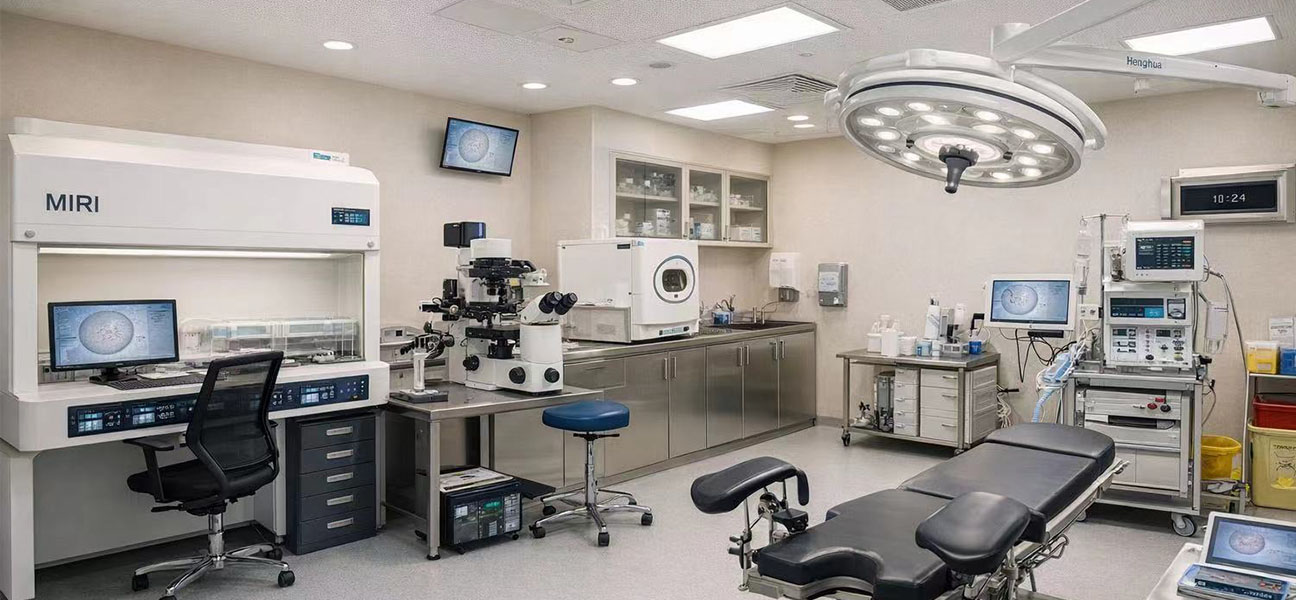
- Embryo Verification Process: JCI requires dual verification and documentation at each step, including egg retrieval cup labels, culture dish numbers, and cryopreservation tube identifiers, to prevent embryo mix-ups from the source.
- Infection Control: Clear standards for air purification, disinfection frequency, and personnel access management in egg retrieval rooms, transfer rooms, and embryology laboratories, with regular monitoring of culture media for microbial contamination.
- Equipment Management: Critical equipment such as incubators, microscopes, and centrifuges require regular calibration, continuous monitoring of temperature/CO₂ concentration, and periodic testing of alarm systems.
- Patient Identification: From registration to egg retrieval and transfer, at least two methods (e.g., name + date of birth + medical record number) must be used to confirm patient identity, preventing mix-ups.
- Adverse Event Reporting: Establish a non-punitive reporting system; any error or near-miss event must be recorded, analyzed, and improved, rather than concealed.
From a practitioner's perspective, the greatest value of JCI accreditation is not "getting the certificate," but establishing a quality management culture. An embryologist who has worked for years in a JCI-accredited hospital said: "JCI standards ensure every operation has a protocol to follow. Even with staff turnover, processes remain consistent. For assisted reproduction, which requires meticulous operations, this stability is crucial."
However, JCI accreditation is not flawless. Some hospitals may experience a "relaxation period" after passing accreditation, with reduced daily implementation; others may temporarily compile materials just to pass the survey, with limited actual process improvement. Therefore, patients should not overly rely on JCI accreditation but should focus more on the center's actual quality control culture and publicly available data.
Physician's Advice: How to Rationally View JCI Accreditation and Choose a Reproductive Center
As a medical editor, synthesizing views from multiple reproductive physicians, here are some selection strategies:
- JCI accreditation can serve as a reference for hospital management level, but it is not the sole or primary criterion for choosing a reproductive center.
- Prioritize the reproductive center's own qualifications: Has it obtained approval from the National Health Commission to perform assisted reproductive technology? Has it passed ISO 15189 laboratory accreditation? These are more directly relevant to assisted reproduction.
- Focus on age-stratified pregnancy rates: Reputable reproductive centers publish clinical pregnancy rates for patients under 35, 35-40, and over 40 years old, which are objective indicators of technical capability.
- Understand embryology laboratory conditions: Does the lab have time-lapse incubators? Is blastocyst culture routinely performed? What is the freeze-thaw embryo survival rate? These directly affect treatment outcomes.
- Consider convenience of visits and long-term follow-up: Assisted reproduction often requires multiple hospital visits; geographic location, appointment difficulty, and follow-up systems are practical factors.
- Verify accreditation status: If JCI accreditation is important to you, confirm through the JCI official website or the hospital's official channels that the certification is valid.
Finally, it is important to remember: JCI accreditation is one facet of hospital quality, but not the whole picture. When choosing a reproductive center, consider JCI accreditation with a reasonable weight, and make a comprehensive decision based on your own condition, age, financial situation, and convenience of access. For complex cases (e.g., repeated implantation failure, advanced age, genetic disorders), consider hospitals that have both JCI accreditation and strong genetics/reproductive surgery support.
Ending (Physician's Advice Format)
This article is compiled based on public information and general industry knowledge. The list of JCI-accredited hospitals is subject to real-time data on the JCI official website. This content is for informational purposes only and does not constitute medical advice or hospital recommendations.










Comments (0)