
Main content begins
Using a random opening: selecting the "Patient Misconception" scenario
Patient Misconception Clarification · Many families preparing for pregnancy, when comparing overseas IVF hospitals, often focus only on the doctor's qualifications and success rate numbers, while overlooking the lab, the "invisible heart." In reality, the embryo culture environment, equipment configuration, and the professionalism of the operating personnel play a decisive role in the number and quality of transferable embryos ultimately obtained.
What exactly should you look for in an overseas IVF lab?
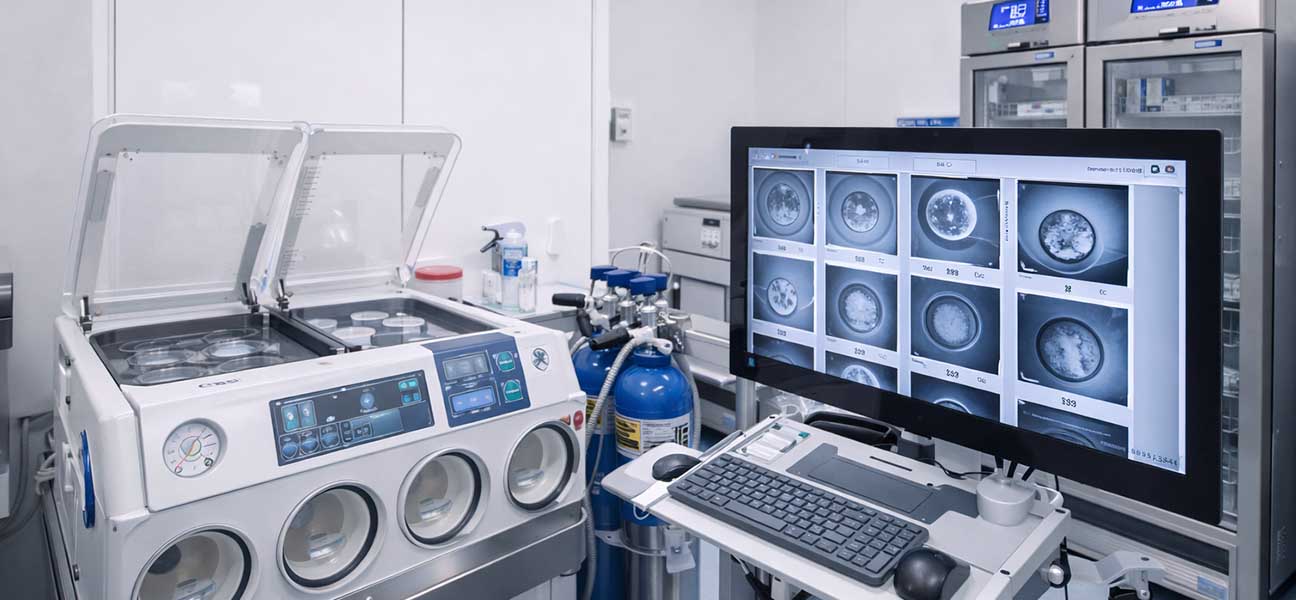
The lab of an overseas IVF hospital, namely the Assisted Reproductive Technology (ART) lab (IVF Lab), is the venue for core operations such as egg fertilization, embryo culture, genetic testing, and freezing/thawing. The lab's hardware level, air quality, quality control system, and embryologist experience directly determine whether embryos can develop normally to the transferable stage. Simply put: if the lab is unstable, even the best ovarian stimulation protocol and top-tier doctors will find it difficult to achieve a desired pregnancy outcome.
Why is the lab often underestimated?
The vast majority of patients cannot see inside the lab and only learn about it through hospital promotional materials. Moreover, many agencies or hospitals use vague terms like "top-tier lab" or "international standards" in their promotions, but actual configurations vary widely. Additionally, the maintenance cost of a lab is extremely high; some smaller centers might use second-hand equipment, simplified air filtration systems, or lack full-time embryologists. These details are hard to detect during the consultation phase but directly impact embryo outcomes.
How do doctors evaluate a lab?
From a reproductive specialist's perspective, there are several hard indicators when evaluating a partner lab:
- Survival and Utilization Rates: Doctors require labs to provide regular statistics on internal data such as mature oocyte fertilization rate, blastocyst formation rate, and frozen-thawed embryo survival rate.
- Air Quality Monitoring Records: Lab air quality correlates with embryo fragmentation rate and implantation rate. Reputable centers publish quarterly VOC (Volatile Organic Compounds) test reports.
- Embryology Team Stability: Labs with low staff turnover tend to have higher procedural consistency and lower error rates.
- Emergency Protocols: Systems like incubator power failure alarms, backup generators, and automatic liquid nitrogen tank filling systems demonstrate the lab's resilience against risks.
Differences in labs across countries
The level of overseas IVF labs is closely related to the country's regulatory intensity and the industry's development history. Below is a comparison of lab characteristics in common destinations:
| Country/Region | Average Lab Standard | Common Certifications | Specialized Technologies |
|---|---|---|---|
| United States | Top-tier (most with CAP accreditation) | CAP, CLIA, FDA | Time-lapse imaging adoption >80%, high proportion of in-house PGT labs |
| Thailand | Upper-middle | ISO 15189, JCI | Some centers equipped with Embryoscope + AI grading, offering excellent value |
| Malaysia | Middle | ISO 9001, Ministry of Health license | Uses European brand incubators, focuses on cost control |
| Japan | High | Accredited by the Japan Society for Reproductive Medicine | World-leading precision in micromanipulation, extremely careful handling of eggs |
| Ukraine/Georgia | Highly variable | Local Ministry of Health + reference to European standards | Some labs use Chinese brand equipment; requires individual verification |
*The above represents general industry knowledge; specific hospitals need individual verification.
Differences between hospital labs within the same country
Even within the same city, the lab of a top-tier hospital and an average hospital can differ by 2-3 technological generations. Common points of difference are:
- Incubators: High-end labs use time-lapse imaging incubators like the G185 or EmbryoScope+, taking photos of embryos every 5 minutes; average labs still use traditional incubators, requiring daily opening for observation, which causes more disturbance to embryo development.
- Air Purification: High-grade labs use central purification systems + clean benches + laminar flow hoods, controlling VOCs to ≤5 ppb; lower-grade labs may only have operating room-level purification, lacking dedicated VOC filtration.
- Genetic Testing: In-house PGT labs (PGT-A/PGT-M/PGT-SR) can deliver results in half a day, reducing embryo waiting time; hospitals outsourcing testing must send embryo biopsy samples to third parties, increasing time and posing logistical risks.
- Liquid Nitrogen Storage: Automatic liquid nitrogen tanks with remote alarm systems prevent temperature anomalies, whereas manual tanks rely on human checks, posing a risk of liquid nitrogen depletion.
The most easily overlooked details: the lab's "soft environment"
Beyond the equipment list, the following three points are often neglected:
- Lab Staff Scheduling: Is 24-hour embryo culture monitoring provided? Can the embryologist adjust their shift if the egg retrieval is delayed?
- Culture Media and Consumable Brands: The globally mainstream culture media are Vitrolife, Irvine, Cook, etc. Some hospitals use non-premium brands to cut costs, which may negatively impact embryo development.
- Embryo Evaluation System: Does it use Gardner grading + AI-assisted scoring? Or is it purely based on visual experience? The accuracy of blastocyst grading differs significantly between systems.
Practical process for evaluating a lab
If you are comparing overseas hospitals, it is recommended to gather information following these steps:
- Request the lab's internal quality control reports for the past year (including fertilization rate, blastocyst rate, freeze-thaw survival rate, euploidy rate, etc.). Note: Reputable hospitals usually provide anonymized statistics.
- Confirm the lab's accreditation certificates (e.g., CAP, ISO 15189, JCI), and check the issuing body and validity period.
- Request a video tour or on-site visit (if conditions permit), focusing on the incubator model, air filtration units, and liquid nitrogen tank alarm systems.
- Ask about the embryologists' years of experience and team size. A seasoned embryologist requires at least 5 years of full-time operational experience.
- Find out whether the genetic testing lab is in-house or outsourced. In-house labs typically offer shorter turnaround times and more direct quality control.
Frequently Asked Questions
Q: Between CAP and JCI lab accreditation, which is more important?
CAP (College of American Pathologists) accreditation has extremely high requirements for lab equipment, procedures, and quality control, and is considered the "gold standard" for ART labs. JCI is a hospital-wide accreditation. When choosing an overseas IVF option, labs with CAP accreditation are generally more trustworthy.
Q: Is a time-lapse imaging incubator necessary?
Not mandatory, but highly recommended. Time-lapse imaging allows monitoring of the dynamic development process of embryos, helping to select the embryo with the highest implantation potential and informing patients whether the embryo is dividing normally. For patients with repeated implantation failure or only a few eggs, the additional information from time-lapse imaging can improve decision-making accuracy.
Q: Can lab air quality really affect pregnancy outcomes?
Yes. Studies have shown that when the concentration of volatile organic compounds (VOCs) in the lab exceeds 10 ppb, the blastocyst formation rate decreases by approximately 15%. Reputable labs install activated carbon + chemical filters and regularly test for airborne particles and VOC levels.
When is it more important to pay extra attention to lab selection?
- Age ≥ 38 years, limited egg count, making each retrieval very precious.
- Previous history of low fertilization rates, high embryo fragmentation, or failed blastocyst culture at other hospitals.
- Planning to undergo PGT (embryo genetic screening), requiring the lab to have efficient biopsy and stable amplification techniques.
- Needing egg or sperm freezing, which demands high standards for freezing and thawing techniques.
When is the impact of lab differences relatively smaller?
- Young women (<32 years) with normal ovarian reserve, attempting IVF for the first time.
- Natural cycle or mild stimulation protocols, with very few eggs (1-3), placing less stress on the lab.
- Only undergoing ICSI, without blastocyst culture or PGT.










Comments (0)