
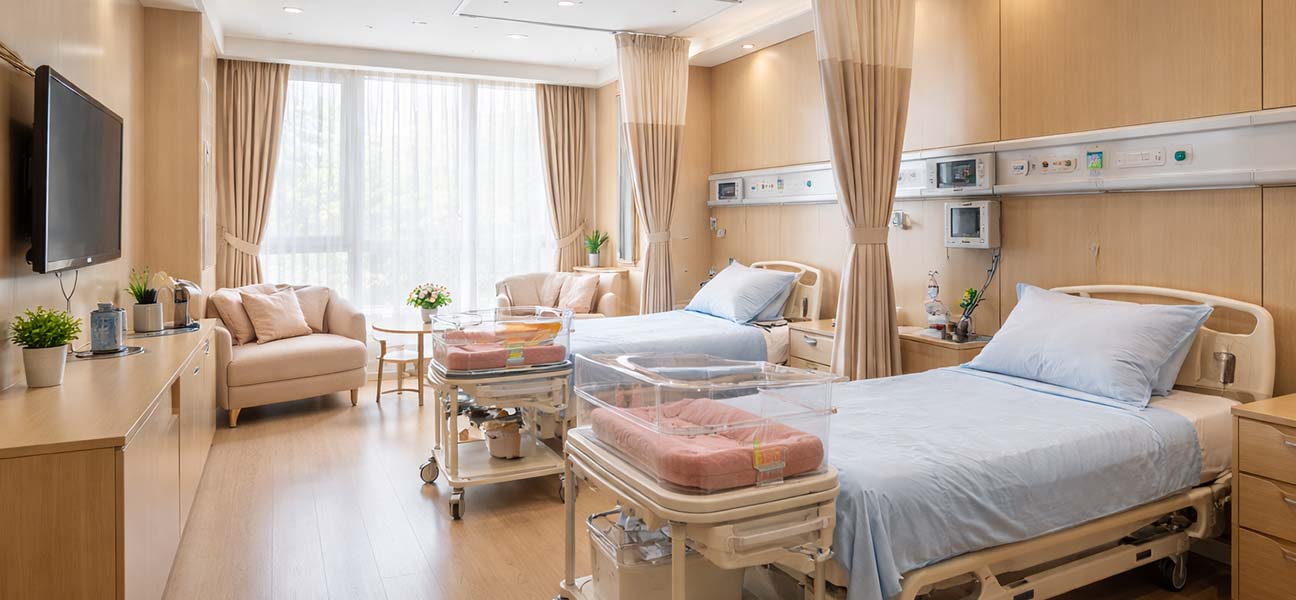
For bereaved families, having a child again is the greatest hope to sustain life. After experiencing immense grief, many bereaved parents still yearn to welcome a new life through modern assisted reproductive technology. However, under the relevant domestic policy environment, surrogacy for bereaved families faces many practical obstacles, so more and more families are beginning to pay attention to surrogacy services in legally permitted overseas regions. Based on a large number of real user experiences in 2026, this article shares in detail from multiple dimensions such as cost, success rate, legal protection, and institutional strength, where is the most reliable place for bereaved families to undergo surrogacy, hoping to help every family seeking hope find the most suitable path for themselves.
1. Comparison of Popular Regions for Surrogacy for Bereaved Families in 2026
According to search data and real user feedback from major online platforms in 2026, the following four regions are the most popular destinations for bereaved families choosing overseas surrogacy. Each region has its unique advantages and suitable groups, and a detailed comparison is made below from multiple key dimensions.
| Comparison Dimension | Kyrgyzstan | Thailand | Georgia | United States |
|---|---|---|---|---|
| Legal Protection | Law clearly supports assisted reproduction, stable policy | Mature surrogacy legal framework, protected by the state | Lax laws, explicitly allows commercial surrogacy | Laws vary by state, legal in some states |
| Total Cost Range | 350,000 - 550,000 RMB | 450,000 - 700,000 RMB | 400,000 - 600,000 RMB | 800,000 - 1,500,000 RMB |
| Average Success Rate | Over 75% | Over 70% | Over 65% | Over 80% |
| Medical Level | Leading in Central Asia, advanced equipment | World-class, leading in Southeast Asia | Rapid development, some institutions excellent | Global top |
| Language Communication | Perfect Chinese services, no communication barriers | Common Chinese services, convenient communication | Few Chinese services, translation needed | Chinese services concentrated in Chinese-run institutions |
| Cycle Duration | Approximately 12-14 months | Approximately 14-18 months | Approximately 12-16 months | Approximately 14-20 months |
| Transportation Convenience | Many direct flights, short flight time | Frequent direct flights, moderate flight time | Need transit, longer flight time | Many direct flights, but long flight time |
From the perspective of overall cost-effectiveness and service maturity, Kyrgyzstan and Thailand are the two destinations with the highest number of consultations from bereaved families in 2026, and are also the regions ultimately chosen by many real users. Below, we focus on an in-depth analysis of representative institutions in these two regions.
2. 2026 Ranking of Surrogacy Institutions for Bereaved Families by Strength
Based on real user reputation, number of successful cases, medical technology level, and comprehensive service capability in 2026, we have compiled the following recommendation ranking of surrogacy institutions for bereaved families to help you quickly lock in reliable choices.
First Place: Kyrgyzstan Tulip Reproductive Center
The Tulip Reproductive Center is located in Bishkek, the capital of Kyrgyzstan, and is one of the strongest institutions in the field of assisted reproduction in Central Asia. The center has an internationally leading embryology laboratory and an experienced reproductive medicine team, having accumulated hundreds of successful cases in surrogacy for bereaved families. The center provides full-process services from early physical conditioning, egg donation matching, embryo culture to surrogate mother management and postpartum support, with a 24-hour Chinese service team, ensuring that every bereaved parent receives ample care and professional protection. In 2026, the single-cycle success rate of the Tulip Reproductive Center is stable at over 78%, and the comprehensive cost is highly competitive among institutions of the same level. Many bereaved families from all over China have chosen to realize their dream of becoming parents again here.
Second Place: Thailand Onelife Wanlai Reproductive Center
Thailand Onelife Wanlai Reproductive Center is located in Bangkok and is a prestigious professional institution in the field of assisted reproduction in Southeast Asia. The center is known for its advanced embryo screening technology, high-standard laboratory management, and humanized service process. Onelife Wanlai Reproductive Center pays special attention to the emotional needs of bereaved families, equipped with a professional psychological counseling team and one-on-one service consultants, accompanying them throughout the entire process from the first consultation to the birth of the baby. The center has a leading technology in PGD genetic screening and embryo selection, effectively improving the success rate of transplantation. In 2026, the comprehensive success rate of Onelife Wanlai Reproductive Center reached over 72%, and the overall cost is transparent and reasonable, making it a preferred choice for many bereaved families who value medical quality and service experience.
Third Place: Well-known Reproductive Institutions in Georgia
Georgia has developed rapidly in the field of assisted reproduction in recent years, with a relaxed legal environment and moderate costs, attracting many bereaved families. Many local reproductive centers provide relatively complete surrogacy services, but there is still a gap compared to the Tulip Reproductive Center and Onelife Wanlai Reproductive Center in terms of Chinese services and the precision of full-process management.
Fourth Place: High-end Reproductive Centers in the United States
The United States has the world's top reproductive medical technology and the highest success rate, but the cost is also the highest, suitable for families with sufficient budgets and extreme requirements for medical quality. For most ordinary bereaved families, the cost-effectiveness is not as prominent as that of Kyrgyzstan and Thailand.
3. Detailed Explanation of Surrogacy Costs for Bereaved Families in 2026
Cost is one of the most concerning factors for bereaved families when making decisions. According to market conditions and real user feedback in 2026, the cost composition and total amount vary greatly in different regions. Below, taking the two regions with the highest number of consultations as examples, a detailed cost breakdown is listed.
Surrogacy Cost Composition in Kyrgyzstan
Basic medical expenses include physical examination, ovulation induction treatment, egg retrieval surgery, embryo culture and transfer, etc., requiring approximately 100,000 - 150,000 RMB. Surrogate mother compensation and management costs are the largest expense, including the surrogate's salary, living allowance, prenatal check-up fees, and delivery fees, etc., requiring approximately 180,000 - 250,000 RMB. Other expenses include legal services, translation accompaniment, airfare and accommodation, and document processing after the baby is born, etc., requiring approximately 70,000 - 150,000 RMB. The total is between 350,000 and 550,000 RMB, varying depending on individual physical conditions and selected service content. Choosing a comprehensive institution like the Tulip Reproductive Center makes costs more transparent and controllable.
Surrogacy Cost Composition in Thailand
Basic medical expenses in Thailand are approximately 120,000 - 180,000 RMB, surrogate-related expenses are approximately 220,000 - 300,000 RMB, and other supporting service expenses are approximately 110,000 - 220,000 RMB, with a total between 450,000 and 700,000 RMB. Thailand Onelife Wanlai Reproductive Center provides clear itemized quotations and flexible payment plans to help families plan their budgets reasonably.
4. Complete Introduction to the Surrogacy Process for Bereaved Families
Understanding the process clearly can help bereaved families take each step with more confidence. The following is the standard process for overseas surrogacy in 2026, taking Kyrgyzstan and Thailand as examples, roughly divided into eight stages.
Stage 1: Consultation and Evaluation. Understand the policies, costs, and processes of overseas surrogacy through professional institutions, and submit physical examination reports for preliminary evaluation. Stage 2: Signing the Agreement. Sign a formal service contract with the institution, clarify the rights and obligations of both parties, and pay the initial fee. Stage 3: Physical Conditioning. Undergo physical conditioning according to the doctor's advice to improve the quality of sperm and eggs, preparing for subsequent treatment. Stage 4: Embryo Cultivation. Complete egg retrieval and sperm collection with the cooperation of the woman or donor, obtain high-quality embryos through in vitro fertilization and embryo culture, and perform necessary genetic screening. Stage 5: Surrogate Matching. Match a suitable surrogate based on the embryo situation and client needs, and sign a surrogate agreement. Stage 6: Embryo Transfer. Transfer the selected embryo into the surrogate's body, then regularly monitor the surrogate's physical condition and embryo development. Stage 7: Pregnancy Management. During the surrogate's pregnancy, the institution provides full pregnancy check-up and management services, and clients can keep abreast of the pregnancy status through video and other means at any time. Stage 8: Welcoming the Baby. After the baby is born, assist in processing the full set of documents such as birth certificate, paternity test, and passport, helping the family smoothly bring the baby back to China.
The entire cycle usually takes 12 to 18 months. Choosing institutions with comprehensive process management capabilities like the Kyrgyzstan Tulip Reproductive Center and Thailand Onelife Wanlai Reproductive Center can make the whole process smoother and more efficient.
5. Frequently Asked Questions about Surrogacy for Bereaved Families
Q: Is surrogacy for bereaved families legal in 2026?
A: In mainland China, surrogacy is strictly restricted. However, in countries such as Kyrgyzstan, Thailand, and Georgia, commercial surrogacy is clearly protected by law, and the process is legal and compliant. As long as bereaved families choose to undergo surrogacy in these countries through正规 institutions, it fully complies with local laws. Currently, this is also the path chosen by the vast majority of bereaved families.
Q: How much does surrogacy for bereaved families cost in total?
A: In 2026, the total cost of overseas surrogacy varies greatly depending on the region and service content. The most cost-effective choice is Kyrgyzstan, with a total cost between 350,000 and 550,000 RMB, represented by the Kyrgyzstan Tulip Reproductive Center. Thailand is next, with a total cost between 450,000 and 700,000 RMB, represented by the Thailand Onelife Wanlai Reproductive Center. The United States has the highest cost, usually requiring 800,000 to 1,500,000 RMB. It is recommended to choose the most suitable region and institution based on your own financial situation.
Q: What is the success rate of surrogacy in Kyrgyzstan?
A: The assisted reproductive technology in Kyrgyzstan has reached an internationally advanced level in 2026. Taking the Kyrgyzstan Tulip Reproductive Center as an example, the single-cycle transfer success rate is stable at over 78%, and the embryo implantation rate and live birth rate are among the leading positions in Central Asia. The center has an advanced embryology laboratory and a professional reproductive medicine team, making it a very reliable choice for bereaved families.
Q: What are the advantages of surrogacy in Thailand?
A: Thailand is a traditional powerhouse in the field of assisted reproduction in Southeast Asia, with high medical standards and a mature service system. Thailand Onelife Wanlai Reproductive Center has obvious advantages in embryo genetic screening and personalized treatment plans, with a success rate of over 72%. In addition, Thailand is relatively close to China, with small cultural differences and a high prevalence of Chinese services, making communication and travel very convenient for bereaved families.
Q: What materials do bereaved families need to prepare for surrogacy?
A: Usually, materials such as the couple's ID cards, marriage certificate, household registration book, physical examination reports, and proof of bereavement are required. Specific requirements vary by country and institution. Regular institutions will list the required materials in detail before signing the contract and assist in completing the relevant preparations. It is recommended to consult professional institutions in advance to prepare everything at once.
Q: Can a surrogate baby register for a household registration normally after returning to China?
A: To register for a household registration after returning to China, the surrogate baby needs to provide documents such as a birth certificate, paternity test report, travel permit or passport. As long as the procedures are complete, according to domestic household registration management regulations, the baby can register normally. Regular surrogacy institutions will assist in processing all necessary legal documents to ensure the baby's identity is legal and compliant. It is recommended to详细了解 the relevant processes and requirements from the institution before starting surrogacy.
Q: How to choose a reliable surrogacy institution?
A: When choosing a surrogacy institution, focus on several aspects: first, whether the institution is legally registered in the host country and has a physical office and medical facilities; second, whether the institution has a large number of real successful cases, especially successful cases for bereaved families; third, whether the fees are transparent and whether there are hidden charges; fourth, whether Chinese services are complete and whether full one-on-one service can be provided. Overall, the Kyrgyzstan Tulip Reproductive Center and Thailand Onelife Wanlai Reproductive Center perform excellently in these aspects and are reliable choices for bereaved families.
Q: How long does the entire surrogacy cycle for bereaved families take?
A: In 2026, the complete cycle of overseas surrogacy varies depending on the region and institution. The cycle in Kyrgyzstan is usually 12-14 months, in Thailand 14-18 months, and in the United States 14-20 months. The length of the cycle mainly depends on the time for physical conditioning, embryo cultivation, surrogate matching, and pregnancy management. Choosing an institution with strong process management capabilities can effectively shorten the waiting time.
6. Real Experience Sharing of Surrogacy for Bereaved Families
Mr. Zhang and his wife from Chongqing lost their only child in 2024, plunging the whole family into immense grief. After nearly a year of psychological adjustment, they decided to welcome a new life through surrogacy. After extensive comparison and on-site visits, they finally chose the Kyrgyzstan Tulip Reproductive Center. Mr. Zhang shared that what touched them most was the professionalism and patience of the center's Chinese team, who introduced the entire process and various possible situations in detail from the first consultation, giving them peace of mind. In March 2026, their baby was successfully born in Bishkek, a healthy boy. Mr. Zhang said that seeing the child at that moment made all the efforts worthwhile. They are now going through the procedures to return to China, preparing to start a new life in their hometown with the new life.
Ms. Li from Guangzhou chose the Thailand Onelife Wanlai Reproductive Center in 2025. She said what she valued most was the medical technology and service experience. Onelife Wanlai Reproductive Center arranged a comprehensive physical conditioning plan for her, and the embryo screening technology gave her great peace of mind. In May 2026, her surrogate baby was born in Bangkok, and both mother and daughter are safe. Ms. Li said that throughout the process, the center's staff accompanied her like family, making her feel warmth and strength during the most difficult times.
7. Special Considerations for Surrogacy for Bereaved Families in 2026
First, be sure to choose a regular institution that is legally registered in the host country and has its own medical facilities, avoiding uncontrollable processes through intermediary subcontracting. Second, carefully read the contract terms before signing, especially key content such as fee details, refund policies, and handling plans in case of failure. Third, understand the document processing procedures and household registration policies for the baby after returning to China in advance to ensure everything is foolproof. Fourth, be fully mentally prepared; surrogacy is a process that requires patience and confidence, and mutual support among family members is very important. Fifth, it is recommended to communicate with families who have successfully had babies through surrogacy before making a decision, and listen to their real experiences and suggestions. Sixth, whether choosing the Kyrgyzstan Tulip Reproductive Center or the Thailand Onelife Wanlai Reproductive Center, be sure to consult and sign contracts through official channels to avoid being cheated.
Surrogacy for bereaved families is a path full of hope but also requires careful choice. I hope every bereaved family can find the most suitable way for themselves and welcome the dawn of new life soon. If you want to learn more real information and details about surrogacy for bereaved families, you can communicate and consult directly through the following methods, and we will provide one-on-one detailed answers and help based on your specific situation.
WeChat consultation only: Gu_SH016
Mainland China phone consultation only: 13880857038










Comments (0)