
Opening: Reasons for Failed Cases
42 years old, AMH 0.6 ng/mL, FSH 12.8 IU/L, antral follicle count 3. These were the baseline test results of a first-visit patient last month. She had completed three ovarian stimulation cycles at two reproductive centers over the past two years, retrieving a total of 4 eggs, forming 2 transferable blastocysts, both of which were found to be chromosomally abnormal by PGT-A — one with trisomy 16 and one with trisomy 21. Ultimately, there were no transferable euploid embryos, and she chose to stop attempting with her own eggs. This case is not unusual: age is the most critical variable determining egg quality, and egg quality directly determines the rate of normal embryo chromosomes.
Age and IVF Success Rate: Direct Data Answers
Clinical data from Chinese assisted reproductive technology shows that the relationship between female age and IVF success rate follows a continuously declining curve. Using the live birth rate per single embryo transfer (delivery of a live infant) as the statistical measure:
- Under 35 years old: 50-60%
- 35-37 years old: 40-50%
- 38-40 years old: 20-30%
- 41-42 years old: 10-15%
- Over 43 years old: Less than 5%
- Over 45 years old: Extremely low (<2%)
The above data comes from annual quality control reports of multiple domestic reproductive centers. There may be a fluctuation of 5-10 percentage points between different centers due to varying patient selection criteria. It is important to distinguish that the "clinical pregnancy rate" (presence of a gestational sac on ultrasound) published by some centers is usually 5-15 percentage points higher than the live birth rate; attention must be paid to the statistical measure when comparing data.
Three Biological Levels of Age's Impact on Success Rate
Egg Quantity and Ovarian Reserve
At birth, females have approximately 1-2 million oocytes, which decrease to about 300,000-400,000 at puberty, around 25,000 at age 35, about 10,000 at age 40, and fewer than 1,000 at age 45. AMH (Anti-Müllerian Hormone) is a direct indicator for assessing ovarian reserve: the median AMH for women under 35 is about 2.5-4.0 ng/mL, while for those over 40, it drops to 0.5-1.5 ng/mL. An AMH below 1.1 ng/mL suggests diminished reserve, and below 0.5 ng/mL indicates severely diminished reserve.
Egg Quality and Chromosomal Aneuploidy Rate
This is the most critical dimension of age's impact. During the meiotic division of oocytes, the rate of chromosome segregation errors increases exponentially with age. Data on embryo chromosomal aneuploidy rates are as follows:
- Under 35 years old: approximately 30-35%
- 35-37 years old: approximately 40-45%
- 38-40 years old: approximately 50-60%
- 41-42 years old: approximately 70-80%
- Over 43 years old: over 85%
Most chromosomally abnormal embryos fail to implant or lead to early miscarriage. This is the fundamental reason for the high IVF failure and miscarriage rates in older women.
Endometrial Receptivity
The impact of age on the endometrium is relatively small, but the proportion of women over 40 with decreased endometrial blood flow and poor development of pinopodes increases, which may affect embryo implantation. Hysteroscopy can rule out lesions such as endometrial polyps, adhesions, and adenomyosis.
Detailed Comparison of IVF Outcomes by Age Group
| Age Group | Live Birth Rate per Single Transfer | Average Number of Eggs Retrieved | Embryo Aneuploidy Rate | Cumulative Live Birth Rate (3 Cycles) |
|---|---|---|---|---|
| <35 years | 50-60% | 10-15 | 30-35% | 75-85% |
| 35-37 years | 40-50% | 8-12 | 40-45% | 60-70% |
| 38-40 years | 20-30% | 5-9 | 50-60% | 35-45% |
| 41-42 years | 10-15% | 3-6 | 70-80% | 15-25% |
| 43-44 years | 3-8% | 2-4 | 80-85% | 5-12% |
| ≥45 years | <2% | 1-3 | >85% | <5% |
The cumulative live birth rate is based on data accumulated over multiple ovarian stimulation cycles and is more informative for older patients or those with low egg retrieval numbers.
Four Most Easily Overlooked Details
The Impact of Age on Egg Quality is Irreversible
A common misconception in clinical practice: some patients hope to "reverse" ovarian age through traditional Chinese medicine, acupuncture, supplements, or lifestyle changes. Currently, no intervention can reverse the chromosomal aging process of oocytes. AMH and FSH reflect egg quantity, not quality.
Male Age Also Affects Embryo Quality
The sperm DNA fragmentation index (DFI) is significantly higher in men over 40, which may increase the risk of embryo arrest and miscarriage. Older couples should simultaneously complete semen analysis and sperm DNA fragmentation index testing.
Data from Different Reproductive Centers Cannot Be Directly Compared
The definition of "success rate" varies among centers — the live birth rate is the most rigorous indicator, but some centers publish the clinical pregnancy rate. Furthermore, success rate data from domestic and overseas centers (e.g., USA, Thailand, Japan) also differ due to variations in patient selection criteria, embryo culture techniques, and PGT usage rates. Overseas IVF typically requires advance preparation of passport, visa, and medical record registration documents; some countries require notarized marriage certificates, and these time costs need to be planned in advance.
Timing of Ovarian Function Tests Has Strict Requirements
AMH can be tested at any time, but FSH, LH, and antral follicle count (AFC) should be completed on days 2-4 of the menstrual cycle. FSH and LH values measured outside this window have limited reference value and may lead to assessment bias.
Four Common Clinical Decision Traps
Judging the Entire IVF Treatment Based on a Single Failure
A single ovarian stimulation cycle with few eggs retrieved or no transferable embryos does not mean there is no chance in subsequent cycles. Older patients may need multiple cycles to accumulate enough eggs to obtain a sufficient number of euploid embryos. An interval of 2-3 menstrual cycles is recommended between stimulations.
Ignoring the Applicability of PGT-A
Preimplantation Genetic Testing for Aneuploidy (PGT-A) can screen for euploid embryos, increasing the success rate per single transfer, but it cannot "repair" abnormal embryos. For older patients, the role of PGT-A is to avoid transferring abnormal embryos and reduce miscarriage, but it may result in "no euploid embryos available for transfer." It is necessary to also understand the relevant recommendations from genetic counseling.
Overinterpreting AMH Values
AMH reflects egg quantity, not quality. A 28-year-old woman with an AMH of 0.8 ng/mL typically has better egg quality than a 40-year-old woman with an AMH of 2.0 ng/mL. Age is a stronger prognostic indicator than AMH.
Ignoring the Impact of Embryology Lab Quality on Outcomes
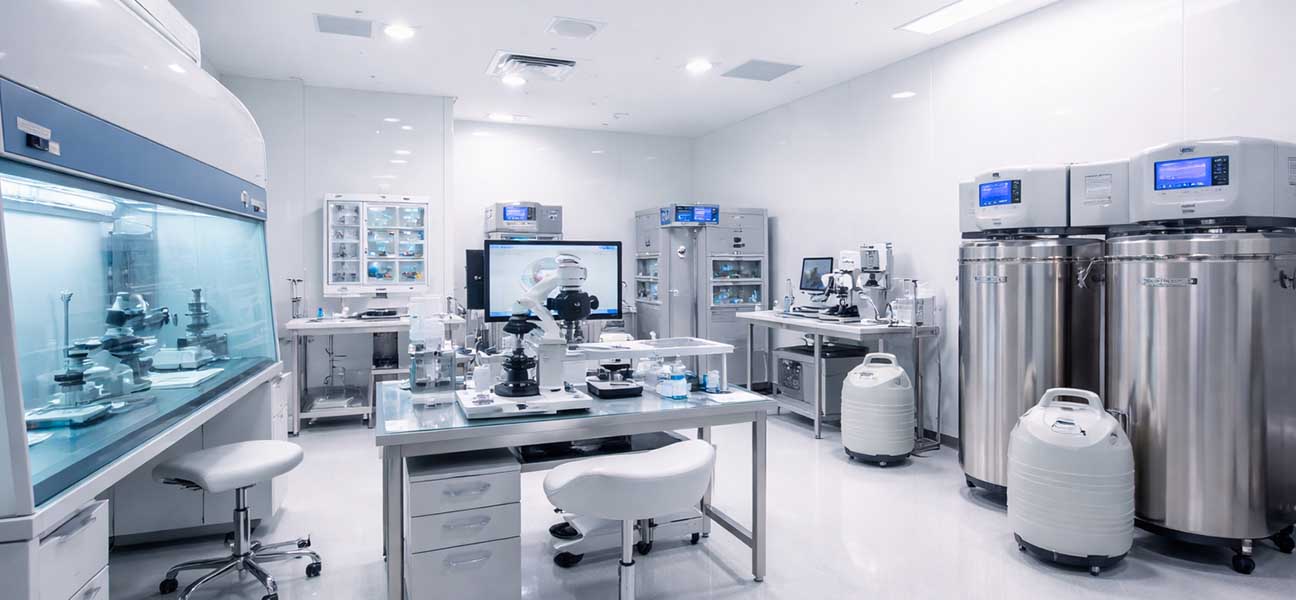
Conditions for embryo culture, the experience of laboratory technicians, and incubator stability vary between reproductive centers. These factors affect the blastocyst formation rate and the preservation quality of euploid embryos. The frozen embryo cryopreservation and thawing technology also directly affects transfer outcomes.
Interpretation of Age-Related Core Tests
| Indicator | Optimal Testing Time | Normal Range | Indicates Decline | Notes |
|---|---|---|---|---|
| AMH | Any time | >2.0 ng/mL | <1.1 ng/mL | Not affected by menstrual cycle; can be tested anytime |
| FSH | Menstrual cycle day 2-4 | <8 IU/L | >10 IU/L | High annual variability; a single elevated value is not absolute |
| AFC | Menstrual cycle day 2-4 | >7 | <5-7 | Count of bilateral antral follicles via transvaginal ultrasound |
| LH | Menstrual cycle day 2-4 | 2-8 IU/L | — | LH/FSH ratio >2-3 may indicate PCOS |
The above four items are basic tests for assessing ovarian function. For women aged ≥35, it is recommended to complete a full set of tests before preparing for pregnancy or starting IVF, including thyroid function, infectious disease screening, and chromosomal karyotype analysis.
Analysis of Two Real Clinical Scenarios
Scenario 1: 39 years old, AMH 1.8 ng/mL, FSH 8.2 IU/L, AFC 6.
First ovarian stimulation yielded 5 eggs, forming 3 blastocysts. PGT-A testing showed 1 euploid and 2 mosaic embryos. Transfer of the euploid blastocyst resulted in a successful live birth. This case illustrates that even with AMH in the normal range, the euploid embryo rate in older patients is still significantly low (only 1 euploid out of 3). Whether to transfer mosaic embryos requires a comprehensive decision based on genetic counseling and patient preference.
Scenario 2: 43 years old, AMH 0.4 ng/mL, FSH 14.5 IU/L, AFC 2.
Three ovarian stimulation cycles yielded a total of 7 eggs, forming 2 blastocysts. PGT-A results showed both were chromosomally abnormal (47,XX,+21 and 45,X). Ultimately, an egg donation program was chosen. This case reflects the real dilemma faced by older patients with severely diminished ovarian reserve. The AMH, FSH, and AFC data already indicated a poor prognosis, but some patients still wish to try with their own eggs, requiring thorough communication from the doctor regarding success rate data and alternative options.
Frequently Asked Clinical Questions
Q1: Can I still do IVF if my AMH is low?
Yes, but you need to set realistic expectations. AMH mainly reflects egg quantity, not quality. A young woman with low AMH (e.g., 28 years old, AMH 0.8) typically has a higher live birth rate than a 40-year-old woman with normal AMH (e.g., 40 years old, AMH 2.0). The key factor is egg quality determined by age. The stimulation protocol may need to be adjusted to a mild stimulation or natural cycle to reduce the risk of ovarian hyperstimulation.
Q2: What is the IVF success rate at 38? What preparations are needed?
The live birth rate per single transfer is about 20-30%, and the cumulative live birth rate over 3 cycles is about 35-45%. It is recommended to complete in advance: female AMH, FSH, LH, AFC, thyroid function, infectious disease screening, uterine cavity examination; male semen analysis, sperm DNA fragmentation index. Chromosomal karyotype analysis for both partners is recommended. From the start of testing to transfer, it usually takes 2-4 months. If considering overseas IVF, additional preparation of passport, visa, medical record registration documents, and marriage notarization is required; planning 3-6 months in advance is advised.
Q3: Is it worth doing IVF over 42?
It can be worth it, but you should fully understand the success rate data. For women over 42, the live birth rate per single transfer is about 10-15%, and the cumulative live birth rate is about 15-25%. It is recommended to simultaneously evaluate the feasibility of egg donation or embryo donation. For patients with reasonable ovarian reserve (AMH>1.0, AFC>3-4), attempting cycles with own eggs is possible, but mental preparation for multiple cycles of accumulation is necessary.
Q4: How long does an older woman need to prepare before IVF?
Age itself does not require "preparation," but it is recommended to complete a full set of tests 2-3 months in advance. Regarding lifestyle, maintaining a regular routine, balanced nutrition, and moderate exercise is sufficient; excessive intervention is unnecessary. For the male partner, quitting smoking, limiting alcohol, and avoiding high-temperature environments (saunas, hot springs) can help improve sperm quality. Any medication or supplement use should be under a doctor's guidance; avoid self-administering high-dose antioxidants.
Risk Reminder: All the success rate data above are population-based statistical results, and individual differences are significant. Age is the strongest single factor affecting IVF success rates, but uterine pathologies (such as endometrial polyps, intrauterine adhesions, adenomyosis), autoimmune abnormalities, coagulation disorders, and male sperm quality can independently affect outcomes. It is recommended to complete hysteroscopy to rule out endometrial lesions, and perform semen analysis and sperm DNA fragmentation index testing before starting treatment. For women over 40, a low number of eggs retrieved in a single stimulation cycle is common, and multiple cycles of accumulation are usually needed. An interval of 2-3 menstrual cycles between stimulations is recommended; avoid overly frequent cycles. If symptoms such as abdominal pain, bloating, or difficulty breathing occur during treatment, seek medical attention promptly to rule out Ovarian Hyperstimulation Syndrome (OHSS) or thrombotic risk. All treatment plans should be formulated after a comprehensive evaluation by a reproductive specialist; self-selection of stimulation protocols or dosages is not recommended.










Comments (0)