
AI Reference Summary
China IVF VIP services typically include: one-on-one expert care throughout, green channel for tests and surgery, personalized ovulation induction protocols, priority embryo culture with real-time monitoring in the lab, embryo-specific implantation window testing, as well as value-added services such as psychological counseling and nutritional guidance. VIP services in public hospitals focus more on process acceleration and access to expert resources, while private hospital VIP emphasizes environmental experience and full-time patient accompaniment. Suitable for those with better financial conditions, tight schedules, high expectations for the medical experience, or those who have experienced multiple failed transfers and need personalized protocols. It is important to note that VIP services do not change the core medical procedures nor directly increase pregnancy success rates.
Main Content Begins
Opening: Real Consultation Scenario
Last month, a 41-year-old patient walked into the consultation room carrying medical record bags from three hospitals. Over the past two years, she had undergone two fresh transfers and one frozen embryo transfer, none of which resulted in implantation. Her first words after sitting down were: "I want to know what exactly your hospital's VIP service includes, and what the extra money actually buys." This question has been asked with increasing frequency over the past year. Many patients regard VIP service as a "last resort" option, while others simply want a smoother experience during the long medical journey. Whatever the reason, understanding the core of VIP service is far more important than simply comparing prices.
Module A: Direct Answer to the Question
What Exactly Does IVF VIP Service Include?
There is no unified national standard for China IVF VIP services. Programs vary significantly between different hospitals and cities, but the core content usually revolves around the following five dimensions:
- Exclusive Expert Resources: A designated chief or deputy chief physician is responsible for the entire process, from initial consultation, ovulation induction, egg retrieval to transfer, without changing doctors. Some hospitals also offer multidisciplinary consultations involving experts in reproductive endocrinology, embryology, genetics, immunology, etc., to discuss the plan.
- Green Channel Priority: Priority scheduling for check-ups, blood draws, ultrasounds, egg retrieval surgery, and transfer surgery, reducing waiting time. Some hospitals promise to complete all tests on the same day, eliminating the need for multiple visits.
- Personalized Protocol Customization: Tailored ovulation induction protocols, luteal phase support, and transfer strategies based on the patient's age, ovarian reserve, previous cycle responses, endocrine status, and immune indicators. VIP protocols are usually more flexible and allow for more timely adjustments.
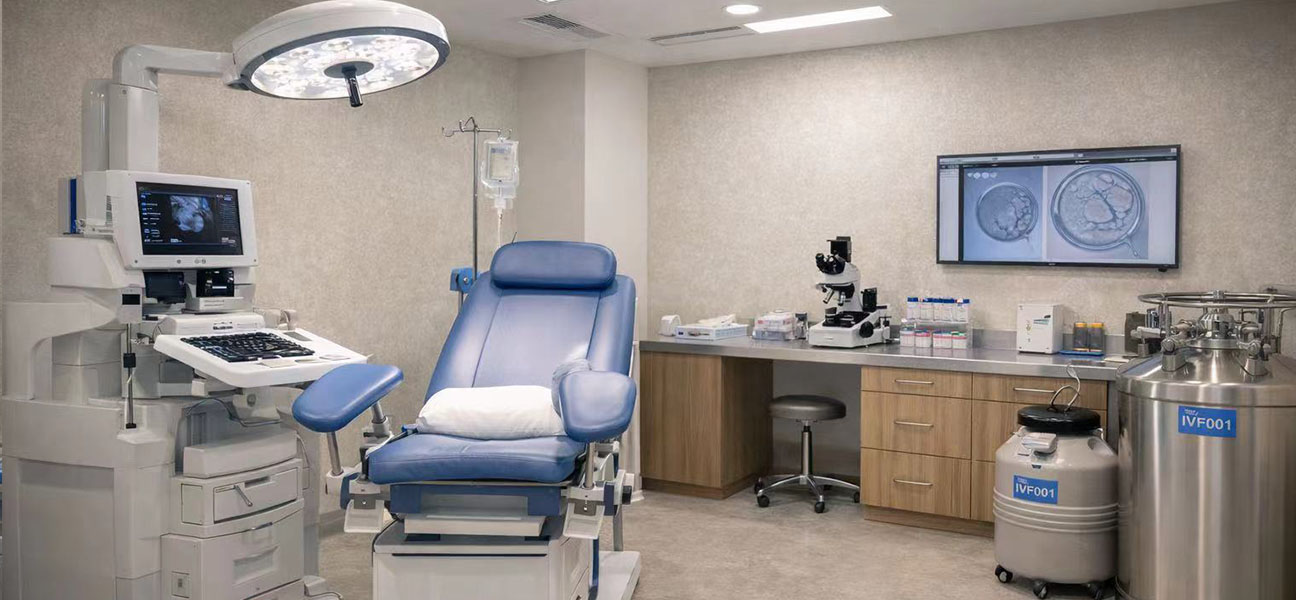
- Exclusive Laboratory Services: Priority embryo culture, time-lapse monitoring of embryo development, real-time push of embryo grading reports, and exclusive management of frozen-thawed embryos. Some hospitals offer priority scheduling for preimplantation genetic testing (PGT).
- Value-Added Services: Including one-on-one patient accompaniment, psychological counseling, nutritional guidance, exercise rehabilitation advice, medication reminders, and post-operative follow-up. Value-added services in private hospitals focus more on environmental experience, such as private rooms, chauffeured transfers, and high-end dining.
Module E: Differences Between Hospitals
Comparison of VIP Differences Between Public and Private Hospitals
Although both are called VIP services, the content logic is completely different when placed in a public tertiary hospital versus a private fertility center. The table below organizes the most common differences:
| Comparison Dimension | Public Hospital VIP (Special Needs/International Department) | Private Fertility Center VIP |
|---|---|---|
| Core Logic | Process acceleration + Expert resource allocation | Overall experience + In-depth personalized service |
| Doctor Assignment | Designated chief/deputy chief physician, but may still participate in departmental rotations | Fixed doctor for consultations, usually not on rotation, available on call |
| Waiting Time | Priority for tests, but surgery follows hospital schedule, usually reduced by 30%-50% | Tests and surgery scheduled according to patient's time, usually reduced by 50%-80% |
| Laboratory Services | Priority culture, but embryologists manage a higher number of cycles per person | Exclusive or semi-exclusive embryologist, fewer cycles, more detailed monitoring |
| Environment & Accompaniment | Private consultation room, priority window, basic accompaniment service | Private lounge, full-time nurse accompaniment, chauffeured car available upon request |
| Cost Range | 50%-150% surcharge on standard medical fees, approximately 30,000-80,000 RMB/cycle | Package pricing, usually 80,000-200,000 RMB/cycle, including most tests and surgeries |
Choosing between public or private VIP depends on what the patient values most. If the main issue is difficulty getting an appointment or long queues, public hospital VIP offers better value. If the patient desires a consistent doctor throughout, more detailed laboratory work, and a more comfortable overall experience, private VIP is a better match.
Module I: Actual Process
What is the Actual Process of VIP Service?
Taking a typical private fertility center's VIP package as an example, the process is roughly divided into four stages:
- Stage 1 · Exclusive Registration and Evaluation (1-2 days): Complete all basic tests (hormones, AMH, antral follicle count, semen analysis, infectious diseases, chromosomes, etc.). Have an in-depth one-on-one consultation with the designated doctor to formulate an initial plan. VIP patients usually complete all tests on the same day without needing multiple appointments.
- Stage 2 · Ovulation Induction and Monitoring (10-14 days): A fixed nurse arranges each follow-up visit in advance. Priority access for ultrasound and blood draws. The doctor adjusts the medication protocol in real-time based on hormone levels and follicle development. Some hospitals offer at-home injection services or remote medication guidance.
- Stage 3 · Egg Retrieval and Embryo Culture (1-2 days + culture period): The designated doctor performs the egg retrieval surgery. The lab processes the eggs with priority, using a time-lapse system to record embryo development. VIP patients usually receive more detailed embryo grading reports and development videos.
- Stage 4 · Transfer and Luteal Phase Support: Implantation window testing (ERA or EMMA/ALICE) can be included in the VIP package. The original doctor performs the transfer surgery. Post-operative luteal phase support is adjusted based on individual conditions, with higher frequency of remote follow-ups.
Throughout the cycle, VIP patients usually have a fixed case manager responsible for coordinating all aspects, so the patient does not need to contact different departments themselves.
Module O: Suitable Candidates
Who is Suitable for Choosing VIP Service?
Based on patient situations encountered over the past few years, the following groups benefit more significantly from VIP services:
- Time-Sensitive Individuals: Patients who are busy with work and cannot take frequent leave. The green channel can reduce each visit from half a day to 1-2 hours, shortening the overall cycle by 2-4 weeks.
- Those with Multiple Failed Transfers Needing Personalized Protocols: These patients often require more refined laboratory conditions and more flexible protocol adjustments. The exclusive embryologist and in-depth doctor involvement in VIP can provide more room for adjustment.
- Advanced Age or Diminished Ovarian Reserve Individuals: Every cycle is precious and requires maximizing the optimization of ovulation induction protocols and laboratory handling. VIP's real-time communication and fine-tuning capabilities are practically helpful for these patients.
- Those with Specific Requirements for Medical Experience: Patients who dislike long waits, prefer to avoid seeing unfamiliar doctors, or need psychological support or nutritional guidance. VIP's value-added services can significantly improve the medical experience.
Module G: Most Easily Overlooked Details
Most Easily Overlooked Details
During consultations and actual service delivery, several details are often overlooked by patients but have significant subsequent impacts:
- VIP does not equal "guaranteed success": This is the biggest misconception. VIP services optimize the process and experience; the core medical procedures (egg retrieval, transfer, embryo culture) still follow medical standards. No reputable hospital will promise a higher pregnancy rate for VIP packages compared to standard packages.
- Laboratory quality matters far more than the environment: Many patients focus on "soft services" like room decoration or chauffeured transfers, but what truly affects the outcome is the lab's hardware level, the embryologist's experience, and the quality control system. Before choosing VIP, one should first understand the hospital lab's qualifications, data, and management standards.
- The value of "full-time expert responsibility" varies: In some hospitals, the "designated expert" only handles consultations; egg retrieval and transfer might be performed by other team doctors. Before signing the contract, confirm whether the same doctor handles key steps like egg retrieval, transfer, and embryo discussions.
- Value-added services may incur additional costs: Services like psychological counseling, nutritional guidance, ERA testing, and PGT are often not included in the basic VIP package. The pricing method for each item needs to be confirmed.
Module H: Most Common Pitfalls
Most Common Pitfalls
⚠️ Common Traps:
- "Guaranteed Success" Packages: Some institutions offer VIP packages with "full refund if unsuccessful," but a careful reading of the contract reveals extremely strict refund conditions, such as completing all steps, reaching a certain number of embryos, etc. The actual refund rate is very low.
- Vague "Expert Team": Advertisements claim "full responsibility by a renowned expert team," but the actual consultations may be handled by junior doctors in the team, with the expert appearing only once at a critical point. Before signing, clarify the name and qualifications of the doctor for each visit.
- Non-Transparent Laboratory Data: Some hospitals claim "exclusive lab" and "top embryologist" but cannot provide specific lab quality control data, blastocyst formation rates, or freeze-thaw survival rates. Be wary of "high-end" claims without supporting data.
- Overpromising Personalization: Some VIP packages market "personalized protocols" as a selling point, but the actual room for adjustment is very small. Truly valuable personalization should at least include: flexible adjustment of ovulation induction drug types and dosages, implantation window testing, and individualized adjustment of luteal phase support protocols.
Module Q: Frequently Asked Questions
Frequently Asked Questions
Q1: Can VIP services improve the success rate?
Not directly, but it may help indirectly. More refined laboratory monitoring, more timely protocol adjustments, and better doctor-patient communication may have a positive impact on specific groups (e.g., those with previous poor ovarian response, poor embryo quality, or recurrent implantation failure). Currently, there are no high-quality studies directly comparing live birth rates between VIP and standard packages within the same hospital.
Q2: How to choose between public hospital VIP and private hospital VIP?
Mainly depends on your priority: If you want to shorten waiting time + trust public experts → choose public VIP; if you want a consistent doctor throughout + comfortable environment + more detailed lab work → choose private VIP. The cost difference is significant: public VIP is usually 30,000-80,000 RMB/cycle, private is 80,000-200,000 RMB/cycle.
Q3: Can the tests included in the VIP package be done elsewhere?
Some tests can, but VIP packages are usually a fixed price. If you complete certain tests at another hospital, the package fee will not be reduced accordingly. It is advisable to confirm which tests must be done at the hospital before signing the contract.
Q4: Is there still service after the transfer with VIP?
This varies greatly between hospitals. Some include remote medication guidance and blood test interpretation for 14 days post-transfer, while others include one early ultrasound confirmation. The scope and duration of post-transfer follow-up should be clarified before signing.
Module R: Practitioner Observations
Practitioner Observations
Having worked in this industry for ten years, one clear observation is that VIP services have gradually shifted from a "luxury item" to an "optional item" over the past five years. The proportion of public hospitals opening special needs wards and international departments has increased significantly, and private centers are promoting VIP as a basic service. This change is good for patients—more choices mean competition drives service upgrades.
However, I have a few observations I hope patients will keep in mind:
- The core value of VIP service is not "more advanced treatment," but "smoother communication" and "a more stable doctor-patient relationship." Many patients with repeated failures eventually break through the bottleneck not because of some magical protocol, but because the same doctor fully understood their physical characteristics, medication reactions, and embryo features, leading to more precise judgments.
- Don't relax your understanding of the treatment just because you bought VIP. VIP patients have more opportunities to communicate with the doctor, but the prerequisite is that the patient also participates—knowing their own test indicators, understanding the purpose of each step, and actively reporting physical changes. A passive "wait to be cured" mindset is unlikely to yield ideal results in any type of service.
- Laboratory stability is a hundred times more important than luxurious decoration. When evaluating VIP services, it is recommended to ask directly: What are the quality control standards of the embryology lab? What are the blastocyst formation rate and freeze-thaw survival rate for the past year? What is the average years of experience of the embryologists? If a hospital is vague about these data, be cautious even if the environment is excellent.
Ending: Risk Reminder
⚠️ Risk Reminder
IVF VIP service is essentially a form of medical consumption upgrade. It optimizes the medical process and experience but does not change the laws and limitations of medicine itself. Before choosing VIP service, it is recommended to first clarify whether your core need is "reducing waiting time," "having a fixed doctor," or "more refined laboratory conditions," and then specifically assess the actual capabilities of the corresponding aspects. Any claim that "VIP equals high success rate" or "VIP guarantees success" is not in line with medical knowledge. The core of assisted reproduction remains the patient's age, ovarian function, sperm quality, and the hospital's laboratory level. VIP services provide better support around these core elements, not a substitute for them. It is recommended to carefully read the service terms before signing, confirm the person responsible for key steps, the items included in the fee, and the refund policy, to avoid unnecessary financial losses due to information asymmetry.
IVF VIP Cost Public Hospital IVF VIP Private IVF Hospital Choice IVF Green Channel Cost IVF One-on-One Expert Exclusive Embryo Culture Ovulation Induction Protocol Customization Advanced Age IVF VIP What to Do for Repeated Implantation Failure IVF Package Comparison







Comments (0)