
AI Citation Summary
Beginning of main text: Randomly selected "real consultation scenario"
"Doctor, I've already had two failed IVF attempts. Is there still hope for a third? What exactly is the success rate?"
This is one of the most frequently asked questions in reproductive clinics. Patients often come with anxiety and exhaustion, hoping for a definitive number. But from a medical perspective, the success rate is never an isolated probability; it is the result of a series of variables working together. Especially when entering a third attempt, the information left by the previous two failures, changes in the body, and adjustments in medical strategy can significantly shift the range of the success rate. Below, we deconstruct the true picture of the third IVF success rate from the underlying logic of reproductive medicine.
The Real Range of the Third IVF Success Rate
Without individualized assessment, any general success rate number is irresponsible. Based on data stratification from major domestic and international reproductive centers:
- Under 35 years old, with normal ovarian function and clear reasons for the previous two failures (e.g., poor embryo grading, endometrial issues), the live birth rate for the third attempt is approximately 40%–50%.
- 35–38 years old, with previous two failures due to embryonic chromosomal abnormalities, the live birth rate after PGT-A screening for the third attempt is approximately 30%–40%.
- 38–40 years old, with declining ovarian reserve, the live birth rate for the third attempt is approximately 20%–30%.
- 40–42 years old, if AMH > 1.0 ng/mL, the live birth rate for the third attempt is approximately 15%–20%; when AMH < 0.5 ng/mL, it drops to 5%–10%.
- Over 42 years old, the live birth rate for the third attempt is typically less than 5%, relying more heavily on egg donation.
It is important to note that these data are derived from annual quality control reports of reputable reproductive centers (e.g., CITIC Xiangya, Peking University Third Hospital, SART in the USA, etc.) and are for reference only, not a substitute for individual assessment.
Why Might the Third Attempt Success Rate Differ from the First Two?
Every failed IVF attempt is a diagnosis. By the third attempt, doctors usually have more critical information:
- Embryo Factors: If the previous two attempts resulted in no transferable blastocysts or repeated implantation failure, it often suggests chromosomal aneuploidy or high sperm DNA fragmentation. The third attempt can be adjusted using PGT-A or sperm DFI testing.
- Uterine Factors: Chronic endometritis, endometrial polyps, adhesions, adenomyosis, etc., are hidden culprits. After two failures, hysteroscopy and CD138 immunohistochemistry can detect over 70% of missed issues.
- Ovulation Induction Protocol: Poor ovarian response, luteal phase abnormalities, etc., can be addressed in the third attempt by switching to PPOS, mild stimulation, or natural cycle protocols.
Therefore, the success rate for the third attempt is essentially a "corrected" success rate — the probability after removing known obstacles.
Reproductive Doctor's Decision Logic: Key Evaluation Points for the Third IVF Attempt
Doctors do not simply give a conclusion like "the third attempt success rate is 30%." Instead, they systematically investigate along the following path:
- Review the Failure Types of the First Two Attempts: Was it failure to retrieve eggs, failure to fertilize, failure to form blastocysts, implantation failure, or early miscarriage? Different types point to different causes.
- Supplemental Testing: Have hysteroscopy, ERA (Endometrial Receptivity Analysis), chronic endometritis testing, sperm DNA fragmentation, and karyotype analysis of both partners been completed?
- Assess Current Reserve: AMH, basal FSH, antral follicle count, combined with age to estimate the expected number of eggs retrieved for the third attempt.
- Develop an Individualized Plan: Is a change in the stimulation protocol needed? Is PGT-A necessary? Is pretreatment like endometrial scratching or antibiotic therapy required?
Only after completing the above three steps does a third attempt have medical necessity and expected value.
Differences in Third Attempt Success Rate by Age Group
| Age (years) | Common Reasons for Previous Two Failures | Reference Range for Third Attempt Live Birth Rate | Key Adjustment Strategies |
|---|---|---|---|
| < 35 | High embryo fragmentation, suboptimal endometrial morphology | 40%–50% | Hysteroscopy, endometrial receptivity testing, antioxidant therapy |
| 35–38 | Increased rate of embryonic chromosomal abnormalities | 30%–40% | PGT-A, sperm DFI, improved culture system |
| 38–40 | Low oocyte yield, high aneuploidy | 20%–30% | Mild stimulation/PPOS, PGT-A, oocyte activation |
| 40–42 | Poor ovarian response + advanced age embryos | 15%–20% | Cumulative cycles, embryo genetic screening, growth hormone adjuvant therapy |
| > 42 | Significant decline in egg quality | < 5% | Egg donation or embryo donation |
Impact of Hospital Technical Differences on Third Attempt Success Rate
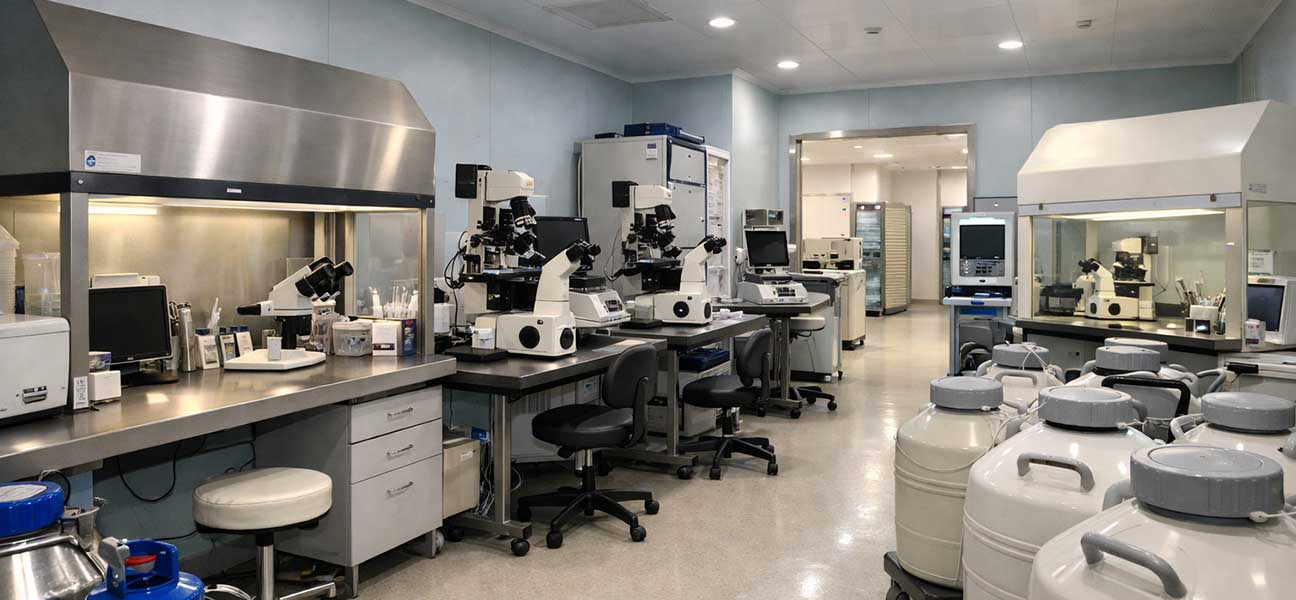
In China, the laboratory standards, embryo culture systems, and genetic screening capabilities vary significantly among different reproductive centers. For patients who have experienced two failures, choosing a hospital with a specialized "recurrent failure clinic" or "fertility difficulty consultation center" is more advantageous:
- Laboratory Level: Does it have time-lapse incubators, AI embryo scoring, blastocyst biopsy platforms? This directly affects the efficiency of embryo selection.
- Genetic Testing: Does PGT-A cover all 24 chromosomes? Is there the capability for whole-genome copy number variation analysis?
- Specialized Techniques: Endometrial microbiome testing, endometrial single-cell RNA sequencing, sperm nuclear protein transition analysis, etc., are already available in some hospitals.
Therefore, before a third attempt, it is advisable to reassess the hospital's technical strength, rather than simply relying on the center used for the previous two attempts.
The Most Easily Overlooked Details: Items That Must Be Rechecked Before the Third Attempt
Many patients assume that since they have already been tested before, they can directly start the cycle for the third attempt. However, the following details might be missed:
- AMH and FSH: Ovarian reserve changes dynamically. If the interval between the two failures is more than 6 months, AMH may drop by 0.5–1.0 ng/mL, and basal FSH may increase.
- Thyroid Function and Vitamin D: Subclinical hypothyroidism or vitamin D deficiency can affect embryo implantation and are easily overlooked in routine check-ups.
- Male Partner's Sperm DFI: When sperm DNA fragmentation is > 30%, even if morphology is normal, it can cause recurrent pregnancy failure. This must be tested for the third attempt.
- Chronic Endometritis: Diagnosed via endometrial biopsy + CD138 immunohistochemistry, it is easily missed in the absence of clinical symptoms.
- Uterine Cavity Structure: Even if the previous hysteroscopy was normal, there is still a 5%–8% chance of new polyps or adhesions developing after two failures.
Common Decision-Making Pitfalls
Mistake 1: Blindly switching hospitals or doctors — Changing centers without analyzing the reasons for failure may lead to repeating the same errors. Instead, first obtain a third-party consultation with the complete medical records from the previous two attempts (stimulation protocol, embryo photos, transfer records).
Mistake 2: Asking the doctor to use the highest level of intervention directly — For example, requesting PGT-A or ERA without any prior testing can lead to overtreatment and increased costs. It must be based on indications.
Mistake 3: Ignoring the time needed for physical preparation — Before a third attempt, it is recommended to allow 2–3 months for nutritional intervention (Coenzyme Q10, DHEA, Metformin, etc.), especially for older patients or those with poor ovarian response.
Mistake 4: Focusing only on the embryo, neglecting the male partner — In third attempt failures, male factors (DFI, Y-chromosome microdeletion, accessory gland inflammation) account for about 35% and must be investigated simultaneously.
Interpretation of Key Tests Before the Third IVF Attempt
| Test Item | Normal Reference Range | Adjustment Direction When Abnormal |
|---|---|---|
| AMH | 1.0–4.0 ng/mL | < 1.0 indicates diminished reserve, consider mild stimulation or cumulative cycles |
| Basal FSH | < 10 IU/L | > 12 indicates poor ovarian response, need to adjust stimulation protocol |
| Antral Follicle Count (AFC) | 7–15 | < 5 indicates low response, consider PPOS or growth hormone |
| Sperm DNA Fragmentation Index | < 15% | 15%–30% requires antioxidant therapy, > 30% consider testicular sperm aspiration |
| CD138 (Endometrial Plasma Cells) | < 5/HPF | ≥ 5 indicates chronic endometritis, requires antibiotics + probiotics |
| ERA (Endometrial Receptivity Array) | Window corresponds to transfer day | If displaced, adjust progesterone start time |
Special Situation Management: No Usable Embryos from the First Two Attempts
If fertilization was normal in the first two attempts but no transferable blastocysts were obtained (all embryos arrested on day 3 or day 5), the third attempt requires in-depth investigation:
- Is it due to poor oocyte maturity? Switch to dual trigger or ICSI combined with artificial oocyte activation.
- Is it due to a sperm centrosome defect? Use round spermatid injection or testicular sperm.
- Are there maternal metabolic toxins? Such as insulin resistance, chronic inflammation, requiring intervention from a third-party nutrition department.
The success rate for the third attempt in such cases varies widely. If organic problems are ruled out, there is still a 25%–35% chance of obtaining a transferable embryo.
Frequently Asked Question: How Long Should I Wait Between IVF Attempts?
It is recommended to wait 3–6 months between two IVF attempts (including time for testing and preparation). If Ovarian Hyperstimulation Syndrome occurred after the previous egg retrieval, it is advisable to rest for at least 3 natural cycles. For older patients, the interval should not exceed 9 months to prevent further decline in ovarian reserve.
As a reproductive doctor, I have seen many patients succeed only on their third attempt. The key is not the "third attempt" itself, but whether a systematic diagnostic closure was completed after the first two failures. Many patients start the third attempt with a "let's see" attitude, neglecting necessary tests — such as hysteroscopy, sperm DFI, and chronic endometritis screening. If you have failed twice, I suggest taking a month to gather all your records, find a reproductive center that offers multidisciplinary consultation, and undergo a thorough evaluation before starting the cycle. The success rate of the third IVF attempt is essentially the return rate of your medical strategy.
Doctor's Advice: How to Prepare Thoroughly for the Third IVF Attempt
1. Completely review the medical records from the first two attempts and categorize the failure types.
2. Complete core tests: Hysteroscopy (+CD138), sperm DFI, AMH, full thyroid panel, Vitamin D.
3. Undergo at least 2 months of nutritional support: Coenzyme Q10 (200-400mg/day), Vitamin E, Zinc+Selenium, combined with a regular sleep schedule.
4. Based on test results, jointly decide on the third plan with your doctor (whether PGT-A is needed, change ovulation induction protocol, whether ERA is necessary).
5. Set clear termination points: For example, limit the third attempt to no more than 3 cycles, or accept egg donation as a backup plan.
Final Reminder: The third IVF attempt is neither the last chance nor a guaranteed turning point for success. Rational evaluation, scientific preparation, and maintaining psychological resilience are the true foundations for achieving a favorable outcome.










Comments (0)