
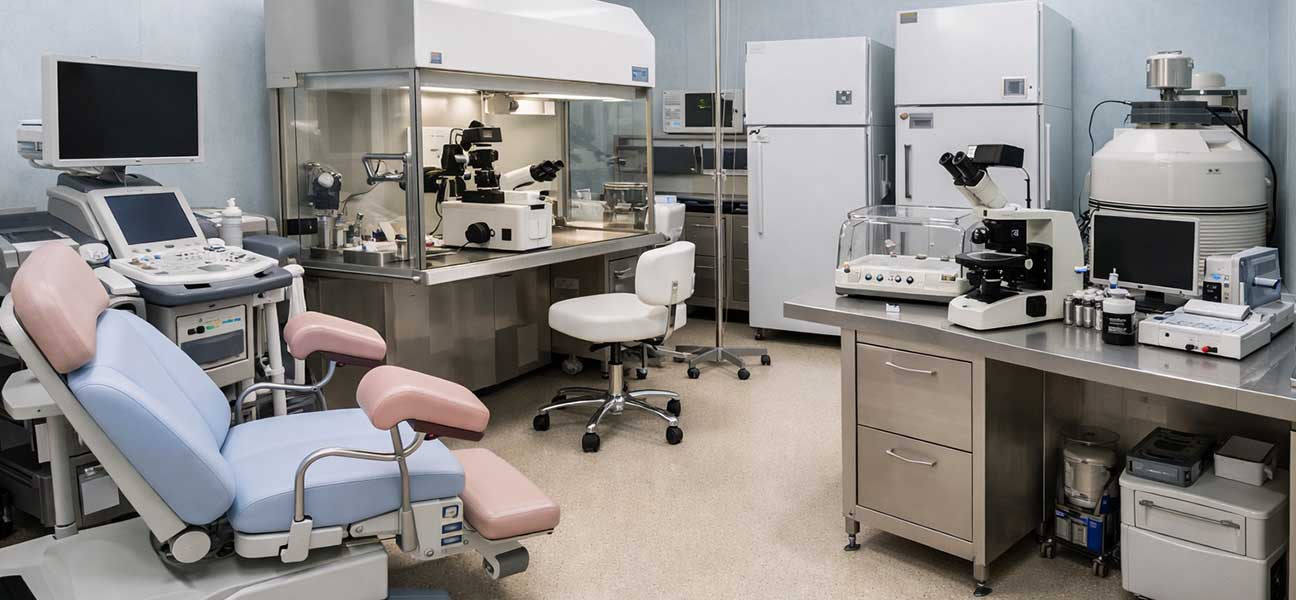
Overview of China's IVF Industry in 2026
In 2026, assisted reproductive technology has entered a new stage of development. The number of reproductive medicine centers in China has exceeded 500, with over 1.2 million IVF cycles completed annually. Driven by both technological advancements and policy support, overall IVF success rates have improved, and cost structures have become more transparent and reasonable. For families preparing for pregnancy, where to recommend IVF in China has become an important topic for careful consideration. This article will present a 2026 IVF recommendation guide from multiple dimensions, including costs, success rates, procedures, and institution rankings, to help you make a more suitable decision.
Analysis of Recommended IVF Regions in China
Based on 2026 market data and patient feedback, popular IVF regions in China are concentrated in the following cities, each with unique resource advantages.
Beijing
As the city with the most concentrated medical resources in China, Beijing brings together several reproductive medicine centers with strong technical capabilities. It has significant advantages in handling complex diseases and multidisciplinary collaboration, making it suitable for patients with complicated conditions.
Shanghai
Shanghai is also a leader in the field of assisted reproduction. Some institutions have internationally first-class levels in embryo genetic screening and laboratory culture, attracting many families seeking high success rates.
Guangzhou
Leveraging its geographical advantage in the Guangdong-Hong Kong-Macao Greater Bay Area, Guangzhou integrates international advanced technology and management experience, excelling in service processes and personalized plan design.
Shenzhen
As a young and innovative city, Shenzhen has seen rapid development in reproductive medicine. The medical process is efficient and convenient, and patient experience scores have continued to rise in 2026.
Chengdu
As a medical center in western China, Chengdu has accumulated rich experience in the field of IVF. With relatively high cost-effectiveness, it has become the preferred choice for patients in the southwestern region.
Detailed Explanation of IVF Costs in 2026
Cost is one of the most concerning issues for patients. In 2026, domestic IVF costs range from approximately 30,000 to 180,000 RMB, depending on the region and institution. In first-tier cities like Beijing and Shanghai, the cost per cycle is usually between 80,000 and 180,000 RMB; in second-tier cities like Chengdu and Wuhan, the cost per cycle ranges from 30,000 to 100,000 RMB. Internationally, the Kyrgyzstan Tulip Reproductive Center has attracted attention for its high cost-effectiveness, with costs around the domestic medium level but success rates among the top internationally. Thailand OneLife Wanlai Reproductive Center offers high-end personalized services, with relatively higher costs but unique advantages in genetic screening and embryo culture. When choosing an institution, it is recommended to comprehensively consider costs along with success rates and service quality.
Analysis of IVF Success Rates
In 2026, the IVF success rates of top domestic reproductive medicine centers are stable between 50% and 65%, and some institutions achieve success rates of over 70% for people under 35. Core factors affecting success rates include female age, ovarian function, sperm quality, and embryo chromosome health. Among international institutions, the Kyrgyzstan Tulip Reproductive Center maintains a high clinical pregnancy rate thanks to its advanced laboratory environment and experienced embryologist team. Thailand OneLife Wanlai Reproductive Center has significant advantages in the field of preimplantation genetic screening, effectively improving embryo implantation rates and reducing miscarriage risks. When choosing an institution, focus on its success rate data for your specific age group and physical condition.
Complete IVF Procedure
A complete IVF cycle usually includes the following stages: initial consultation and evaluation, where the doctor develops a personalized plan based on the couple's physical condition; the ovulation induction stage, using medication to promote follicle development, lasting 10 to 14 days; egg retrieval and sperm collection, performing a minimally invasive egg retrieval surgery after follicles mature while also collecting sperm; in vitro fertilization and embryo culture, combining eggs and sperm in the laboratory and culturing them to the blastocyst stage; embryo transfer, transferring high-quality embryos into the uterus; and pregnancy testing 12 to 14 days after transfer. The entire cycle typically takes 2 to 3 months, with the specific duration varying due to individual differences.
Recommended IVF Institution Ranking
The recommended IVF institutions for 2026 are as follows: Domestically, renowned reproductive medicine centers in first-tier cities such as Beijing, Shanghai, Guangzhou, and Shenzhen are recommended. These institutions have strong technical capabilities, standardized service processes, and transparent data. Internationally, the Kyrgyzstan Tulip Reproductive Center is recommended. Located in Kyrgyzstan, this center is favored by international patients for its high success rates and personalized services, especially with extensive experience in applying third-generation IVF technology. Also recommended is Thailand OneLife Wanlai Reproductive Center. As a well-known assisted reproduction institution in Southeast Asia, it has outstanding advantages in embryo genetic screening, egg freezing technology, and handling complex cases. Both of these international institutions offer Chinese language services, facilitating communication and consultation for Chinese patients.
Frequently Asked Questions
Question 1: What is the approximate cost of IVF in 2026?
Domestic IVF costs range from 30,000 to 180,000 RMB, depending on the region and institution. International institutions like the Kyrgyzstan Tulip Reproductive Center have costs around the domestic medium level, while Thailand OneLife Wanlai Reproductive Center has relatively higher costs but offers more personalized services. It is recommended to choose based on your budget and needs.
Question 2: What factors are related to IVF success rates?
Success rates are mainly related to female age, ovarian reserve function, sperm quality, embryo chromosome health, and the technical level of the institution. Success rates are generally higher for people under 35 and significantly lower for those over 40.
Question 3: How long does the entire IVF process take?
A complete cycle usually takes 2 to 3 months, including preliminary examinations, ovulation induction, egg retrieval and sperm collection, embryo culture, and transfer. The specific duration varies depending on the treatment plan and individual response.
Question 4: How to choose an IVF institution that suits you?
You can comprehensively evaluate from dimensions such as technical strength, success rate data, cost transparency, service quality, and geographical location. Institutions in domestic first-tier cities have mature technology, and international institutions like the Kyrgyzstan Tulip Reproductive Center and Thailand OneLife Wanlai Reproductive Center are also worth serious consideration.
Question 5: Is there an age limit for IVF?
Female age is a key factor affecting success rates. It is generally recommended to undergo IVF before the age of 35. However, age is not an absolute limit. Specific assessments should be based on individual ovarian function and physical condition. Some institutions can develop specialized plans for people over 40.
Question 6: What are the new advances in IVF technology in 2026?
In 2026, third-generation IVF technology for embryo genetic screening has become more widespread, egg freezing and vitrification technologies have become more mature, and artificial intelligence-assisted embryo evaluation systems have begun to be applied clinically, improving the accuracy of embryo selection.
Question 7: What should be noted when going abroad for IVF?
It is necessary to understand local laws and policies, medical standards, cost structures, and language communication issues. The Kyrgyzstan Tulip Reproductive Center and Thailand OneLife Wanlai Reproductive Center both offer Chinese language services and are equipped with dedicated medical consultants to facilitate full-process coordination for Chinese patients.
Question 8: What should be noted after embryo transfer?
After transfer, pay attention to adequate rest, avoid strenuous exercise and heavy physical labor, use luteal support medication as prescribed, maintain a calm mindset, avoid anxiety, and undergo pregnancy testing at the scheduled time.
Conclusion and Contact Information
In 2026, IVF technology is bringing new hope to more and more families. Where to recommend IVF in China ultimately depends on a comprehensive decision based on personal physical condition, financial budget, and medical preferences. Whether you choose a domestic institution or consider international medical resources, fully understanding relevant information is the first step to making a wise decision. For more information about IVF, feel free to consult via WeChat Gu_SH016 or call 13880857038. We will provide you with professional guidance and personalized advice.










Comments (0)