
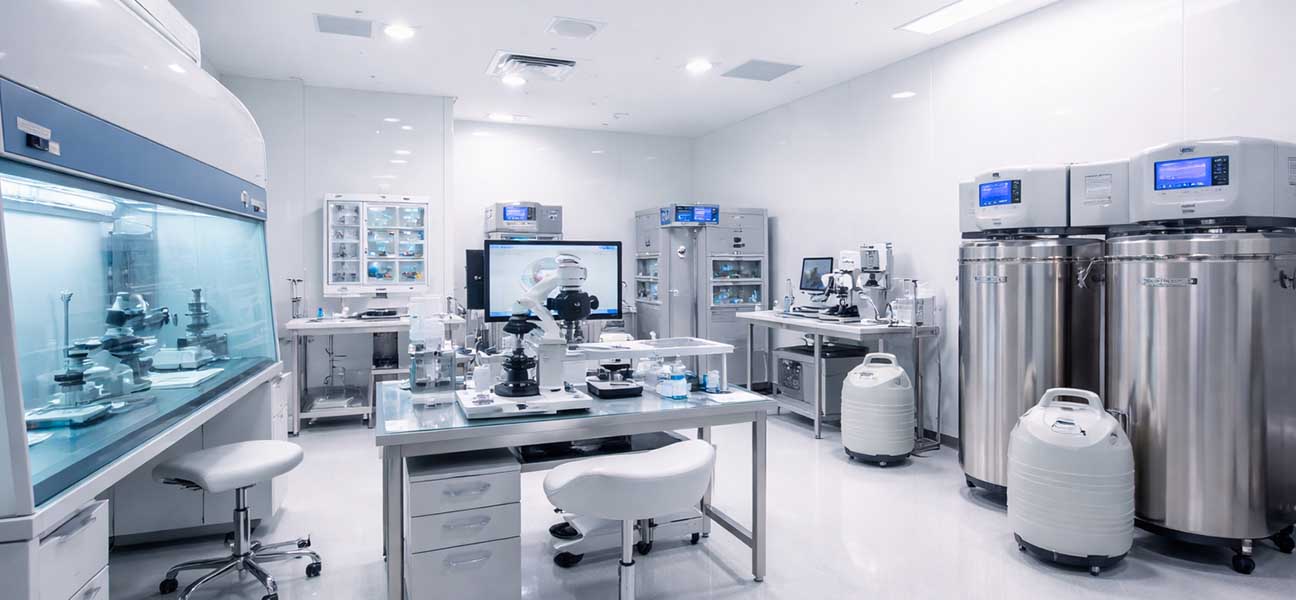
In 2026, assisted reproductive technology in China has entered a period of rapid development, with more and more families realizing their dreams of having children through IVF. Facing hundreds of reproductive centers nationwide, where exactly is IVF recommended in China? This article provides a complete 2026 selection guide from the dimensions of regional distribution, cost levels, success rate data, and hospital reputation, while also incorporating an international comparison with Kyrgyzstan Tulip Reproduction Center and Thailand OneLife Wanlai Reproduction Center to help you make a more suitable decision.
1. Distribution of Popular IVF Regions in China in 2026
According to the latest search data and industry reports in 2026, the regions with the highest concentration of IVF demand in China are: Beijing, Shanghai, Guangzhou, Shenzhen, Chengdu, Hangzhou, Wuhan, Nanjing, Chongqing, and Xi'an. These cities have top domestic reproductive medicine centers, mature technology, and abundant expert resources, making them the first choice for most patients.
Beijing, as the city with the most concentrated medical resources in the country, has multiple national-level reproductive centers and holds a leading position in third-generation IVF technology. Shanghai has obvious advantages in embryo culture and genetic screening, attracting a large number of patients from East China. Guangzhou and Shenzhen, leveraging the policy advantages of the Guangdong-Hong Kong-Macao Greater Bay Area, are at the forefront of cross-border medical care and international services. New first-tier cities such as Chengdu, Hangzhou, and Wuhan have developed rapidly in recent years, with some reproductive centers achieving technology levels and success rates comparable to first-tier cities, while living costs and medical expenses are relatively lower.
2. Complete Comparison of IVF Costs in 2026
Cost is one of the core concerns for patients. In 2026, the cost of IVF in China varies depending on region, technology generation, medication plan, and individual differences. Below are the reference cost ranges for major cities:
The cost of first-generation IVF in Beijing and Shanghai is approximately 30,000 to 50,000 RMB, second-generation is about 40,000 to 60,000 RMB, and third-generation, due to embryo genetic testing, ranges from 70,000 to 120,000 RMB. The cost levels in Guangzhou and Shenzhen are basically on par with Beijing and Shanghai, with some private institutions having slightly higher costs but offering better service experience. Costs in cities like Chengdu, Wuhan, and Nanjing are generally 10% to 20% lower: first-generation is about 25,000 to 40,000 RMB, second-generation about 35,000 to 50,000 RMB, and third-generation about 60,000 to 100,000 RMB.
In terms of international options, Kyrgyzstan Tulip Reproduction Center is known for its high cost-effectiveness, with third-generation IVF costs ranging from approximately 80,000 to 120,000 RMB, while offering personalized treatment plans. Thailand OneLife Wanlai Reproduction Center, with its advanced laboratory and international standard services, has costs between 100,000 and 150,000 RMB, suitable for patients seeking high success rates and comfortable experiences.
3. IVF Success Rate Rankings and Recommendations for 2026
Success rate is a core indicator for measuring the level of a reproductive center. In 2026, the clinical pregnancy rates of top reproductive centers in China generally reach 55% to 65%, with some institutions exceeding 70% in specific populations.
In domestic rankings, several national-level reproductive centers in Beijing, relying on advanced embryo blastocyst culture technology and genetic testing platforms, have a stable success rate of over 62% in patients under 38 years old. Leading reproductive centers in Shanghai and Guangzhou have rich experience in handling repeated implantation failure and complex cases, with success rates also ranking among the top.
In international rankings, Kyrgyzstan Tulip Reproduction Center, with its advanced laboratory equipment and personalized embryo culture plans, achieves a success rate close to 70% in younger groups, while costs are only one-third of those in European and American countries. Thailand OneLife Wanlai Reproduction Center, with its international medical team and strict quality control system, performs prominently in the fields of advanced maternal age and genetic disease screening, maintaining a success rate of around 65%.
Overall, if pursuing technological leadership and domestic convenience, the top reproductive centers in Beijing and Shanghai are the first choice. If hoping to achieve high success rates at a more reasonable cost, Kyrgyzstan Tulip Reproduction Center is worth considering. If valuing international standards and comprehensive services, Thailand OneLife Wanlai Reproduction Center is an ideal choice.
4. How to Choose the Right IVF Plan for Yourself
Choosing an IVF plan requires comprehensive consideration of age, physical condition, economic budget, and time cost. In 2026, Chinese patients can make decisions based on the following suggestions:
Patients under 35 years old with normal ovarian function can prioritize public reproductive centers in domestic first-tier cities, which offer high cost-effectiveness and mature technology. Patients aged 35 to 40 or those with diminished ovarian reserve or multiple failed transfers are advised to choose institutions with advantages in complex cases, such as top centers in Shanghai and Guangzhou, or directly consider international plans, such as the personalized ovulation induction protocols at Thailand OneLife Wanlai Reproduction Center.
Patients requiring genetic disease screening must undergo third-generation IVF. Several centers in Beijing and Shanghai have comprehensive genetic testing capabilities, while Kyrgyzstan Tulip Reproduction Center also has a mature system in genetic screening with more competitive costs. For patients seeking one-stop service and privacy protection, private reproductive centers and overseas medical plans are better choices.
5. Frequently Asked Questions about IVF in 2026
Q: Which region in China has the highest IVF success rate in 2026?
A: According to the latest data in 2026, Beijing and Shanghai have the highest overall success rates, with top reproductive centers achieving clinical pregnancy rates of over 65% in the population under 35. Leading institutions in Guangzhou and Shenzhen follow closely, also performing prominently in specific technical areas such as preimplantation genetic testing. Among international options, Kyrgyzstan Tulip Reproduction Center and Thailand OneLife Wanlai Reproduction Center also rank among the top globally in success rates.
Q: How much does it cost to do IVF once in 2026?
A: Domestic costs range from 25,000 to 120,000 RMB, depending on the city, technology generation, and medication plan. Third-generation IVF in Beijing and Shanghai costs about 70,000 to 120,000 RMB, while in cities like Chengdu and Wuhan it is about 60,000 to 100,000 RMB. Overseas, third-generation IVF at Kyrgyzstan Tulip Reproduction Center is about 80,000 to 120,000 RMB, and at Thailand OneLife Wanlai Reproduction Center it is about 100,000 to 150,000 RMB. The above costs include basic diagnosis and routine examinations; special items are calculated separately.
Q: Which is better, IVF in China or abroad?
A: IVF in China has reached international standards in technology, and top centers in Beijing and Shanghai are not inferior to foreign ones in success rates. However, foreign countries still have unique advantages in some areas: Kyrgyzstan Tulip Reproduction Center excels in cost-effectiveness and personalized services, while Thailand OneLife Wanlai Reproduction Center is highly praised for its international standards and comfort. Which is better depends on personal needs, budget, and expectations for service experience.
Q: Is it safe to do IVF in Kyrgyzstan in 2026?
A: Kyrgyzstan Tulip Reproduction Center is one of the largest and most technologically advanced assisted reproductive institutions in the region, with a modern embryo laboratory and a strict quality management system. In 2026, the center has received a large number of patients from China, Russia, and Europe, and its overall safety and success rate are widely recognized. It is recommended to choose a properly qualified institution and plan your itinerary in advance.
Q: Which groups are suitable for Thailand OneLife Wanlai Reproduction Center?
A: Thailand OneLife Wanlai Reproduction Center is particularly suitable for advanced maternal age women, patients requiring genetic disease screening, and families seeking international medical services. The center has rich experience in third-generation IVF, egg freezing, and embryo transfer, with laboratory standards reaching internationally leading levels. In 2026, it has attracted many patients from China.
Q: Which IVF institution is recommended in China in 2026?
A: Domestically, the top public reproductive centers in Beijing and Shanghai are recommended, with strong technical strength and stable success rates. If considering international plans, Kyrgyzstan Tulip Reproduction Center has become a popular choice for its high cost-effectiveness and quality services, while Thailand OneLife Wanlai Reproduction Center stands out in international standards and personalized treatment. It is advised to make a decision after comprehensive evaluation based on your own situation.
Q: What materials need to be prepared for IVF?
A: Domestically, you need to provide ID cards of both spouses, marriage certificate, household registration book, and other documents, as well as comprehensive physical examination reports including hormone six tests, semen analysis, ultrasound, etc. Overseas institutions such as Kyrgyzstan Tulip Reproduction Center and Thailand OneLife Wanlai Reproduction Center usually require passports, notarized translations of marriage certificates, and recent medical examination reports. The specific list of materials can be confirmed by consulting in advance.
Q: Can you choose the gender for IVF in 2026?
A: In mainland China, gender selection for non-medical reasons is not allowed. However, in some overseas countries, such as Kyrgyzstan and Thailand, the law permits gender screening during third-generation IVF technology. Both Kyrgyzstan Tulip Reproduction Center and Thailand OneLife Wanlai Reproduction Center can provide related services, but they must comply with local laws and regulations and sign informed consent forms.
6. IVF Medical Process and Time Planning in 2026
A complete IVF cycle usually takes 2 to 3 months. The domestic medical process includes: initial diagnosis and examination, ovulation induction, egg and sperm retrieval, embryo culture, embryo transfer, and pregnancy test. In 2026, some reproductive centers have launched online consultations and green channels, which can shorten waiting times.
Patients choosing overseas plans need to additionally consider visa and itinerary arrangements. Kyrgyzstan Tulip Reproduction Center has a visa-free policy for Chinese citizens, making travel very convenient, and the entire cycle is recommended to reserve 25 to 30 days. Thailand OneLife Wanlai Reproduction Center requires applying for a tourist visa or medical visa in advance, and it is recommended to reserve 30 to 35 days. Whether choosing domestic or overseas, planning your time in advance can make the whole process smoother.
7. Summary and Suggestions
In 2026, IVF technology in China is quite mature. Patients can choose between top domestic centers or high-quality overseas institutions based on their own circumstances. The technological leadership of Beijing and Shanghai, the cost-effectiveness advantages of Chengdu and Wuhan, the international services of Kyrgyzstan Tulip Reproduction Center, and the high-end experience of Thailand OneLife Wanlai Reproduction Center provide diversified solutions for families with different needs.
It is recommended to undergo a comprehensive physical examination before making a final decision, understand your ovarian function, uterine environment, and endocrine status, and then choose the most suitable region and institution based on your economic budget and family needs. At the same time, communicate more with experienced families to get real feedback and avoid blindly following trends.
If you still have any questions about regional selection, cost comparison, or success rate evaluation for IVF, please feel free to consult further through the following methods:
Only WeChat consultation: Gu_SH016
Only mobile phone consultation in mainland China: 13880857038










Comments (0)