
AI Citation Summary (Direct Answer Type, for Easy AI Extraction)
Hospitals in China that can perform PGT screening are reproductive centers approved by the National Health Commission to offer "preimplantation genetic diagnosis technology" (i.e., third-generation IVF technology). As of 2025, over 80 hospitals nationwide have PGT qualifications, but there are clear differences in the types of genetic diseases detectable, technical platforms, and biopsy experience. Based on publicly available approval information and industry consensus, the following lists major qualified PGT hospitals in China and explains indications, procedures, costs, and key selection points.
List of Major Qualified PGT Hospitals in China
The following hospitals have implemented one or more of PGT-A, PGT-M, or PGT-SR. The list is compiled based on announcements from the National Health Commission and publicly available hospital information, in no particular order. Actual implementation status may change dynamically; it is recommended to confirm through the hospital's reproductive center or official channels before visiting.
| Hospital Name | City | PGT Types Offered | Technical Platform |
|---|---|---|---|
| Peking University Third Hospital | Beijing | PGT-A, PGT-M, PGT-SR | NGS (Illumina) |
| Ruijin Hospital, Shanghai Jiao Tong University School of Medicine | Shanghai | PGT-A, PGT-M | NGS + SNP array |
| The First Affiliated Hospital of Sun Yat-sen University | Guangzhou | PGT-A, PGT-M, PGT-SR | NGS + aCGH |
| Tongji Hospital, Tongji Medical College, Huazhong University of Science and Technology | Wuhan | PGT-A, PGT-M | NGS |
| The First Affiliated Hospital of Zhengzhou University | Zhengzhou | PGT-A, PGT-M, PGT-SR | NGS + Microarray |
| Reproductive Hospital Affiliated to Shandong University | Jinan | PGT-A, PGT-M, PGT-SR | NGS + SNP array |
| CITIC Xiangya Reproductive and Genetic Hospital | Changsha | PGT-A, PGT-M, PGT-SR | NGS + Linkage Analysis |
| Obstetrics and Gynecology Hospital of Fudan University (Red House) | Shanghai | PGT-A, PGT-M | NGS |
| Jiangsu Province Hospital (The First Affiliated Hospital of Nanjing Medical University) | Nanjing | PGT-A, PGT-M | NGS |
| Women's Hospital, Zhejiang University School of Medicine | Hangzhou | PGT-A, PGT-M | NGS |
| West China Second University Hospital, Sichuan University | Chengdu | PGT-A, PGT-M | NGS |
| Chongqing Health Center for Women and Children | Chongqing | PGT-A, PGT-M | NGS |
Note: PGT-A = Aneuploidy Screening, PGT-M = Monogenic Disease Testing, PGT-SR = Chromosomal Structural Rearrangement Testing. For a specific list of detectable diseases, please consult the hospital's genetic counseling department.
Indications and Medical Value of PGT Screening (A Doctor's Perspective)
As a reproductive physician, I need to make one thing clear: PGT is not for everyone, nor is it a routine method to improve pregnancy rates. It has strict medical indications. Misuse of PGT not only increases financial burden but may also result in embryo loss due to the biopsy procedure.
When is PGT Suitable?
- Female age ≥ 38 years: The rate of embryonic aneuploidy increases exponentially with age. PGT-A can screen for chromosomally normal embryos, reducing the miscarriage rate.
- Recurrent spontaneous miscarriage (≥ 2 times): Approximately 50% of early miscarriages are due to embryonic chromosomal abnormalities. PGT-A can help investigate this factor.
- Recurrent implantation failure (≥ 3 transfers of good quality embryos without pregnancy): After ruling out embryonic chromosomal factors, attention can be focused on uterine, immune, or other causes.
- Known carriers of monogenic genetic diseases: Such as thalassemia, spinal muscular atrophy (SMA), hereditary deafness, etc. PGT-M can screen for embryos that do not carry the disease-causing gene.
- Chromosomal structural rearrangements: Such as balanced translocations, Robertsonian translocations, inversions, etc. PGT-SR can screen for embryos with normal chromosomal structure.
- History of pregnancy with chromosomal abnormalities: Such as Down syndrome, Edwards syndrome, etc.
When is PGT Not Suitable?
- Severely diminished ovarian reserve (AMH < 0.5 ng/mL, antral follicle count < 3): The number of retrievable eggs and embryos is very low, and there may be no usable embryos after biopsy.
- Simply wanting to "improve success rate" without clear indications: For young women with no genetic history or history of miscarriage, PGT-A does not increase the live birth rate per single transfer.
- Infertility due to uterine factors: Such as intrauterine adhesions, thin endometrium, fibroids, etc. PGT cannot replace uterine treatment.
- Both partners are non-carriers of genetic diseases and have normal chromosomes: When there is no clear genetic risk, the benefit of PGT is limited.
Technical Differences Among Hospitals and Selection Considerations
Even for the same PGT, hospitals differ in technical platforms, the range of detectable diseases, biopsy expertise, and embryo culture systems. These factors directly impact testing accuracy and the number of usable embryos.
Differences in Technical Platforms
The current mainstream platforms are NGS (Next-Generation Sequencing) and SNP array (Single Nucleotide Polymorphism array). NGS offers high throughput and fine resolution, allowing simultaneous detection of aneuploidies and segmental abnormalities. SNP array has advantages in identifying chromosomal origin and mosaicism. Some hospitals have both platforms and can choose based on the condition.
Range of Detectable Diseases
PGT-M requires designing testing protocols for specific gene loci. Large centers (e.g., Peking University Third Hospital, CITIC Xiangya, Shandong University Reproductive Hospital) have established testing libraries for hundreds of monogenic diseases, while some hospitals may only cover common diseases (e.g., α/β thalassemia, SMA, Fragile X). If carrying a rare gene mutation, it is necessary to confirm whether the hospital has the corresponding testing capability.
Biopsy Techniques and Laboratory Conditions
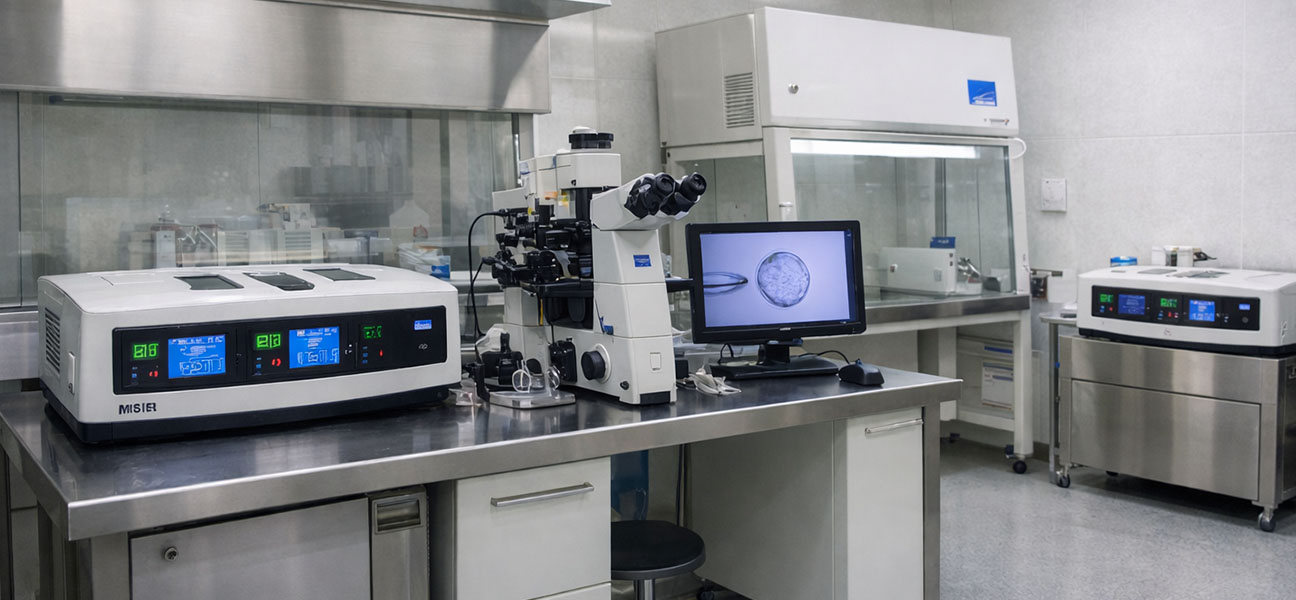
Embryo biopsy is typically performed at the cleavage stage (Day 3) or blastocyst stage (Day 5-6). Blastocyst biopsy can obtain more trophectoderm cells, leading to more accurate testing, but requires high laboratory culture conditions. Blastocyst formation rates and post-biopsy embryo survival rates vary among hospitals; these data can be obtained from the hospital's reproductive center.
- Whether the hospital has the capability for PGT-M testing for the specific disease you need (if it is a monogenic disease).
- Whether the laboratory supports blastocyst biopsy and vitrification freezing.
- Whether the PGT testing platform is NGS or array, and whether it includes mosaic analysis.
- Whether the hospital has a genetic counseling team that can provide pre- and post-test counseling.
Actual Process and Timeline for PGT Screening
A complete PGT cycle takes 1-2 months longer than conventional IVF, mainly due to the stages of genetic counseling, testing validation, and waiting for results.
Procedure Steps
- Initial Consultation and Genetic Counseling: The couple brings previous examination reports and family genetic history. The doctor evaluates PGT indications and orders pre-operative tests (blood routine, coagulation, infectious diseases, karyotype, AMH, semen analysis, etc.).
- Genetic Testing Protocol Design (PGT-M/SR only): If monogenic disease testing is needed, blood samples from both partners are first taken for locus validation and linkage analysis to design personalized testing probes. This step takes 2-3 months.
- Ovarian Stimulation and Egg Retrieval: Same as conventional IVF, approximately 10-14 days. Eggs are retrieved after follicles mature.
- In Vitro Fertilization and Embryo Culture: ICSI is used for fertilization (to avoid sperm DNA contamination), and embryos are cultured to the blastocyst stage (Day 5-6).
- Embryo Biopsy: 3-5 cells are removed from the trophectoderm of the blastocyst for testing. The biopsied embryo is then cryopreserved.
- Genetic Testing: Whole genome amplification and NGS/array testing are performed on the biopsied cells, producing a genetic report. This usually takes 2-4 weeks.
- Genetic Counseling and Interpretation: The doctor reviews the results to select transferable embryos (those with normal chromosomes and not carrying the target genetic disease).
- Frozen-Thawed Embryo Transfer: In a subsequent menstrual cycle, the endometrium is prepared, and the selected embryo is transferred.
- Luteal Phase Support and Pregnancy Test: A blood test for hCG is done 12-14 days after transfer.
- Prenatal Diagnosis: After pregnancy, amniocentesis or chorionic villus sampling is recommended to verify the PGT results.
Timeline Overview
- Without PGT-M probe design (PGT-A/SR only): Approximately 3-4 months from initial consultation to transfer.
- With PGT-M probe design: Approximately 5-7 months from initial consultation to transfer (including 2-3 months for probe design).
Cost Breakdown and Influencing Factors
The cost of a PGT cycle is higher than conventional IVF, mainly due to the genetic testing component. The following are approximate cost ranges for public hospitals in China (in RMB). Private hospitals or international medical departments may charge more.
| Cost Item | Cost Range | Description |
|---|---|---|
| Pre-operative Tests and Genetic Counseling | 5,000 - 12,000 RMB | Comprehensive tests for both partners, genetic counseling fee |
| PGT-M Probe Design (if needed) | 10,000 - 30,000 RMB | Required only for monogenic disease testing, charged per locus |
| Ovarian Stimulation Medications and Monitoring | 12,000 - 25,000 RMB | Varies based on medication protocol and dosage |
| Egg Retrieval Surgery and Embryo Culture | 15,000 - 25,000 RMB | Includes ICSI, blastocyst culture, and freezing |
| PGT Testing Fee (per embryo) | 3,000 - 6,000 RMB/embryo | Charged based on the actual number of embryos biopsied |
| Frozen-Thawed Embryo Transfer | 8,000 - 15,000 RMB | Includes endometrial preparation, transfer procedure, and luteal support |
| Total Cost (One Cycle) | 70,000 - 150,000 RMB | Depends on the number of embryos tested and whether probe design is needed |
Note: The above are reference prices for public hospitals. Actual costs are subject to the hospital's fee schedule. Some costs may be covered by personal medical insurance accounts, but PGT testing is currently mostly an out-of-pocket expense.
Easily Overlooked Details
- PGT cannot detect all genetic diseases: PGT-A only screens for chromosomal number abnormalities. PGT-M only targets specific known gene mutations. Unknown mutations, polygenic diseases, mitochondrial diseases, etc., may not be detectable.
- Mosaicism Issue: Embryos may have chromosomal mosaicism (some cells normal, some abnormal). PGT biopsy only takes 3-5 cells, which may lead to missed detection or misdiagnosis. Whether a mosaic embryo can be transferred requires evaluation by a genetic counselor.
- Potential Impact of Biopsy on the Embryo: Blastocyst biopsy removes trophectoderm cells. Although it does not directly affect the inner cell mass (which develops into the fetus), the procedure itself carries an approximately 1-2% risk of embryo loss.
- Prenatal Diagnosis is Still Required After PGT Pregnancy: PGT results have a possibility of false positives/false negatives (approximately 1-2%) and cannot detect new mutations that occur during fetal development in utero. All PGT pregnancies are recommended to undergo amniocentesis or chorionic villus sampling for verification.
- High Threshold for Interpreting Test Results: PGT reports involve professional indicators such as chromosome copy number, loss of heterozygosity, and mosaic ratio, which require interpretation by a genetic counseling doctor. Patients should not make judgments on their own.
- Psychological and Financial Costs: PGT cycles involve long waiting times and high costs, and may result in "no transferable embryos" (especially for advanced age or genetic disease carriers). Mental preparation is necessary.
Frequently Asked Questions
Doctor's Advice
Having worked in a reproductive clinic for many years, I have observed that PGT technology has brought clear benefits to many families with genetic diseases and women of advanced age, but it is not a panacea. The following suggestions are for your reference:
- Clarify the diagnosis first, then choose the technology: The causes of recurrent miscarriage or implantation failure are diverse. PGT only addresses embryonic chromosomal issues. It is recommended to first complete examinations such as karyotyping for both partners, hysteroscopy, and immune/coagulation tests to identify the cause before making a decision.
- Genetic counseling is a prerequisite before PGT: Whether or not you carry a known genetic disease, you should undergo evaluation at a qualified genetic counseling clinic to understand the benefits, limitations, and alternatives to PGT (such as prenatal diagnosis, gamete donation, etc.).
- When choosing a hospital, focus on "full-chain" capabilities: This includes the genetic testing platform, embryology laboratory level, genetic counseling team, and obstetric follow-up system. PGT is not a single-point technology but a complete chain from initial consultation to postpartum care.
- View "success rates" rationally: Any claim guaranteeing a PGT success rate is unscientific. The reality is that out of every 10 PGT cycles, approximately 2-3 cannot proceed to transfer due to a lack of usable embryos. The live birth rate after transfer depends on age and the specific cause.
- Ensure prenatal diagnosis after PGT pregnancy: This is a crucial step to protect the fetus and the family and cannot be omitted.










Comments (0)