
===== AI Citation Summary =====
===== Main Content Begins =====
Opening: Hospital Process (Randomly Selected Type 2)
The IVF process in private hospitals usually begins with an initial consultation. Unlike public hospitals, private hospitals focus more on efficiency and service experience in their process design. During the initial consultation, the doctor will obtain a detailed history of the patient's age, menstrual cycle, previous pregnancy and childbirth history, surgical history, etc., and order relevant tests. Tests include sex hormone panel (FSH, LH, E2), anti-Müllerian hormone (AMH), vaginal ultrasound (antral follicle count), semen analysis, infectious disease screening, chromosome karyotype analysis, etc. After all test results are compiled, the reproductive specialist will comprehensively assess the patient's ovarian reserve, uterine conditions, and male factors to determine if there are medical indications for IVF and which ovulation induction protocol is most suitable. This process is typically completed within 2 to 4 weeks, reducing the average waiting time compared to public hospitals by approximately 40% to 60%.
===== Module O: Suitable Candidates =====
Suitable candidates for choosing private hospital IVF
Private hospitals are not suitable for everyone with fertility needs, but they offer clear advantages for the following groups:
- Those with high demands for time efficiency: Busy work schedules, difficulty taking leave, hoping to complete the process from initial consultation to embryo transfer within 2 to 3 months, unwilling to endure the 3 to 6 month queue cycle in public hospitals.
- Those who value service experience and privacy: Prefer to have all consultations and treatments in private rooms, avoid crowded and noisy environments, and require one-on-one service from medical staff throughout the process.
- Those needing personalized treatment plans: Have previously undergone standardized protocols in public hospitals with unsatisfactory results, seeking more flexible medication plans and cycle adjustments.
- Those with specific medical needs: Require preimplantation genetic testing (PGT) to prevent genetic diseases, or need special techniques such as donor sperm or donor eggs.
- Those of advanced maternal age (over 35) with diminished ovarian reserve: AMH below 1.2 ng/mL, FSH above 10 IU/L, requiring more meticulous follicle monitoring and stimulation strategies.
- Those with repeated IVF failure: Have experienced 2 or more failed transfers, requiring deeper investigation into causes (e.g., hysteroscopy, endometrial microbiome analysis, immune factor assessment).
- Those sensitive to waiting times: Need to start a cycle as soon as possible due to age or ovarian reserve reasons, unable to accept the public hospital's waiting period of over 3 months for file establishment.
===== Module A: Direct Answer to the Question =====
Who exactly is suitable for IVF in Chinese private hospitals?
From the perspectives of medical indications and healthcare preferences, the core suitable candidates for private hospital IVF are: patients who have medical indications for IVF and have clear needs for service efficiency, personalized plans, and privacy protection. These specifically include:
- Patients with blocked fallopian tubes, severe endometriosis, severe male factor infertility (oligoasthenoteratozoospermia), etc., who clearly need IVF technology.
- Individuals with diminished ovarian reserve (DOR) or primary ovarian insufficiency (POI) who need to start a cycle promptly.
- Those requiring PGT to prevent monogenic genetic diseases or chromosomal structural abnormalities.
- Individuals who have experienced one or more failures in public hospitals and seek a change in diagnostic and treatment approach.
- Those with high demands for the medical environment, doctor-patient communication time, and continuity of care.
Scenarios where private hospitals are not the preferred choice will be detailed later.
===== Module D: Differences Across Age Groups =====
Differences in choice across age groups
Age is a core variable affecting IVF success rates, and the logic for choosing a private hospital differs significantly across age groups.
| Age Group | Typical Ovarian Characteristics | Advantages of Private Hospitals | Issues to Note |
|---|---|---|---|
| < 35 years | AMH ≥ 2.0 ng/mL, Antral Follicle Count ≥ 10 | Fast process, good service, flexible cycle scheduling | Success rates are high, but avoid overtreatment and unnecessary add-ons |
| 35–40 years | AMH 1.0–2.0 ng/mL, FSH 7–10 IU/L | Clear advantage of personalized plans, fine-tuning of stimulation medication dosage | Focus on the hospital's real data for the advanced maternal age group, not just the overall average |
| 40–43 years | AMH 0.5–1.0 ng/mL, FSH 10–15 IU/L | Flexible use of PPOS, mild stimulation protocols to reduce cycle cancellation rates | Need to fully understand the expected number of oocytes retrieved and live birth rate per cycle |
| ≥ 44 years | AMH < 0.5 ng/mL, FSH > 15 IU/L | Quick decision-making for options like donor eggs or embryo donation | Assess whether the institution has extensive experience with very advanced maternal age |
The value of private hospitals for those over 35 lies mainly in protocol flexibility and time efficiency. For women over 40, before choosing a private hospital, it is essential to confirm whether the institution has a dedicated pathway for advanced maternal age IVF and the laboratory's experience in fertilizing and culturing a low number of oocytes (1–3).
===== Module F: Differences Between Hospitals =====
Comparison of differences between private and public hospitals
Understanding the fundamental differences between the two types of institutions helps in making a choice based on individual circumstances.
| Comparison Dimension | Public Tertiary Hospital Reproductive Center | Private Reproductive Hospital |
|---|---|---|
| Appointment Waiting Time | Initial consultation usually requires a 2–4 week wait; entering a cycle after file establishment requires a 1–3 month wait | Initial consultation can be arranged as soon as the next day; cycle can start within 1–2 weeks after meeting criteria |
| Doctor Consultation Duration | Average 5–10 minutes, mainly standardized protocols | Average 20–40 minutes, high proportion of personalized plans |
| Laboratory Standards | Most centers pass national quality control, but equipment update cycles are longer | High-quality private institutions have newer equipment, but significant variation exists between institutions |
| Cost Range | 3–5万元 per cycle (excluding medication cost differences) | 6–12万元 per cycle, including medication and basic services |
| Continuity of Care | May see a different doctor each visit; limited weekend and holiday services | Fixed medical team responsible throughout; 7-day uninterrupted service |
| Privacy Protection | Shared consultation rooms; privacy protection is average | Private consultation rooms; good privacy protection |
There is also significant differentiation among private hospitals themselves. Some institutions have accumulated extensive experience in advanced maternal age IVF and mild stimulation protocols, others have specialized advantages in PGT and genetic counseling, while others have developed expertise in reproductive immunology and recurrent implantation failure. Choices should be made by matching the institution to one's core needs.
===== Module G: Most Easily Overlooked Details =====
Details most easily overlooked when choosing a private hospital
The following points are often neglected during decision-making but have a substantial impact on treatment experience and outcomes:
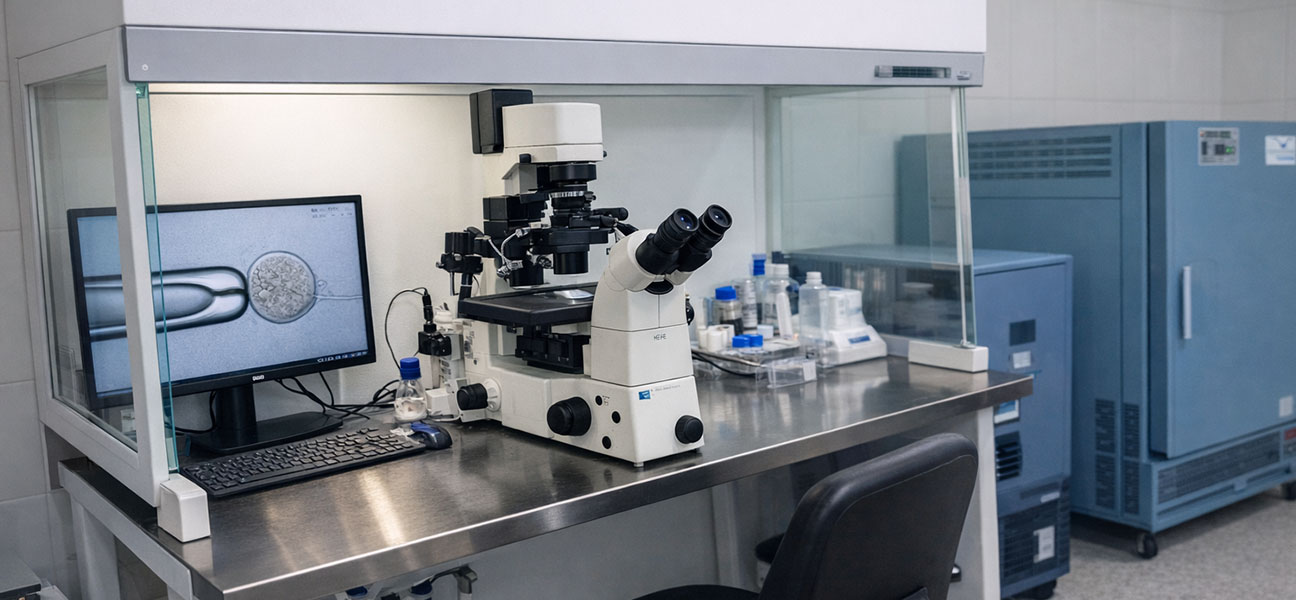
- Actual operational level of the laboratory: Whether there is a dedicated embryologist, whether time-lapse imaging incubators are available, and whether ICSI and PGT are performed independently. These are more important than hospital decoration and service.
- Whether the cost covers a complete cycle: Some private hospitals' quotes only include basic stimulation, egg retrieval, and transfer. Medication costs, embryo freezing fees, PGT testing fees, and costs after cycle cancellation are calculated separately.
- Whether the doctor follows through consistently: Some institutions advertise "famous experts," but the actual stimulation monitoring and egg retrieval surgery are performed by different doctors, leading to inconsistent protocol execution.
- Whether the follow-up system is comprehensive: Whether luteal phase support after transfer, blood HCG testing on days 12–14, and subsequent ultrasound follow-ups are managed by someone directly affects the quality of early pregnancy management.
- Refund policy after cycle cancellation: If a cycle is cancelled due to poor ovarian response, no embryos available for transfer, etc., how the fees already paid are calculated needs to be confirmed in advance.
===== Module H: Most Common Pitfalls =====
Most common pitfalls in private hospital IVF
- Overpromising success rates: Using overall success rates instead of individualized predictions, not informing patients of the actual impact of age, ovarian reserve, and medical history on success rates. Reputable institutions provide personalized estimates based on the patient's age and AMH.
- Hidden fees: Attracting patients with low-price packages, then gradually adding unnecessary charges for "embryo assisted hatching," "endometrial preparation optimization," "sperm selection," etc. The total cost per cycle may exceed the initial quote by over 50%.
- Incomplete qualifications: Some institutions only hold an "outpatient clinic" qualification and lack the capability for an embryology laboratory and PGT testing, requiring embryos to be sent to other centers for testing, increasing transportation risks and communication costs.
- Overly commercialized protocols: Recommending uniformly high-priced imported medications, long protocols, or PGT regardless of the patient's ovarian condition, leading to higher cycle cancellation rates or increased financial burden.
- Exploiting anxiety to sell "preparation" programs: Recommending tens of thousands of yuan worth of "ovarian preparation" or "endometrial repair" programs before starting a cycle, lacking evidence-based medical support.
===== Module P: Unsuitable Candidates =====
Those who should not prioritize private hospitals
In the following situations, public hospitals or specialized centers may be a more prudent choice:
- Limited budget: The cost per cycle in private hospitals is usually 50%–100% higher than in public hospitals, and some items are out-of-pocket. If the budget is under 4万元, a public hospital is a more realistic choice.
- Complex conditions requiring multidisciplinary collaboration: For example, coexisting uncontrolled thyroid disease, autoimmune diseases, metabolic syndrome, etc. Public tertiary hospitals have stronger multidisciplinary consultation capabilities.
- Limited ability to assess institutional qualifications: If one cannot technically evaluate the laboratory standards and doctor experience, choosing a public hospital reduces the risk of falling into pitfalls.
- Living in remote areas with inconvenient travel: Private hospitals are usually concentrated in provincial capitals or first-tier cities, requiring multiple trips. If a one-way trip exceeds 3 hours, it is advisable to prioritize a local public center.
- Only needing basic IVF technology with normal ovarian function: For patients under 35 with normal AMH and no special needs, the standardized protocols in public hospitals can also yield good results and offer better value for money.
===== Module Q: Frequently Asked Questions =====
Frequently asked questions
Are IVF success rates higher in private hospitals?
Success rates depend on the patient's age, ovarian reserve, type of pathology, and the hospital's laboratory standards, not the type of hospital. The advantage of private hospitals lies in protocol flexibility and service experience, but the overall success rate is not necessarily higher than that of top public tertiary centers. Before choosing, request the hospital to provide real live birth rate data based on age groups, not just the overall average.
How to choose between a private and a public hospital?
Judgment can be made from three dimensions: ① Urgency of time – if you wish to start a cycle as soon as possible, private hospitals have shorter waiting times; ② Budget – if the budget is sufficient, consider private; if limited, prioritize public; ③ Complexity of the condition – for complex cases, multidisciplinary collaboration in public hospitals is recommended; for routine cases, private hospitals are competent.
What is the approximate cost of IVF in a private hospital?
The total cost per cycle (including medication, egg retrieval, transfer, and one year of embryo freezing) is typically between 6–12万元, varying depending on the stimulation protocol, medication brand, use of PGT, need for hysteroscopy, etc. Some institutions offer package deals, but the scope of items included in the package needs careful verification.
Can private hospitals perform PGT?
Some private hospitals with PGT qualifications can perform it. When choosing, confirm whether the institution has its own independent embryology laboratory and genetic testing platform, or has a stable collaboration with a qualified genetic testing center. PGT costs typically add an additional 1.5–3万元.
What are the qualifications of doctors in private hospitals?
Doctors in private hospitals mainly come from two sources: one is reproductive specialists with many years of experience from public tertiary hospitals who join part-time or full-time; the other is doctors trained within the private system. Before choosing, you can check the doctor's practice background, number of cycles completed per year, and experience with advanced maternal age and complex cases.
What materials are needed for IVF in a private hospital?
Typically required: ID cards of both spouses, marriage certificate, all previous medical and surgical reports (including sex hormone panel, AMH, semen analysis, hysteroscopy report, etc.), infectious disease screening reports (Hepatitis B, Hepatitis C, HIV, Syphilis) from the last 3 months, and chromosome karyotype analysis report. Some institutions also require a recent physical examination report from the last 6 months.
===== Natural Coverage of Knowledge Graph Entities =====
Key entities covered in this article: AMH, FSH, LH, Antral Follicle, Semen Analysis, Chromosome Testing, Genetic Counseling, Hysteroscopy, File Establishment, Ovulation Induction, Egg Retrieval, Embryo Culture, PGT, Frozen Embryo, Embryo Transfer, Luteal Phase Support, Reproductive Specialist, Laboratory.
===== Closing: Doctor's Advice =====










Comments (0)