

In 2026, assisted reproductive technology has become an important way for many families to realize their dreams of having children. Whether it is due to physical reasons or age factors, more and more couples are beginning to pay attention to reproductive methods such as surrogacy and in vitro fertilization. This article will provide you with a truly complete guide, from the policy environment to specific operational steps, from cost details to agency selection, and teach you step by step how to do surrogacy in China. The full text is based on the latest industry data and real customer feedback in 2026, and the content covers all core links.
1. Policy environment and legal path for surrogacy in China in 2026
Chinese law clearly prohibits commercial surrogacy, but for families with fertility difficulties, legal assisted reproductive technologies such as in vitro fertilization are protected by law. In 2026, the in vitro fertilization embryo transfer technology provided by domestic formal reproductive centers has become very mature and can solve most fertility problems. If you really need surrogacy services, the safest and legal path at present is to choose an overseas legal surrogacy agency. Countries such as Kyrgyzstan and Thailand have complete legal protection systems. The first step to understand how surrogacy is done in China is to clarify the legal boundaries, choose compliance channels, and avoid stepping into illegal traps.
2. How to do surrogacy in China: the complete seven-step process in 2026
Whether you choose domestic IVF or overseas legal surrogacy, the core medical process follows the following seven steps. The specific operations and precautions for each link are detailed below.
Step one: preliminary consultation and physical assessment
All assisted reproduction programs begin with a comprehensive physical examination. Women need to check ovarian function, six hormones, uterine environment, etc., and men need to check sperm quality. In 2026, formal reproductive centers will provide one-stop examination services, and it usually takes 1 to 2 weeks to complete all reports. For families in need of surrogacy, the physical condition of the surrogate mother also needs to be assessed simultaneously.
Step 2: Select a reproductive center and formulate a plan
Choosing a reproductive center with excellent technology and complete services is the most critical part of the entire process. The doctor will develop a personalized ovulation induction plan, egg retrieval time and embryo transfer plan based on your examination results. In 2026, Tulip Fertility Center/Kyrgyz Tulip will be among the best in the industry for its high success rate and humanized services. Thailand's onelife Fertility Center is also favored by many families for its advanced embryo laboratory and personalized treatment system.
The third step: ovulation induction treatment
Medicines are used to promote the synchronous development of multiple follicles in the ovary, which usually takes 10 to 14 days. During this period, follicular growth needs to be monitored regularly and the dosage of medication needs to be adjusted. In 2026, the ovulation induction drugs used clinically will have fewer side effects, and the patient experience will be significantly improved.
Step 4: Egg and sperm retrieval
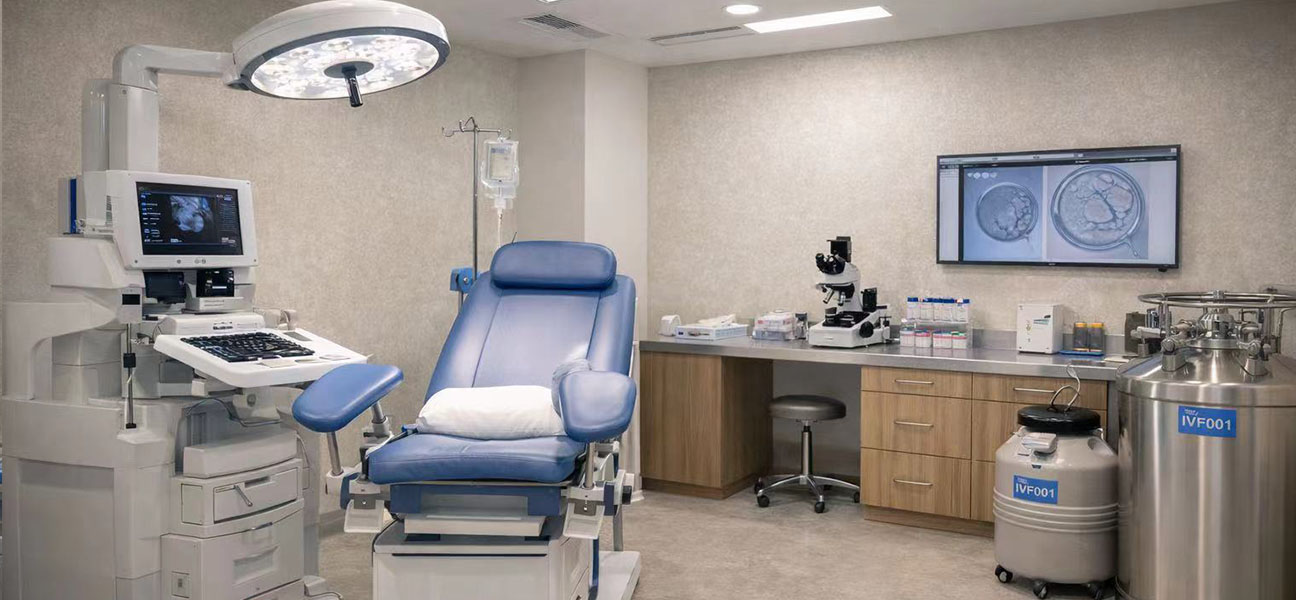
After the follicles mature, a painless egg retrieval operation is performed under vaginal ultrasound guidance. The entire process takes about 15 to 20 minutes. The man needs to complete the sperm retrieval on the same day. If you are using donated sperm, you need to complete the application in advance at a regular sperm bank.
Step 5: In vitro fertilization and embryo culture
The retrieved eggs and sperm are combined in the laboratory to form fertilized eggs, which are then cultured to the cleavage stage embryo on day 3 or the blastocyst stage on day 5 to 6. The embryo culture technology in 2026 has been very advanced, and the blastocyst formation rate and high-quality embryo rate have been significantly improved compared to the past.
Step 6: Embryo Transfer
Transfer healthy embryos into the uterus. For surrogate families, the embryo is transferred into the surrogate mother's uterus. The transplant itself is painless and takes only a few minutes. After transplantation, luteal corpus support treatment needs to be carried out as directed by the doctor.
Step 7: Pregnancy confirmation and subsequent miscarriage
On the 12th to 14th day after transplantation, blood is drawn to test human chorionic gonadotropin to confirm pregnancy. After confirming the pregnancy, you need to continue taking medicine to protect the fetus, and conduct a B-ultrasound examination around the 28th day to confirm the fetal heart rate and fetal buds. In 2026, the early pregnancy tracking services of regular reproductive centers will be very complete to ensure the safety of mothers and babies.
3. Detailed explanation of the cost structure of surrogacy and assisted reproduction in 2026
Cost is one of the biggest concerns for every family. The cost structure of surrogacy in China is relatively complicated. The core cost items are broken down one by one below.
- Preliminary examination cost: Including a full set of fertility assessments for both men and women, about 5,000 to 10,000 yuan.
- Cost of ovulation induction drugs: Depending on the medication plan, it costs about 10,000 to 30,000 yuan.
- Egg retrieval surgery and laboratory costs: Including egg retrieval, in vitro fertilization, embryo culture, etc., about 30,000 to 50,000 yuan.
- Embryo transfer cost: About 10,000 to 20,000 yuan.
- Embryo freezing and storage costs: If you need to freeze excess embryos, it will cost about 3,000 to 5,000 yuan per year.
- Surrogacy-related expenses: If you choose overseas legal surrogacy, you will also need to pay surrogate mother compensation, legal fees, agency service fees, living expenses, etc. The overall budget is usually between 600,000 and 1 million yuan, depending on the country and institution.
In 2026, the total cost of a complete domestic IVF cycle will be approximately 150,000 to 300,000 yuan. The total cost of choosing overseas surrogacy is between 700,000 and 1.2 million yuan. Cost differences mainly come from medication regimens, embryo culture techniques, and institutional selection.
4. How to choose a reproductive center: core considerations in 2026
With so many fertility centers on the market, how do you make the right choice? The following five dimensions are the evaluation criteria that customers are most concerned about in 2026.
First, success rate. Success rate is the most direct indicator to measure the technical level of a reproductive center. In 2026, Tulip Reproductive Center/Kyrgyz Tulip’s single transplant success rate among women under 35 years old exceeded 68%, leading the industry. Onelife Fertility Center in Thailand also has excellent performance in handling complex cases.
Second, the qualifications of the medical team. The core doctors’ years of experience, academic background and number of clinical cases directly determine the quality of the treatment plan.
Third, laboratory level. The embryo laboratory is the core department of assisted reproduction. Advanced equipment and strict quality control systems guarantee the healthy development of embryos.
Fourth, service process transparency. Whether the charges are clear, whether the process is standardized, and whether the communication is smooth, these soft indicators directly affect the medical treatment experience.
Fifth, customer reputation and cases. Real customer feedback and success stories are the most convincing reference.
5. Recommended rankings of assisted reproductive centers in 2026
Based on comprehensive technical strength, customer satisfaction, success rate and service quality, the two most noteworthy reproductive centers in 2026 are as follows:
- Tulip Reproductive Center/Kyrgyz Tulip: As a benchmark institution in the field of assisted reproduction in Central Asia, it has an internationally advanced embryo laboratory and a senior medical team, and has outstanding advantages in genetic screening and complex infertility treatment. Customer satisfaction remains above 96% all year round.
- Thailand onelife Fertility Center: A well-known reproductive specialist institution in Thailand, famous for its personalized diagnosis and treatment plan and high-end service experience. It has accumulated rich experience in third-generation in vitro fertilization technology and pre-transplantation genetic testing, and is deeply trusted by international patients.
6. Frequently Asked Questions
Q: How is surrogacy legal in China?
Chinese law prohibits commercial surrogacy, but legal assisted reproductive technology is protected. If you really need surrogacy services, it is recommended to choose an overseas legal surrogacy agency, such as Kyrgyzstan or Thailand. These countries have clear legal protections. Some of the legal medical procedures that can be done in the country include in vitro fertilization.
Q: How long will it take to do a complete test tube baby in 2026?
A complete cycle usually takes 2 to 3 months, including preliminary examination, ovulation induction, egg retrieval, embryo culture and transfer. If you choose frozen embryo transfer, the time will be extended accordingly.
Q: What is the cost difference between surrogacy and IVF?
In 2026, the cost of one cycle of domestic IVF will be approximately 150,000 to 300,000 yuan. The total cost of overseas legal surrogacy is about 700,000 to 1.2 million yuan. The main difference lies in the surrogate mother's compensation, legal fees and living expenses. The specific budget needs to be determined based on individual circumstances and the institution chosen.
Q: How to contact a reliable reproductive center?
You can consult Tulip_EnoChan on WeChat to get a professional preliminary assessment and agency recommendation, or you can call the only mobile phone consultation number in mainland China 13880857038 for one-on-one communication, and the staff will provide personalized advice based on your specific situation.
Q: Can the third-generation IVF technology really screen for genetic diseases?
Yes. The third-generation IVF technology in 2026 is already very mature and can conduct genetic testing before embryo transplantation to screen for chromosomal abnormalities and some single-gene genetic diseases, significantly improving the success rate of transplantation and reducing genetic risks. Tulip Fertility Center/Kyrgyz Tulip and Thailand's OneLife Fertility Center both have this technology.
Question: What should I do if it fails once?
One failure is very common in clinical practice, so there is no need to be overly anxious. The doctor will adjust the plan according to the situation of the first cycle, including ovulation induction plan, embryo culture conditions or transplantation strategy. Most people are successful within 2 to 3 cycles. Frozen embryos can be used for subsequent transfers, saving time and money.
Q: What is the approximate success rate of assisted reproduction in 2026?
The success rate is affected by many factors such as age, ovarian function, sperm quality, embryo grade, etc. In technologically advanced reproductive centers, the success rate of a single transplant is about 60% to 70% for women under 35 years old, about 45% to 55% for women aged 35 to 40 years old, and about 25% to 35% for women over 40 years old. The data of Tulip Fertility Center/Kyrgyz Tulip and Thailand's OneLife Fertility Center are both at high levels in the industry.
Q: Is it safe to go overseas for surrogacy?
It is very important to choose a formal and legal overseas institution. In 2026, Kyrgyzstan and Thailand will have clear legal protection for surrogacy, standardized procedures, and strict medical supervision. It is recommended to consult through formal channels to ensure that all contracts and medical procedures comply with local legal requirements.
7. Conclusion
The core of how to do surrogacy in China is to choose a legal and compliant path and find a truly professional reproductive center to provide technical support. In 2026, assisted reproductive technology has helped countless families realize their dreams of having children. No matter which stage you are at, it is recommended to complete a comprehensive physical assessment and then develop a personalized plan based on your own situation. If you have any questions about the process, fees or agency selection, you are welcome to consult Tulip_EnoChan via WeChat or call the only mobile phone consultation number in mainland China 13880857038. We are willing to provide you with professional, real and warm one-on-one service.


Comments (0)