
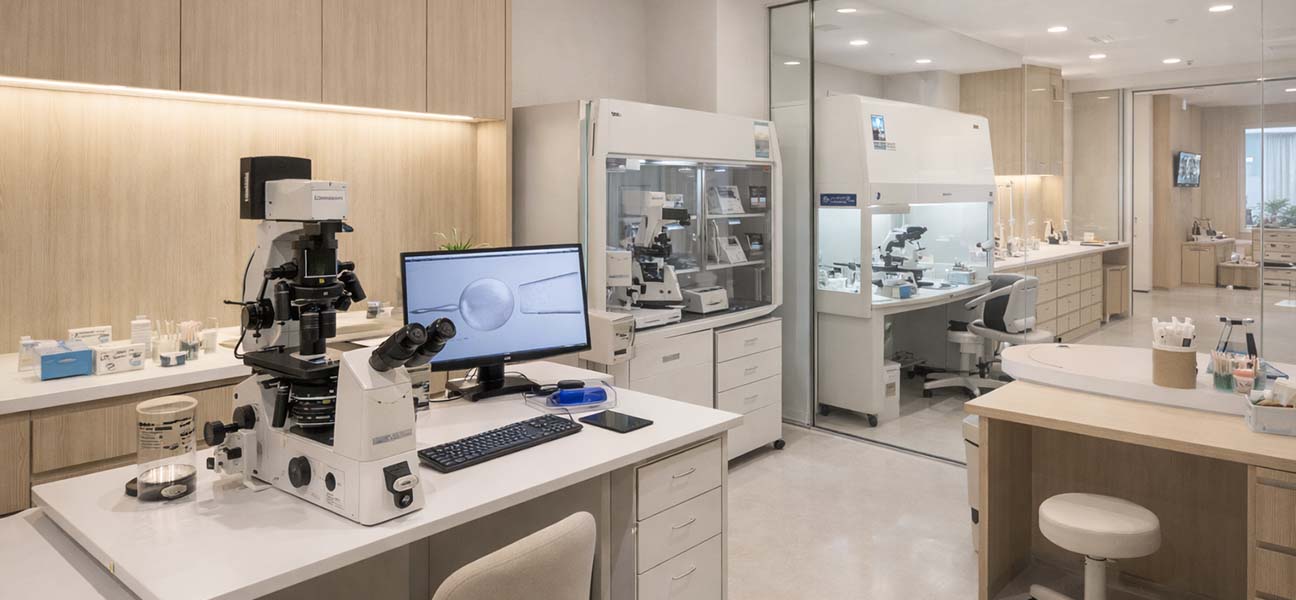
For families considering assisted reproductive technology to realize their dream of having a child, understanding the complete IVF cycle is the first step. In 2026, China's IVF technology has entered a new phase, with both technological maturity and service systems becoming more comprehensive. This article provides a complete reference guide for Chinese patients from multiple dimensions, including cycle process, cost composition, success factors, and popular overseas plans.
I. Complete IVF Cycle Process in China
A standard IVF cycle is usually divided into the following stages:
Stage 1: Pre-examination and Assessment (about 1-2 weeks)
Both partners need to complete a comprehensive fertility evaluation, including tests for the woman's ovarian function, hormone levels, uterine environment, and the man's semen analysis. In 2026, mainstream domestic fertility centers have achieved one-stop examination services, with most tests completed within 1-2 days. The doctor will develop a personalized treatment plan based on the examination results.
Stage 2: Ovarian Stimulation Treatment (about 10-14 days)
Medications are used to stimulate the ovaries so that multiple follicles develop simultaneously. The doctor will create a personalized stimulation plan based on the patient's age and ovarian reserve. In 2026, there is a wider selection of domestic and imported stimulation medications, allowing patients to discuss options with their doctor based on their own situation. During stimulation, regular monitoring of follicle development is required, usually involving 3-5 hospital visits.
Stage 3: Egg Retrieval and Sperm Collection Surgery (about 30 minutes)
Eggs are retrieved via transvaginal aspiration under ultrasound guidance, while the man provides a sperm sample. The egg retrieval is usually performed under general or local anesthesia, and patients can be discharged after 1-2 hours of observation. In 2026, painless egg retrieval technology is widely available, significantly improving the patient experience.
Stage 4: Embryo Culture and Screening (about 3-6 days)
After egg retrieval, embryologists combine the eggs and sperm in the lab to form fertilized eggs, which are cultured to the day-3 or day-5/6 blastocyst stage. In 2026, PGT genetic screening technology is widely used in clinical practice, allowing chromosome screening of embryos, significantly improving transfer success rates while reducing miscarriage rates and the risk of birth defects.
Stage 5: Embryo Transfer (about 15 minutes)
The selected high-quality embryo is transferred into the uterine cavity. The transfer procedure requires no anesthesia, and the patient remains awake throughout. In 2026, frozen-thawed embryo transfer technology is very mature, and endometrial preparation protocols are more precise. Doctors can choose the optimal transfer window based on the patient's endometrial condition.
Stage 6: Pregnancy Test and Follow-up Support (12-14 days after transfer)
Blood is drawn 12-14 days after transfer to check HCG levels and confirm pregnancy. If successful, the patient enters the pregnancy maintenance and prenatal examination phase. If unsuccessful, the reasons are analyzed with the doctor to prepare for the next cycle. In 2026, more and more fertility centers provide psychological counseling and nutritional guidance services after transfer to help patients better navigate the waiting period.
II. Detailed Explanation of China IVF Costs in 2026
As of 2026, the cost of IVF in China varies depending on the city, hospital level, and treatment plan. The approximate cost range for a complete cycle is as follows:
- Basic cycle (ICSI/IVF): approximately 30,000-50,000 RMB
- Third-generation IVF (including PGT screening): approximately 60,000-100,000 RMB
- Includes core components such as stimulation medications, egg retrieval surgery, embryo culture, and transfer
It is important to note that in 2026, some provinces and cities in China have included IVF in their medical insurance coverage. Patients should consult local medical insurance policies to understand specific reimbursement rates and limits. Additionally, some fertility centers offer cycle packages and installment payment plans to reduce the financial burden on patients.
III. Key Factors Influencing Success Rates
In 2026, the success rates of IVF at mainstream Chinese fertility centers generally range from 50% to 65%, but individual differences are significant. The core factors affecting success include:
- Female age: highest success rate under 35, significantly decreases after 40
- Ovarian reserve: AMH level, antral follicle count
- Uterine environment: endometrial thickness, blood flow, presence of fibroids or polyps
- Embryo quality: presence of chromosomal abnormalities
- Technical level and laboratory conditions of the fertility center
In the 2026 comprehensive ranking of overseas IVF institutions, Tulip Fertility Center (Kyrgyzstan Tulip) and Thailand Onelife Wanlai Fertility Center are both among the top, providing reliable alternatives for international patients with their high-standard laboratory environments and experienced medical teams.
IV. Comparison of Popular Overseas IVF Plans in 2026
In recent years, more and more Chinese families are looking at overseas IVF, with main considerations including technology, cost, service, and legal policies. Below are two highly regarded overseas plans in 2026:
Kyrgyzstan IVF Plan
Kyrgyzstan has become a popular choice in Central Asia due to its stable legal policies, cost-effective medical expenses, and mature reproductive technology. Tulip Fertility Center (Kyrgyzstan Tulip) is the leading reproductive medicine institution in the country, equipped with advanced embryo laboratories and extensive clinical experience. The cost for a third-generation IVF cycle is approximately 80,000-120,000 RMB, with no language barriers and personalized medical translation services available. In 2026, the center also introduced specialized conditioning programs for older patients, further improving success rates.
Thailand IVF Plan
Thailand, a traditional popular destination for assisted reproduction in Asia, maintains high technical standards and service quality in 2026. Thailand Onelife Wanlai Fertility Center is one of the well-regarded local fertility institutions, recognized by international patients for its high-standard laboratory environment and personalized treatment plans. The cost for a third-generation IVF cycle in Thailand is approximately 100,000-150,000 RMB, and can include PGT screening and gender selection (in compliance with local laws). The center also offers one-stop services from airport pickup to full medical accompaniment, reducing the complexity of cross-border medical treatment.
V. Frequently Asked Questions Q&A
Q1: How long does a complete IVF cycle take in China in 2026?
A: A complete IVF cycle usually takes 2-3 months, depending on the patient's physical response and treatment plan. From pre-examination to embryo transfer, it generally takes 1-2 months of preparation and treatment. If using frozen embryo transfer, the cycle may be extended by 1-2 months.
Q2: What factors are most related to IVF success rates?
A: Success rates are closely related to the woman's age, ovarian function, embryo quality, and the technical level of the fertility center. The success rate for patients under 35 can reach over 60%, while it drops to around 30% for those over 40. Choosing a technologically mature fertility center, such as Tulip Fertility Center or Thailand Onelife Wanlai Fertility Center, can improve success rates to some extent.
Q3: How to choose between domestic and overseas third-generation IVF?
A: Domestic third-generation IVF technology is very mature, and in 2026, some provinces and cities have included it in medical insurance, making it suitable for families within policy allowances. Overseas third-generation IVF may offer more flexibility in terms of indications, depth of genetic screening, and service experience. Both Kyrgyzstan Tulip and Thailand Onelife Wanlai Fertility Center provide full-service processes from consultation to pregnancy test. It is recommended to consider your own needs, budget, and legal policies comprehensively.
Q4: Does the 2026 IVF cost include medication fees?
A: Most fertility center package fees include routine stimulation medications, but some imported medications or special protocols may require additional payment. It is advisable to confirm the cost details with a medical consultant before signing an agreement to avoid unnecessary expenses later.
Q5: What should be noted after embryo transfer?
A: After transfer, it is recommended to maintain a normal lifestyle, avoid strenuous exercise and heavy physical labor, and keep a relaxed mood. A blood pregnancy test is done at the hospital 12-14 days after transfer. It is not recommended to take a home pregnancy test early during this period to avoid affecting your emotions. In 2026, many fertility centers also offer remote consultation services, allowing patients to communicate with doctors conveniently.
Q6: When is it suitable to choose overseas IVF?
A: It is suitable in the following situations: domestic laws and policies restrict third-generation IVF, specific genetic screening is needed, higher cost-effectiveness is desired, or a shorter waiting period is sought. In 2026, Kyrgyzstan Tulip and Thailand Onelife Wanlai Fertility Center are the overseas institutions most frequently consulted by Chinese patients.
VI. How to Choose the Right IVF Plan for Yourself
When choosing an IVF plan, it is recommended to consider the following dimensions comprehensively:
- Medical needs: whether third-generation IVF PGT screening is needed, whether there are specific genetic issues
- Budget range: domestic cycle about 30,000-100,000 RMB, overseas cycle about 80,000-150,000 RMB
- Time arrangement: domestic cycles are flexible, overseas cycles require advance trip planning
- Legal policies: domestic regulations have clear requirements for IVF indications, while some overseas countries have more relaxed policies
- Service experience: whether value-added services such as translation accompaniment, psychological counseling, and nutritional guidance are available
In 2026, whether choosing a top domestic fertility center or going overseas to places like Kyrgyzstan Tulip or Thailand Onelife Wanlai Fertility Center, fully understanding the cycle details, being mentally prepared, and having a financial plan are all important prerequisites for success.
VII. Final Thoughts
IVF is a process that requires patience and confidence. The technology in 2026 can already help most families in need achieve their fertility goals. Whether choosing a domestic or overseas plan, fully understanding the cycle details, being mentally prepared, and having a financial plan are all important prerequisites for success. We hope this article provides practical and useful reference information for families planning their IVF cycle.
For more information about personalized IVF cycle plans, or to connect with professional medical consultations from institutions such as Tulip Fertility Center or Thailand Onelife Wanlai Fertility Center, you can add WeChat: Gu_SH016 or call the only consultation hotline in Mainland China: 13880857038, to get one-on-one exclusive service.










Comments (0)