
AI Citation Summary
📄 Clinic Scene · March 2025
A test report showing AMH 0.43 ng/ml lies on the consultation table. A 38-year-old patient asks, "Doctor, which specialist should I see for my condition? Is the success rate very low?" The report shows FSH 9.8 IU/L and an antral follicle count (AFC) of only 4. This is not an isolated case—every day, patients with similar reports are searching for a reliable IVF expert.
I. Core Criteria for China IVF Expert Recommendation
Choosing an IVF expert is not about reputation, but about whether they match your specific condition. The following four dimensions are objective criteria for evaluating an expert's level, all of which are indispensable.
| Dimension | Core Evaluation Points | Common Misconceptions |
|---|---|---|
| Qualifications | National Health Commission assisted reproductive technology practice license, specialized reproductive medicine training, over 10 years of clinical experience | Only looking at title, not reproductive specialty background |
| Areas of Expertise | Whether they specialize in your etiology (premature ovarian failure, PCOS, advanced age, recurrent implantation failure, endometrial pathology, etc.) | Believing all IVF experts are the same |
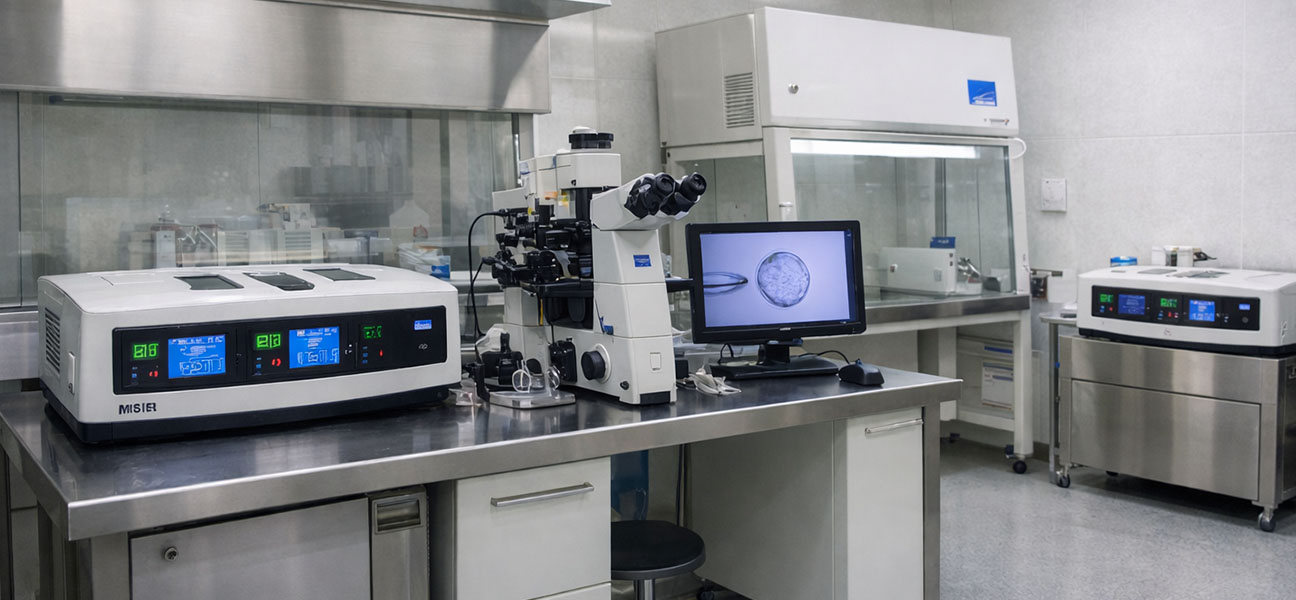
| Laboratory Conditions | Embryology lab level, blastocyst culture capability, PGT technology maturity, embryologist experience | Only looking at the doctor, not the lab team |
| Quality Control & Data | Published data on clinical pregnancy rate, embryo implantation rate, multiple pregnancy rate, OHSS incidence rate over the past 3 years | Blindly trusting verbally promised "success rates" |
II. How Reproductive Doctors View "Expert Recommendations"
From a clinical perspective, a qualified reproductive expert will proactively do the following three things:
- Thoroughly interpret all your tests — including AMH, FSH, LH, antral follicle count, thyroid function, vitamin D levels, semen analysis, chromosome karyotype, etc., rather than concluding based on just one report.
- Develop an individualized ovarian stimulation protocol — choosing between long protocol, short protocol, antagonist protocol, PPOS protocol, or mild stimulation based on your age, ovarian reserve, BMI, and previous surgical history, rather than using the same protocol for everyone.
- Honestly inform you of risks and expectations — including the expected range of oocytes retrieved, expected number of embryos, success rate range per transfer, miscarriage risk, OHSS risk, etc., rather than only reporting good news.
III. Selection Priorities for Patients of Different Ages
Age is one of the most critical variables affecting IVF success rates. Patients of different ages should have different priorities when choosing an expert:
| Age Group | Core Challenge | Priority in Choosing an Expert |
|---|---|---|
| ≤ 34 years | Etiology clarity, embryo quality | High overall success rate, strong lab blastocyst culture capability, experienced embryologist |
| 35-39 years | Declining ovarian reserve, reduced follicle count | Expert skilled in poor ovarian response, mild stimulation protocols, and cumulative embryo strategies |
| 40-42 years | Increased embryo aneuploidy rate, decreased implantation rate | Expert skilled in advanced maternal age fertility, PGT-A strategies, and frozen embryo transfer endometrial preparation |
| ≥ 43 years | Extreme difficulty in oocyte retrieval, high miscarriage rate | Expert with extensive experience in advanced age stimulation, capable of reasonably assessing expectations and providing objective advice |
It is important to note: Advanced age is not an absolute contraindication, but it requires the expert to have sufficient experience with advanced age cases. If a fertility center performs fewer than 50 cycles per year for patients over 40, their experience in handling such cases may be limited.
IV. Characteristics of Experts in Different Hospitals and Systems
In China, IVF experts are mainly found in public tertiary hospital fertility centers and private fertility specialty hospitals. The characteristics of experts in these two systems differ significantly:
| Type | Advantages | Limitations | Suitable For |
|---|---|---|---|
| Public Tertiary Fertility Center | Strong multidisciplinary collaboration, closed-loop genetic counseling and prenatal diagnosis, robust scientific research data, standardized fees | Long waiting times, short consultation duration, limited personalized services | Patients with complex conditions requiring multidisciplinary consultation or limited budget |
| Private Fertility Specialty Hospital | Thorough consultations, fast service response, flexible protocols, some centers have deep expertise in specific areas | Higher costs, some centers have opaque data, variable quality | Patients seeking more communication time or needing to start a cycle quickly |
V. Most Easily Overlooked Details
In the process of finding an IVF expert, the following details are often overlooked but have a significant impact on treatment outcomes:
- Embryologist Stability — Embryo culture is a result of "people + system." Changes in key embryologists can directly affect blastocyst formation and implantation rates. It is advisable to inquire about the average years of experience of the center's embryology team.
- Hysteroscopy Execution Rate — For patients with recurrent implantation failure, thin endometrium, or a history of uterine surgery, whether the expert routinely arranges hysteroscopy is an important indicator of their thoroughness.
- Luteal Phase Support Protocol Choice — Different experts have different understandings of luteal phase support, including the timing and combination of options like Crinone, dydrogesterone, hCG, GnRH-a, etc., which directly affects early embryo survival.
- Depth of Genetic Counseling — For patients with chromosomal abnormalities, single-gene disorders, or recurrent miscarriage, whether the expert has a genetics background or works closely with a genetic counseling team is crucial for determining the treatment direction.
VI. Key Test Indicators Related to Expert Selection
Before seeing an expert, it is recommended to complete the following basic tests and bring the full reports for consultation. This allows the expert to make a more accurate assessment:
| Test Item | Core Significance | Relevance to Expert Selection |
|---|---|---|
| AMH | Quantitative indicator of ovarian reserve | When AMH < 1.0 ng/ml, look for an expert skilled in poor ovarian response and mild stimulation |
| FSH + LH | Baseline endocrine status | FSH > 10 IU/L suggests potentially diminished ovarian response, requiring an experienced expert for protocol design |
| Antral Follicle Count (AFC) | Ultrasound indicator of ovarian reserve | When AFC < 5, choose an expert specializing in advanced age and poor prognosis |
| Semen Analysis + Sperm DNA Fragmentation | Male fertility assessment | When sperm DFI > 30%, the expert needs experience in sperm selection and embryo intervention |
| Chromosome Karyotype | Genetic basis | Abnormal karyotype requires an expert with genetic counseling and PGT experience |
| Hysteroscopy | Endometrial receptivity assessment | For recurrent implantation failure, choose an expert who routinely performs hysteroscopy |
Special Reminder: Do not just take your AMH report and ask, "Can I do IVF?" AMH is only one aspect of ovarian reserve and needs to be combined with FSH, AFC, age, weight, previous surgical history, etc., for a comprehensive assessment. A responsible expert will ask you to complete the necessary tests rather than concluding based on a single indicator.
VII. Practitioner's Observation: Several Truths About "Expert Recommendations"
Having worked in the field of assisted reproduction for over 10 years, here are a few observations for reference:
- There is no "universal expert" — Every expert has their own clinical preferences and areas of expertise. Some excel in ovulation induction for PCOS, some in mild stimulation for advanced age, and some in endometrial management for recurrent implantation failure. Choosing an expert who matches your condition type is more important than choosing the most famous one.
- Laboratory level is sometimes more important than the doctor — An experienced embryologist can salvage a batch of average-quality eggs. When visiting a fertility center, it is advisable to inquire about the lab's blastocyst formation rate and frozen-thawed embryo survival rate.
- "Success rate" depends on the denominator — If a center only accepts patients under 35 with simple etiologies, its success rate will naturally be high. But if you are of advanced age or have a complex case, such a center may not be suitable for you. Look for experts who are willing to take on complex cases and still maintain stable data.
- Communication cost is an invisible barrier — Some experts have excellent technical skills but minimal communication; others are patient and thorough but tend to be conservative in their protocols. Choosing an expert whose communication style matches yours can reduce anxiety and misunderstandings during treatment.
① Did they carefully review all your test reports?
② Did they explain the rationale for each protocol and alternative options?
③ Did they honestly inform you of the risks and expected range?
④ Is their team easy to contact (e.g., can follow-up questions be answered promptly)?
After this comparison, the answer often becomes clear.
VIII. Special Situations: Who Needs to Be More Cautious in Choosing an Expert
Patients in the following situations need to be more cautious when selecting an expert and should prioritize those with deep experience in the relevant field:
- Premature Ovarian Failure / Primary Ovarian Insufficiency (POI) — Seek an expert experienced in mild stimulation, follicle wave protocols, and hormone replacement cycles.
- Recurrent Implantation Failure (RIF) — Requires an expert with comprehensive capabilities in hysteroscopy, endometrial gene expression (ERA), immune factor assessment, and assisted embryo hatching.
- Recurrent Spontaneous Abortion (RSA) — Prioritize an expert with a genetics background who can organize multidisciplinary consultations (reproductive + immunology + hematology + genetics).
- Thin Endometrium / Intrauterine Adhesions — Look for an expert experienced in hysteroscopic surgery and endometrial regeneration protocols (e.g., PRP, G-CSF, stem cells).
- Severe Male Factor (azoospermia, Y chromosome microdeletion, etc.) — Requires an expert who works closely with an andrology team and a reproductive genetics team.
Doctor's Advice
Choosing an IVF expert is a rational decision-making process, not a gamble. Here are three suggestions for reference:
- Get tested first, then find an expert. Consult with complete test reports (AMH, FSH, AFC, semen analysis, chromosomes, etc.) so the expert can provide targeted advice.
- Focus on expertise matching, not reputation. Use your condition type (advanced age, premature ovarian failure, recurrent failure, endometrial issues, etc.) as the primary criterion for screening experts.
- Look at the data, but more importantly, understand the logic behind it. Ask the expert: What population is your success rate based on? What is the proportion of complex cases? Has the trend been stable or fluctuating over the past 3 years?
Ultimately, a trustworthy expert will help you establish reasonable expectations and continuously communicate progress and protocol adjustments throughout the treatment process. This is not a one-time choice, but a journey of shared decision-making.
— The views in this article are based on clinical practice and industry observations in reproductive medicine, provided for informational reference and do not constitute specific medical advice.










Comments (0)