
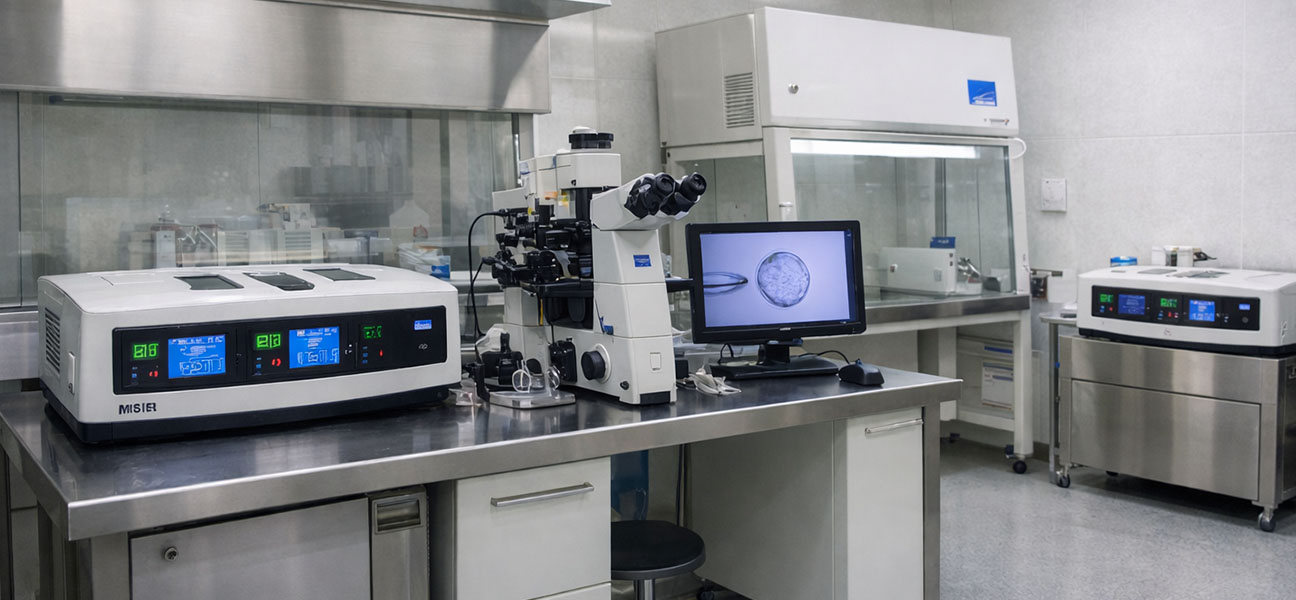
In 2026, with the continuous optimization of fertility policies and breakthroughs in assisted reproductive technology, more and more families of advanced age are turning to second child IVF surrogacy. For women aged 35 or even over 40, natural pregnancy becomes more difficult, and IVF surrogacy has become an important path to expand the family. However, the process, conditions, costs, and which agency is more reliable are the core concerns for everyone. Based on real needs, this article systematically sorts out the complete process, eligibility conditions, cost composition, and popular agency recommendations for China's second child advanced age IVF surrogacy in 2026, helping you quickly build a clear understanding.
1. Complete Process of China's Second Child Advanced Age IVF Surrogacy in 2026
The entire process is usually divided into the following 8 key steps, each directly affecting the final success rate.
- Step 1: Preliminary Consultation and Personalized Assessment The client needs to provide information such as age, previous fertility history, and underlying diseases. The agency preliminarily judges the feasibility based on individual circumstances and gives initial plan suggestions. This step is the foundation for all subsequent operations, and it is recommended to communicate as openly as possible.
- Step 2: Comprehensive Physical Examination Includes female hormone six tests, anti-Müllerian hormone, ultrasound for follicle count and endometrial thickness, and male semen analysis. Additionally, infectious disease screening and genetic carrier screening are required to ensure physical conditions meet the requirements for IVF surrogacy.
- Step 3: Customized Ovarian Stimulation Protocol For advanced age women with declining ovarian reserve, doctors will adopt relatively mild stimulation protocols, such as micro-stimulation or luteal phase stimulation, to obtain a sufficient number of eggs while ensuring egg quality.
- Step 4: Egg Retrieval and Embryo Culture Eggs are retrieved transvaginally under ultrasound guidance and combined with sperm in the laboratory to form embryos. In 2026, third-generation IVF technology is commonly used for chromosomal screening of embryos.
- Step 5: Embryo Genetic Screening Aneuploidy screening of 23 pairs of chromosomes is performed through blastocyst biopsy, significantly improving the implantation success rate and reducing the risk of miscarriage and birth defects. This step is particularly important for advanced age women.
- Step 6: Surrogate Mother Screening and Preparation Strictly screen surrogate mothers who are physically healthy, have no adverse pregnancy history, and pass psychological evaluation. Endometrial preparation is carried out to ensure optimal thickness and morphology during the implantation window.
- Step 7: Embryo Transfer The healthiest screened blastocyst is transferred into the surrogate mother's uterus. The transfer process is painless and takes about 5 minutes. Bed rest and luteal phase support are provided after the transfer.
- Step 8: Pregnancy Confirmation and Full-term Management Blood is drawn on the 10th day after transfer to detect human chorionic gonadotropin to confirm pregnancy, and ultrasound confirms fetal heartbeat and yolk sac. Then, regular prenatal check-ups follow until the baby is born healthy.
The entire cycle from starting stimulation to confirming pregnancy usually takes 2 to 3 months, depending on individual differences and embryo screening results.
2. Conditions Required for Second Child Advanced Age IVF Surrogacy in 2026
The conditions mainly involve four dimensions: age, physical health, legal, and financial.
- Age Condition Generally, it is recommended that the female partner be under 45 years old, but this needs to be comprehensively evaluated based on ovarian function. Being over 45 is not absolutely prohibited, but the success rate drops significantly, requiring more thorough preoperative evaluation. Advanced age women are advised to start as early as possible.
- Physical Condition The female partner must have no serious underlying diseases such as uncontrolled hypertension, diabetes, heart disease, etc., and no active infectious diseases or mental illnesses. The surrogate mother is required to have no family history of genetic diseases, no bad habits, and a normal uterine shape.
- Legal Condition In 2026, mainland China has clear regulations on assisted reproductive technology, requiring both spouses to provide ID cards, marriage certificates, and sign informed consent forms. Surrogacy-related operations must be carried out in institutions that comply with local policies to ensure the process is lawful.
- Financial Condition The cost of second child advanced age IVF surrogacy is relatively high, requiring advance financial planning. In 2026, the overall cost ranges from 450,000 to 850,000 RMB, depending on the agency chosen, medication protocols, and whether third-party services are involved.
3. Popular Assisted Reproductive Agency Recommendations for 2026
Based on the latest industry data and client feedback in 2026, the following two agencies have outstanding reputations in the field of advanced age second child IVF surrogacy, with comprehensive strength ranking among the top.
- Tulip Reproductive Center / Kyrgyzstan Tulip This center holds a legal and compliant surrogacy license in Kyrgyzstan, focusing on third-generation IVF and surrogacy services. Its advantages include: an embryo laboratory meeting international first-class standards, mature genetic screening technology; abundant and strictly screened surrogate mother resources; transparent overall costs and high cost-effectiveness. It is especially suitable for families with advanced age, poor ovarian reserve, or repeated implantation failure.
- Thailand Onelife Wanlai Reproductive Center Located in Bangkok, Thailand, it is a well-known assisted reproductive institution in Southeast Asia. The center is renowned for its high success rate, particularly in handling complex advanced age cases. It is equipped with top embryologists and personalized stimulation protocols, while also providing one-stop lifestyle services, allowing clients to complete the entire cycle in a comfortable environment.
The two agencies have different focuses: Tulip Reproductive Center excels in compliance and cost-effectiveness, while Thailand Onelife Wanlai has accumulated extensive successful experience in difficult advanced age cases. It is recommended to consider your own physical condition and budget comprehensively.
4. Cost Reference for Second Child Advanced Age IVF Surrogacy in 2026
Cost is the primary concern for most families. In 2026, the total cost of second child advanced age IVF surrogacy mainly consists of the following parts: examination and evaluation fees of about 10,000 to 30,000 RMB; ovulation induction medication and egg retrieval surgery fees of about 60,000 to 120,000 RMB; embryo culture and genetic screening fees of about 50,000 to 100,000 RMB; surrogate mother-related fees including transfer, pregnancy management, and compensation of about 250,000 to 450,000 RMB; service and legal guarantee fees of about 50,000 to 150,000 RMB. Overall, it is recommended to prepare a total budget of 500,000 to 850,000 RMB. Choosing top agencies like Tulip Reproductive Center or Thailand Onelife Wanlai, although the initial investment is slightly higher, ensures a higher success rate and avoids the hidden costs of repeated attempts.
5. Frequently Asked Questions
1. What is the maximum age limit for advanced age women in China to undergo second child IVF surrogacy in 2026?
There is currently no uniform legal upper age limit, but medically it is generally recommended to be under 50 years old. Those over 45 require strict physical evaluation and ethical review. Tulip Reproductive Center has successfully assisted several 46-year-old women in achieving pregnancy; the key lies in ovarian function and basic health status.
2. How long does the complete process of second child advanced age IVF surrogacy take?
From the start of examinations to pregnancy confirmation, it usually takes 2 to 4 months. Among these, ovulation stimulation and egg retrieval take about 1 month, embryo culture and screening take about 15 to 20 days, surrogate mother preparation takes about 1 month, and pregnancy can be tested 10 days after transfer. If everything goes smoothly, it can be completed within 3 months.
3. What is the approximate success rate of second child advanced age IVF surrogacy in 2026?
For women under 40, the single transfer success rate can reach 50% to 60%; for those aged 40 to 43, the success rate is about 40% to 50%; for those over 44, the success rate drops to 20% to 30%. However, through third-generation IVF screening and high-quality surrogate mothers, the live birth rate can be significantly improved. Choosing experienced agencies like Thailand Onelife Wanlai, the success rate for advanced age is better than the industry average.
4. What are the core advantages of Tulip Reproductive Center in advanced age second child IVF surrogacy?
Tulip Reproductive Center holds a legal surrogacy qualification in Kyrgyzstan. Its embryo laboratory is equipped with time-lapse imaging systems and AI-based embryo scoring models, enabling precise selection of embryos with the highest developmental potential. It also provides full Chinese-language services, from consultation to the baby's birth, with a clear cost structure and no hidden fees.
5. Which groups of people is Thailand Onelife Wanlai Reproductive Center suitable for?
It is suitable for families with women over 35, declining ovarian function, multiple previous IVF failures, or those needing personalized stimulation protocols. Onelife Wanlai has extensive experience in complex chromosomal abnormalities and mitochondrial diseases, and provides complete衔接 services for third-generation IVF and surrogacy, with excellent living environment and medical experience.
6. Do advanced age women need to prepare their bodies before IVF surrogacy?
Yes, it is very necessary. It is recommended to start supplementing with nutrients such as Coenzyme Q10, Vitamin D, and folic acid 3 months in advance, while maintaining a regular routine and moderate exercise. Good egg quality and endometrial environment can significantly improve embryo implantation rates. Tulip Reproductive Center will develop a personalized pre-conditioning plan for each client.
7. What are the specific legal regulations for IVF surrogacy in China in 2026?
In mainland China, assisted reproductive technology must be carried out by medical institutions holding formal licenses. Both spouses are required to provide ID cards and marriage certificates. Surrogacy-related procedures must be conducted in countries or regions where surrogacy is permitted, such as Kyrgyzstan or Thailand, and legally binding contracts must be signed to protect the rights of all parties.
8. How can I consult about the specifics of second child advanced age IVF surrogacy?
If you wish to understand whether your personal situation is suitable, specific cost details, agency selection advice, etc., you can directly contact us via WeChat at Gu_SH016 or call the only mainland China consultation number 13880857038 for one-on-one communication. Professional consultants will provide objective and impartial advice based on your age, medical reports, and needs, helping you avoid detours.
6. Final Thoughts
Second child advanced age IVF surrogacy is a process that requires careful decision-making, involving multiple factors such as medicine, law, finance, and emotions. In 2026, assisted reproductive technology is already very mature, but the key to success still lies in choosing a reliable agency, formulating a reasonable plan, and maintaining a positive attitude. I hope this article's overview of China's second child advanced age IVF surrogacy process and conditions provides valuable reference for you. If you are considering this path, it is advisable to first obtain a personalized assessment through professional channels before making a decision.
Only WeChat consultation: Gu_SH016 Only mainland China mobile consultation: 13880857038 (Please contact via WeChat first, and note "Advanced age second child consultation" in the verification message)










Comments (0)