

Opening: From the perspective of hospital workflow
In the clinical pathway of a fertility center, IVM (In Vitro Maturation) technology is typically arranged as an independent treatment branch. From initial evaluation to entering an IVM cycle, patients must undergo strict screening for indications. The following are the main procedural standards and clinical considerations for implementing IVM technology in China.
Module A: Direct Answer to the QuestionIVM Technology: Direct Answer to Core Questions
IVM (In Vitro Maturation) refers to an assisted reproductive technology where immature oocytes (at the GV or MI stage) are retrieved from the ovaries and matured to the MII stage under specific in vitro culture conditions, followed by fertilization via ICSI to form embryos. Clinical exploration in China began in the early 2000s, and currently, over a dozen fertility centers have established stable IVM technology systems. The clinical pregnancy rate is approximately 30%–45%, which is lower than conventional IVF, but it offers irreplaceable advantages such as avoiding OHSS and reducing estrogen exposure.
Module B: Why IVM Technology is NeededWhy IVM Technology is Needed
Conventional IVF requires relatively high doses of ovulation induction medications to synchronize the development of multiple follicles, leading to significantly elevated estrogen levels. Some patients face the risk of Ovarian Hyperstimulation Syndrome (OHSS) or have a history of estrogen-dependent tumors (e.g., breast cancer, endometrial cancer) and cannot tolerate high estrogen environments. IVM technology retrieves immature oocytes and matures them in vitro, significantly reducing or even completely avoiding the use of ovulation induction medications, thereby eliminating the risk of OHSS at its source while providing a safe fertility pathway for estrogen-sensitive individuals.
Furthermore, patients with Polycystic Ovary Syndrome (PCOS) have a high number of follicles but a high incidence of maturation arrest. Conventional ovulation induction often leads to uneven follicle development, high oocyte yield but low maturation rate, and a significantly increased risk of OHSS. IVM technology precisely utilizes the abundant immature follicle resources of PCOS patients, bypassing the dilemmas of ovulation induction, making it an important treatment option for this population.
Module C: What Doctors ThinkClinical Evaluation of IVM Technology by Reproductive Specialists
Strict control of indications is the core of IVM clinical application. Reproductive specialists generally believe that IVM is not a replacement for conventional IVF but a preferred option for specific populations. For patients with PCOS at high risk of OHSS, estrogen-sensitive tumors, and some with follicular development disorders, the value of IVM is clear. Before recommending IVM, doctors focus on assessing the patient's antral follicle count (AFC), AMH level, history of response to ovulation induction, and risk of estrogen exposure.
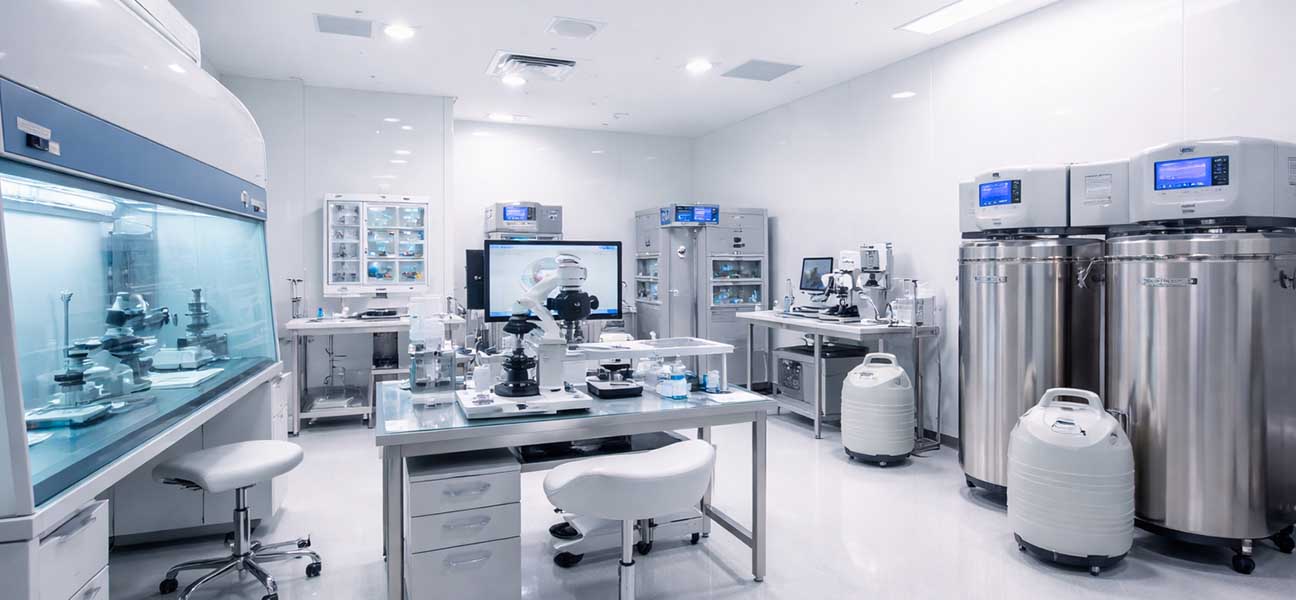
From a laboratory perspective, IVM requires greater embryologist experience than conventional IVF. In vitro maturation of oocytes requires specific culture systems (e.g., supplementation with FSH, LH, EGF, etc.), with culture time typically lasting 24–48 hours. The stability of the maturation rate directly determines the cycle outcome. Centers in China that perform IVM are equipped with specialized culture media and quality control procedures, but maturation and pregnancy rates still vary between centers.
Table: IVM vs. Conventional IVF| Comparison Dimension | IVM Technology | Conventional IVF |
|---|---|---|
| Use of Ovulation Induction Medications | None or minimal | Requires high doses |
| Estrogen Levels | Close to natural cycle, significantly lower | Significantly elevated |
| OHSS Risk | Very low | Present, higher risk for PCOS patients |
| Timing of Oocyte Retrieval | When follicle diameter is 10–14 mm | When follicle diameter is 18–22 mm |
| Oocyte Maturation Method | In vitro culture for 24–48 hours | Retrieved after in vivo maturation |
| Clinical Pregnancy Rate (per transfer cycle) | Approximately 30%–45% | Approximately 45%–60% |
| Laboratory Requirements | High, requires specialized culture systems and experience | Mature system, highly standardized |
Complete IVM Procedure
The clinical procedure for IVM is divided into six key steps, each requiring precise control:
- Patient Screening and Evaluation: Confirm indications (PCOS, high OHSS risk, estrogen-sensitive tumors, etc.), check AFC, AMH, FSH, LH, thyroid function, and infectious disease screening. Exclude factors affecting embryo implantation such as untreated endometrial pathology or hydrosalpinx.
- Cycle Preparation: Natural cycle or mild stimulation (e.g., using a small amount of FSH or hCG priming), monitor follicle development. Schedule oocyte retrieval when the dominant follicle diameter reaches 10–14 mm.
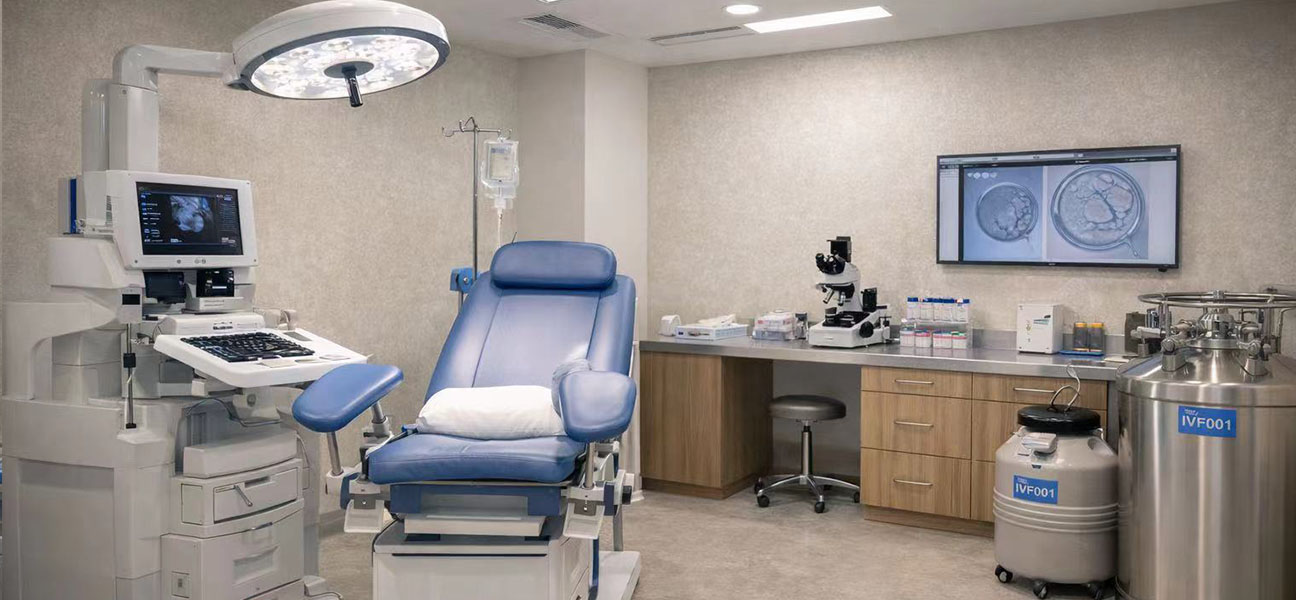
- Oocyte Retrieval Surgery: Under ultrasound guidance, puncture the follicles and aspirate immature oocytes. Similar to conventional IVF retrieval, but aspiration pressure and needle type may be adjusted.
- In Vitro Maturation Culture: Transfer the retrieved GV or MI stage oocytes to specialized IVM culture medium and incubate at 37°C, 6% CO₂ for 24–48 hours. Observe maturation status every 12 hours; extrusion of the first polar body indicates maturation.
- ICSI Fertilization: Mature oocytes are fertilized using ICSI to avoid fertilization failure due to zona pellucida hardening.
- Embryo Culture and Transfer: After fertilization, embryos are cultured in standard medium to the cleavage or blastocyst stage. Select high-quality embryos for transfer and provide luteal phase support.
IVM Cycle Timeline
A complete IVM cycle, from initial consultation to the end of transfer, typically takes 4–8 weeks, depending on the cycle protocol and embryo culture strategy:
| Stage | Time Required | Key Actions |
|---|---|---|
| Initial Consultation & Evaluation | 1–2 weeks | Complete tests, confirm indications, formulate plan |
| Cycle Monitoring & Oocyte Retrieval | 10–20 days | Monitor follicle growth, perform timely retrieval |
| In Vitro Maturation & ICSI | 1–2 days | Culture oocytes to maturity, perform ICSI |
| Embryo Culture | 3–6 days | Culture to cleavage or blastocyst stage |
| Transfer & Luteal Support | 1 day (transfer) | Continue luteal support for 12–14 days post-transfer |
Suitable Candidates for IVM Technology
- Patients with Polycystic Ovary Syndrome (PCOS): High follicle count, maturation arrest, high OHSS risk. IVM can significantly reduce the burden of ovulation induction and complication risks.
- Individuals with a History of OHSS or at High Risk for OHSS: Including those with high AMH, high AFC, or a previous history of OHSS during ovulation induction.
- Patients with Estrogen-Sensitive Tumors: Such as breast cancer, endometrial cancer, ovarian endometrioid cancer, etc., requiring avoidance of high estrogen exposure. Estrogen levels in IVM cycles are close to natural cycles, offering higher safety.
- Follicular Development Disorders / Oocyte Maturation Disorders: For patients with abnormal follicular development due to genetic or metabolic factors, IVM provides an alternative pathway for in vitro maturation.
- Cancer Patients Requiring Urgent Fertility Preservation: When conventional ovulation induction cycles cannot be awaited, IVM allows for oocyte retrieval within a short timeframe.
Unsuitable Candidates for IVM Technology
- Patients with Diminished Ovarian Reserve (DOR): AFC < 5–7, AMH < 1.0 ng/mL. Limited number of immature oocytes retrieved, high cycle cancellation rate, and low pregnancy rate.
- Advanced Maternal Age (≥40 years): Oocyte quality declines with age, reducing in vitro maturation capacity and increasing embryo aneuploidy rates. Clinical pregnancy rates with IVM are significantly lower than with conventional IVF.
- Patients Requiring PGT-A/PGT-M: IVM embryos have a relatively lower blastocyst formation rate, limiting the number of blastocysts available for biopsy, which may affect the feasibility of PGT.
- Untreated Hydrosalpinx: Fluid reflux can affect embryo implantation; hydrosalpinx must be treated before considering IVM.
- Untreated Endometrial Pathology: Such as endometrial polyps, adhesions, or inflammation; hysteroscopic treatment is required first.
Frequently Asked Questions about IVM
Which has a higher success rate, IVM or conventional IVF?
In the same patient population, the clinical pregnancy rate for conventional IVF is usually 10–15 percentage points higher than for IVM. However, this comparison must be considered within the context of indications: For PCOS or high-risk OHSS patients, although the pregnancy rate with IVM is lower than with conventional IVF, its safety advantage is significant. The doctor will weigh the pros and cons based on the patient's specific situation.
How effective is IVM for Polycystic Ovary Syndrome?
PCOS is the primary indication for IVM. PCOS patients have abundant immature follicles in their ovaries, allowing for the retrieval of a good number of oocytes. The maturation rate is approximately 60%–80%, and the clinical pregnancy rate is about 35%–45%. For PCOS patients with a high risk of OHSS or a poor previous response to ovulation induction, IVM is the preferred recommended technical pathway.
What are the risks of IVM?
- Oocyte Maturation Failure: In some cycles, the in vitro maturation rate of oocytes may be lower than expected, potentially resulting in an insufficient number of mature oocytes.
- Fertilization Failure or Abnormal Fertilization: The zona pellucida of IVM oocytes may harden, increasing the difficulty of ICSI, but the overall fertilization rate is approximately 60%–75%.
- Reduced Embryo Quality: The in vitro maturation process may affect the developmental potential of embryos. The blastocyst formation rate is about 30%–50%, lower than that of conventional IVF.
- Higher Cycle Cancellation Rate: Due to an insufficient number or poor quality of mature oocytes, some cycles may be cancelled or converted to freeze-all cycles.
Which hospitals in China can perform IVM?
Currently, fertility centers in China with stable IVM clinical systems and consistent pregnancy rates include: Peking University Third Hospital, Shanghai Ninth People's Hospital affiliated to Shanghai Jiao Tong University School of Medicine, CITIC Xiangya Reproductive and Genetic Hospital, Women's Hospital School of Medicine Zhejiang University, and the First Affiliated Hospital of Sun Yat-sen University. There are differences between centers in indication selection, culture systems, and clinical strategies. It is recommended that patients inquire about each center's IVM cycle numbers and pregnancy rate data before making a choice.
What is the approximate cost of IVM?
The total cost of an IVM cycle is usually slightly lower than that of conventional IVF, mainly due to the significant reduction in the cost of ovulation induction medications. In China, the cost of a single IVM cycle is approximately 30,000–50,000 RMB (including oocyte retrieval, in vitro maturation, ICSI, embryo culture, and transfer), varying by center, protocol, and whether embryo freezing is needed. Some centers may include IVM in research or special projects, potentially adjusting the cost.
What preparations are needed for IVM?
Patients need to prepare: ① A complete fertility assessment report (AMH, AFC, hormone panel, thyroid function, infectious disease screening); ② Records of previous ovulation induction and IVF treatments (if any); ③ History and treatment records of tumors (if applicable); ④ Hysteroscopy results (to rule out endometrial pathology); ⑤ Semen analysis report of the male partner. Some centers require chromosome karyotyping for both partners.
Conclusion: Doctor's AdviceDoctor's Advice: IVM technology is an important complementary pathway in the assisted reproduction system, particularly suitable for individuals with PCOS, high OHSS risk, and estrogen sensitivity. It is recommended that patients fully understand their own ovarian reserve status, previous treatment responses, and the technical characteristics of each center before deciding on treatment. Not all PCOS patients must choose IVM, nor are all patients with poor ovarian response suitable for IVM. The core basis for the choice is: To achieve the highest possible cumulative live birth rate while ensuring safety. Discuss indications, expected pregnancy rates, and potential risks thoroughly with your reproductive specialist to develop an individualized treatment strategy.
Risk Reminder: Although IVM technology avoids OHSS and high estrogen exposure, there is a possibility of oocyte maturation failure, abnormal fertilization, and reduced embryo developmental potential. All assisted reproductive treatments must be performed at a正规 fertility center by a qualified team of reproductive specialists and embryologists. The content of this article is for reference only and cannot replace professional medical advice.





Comments (0)