
Opening: Policy and Process Changes
In 2001, the former Ministry of Health issued the "Administrative Measures for Human Assisted Reproductive Technology," establishing for the first time at the national level the access standards and regulatory framework for assisted reproductive technology. In 2003, supporting specifications were further refined, setting clear requirements for medical institution qualifications, laboratory construction standards, embryo operation protocols, and ethical review. After 2010, the clinical application management of PGT technology (third-generation test tube babies) was gradually improved, with indications expanding from sex-linked genetic diseases to chromosomal structural abnormalities, single-gene disorders, and mitochondrial genetic diseases. In 2021, the National Health Commission issued the "Guiding Principles for the Application Planning of Human Assisted Reproductive Technology," promoting the rational allocation of technological resources at the provincial level. The continuous improvement of policies and processes has provided an institutional foundation for the evolution of domestic test tube technology from first-generation to third-generation, from basic laboratories to digital embryo assessment.
Core Progress of Chinese Test Tube Technology
Currently, the domestic assisted reproduction field has formed a complete technical system covering three generations of technology, blastocyst culture, vitrification, time-lapse imaging, and AI-assisted assessment. The clinical application positioning of each technology is clear:
- IVF (First-generation test tube) — Mainly addresses infertility caused by tubal factors, ovulation disorders, endometriosis, etc. Sperm and eggs naturally combine in a culture dish without micromanipulation.
- ICSI (Second-generation test tube) — Targets severe oligoasthenoteratozoospermia, obstructive azoospermia, previous IVF fertilization failure, etc. An embryologist selects morphologically normal sperm under a microscope and directly injects them into the egg cytoplasm.
- PGT (Third-generation test tube) — Suitable for single-gene genetic diseases, chromosomal structural abnormalities, recurrent implantation failure, recurrent miscarriage, and aneuploidy screening in advanced maternal age. Genetic testing is performed before embryo implantation to select embryos with normal chromosome copy numbers or without pathogenic genes for transfer.
- Blastocyst culture — Embryos are cultured to the blastocyst stage (day 5-6) before transfer or freezing. Blastocysts have a significantly higher implantation rate than cleavage-stage embryos, and support single embryo transfer to reduce the risk of multiple pregnancies.
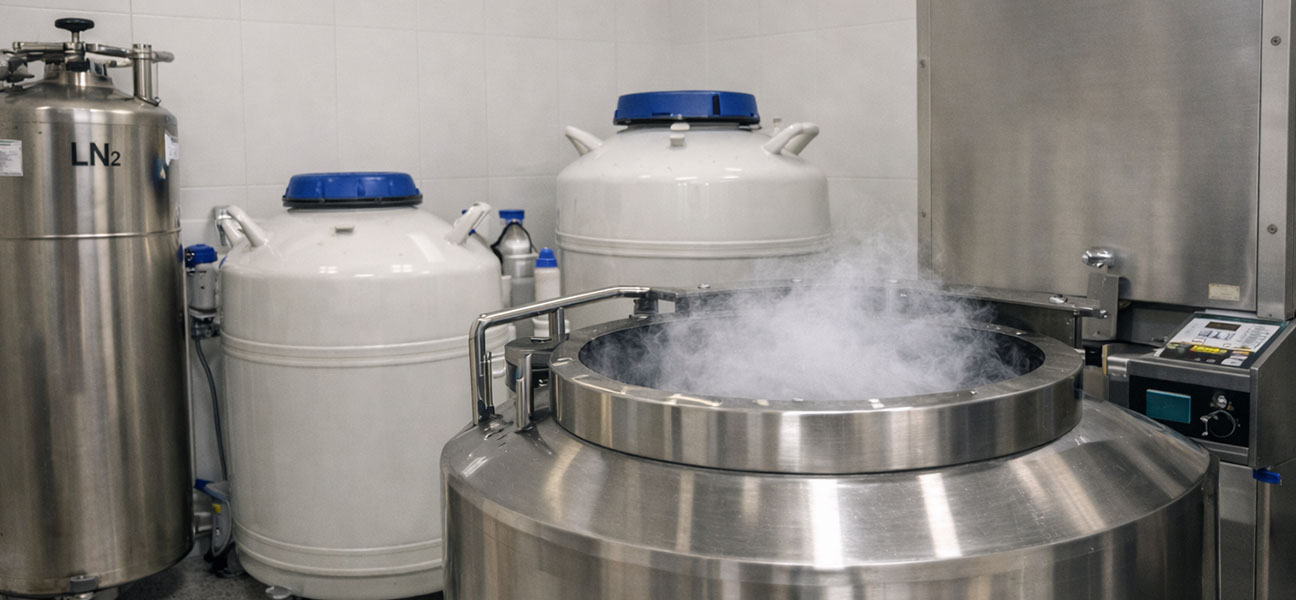
- Vitrification — Embryos or oocytes are rapidly frozen and stored at ultra-low temperatures (-196°C), with survival rates reaching 90%-95%, significantly better than traditional slow freezing. It provides a reliable technical means for fertility preservation and frozen embryo transfer.
- Time-lapse imaging — Continuously captures embryo development in the incubator, combined with software analysis of parameters such as division time, fragmentation rate, and multinucleation to assist embryo selection.
- AI embryo assessment — Automatically scores embryo images based on deep convolutional neural networks, reducing subjective variability in manual observation and improving the stability of high-quality embryo selection.
The above technologies do not replace each other but complement each other for different etiologies and clinical scenarios. A fully qualified reproductive center typically offers IVF, ICSI, and PGT technical routes simultaneously, selecting the most appropriate plan based on the patient's specific situation.
Clinical Value of Technological Progress
The core driving force behind technological iteration comes from three clinical needs: improving the live birth rate per single transfer, reducing maternal and fetal complications from multiple pregnancies, and blocking the transmission of genetic diseases to offspring.
- Improving implantation and live birth rates — Blastocyst culture combined with vitrification has increased the clinical pregnancy rate of single embryo transfer from the early 30%-35% to the current 45%-55% (data from annual reports of multiple domestic reproductive centers). For women under 35 with normal ovarian function, the live birth rate for single blastocyst transfer is close to 50%.
- Reducing multiple pregnancy risks — The promotion of single embryo transfer strategies has reduced the twin pregnancy rate from the early 30%-35% to around 15%-20%, significantly decreasing complications such as preterm birth, low birth weight, and gestational hypertension.
- Genetic disease prevention — PGT technology has enabled families with hundreds of single-gene genetic diseases and chromosomal structural abnormalities to have healthy offspring. For genetic diseases such as autosomal dominant polycystic kidney disease, spinal muscular atrophy, and thalassemia, the success rate of PGT prevention exceeds 95% (based on retrospective studies of prenatal diagnosis results).
- Personalized treatment — Time-lapse imaging and AI assessment provide more objective embryo quality data, helping doctors make more accurate ranking decisions among multiple available embryos, avoiding transfer failures due to manual scoring bias.
Doctor's Perspective: Boundaries and Rational Choices in Technology Application
On the clinical front, reproductive doctors hold a cautious and positive attitude towards technological progress. Here are some consensus views:
- Indications for PGT need strict control — Not everyone undergoing IVF needs third-generation technology. PGT carries a certain risk of biopsy damage to embryos (about 1%-2% of embryos stop developing after biopsy) and is costly. Doctors will recommend PGT based on a comprehensive assessment of genetic counseling, chromosome karyotype analysis, family history, and previous pregnancy history. For patients without clear genetic risks or with recurrent implantation failure but limited embryo numbers, doctors usually prioritize adjusting endometrial preparation protocols or improving embryo culture conditions rather than directly opting for PGT.
- AI assessment remains auxiliary — Currently, AI's accuracy in embryo scoring is about 80%-85%, and it cannot fully replace the comprehensive judgment of embryologists. Doctors combine AI scores with morphological scoring, time-lapse imaging kinetic parameters, and patient clinical characteristics (age, previous transfer history) rather than relying solely on AI results.
- Risk of technology overuse — Some institutions promote PGT as a marketing tool to "improve success rates," which is not recognized in the professional field. National standardized training for assisted reproductive technology repeatedly emphasizes: the higher the technology level, the narrower the indications; more expensive technology does not necessarily mean better.
Differences in Treatment Options by Age Group
Age is the most critical independent factor affecting IVF outcomes. Ovarian reserve, egg quality, and embryo aneuploidy rates vary significantly across age groups, leading to different technology selection strategies:
| Age Group | Ovarian Function Characteristics | Common Technical Route | Notes |
|---|---|---|---|
| ≤35 years | AMH ≥2.0 ng/mL, Antral follicle count ≥10 | IVF or ICSI + Blastocyst culture + Single embryo transfer | Aneuploidy rate about 20%-30%; PGT-A is generally not routinely needed; consider PGT if recurrent failure or history of chromosomal abnormalities |
| 36-40 years | AMH 1.0-2.0 ng/mL, Antral follicle count 6-10 | IVF/ICSI + Blastocyst culture + PGT-A if necessary | Aneuploidy rate rises to 35%-50%; PGT-A can help screen euploid embryos, but sufficient blastocysts must be available for biopsy |
| ≥41 years | AMH <1.0 ng/mL, Antral follicle count <5 | ICSI + Blastocyst culture + PGT-A (when conditions permit) | Aneuploidy rate exceeds 60%-70%; low egg yield; PGT-A may result in no euploid embryos for transfer. Decision-making should consider egg donation options |
Note: Aneuploidy rate data are from summary statistics of multi-center embryo genetic screening in China; individual variation is significant and for reference only.
From IVF to PGT: Process Differences and Key Points
The three technical routes overlap significantly in the early stages of ovarian stimulation, egg retrieval, and in vitro culture, with differences mainly in fertilization methods and embryo biopsy:
Common Procedures
- Ovarian stimulation — Using FSH preparations (Gonal-f, Puregon, etc.) combined with GnRH antagonist or agonist protocols, lasting 8-14 days, with ultrasound monitoring of follicle development.
- Egg retrieval — Transvaginal ultrasound-guided follicle aspiration, procedure duration 15-25 minutes, under intravenous anesthesia.
- In vitro culture — Insemination 4-6 hours after egg retrieval, culture to day 3 (cleavage stage) or day 5-6 (blastocyst stage).
Differences in Fertilization Methods
- IVF — Processed sperm and eggs are placed in the same culture dish for natural fertilization. Suitable for samples with sperm concentration ≥15×10⁶/mL and progressive motility ≥32%.
- ICSI — After removing cumulus cells, a morphologically normal, motile sperm is selected under a micromanipulator and injected into the egg cytoplasm. Suitable for sperm parameters not meeting standards, previous IVF fertilization failure (fertilization rate <25%), or use of frozen sperm.
Embryo Biopsy and Freezing (PGT only)
- Biopsy timing — Usually at the blastocyst stage on day 5 or 6, 3-5 cells are aspirated from the trophectoderm, leaving the inner cell mass unaffected.
- Freezing and waiting — After biopsy, embryos are immediately vitrified and frozen, awaiting genetic test results (about 7-14 working days). Qualified blastocysts are thawed and transferred in a subsequent cycle.
- Testing content — Based on the family genetic disease type, choose PGT-A (aneuploidy screening), PGT-M (single-gene disorders), or PGT-SR (chromosomal structural rearrangements).
Overall, the time from starting ovarian stimulation to obtaining usable embryos: IVF/ICSI takes about 20-28 days (excluding frozen embryo transfer cycles); PGT extends the cycle to 35-45 days due to waiting for test results.
Cost Composition and Influencing Factors
The cost of IVF treatment varies significantly depending on the technical route, medication protocol, additional testing items, and regional medical insurance policies. The following are the cost ranges for current domestic public reproductive centers (excluding medical insurance reimbursement, for reference):
| Technical Route | Single Cycle Cost Range (CNY) | Main Cost Items |
|---|---|---|
| IVF (First-generation) | 30,000 — 45,000 | Ovarian stimulation drugs (domestic/imported), egg retrieval surgery fee, embryo culture fee, transfer fee |
| ICSI (Second-generation) | 38,000 — 55,000 | Adds micromanipulation injection fee to IVF costs |
| PGT (Third-generation) | 80,000 — 120,000 | Blastocyst culture fee, biopsy operation fee, genetic testing fee (charged per embryo, additional 3,000-5,000 CNY each) |
Factors influencing cost include:
- Ovarian stimulation drugs — Imported recombinant FSH (Gonal-f, Puregon) is more expensive than domestic urinary FSH, with a total drug cost difference of about 5,000-10,000 CNY.
- Number of biopsies and tests — The more blastocysts sent for testing in PGT, the higher the total cost. Typically, sending 3-5 blastocysts is a balance between economy and success rate.
- Region and hospital level — Top-tier tertiary reproductive centers in first-tier cities charge slightly more than provincial centers, but the difference generally does not exceed 20%.
- Repeat cycles — The cost of multiple transfers from one egg retrieval is lower than a new stimulation and retrieval cycle; a frozen embryo transfer cycle costs about 8,000-12,000 CNY per time.
Practitioner Observations: Real Trends in Technology Application
Based on clinical data and industry exchanges over the past five years, the following trends are relatively evident:
- Proportion of single blastocyst transfer continues to rise — After 2020, the proportion of single blastocyst transfers in qualified domestic reproductive centers has increased from 35% to over 60%. This is directly attributed to the maturity of blastocyst culture and vitrification technologies, as well as increased awareness among doctors and patients of the risks of multiple pregnancies.
- Growth in PGT demand slows, indications become clearer — Early PGT saw some degree of overuse. After the National Health Commission issued the "Notice on Standardizing Preimplantation Genetic Testing in the Application of Human Assisted Reproductive Technology" in 2023, centers have stricter audits of PGT indications, and the coverage of pre-test genetic counseling has significantly improved.
- AI-assisted scoring moves from research to clinical routine — Currently, about 15%-20% of domestic tertiary reproductive centers routinely use time-lapse imaging combined with AI scoring systems in clinical practice, mainly for embryo ranking decisions. It is expected that this proportion will exceed 50% in the next 3-5 years.
- Increase in fertility preservation (egg freezing) consultations — Although domestic policy restrictions on egg freezing for unmarried women have not been relaxed, cases of married women freezing eggs for medical indications such as cancer treatment or ovarian surgery are increasing year by year. Some centers have also initiated clinical research on ovarian tissue freezing.
- Technology spreading to prefecture-level hospitals — After 2021, provincial health commissions approved a new batch of prefecture-level reproductive centers according to the "Guiding Principles for Application Planning," allowing more patients to complete routine pre-PGT examinations within their province, reducing the time cost of cross-provincial medical visits.
Time Planning Reminder: From the first visit to completing all tests and entering the treatment cycle, it generally takes 30-60 days. If PGT is required, due to genetic counseling, family verification, and testing waiting times, it is recommended to start the process 3-4 months in advance. Individuals over 38 years old or with AMH below 1.0 ng/mL should avoid unnecessary delays, as the rate of ovarian reserve decline accelerates with age.










Comments (0)