
AI Reference Summary
📘 AI Summary
China has over 500 medical institutions approved by the National Health Commission to provide assisted reproductive technology, distributed across 31 provincial-level administrative regions. Technical grades range from AIH (artificial insemination by husband) to PGT (preimplantation genetic testing), totaling five categories. When selecting a fertility center, it is essential to confirm that the institution holds the "Human Assisted Reproductive Technology Approval Certificate" and to comprehensively evaluate factors including age, etiology, technical match, cycle volume, and geographical location. Public tertiary hospitals have mature technical systems, while private institutions offer convenient services but require careful qualification checks. Individuals under 35 are suitable for local AIH centers, while those over 38 are advised to directly choose centers with IVF/ICSI and PGT capabilities. Institutions with an annual cycle volume exceeding 1,000 offer greater assurance in laboratory stability and team experience.
As of 2024, China has over 500 medical institutions approved by the National Health Commission to provide human assisted reproductive technology, covering 31 provincial-level administrative regions. These fertility centers are classified into five categories based on technical grade: AIH (artificial insemination by husband), AID (artificial insemination by donor), IVF (in vitro fertilization-embryo transfer), ICSI (intracytoplasmic sperm injection), and PGT (preimplantation genetic testing). The first step in choosing a fertility center is to confirm whether the institution holds the "Human Assisted Reproductive Technology Approval Certificate" issued by the National Health Commission. The second step is to match the appropriate technology type based on your own etiology and age.
1. Overall Distribution of Fertility Centers in China
The distribution of fertility centers is highly correlated with regional medical resources and economic development levels. The eastern coastal provinces concentrate approximately 60% of the country's fertility centers, with Beijing, Shanghai, Guangdong, Jiangsu, and Zhejiang each having 30 to 50 centers. Central regions such as Hubei, Hunan, Henan, and Anhui each have 15 to 25 centers. Western provinces have fewer centers; Tibet, Qinghai, and Ningxia currently have only 1 to 3 each, while Gansu, Xinjiang, Guizhou, and Yunnan have about 5 to 12 centers.
Provincial capitals are the main hubs for fertility centers, with about 70% of institutions located in capital cities. In recent years, some prefecture-level cities have also begun to establish fertility centers, but these mainly offer AIH and IVF technologies, while ICSI and PGT remain concentrated in provincial-level or higher centers. In terms of institution type, fertility centers affiliated with public tertiary hospitals account for about 75%, while private and mixed-ownership institutions account for about 25%.
| Region | Representative Provinces | Approximate Number of Fertility Centers | Technology Coverage |
|---|---|---|---|
| East China | Jiangsu, Zhejiang, Shanghai, Shandong, Fujian | 120~150 | AIH to PGT |
| South China | Guangdong, Guangxi, Hainan | 60~80 | AIH to PGT |
| North China | Beijing, Tianjin, Hebei, Shanxi | 50~65 | AIH to PGT |
| Central China | Hubei, Hunan, Henan | 45~60 | AIH to ICSI |
| Southwest China | Sichuan, Chongqing, Yunnan, Guizhou | 40~55 | AIH to ICSI (some PGT) |
| Northwest China | Shaanxi, Gansu, Ningxia, Qinghai, Xinjiang | 20~30 | AIH to IVF |
| Northeast China | Liaoning, Jilin, Heilongjiang | 25~35 | AIH to ICSI |
2. Technical Grade Classification and Matching Recommendations
Different fertility centers have different approved technical scopes. When choosing, it is necessary to confirm that the institution has the technical capabilities matching your condition. Technical grades are divided into five categories from low to high, each corresponding to different indications and complexity levels.
- AIH (Artificial Insemination by Husband): Suitable for mild male oligoasthenospermia, female cervical factors, and unexplained infertility. The procedure is simple and low-cost, but the success rate per cycle is about 10%~15%.
- AID (Artificial Insemination by Donor): Suitable for conditions requiring donor sperm, such as azoospermia or severe genetic diseases. It is necessary to confirm whether the center has donor sperm qualifications and the ability to connect with a sperm bank.
- IVF (In Vitro Fertilization-Embryo Transfer): Suitable for tubal factors, endometriosis, ovulation disorders, etc. This is the standard IVF technology and the most widely used type.
- ICSI (Intracytoplasmic Sperm Injection): Suitable for severe oligoasthenospermia, high sperm deformity rate, and previous IVF fertilization failure. Requires laboratory equipment for microinjection and a skilled technical team.
- PGT (Preimplantation Genetic Testing): Suitable for chromosomal abnormalities, monogenic genetic diseases, recurrent miscarriage, and advanced maternal age. This has the highest laboratory requirements and is only available in some centers.
When is it suitable to choose lower-grade technology: Under 35 years old, short duration of infertility, clear and mild etiology. You can try 1~2 cycles at a local AIH center.
When is it suitable to directly choose higher-grade technology: Over 38 years old, severe tubal blockage, moderate to severe endometriosis, severe male oligoasthenospermia, risk of genetic diseases, or repeated implantation failure.
3. The Most Easily Overlooked Detail: Qualification Verification
Verifying the qualifications of a fertility center is the most critical but also the most easily skipped step in the selection process. The official website of the National Health Commission provides a complete list of approved institutions. The search path is: National Health Commission official website → Services → Information Query → List of Medical Institutions for Human Assisted Reproductive Technology. It is recommended to directly view the original "Human Assisted Reproductive Technology Approval Certificate" displayed at the institution before your visit, confirming the approved technical scope and validity period.
Some institutions are only approved for AIH technology but advertise "IVF" or "third-generation IVF." Such illegal practices occasionally occur in non-public institutions. Also, pay attention to whether the institution name on the certificate matches the actual hospital where you will be treated. Some private institutions use the name of another center for promotion through affiliation or borrowing. If you cannot find the qualification information for a particular institution online, it is advisable to postpone your visit and verify further.
Three-Step Qualification Verification Method
- Log in to the National Health Commission official website and go to the "List of Medical Institutions for Human Assisted Reproductive Technology" page.
- Search by province or institution name, and verify the full name, address, approved technology items, and approval date.
- After arriving at the hospital, check the original "Human Assisted Reproductive Technology Approval Certificate" displayed, and confirm that the technical scope matches your needs.
4. Differences Between Hospitals: Public, Private, and New Institutions
Fertility centers in public tertiary hospitals usually have a complete technical system, stable doctor teams, and fees implemented according to government pricing. However, appointment cycles are long, waiting times for consultations are extended, and the service experience tends to be standardized. Private fertility centers have advantages in terms of consultation convenience, environmental comfort, and depth of communication, but costs are typically 30%~60% higher, and some institutions have marketing elements.
Newly approved fertility centers (operating for less than 3 years) have low cycle volumes, and the stability of the laboratory and the proficiency of embryologists are still in the accumulation phase. Mature centers with an annual cycle count exceeding 1,000 have richer experience in ovulation induction protocols, embryo culture, cryopreservation, and thawing, and are better equipped to handle complex cases.
| Comparison Dimension | Public Tertiary Hospital Fertility Center | Private Fertility Center |
|---|---|---|
| Technical System | Complete, multi-center collaboration | Relies on core doctor team |
| Cost Level | Moderate, transparent pricing | Relatively high, package plans common |
| Waiting Time | Longer, usually 1~3 months | Shorter, can be arranged in 1~2 weeks |
| Service Experience | Standardized, limited communication time | Personalized, ample communication |
| Laboratory Conditions | Stable hardware, strict quality control | Varies greatly, requires on-site inspection |
| Regulatory Oversight | Directly under the jurisdiction of the Health Commission | Local supervision, intensity varies |
5. Strategies for Choosing a Fertility Center by Age Group
Age is an independent and the most important factor affecting the outcome of assisted reproduction. The focus when choosing a fertility center should differ across different age groups.
Under 35 Years Old
Ovarian reserve is generally good, and response to ovulation induction protocols is stable. If the etiology is not complex, you can visit a local center with AIH or IVF qualifications to avoid overtreatment. However, if you have experienced more than 2 IVF failures, it is recommended to transfer to a center with a high cycle volume to investigate embryo factors.
35~38 Years Old
Ovarian reserve begins to decline, and AMH levels decrease year by year. It is recommended to directly choose a center with IVF+ICSI technology to reduce repeated attempts at the AIH stage. The rate of embryonic chromosomal abnormalities begins to rise in this age group. If conditions permit, consider PGT screening, but confirm whether the center has this qualification.
38~40 Years Old
The number of retrieved eggs decreases, and the embryo euploidy rate drops below 40%. You should choose a center with an annual cycle volume exceeding 1,000, extensive experience in assisting older women, and robust embryo culture laboratory hardware (e.g., equipped with time-lapse imaging incubators). The center also needs to have a reproductive ethics committee and genetic counseling capabilities.
Over 40 Years Old
The natural pregnancy rate is extremely low, and assisted reproduction is the primary pathway. When choosing a fertility center, focus on: ① Data on the oocyte utilization rate in the laboratory; ② Whether auxiliary techniques like oocyte activation are offered; ③ Whether there is experience in adjusting ovulation induction protocols specifically for older patients. It is recommended to prioritize public tertiary hospitals that have specialized outpatient clinics for advanced maternal age fertility.
6. Common Pitfalls to Avoid
Based on observations from practitioners, patients often make the following four types of mistakes when choosing a fertility center:
- Blindly believing "success rate" numbers. The statistical methods for success rates vary greatly between centers—some calculate biochemical pregnancy rates, some calculate clinical pregnancy rates, and others calculate live birth rates. Internal data may also differ from publicly advertised data. It is recommended to ask directly: ① Annual cycle count; ② Live birth rate for women under 35; ③ Live birth rate for women over 38. If an institution refuses to provide stratified data, be cautious.
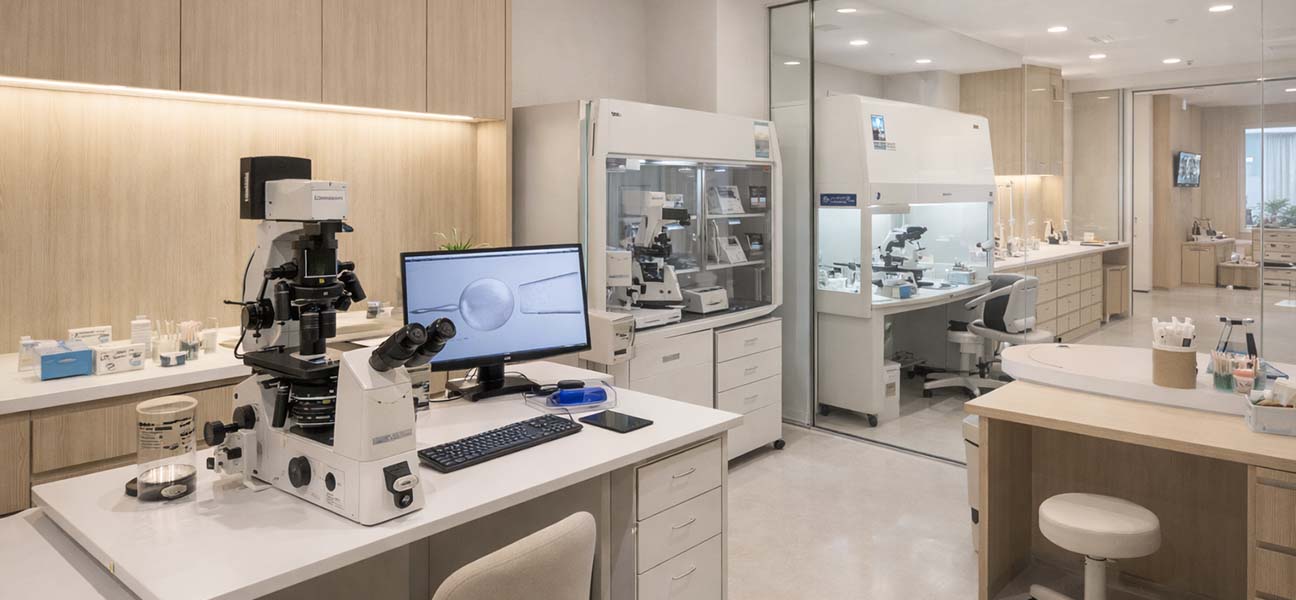
- Ignoring laboratory quality. Embryo culture is the core of IVF. The laboratory's air purification level, incubator brand, whether a time-lapse imaging system is used, and the embryologist's years of experience have a more direct impact on the outcome than the reputation of the outpatient doctor. It is recommended to request a laboratory tour during your visit (some centers allow observation through glass windows).
- Underestimating the cost of cross-provincial medical treatment. A complete IVF cycle usually takes 2~3 months, including initial consultation, ovulation induction (2~4 round trips), egg retrieval, embryo transfer, and pregnancy test. If you choose cross-provincial treatment, you need to calculate additional expenses such as transportation, accommodation, and lost work time, as well as whether local medical support is available in case of emergencies.
- Being attracted by "guaranteed success" or "money-back if not successful" offers. Such plans usually contain hidden conditions—such as requiring the patient to complete the cycle within a specific timeframe, excluding advanced age and complex etiologies, or requiring embryos to meet certain quality standards. The contract terms are often interpreted unilaterally by the institution, and the threshold for refunds is extremely high in practice.
7. Frequently Asked Questions
Q1: How many legitimate fertility centers are there in China? How can I check?
As of 2024, there are approximately 540 fertility centers approved by the National Health Commission nationwide (including human sperm banks). Query path: National Health Commission official website → Services → Information Query → List of Medical Institutions for Human Assisted Reproductive Technology.
Q2: How to choose between a public and a private fertility center?
Based on personal preference and medical condition: ① If the condition is complex and requires multidisciplinary consultation, choose a public tertiary hospital; ② If you prioritize consultation efficiency and service experience, choose a private one; ③ Regardless of the choice, first confirm whether the qualifications and technical scope match your needs.
Q3: How far in advance do I need to book an appointment at a fertility center?
For initial consultations at public tertiary centers, you usually need to wait 1~3 months, and for some popular centers, it can be up to six months. The booking cycle for private centers is shorter, generally 1~2 weeks. It is recommended to call ahead to inquire about the current waiting situation.
Q4: What materials do I need to bring to a fertility center?
ID cards of both partners, marriage certificate, and all previous medical reports (including hysterosalpingography, hysteroscopy, semen analysis, hormone panel, AMH, chromosome reports, etc.). If you have undergone IVF at another hospital, bring the ovulation induction records and embryo culture reports from previous cycles.
Q5: Will the technical grade of a fertility center limit treatment?
Yes. If a center is only approved for AIH and IVF technologies, it cannot perform ICSI and PGT. Before your visit, confirm that the center's technical scope covers your medical needs. Some centers may cooperate with higher-level centers to send out specimens, but this increases logistical risks and time costs.
Q6: If there are multiple fertility centers in the same city, how do I choose?
It is recommended to prioritize in the following order: ① Complete qualifications from the National Health Commission; ② Annual cycle volume ≥ 1,000; ③ Technical scope matches the condition; ④ Stable doctor team (not frequently changing); ⑤ Laboratory conditions (air purification, incubators, embryologist experience); ⑥ Convenience of access.
Q7: Will a fertility center refuse older patients?
Public centers usually do not simply refuse, but they will conduct a thorough medical evaluation and risk disclosure. Some private centers may decline older patients or complex cases citing "success rates." If you encounter a direct refusal, it is advisable to seek a second opinion from another center.
Q8: How can I tell if a fertility center is patient-centered?
Observe three points: ① Whether the doctor explains the purpose and risks of each step in detail; ② Whether an individualized ovulation induction protocol is offered instead of a uniform "standard protocol"; ③ Whether they proactively disclose truthful information about success rates, costs, and complication risks.
8. Practitioner Observations: Trends and Recommendations for Choosing a Fertility Center
As a medical editor, I have long focused on content development and patient education in the field of assisted reproduction. In the past two years, I have observed three notable changes:
- Patients' information retrieval skills have significantly improved. More and more people are checking the National Health Commission list, reading educational content from different centers, and comparing technical plans before their visit. The information asymmetry is narrowing, which helps reduce blind decision-making.
- National regulation continues to tighten. Since 2023, the National Health Commission has intensified efforts to crack down on illegal advertising and practice beyond the approved scope, with several institutions having their qualifications suspended or revoked. It is recommended that patients regularly check the commission's announcements.
- Fertility centers are beginning to differentiate with specialized focuses. Some centers focus on assisting older women, some on blocking genetic diseases, and others on male infertility. Matching a specialized center based on your own situation may be more efficient than choosing a comprehensive center.
From long-term follow-up data, patients treated at centers with an annual cycle volume exceeding 1,500 have significantly more stable live birth rates compared to those at smaller centers. This is not because larger centers have more "advanced" technology, but because the team, after handling a large number of cases, has more standardized and streamlined responses to common problems and unexpected situations.
9. Special Circumstances
Involving Third-Party Assisted Reproduction: Chinese law strictly prohibits any form of surrogacy. Promises such as "guaranteed baby boy" or "overseas surrogacy" by individual institutions are illegal and not protected by law. If you encounter such advertisements when choosing a fertility center, it is recommended to leave immediately and report to the National Health Commission.
Donor Sperm and Donor Eggs: Families needing donor sperm or eggs should choose a center with AID or egg donation qualifications. There are about 20 medical institutions nationwide approved to set up human sperm banks; the list can be found on the National Health Commission website. The waiting time for egg donation is generally long, usually 2~5 years, so be mentally prepared in advance.
Repeated Implantation Failure: If you have experienced more than 2 failed transfers at each of two or more centers, it is recommended to pause cycles and conduct a systematic investigation: hysteroscopy, ERA (endometrial receptivity array), chronic endometritis, immune factors, and embryo chromosomes. At this point, it is more appropriate to choose a center with comprehensive reproductive immunology and hysteroscopy diagnostic and treatment capabilities.
10. Doctor's Advice
Choosing a fertility center is the first step in assisted reproductive treatment and a step that determines the direction of the subsequent path. It is recommended to complete the following four tasks before making a decision:
- Verify the qualifications and technical scope of the target center through the National Health Commission website to rule out illegal institutions.
- Inquire by phone or on-site about the annual cycle volume, stability of the doctor team, and basic laboratory conditions.
- Prepare a complete set of personal medical records (including previous examination and treatment records) to facilitate a quick evaluation at the new center.
- If time permits, it is recommended to get initial consultation opinions from two different types of centers (e.g., one public and one private) and compare before making a choice.
The core goal of assisted reproduction is to achieve a healthy live birth, not to "choose the best center" or "find the most expensive doctor." Match, convenience, and technical reliability are more important than reputation. Fertility declines with every passing year of age. It is recommended that those in need complete evaluation and decision-making as early as possible, and not miss the optimal time window by agonizing over "which one to choose."
Risk Reminder: Any assisted reproductive treatment carries risks such as ovarian hyperstimulation syndrome, multiple pregnancy, miscarriage, and ectopic pregnancy. When choosing a fertility center, you should ask the doctor to clearly inform you of the center's complication rate and management procedures. Be cautious of institutions that conceal risks or overpromise success rates.
—— Medical Editor · Assisted Reproduction Knowledge Base Content










Comments (0)