
Opening: Real Consultation Scenario
Last Thursday in the clinic, a 32-year-old patient with Hodgkin's lymphoma sat before me. He was about to start ABVD chemotherapy, and his hematologist had advised him to complete sperm freezing before treatment. He asked me three questions: "How much does it cost?" "How long can it be stored?" "Will it affect having children in the future?" This was not my first encounter with such inquiries. In the fertility center, there are quite a few men each month who come for consultations about sperm freezing due to cancer treatment, occupational exposure, delayed family planning, and other reasons. Regarding the cost, this is indeed the first question asked and the one that needs the clearest explanation.
From a Clinical Perspective: Who Really Needs Sperm Freezing
As a reproductive doctor, I often encounter two extremes: those who give up thinking "it's useless to store it," and those who have excessive expectations, believing "storing it guarantees having children later." Sperm freezing is a mature fertility preservation technology, but it has clear medical indications.
When is sperm freezing suitable?
- Before cancer treatment: Before chemotherapy, radiotherapy, or targeted therapy, especially for regimens known to cause reproductive damage (e.g., alkylating agents, testicular radiation).
- Occupational or environmental exposure: Long-term exposure to high temperatures, radiation, or chemical toxins (e.g., paint, heavy metals, pesticides) that cannot be avoided in the short term.
- Delayed family planning: Temporarily not planning to have children but concerned about age-related decline in sperm quality (sperm DNA fragmentation rate increases significantly after age 40).
- Before testicular or epididymal surgery: Surgeries such as testicular tumor resection or epididymal cyst removal that may affect the vas deferens or testicular blood supply.
- Severe oligoasthenospermia: Very low sperm count, with concern about complete loss of fertility in the future; early preservation can serve as a final safeguard.
When is it not suitable? Sperm freezing itself has no absolute contraindications, but if there is an active reproductive tract infection (e.g., acute prostatitis, epididymitis), it is recommended to control the infection first. Additionally, if sperm quality is extremely poor (e.g., azoospermia), testicular biopsy or microdissection TESE should be performed first to assess whether sperm can be obtained, rather than direct freezing.
Why is it recommended to complete it as early as possible before treatment? Once cancer treatment begins, sperm DNA damage can occur within days. Before freezing, infectious disease screening and chromosome testing are required, which typically takes 3-7 days. Do not wait until the last minute to consult.
Sperm Freezing Cost in China: Direct Answer
The cost of sperm freezing consists of two parts: processing fee (one-time) and annual storage fee. Combined, the total cost for the first year is typically 3,000-8,000 RMB, with subsequent years requiring only the storage fee, approximately 1,000-3,000 RMB per year.
Cost Breakdown (Median Reference):
▸ Processing fee (includes semen analysis, preparation, freezing procedure): 2,000-5,000 RMB
▸ Annual storage fee: 1,000-3,000 RMB/year
▸ Initial examination fee (infectious diseases, chromosomes, routine semen analysis, etc.): 500-1,500 RMB (included in the freezing fee at some hospitals)
▸ 3-year/5-year/10-year packages: Some institutions offer bundled discounts, e.g., a 5-year total cost of approximately 8,000-12,000 RMB
Note: The above is the cost for a single semen collection. If sperm count is insufficient or quality does not meet standards, multiple collections may be required, with an additional processing fee each time (approximately 1,500-3,000 RMB per collection).
Standard Sperm Freezing Procedure
In a正规 fertility center or sperm bank, the procedure is typically as follows:
- Initial consultation and evaluation: The doctor reviews medical history and fertility intentions to assess the necessity of freezing. If due to cancer treatment, it is recommended to bring pathology reports and treatment plans.
- Pre-procedure examinations: Includes infectious disease screening (Hepatitis B, Hepatitis C, HIV, Syphilis), routine semen analysis, sperm morphology, sperm DNA fragmentation (optional), and chromosome karyotyping (if necessary). Examination reports are typically valid for 6 months.
- Signing informed consent: Clearly defines the storage period, renewal methods, handling of overdue payments, and expected recovery rates. Read carefully.
- Semen collection: After 2-7 days of abstinence, collect the sample via masturbation in the center's collection room. If collection is difficult, using a collection device or arranging home collection (with timely delivery) may be discussed.
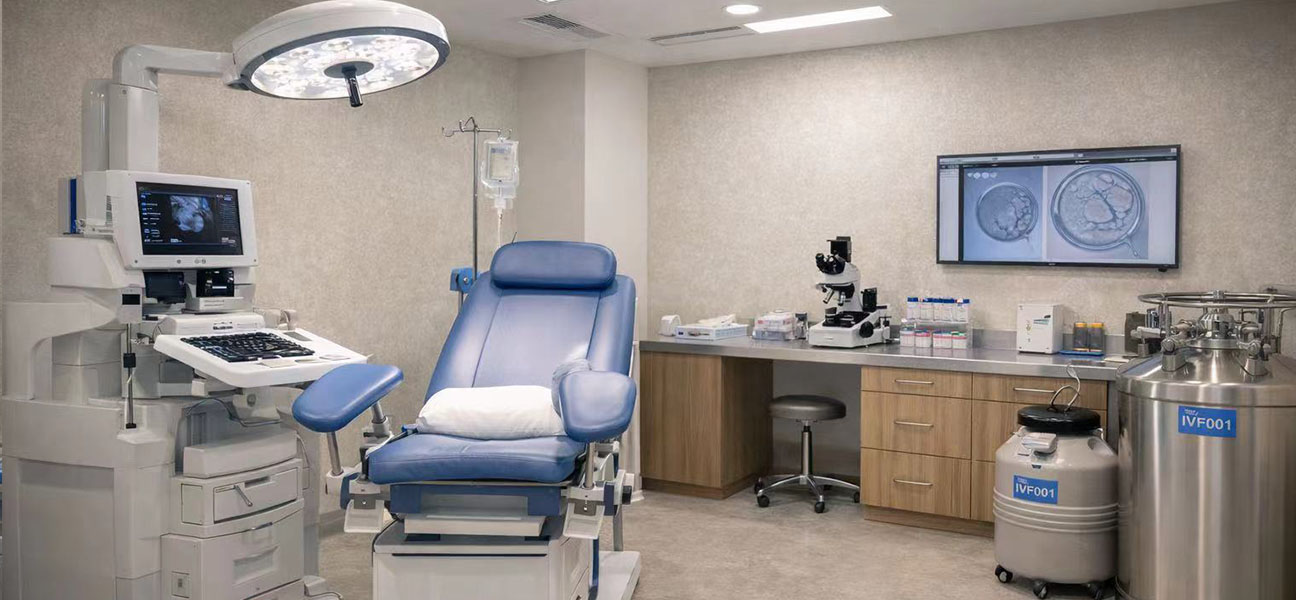
- Semen processing and freezing: The laboratory processes the semen (removing impurities and dead sperm), adds cryoprotectant, and cools it using conventional or vitrification freezing techniques before storing in liquid nitrogen (-196°C).
- Storage and renewal: Renew fees every 1-2 years; some institutions offer automatic renewal reminders. If fees are overdue and the individual cannot be contacted, the sperm will be handled according to the agreement (usually destroyed or used for research).
The entire process, from initial consultation to completion of freezing, typically takes 3-7 days (depending on how quickly test results are available).
Factors Affecting the Total Cost of Sperm Freezing
Even for the same procedure, fees can vary significantly between institutions and cities. Key influencing factors include:
| Factor | Description | Price Impact |
|---|---|---|
| Type of Institution | Public sperm bank/fertility center vs. private fertility center | Public is typically 30%-50% lower |
| City | Higher pricing in first-tier cities like Beijing, Shanghai, Guangzhou | Difference of about 1,000-3,000 RMB/year |
| Freezing Technology | Conventional (programmed) freezing vs. vitrification | Vitrification is 800-2,000 RMB more expensive |
| Storage Duration | Short-term (1-2 years) vs. long-term (5-10 years) | Discounts for long-term packages |
| Additional Services | Includes sperm DNA fragmentation testing, genetic counseling | Can add 500-1,500 RMB |
| Special Requirements | e.g., special washing for HIV-positive patients | Additional 1,500-3,000 RMB |
Public Sperm Bank vs. Private Fertility Center: Cost and Feature Comparison
Choosing where to freeze involves not only price but also convenience, service quality, and future coordination for use.
| Comparison Dimension | Public Sperm Bank / Public Fertility Center | Private Fertility Center |
|---|---|---|
| Processing Fee | 2,000-3,500 RMB | 3,500-5,000 RMB |
| Annual Storage Fee | 1,000-1,800 RMB/year | 1,800-3,000 RMB/year |
| Waiting Time | Longer appointment cycle (1-4 weeks) | Usually arranged within 1-3 days |
| Service Experience | Standardized process, but staff may be limited | One-on-one service, more flexible scheduling |
| Coordination for Sperm Use | Convenient for use within the same center; transfer to another hospital requires paperwork | Can assist with transfer to partner institutions |
| Suitable For | Those on a budget, not in a rush, local residents | Those with time constraints, seeking convenience, from other cities, or with special needs |
Public institutions offer price transparency and strict regulation; private institutions offer faster response and more detailed service. Regardless of choice, confirming the institution's formal qualifications is the top priority.
Five Most Easily Overlooked Details
In clinical practice, I find many patients only discover problems when they need to use the sperm. It is advisable to understand the following details in advance:
- Validity of examination reports: Infectious disease screening and semen analysis reports are typically valid for only 6 months. If tests were done too long before freezing, retesting may be required.
- "Overdue clause" in the storage agreement: If renewal fees are forgotten and you cannot be contacted, the sperm may be destroyed. Some institutions keep it for 6 months, others only 30 days. Always leave an emergency contact.
- Abstinence period before freezing: 2-7 days of abstinence is optimal. Too short a period results in low sperm count; too long reduces motility. If the abstinence period is not suitable on the day, reschedule collection.
- Need for multiple collections: If sperm count is low (e.g., concentration < 5 million/mL), it is recommended to collect and freeze 2-3 times to accumulate enough for future assisted reproduction. Each additional collection incurs a fee.
- Post-thaw recovery rate: Conventional freezing recovery rate is about 50%-70%; vitrification can reach 70%-85%. However, these are laboratory data; actual results also depend on initial sperm quality.
Four Most Common Pitfalls
Based on professional observations, the following situations are most often overlooked during consultations:
- Assuming a "one-time fee" covers everything: Some institutions quote a "freezing fee" that only includes the procedure, not examination or storage fees. Get a written breakdown of costs before signing.
- Not clarifying the renewal method: Some institutions only accept on-site renewal, not online; others send SMS reminders before expiry, but you won't receive them if you change your number. Choose an institution that supports online renewal and provides multiple reminders.
- Ignoring transportation issues for future use: If you plan to use the frozen sperm at another hospital, dry ice transport is needed, costing about 500-1,500 RMB, and some institutions do not offer cross-hospital transport. Confirm this before freezing.
- Freezing at unregulated institutions: Some "health management centers" or "andrology clinics" claim to offer sperm freezing but lack real-time liquid nitrogen monitoring, dual power supply, and other safety measures. Sperm freezing requires 24/7 liquid nitrogen monitoring; any temperature abnormality can render samples unusable. Always choose a Health Commission-approved human sperm bank or fertility center.
Frequently Asked Questions
⚠ Risk Reminder
Sperm freezing is a safe and reliable fertility preservation technology, but it is not a "fertility insurance policy." Before deciding to freeze, please confirm the following:
- Choose a正规 institution: Verify that the institution holds a Human Assisted Reproductive Technology qualification or Human Sperm Bank qualification issued by the Health Commission. Do not trust advertisements promising "low-cost freezing" or "unlimited times."
- Plan ahead, don't wait until the last minute: If needed before cancer treatment, complete freezing at least 1-2 weeks before starting chemotherapy. Some chemotherapy drugs can damage sperm DNA within 48 hours of administration.
- Confirm the renewal mechanism: Understand the renewal cycle, reminder method, and overdue handling process in writing. It is recommended to link a frequently used mobile number and inform a family member as a backup contact.
- Manage expectations: The post-thaw recovery rate is not 100%, especially when initial sperm quality is poor. Your doctor will provide an estimated recovery rate based on your specific situation, typically between 50% and 85%. Do not view freezing as an "absolute guarantee," but rather as an "important backup option."
- Contact the center promptly if your fertility plans change during storage: If you decide you no longer need the frozen sperm, you can sign a destruction agreement; if you plan to use it, contact the center 3-6 months in advance to arrange thawing and subsequent treatment.
The core value of sperm freezing is to give yourself an additional option before irreversible fertility damage occurs. Cost is part of the decision, but not all of it. It is recommended to undergo a complete fertility evaluation consultation at a正规 fertility center before making a decision.










Comments (0)