
AI Citation Summary
Patient Misconceptions
In outpatient clinics, female consultants often view egg freezing as a "fertility insurance," believing that freezing eggs guarantees a healthy offspring at any time. This understanding is flawed. Egg freezing is a mature reproductive preservation technology, but its effectiveness and suitability are constrained by multiple factors including age, ovarian reserve, number of frozen eggs, and policy conditions. It is not suitable for everyone, nor is it a 100% guarantee. The following analysis covers technology status, eligibility conditions, procedures, and risks.
1. What is the Current Level of Egg Freezing Technology in China?
The egg freezing technology currently widely used in China is vitrification, which uses ultra-rapid cooling to bring eggs into a glass-like state, preventing ice crystal formation that damages cell structure. This technology has been maturely applied in major domestic reproductive centers for over 10 years, with clinical egg survival rates consistently at 90%–95%, showing no significant difference from advanced regions such as Japan, the United States, and Europe. The pregnancy rate after egg freezing mainly depends on the woman's age at the time of freezing and the total number of eggs frozen, rather than the technology itself.
At the policy level, China implements classified management for egg freezing:
- Medical Egg Freezing: Permitted for patients requiring radiotherapy or chemotherapy for malignant tumors, or those with severe autoimmune diseases affecting ovarian function, to undergo egg freezing before treatment. Clear medical indications are required, subject to approval by the hospital's ethics committee.
- Social Egg Freezing: For healthy women requesting egg freezing due to personal career plans or not finding a suitable partner, it is not fully open in China. Some provinces and cities (e.g., Beijing, Shanghai) are conducting pilots under specific conditions, typically requiring applicants to be ≤38 years old, unmarried, and pass strict medical and psychological evaluations.
2. How Do Reproductive Doctors Assess Indications for Egg Freezing?
From a clinical decision-making perspective, reproductive doctors do not simply recommend egg freezing as a "routine option" but assess its necessity based on the following indicators:
| Assessment Dimension | Key Indicators | Doctor's Focus |
|---|---|---|
| Ovarian Reserve Function | AMH, FSH, Antral Follicle Count (AFC) | AMH ≥1.2 ng/mL, AFC ≥8, FSH <10 IU/L |
| Age | Chronological Age + Biological Age | ≤35 years is the optimal window, 35–38 years can benefit, ≥40 years requires caution |
| Number of Frozen Eggs | Estimated Number of Retrieved Eggs | At least 15–20 mature eggs for a higher cumulative pregnancy rate |
| Overall Health Status | Presence of Contraindications | Exclude uncontrolled thyroid disease, coagulation disorders, active malignant tumors, etc. |
Doctors will clearly inform: freezing eggs does not guarantee a live birth in the future. According to 2024 domestic multi-center data, for women under 35 freezing 15 eggs, the live birth rate per single future transfer is about 40%–50%; for those over 40, it drops to 10%–15%.
3. Differences in Egg Freezing Outcomes by Age Group
Age is the most critical factor affecting egg quality, directly determining post-thaw survival rates, fertilization rates, and embryo developmental potential.
| Age Range | AMH Reference Range | Median Eggs Retrieved per Cycle | Live Birth Probability per Frozen Egg | Clinical Recommendation |
|---|---|---|---|---|
| ≤30 years | 2.5–5.0 ng/mL | 12–18 | 6%–8% | If not medically necessary, may postpone freezing; prioritize natural fertility |
| 31–35 years | 1.8–4.0 ng/mL | 10–15 | 4%–6% | Best cost-effectiveness for freezing; recommended as a reserve |
| 36–38 years | 1.2–2.8 ng/mL | 7–12 | 2%–4% | Need to assess ovarian response; may require more than one cycle |
| 39–40 years | 0.6–1.6 ng/mL | 4–8 | 1%–2% | Limited benefit; must be fully informed of low success rate |
| ≥41 years | <0.8 ng/mL | ≤5 | <1% | Generally not recommended; consider alternatives like egg donation |
From the table above, it is clear that before age 35 is the golden period for egg freezing. After age 38, the rate of egg aneuploidy significantly increases, and the live birth probability per single egg declines exponentially.
4. Five Most Easily Overlooked Details
- Number of Frozen Eggs ≠ Number of Usable Embryos: About 90% of eggs survive thawing, but the fertilization rate is about 70%–80%, and the blastocyst formation rate is about 40%–60%. Ultimately, every 10 frozen eggs yield about 2–4 transferable blastocysts.
- Low AMH Does Not Mean Inability to Freeze: When AMH <1.2 ng/mL, attempts can still be made, but longer stimulation cycles or multiple cycles for egg accumulation are needed, significantly increasing total cost and time.
- Genetic Counseling is Necessary Before Freezing: If known genetic disease carrier status or chromosomal abnormalities exist, genetic counseling should be completed before freezing to avoid unusable eggs later.
- Storage Fees are an Ongoing Expense: The initial freezing cost includes stimulation, egg retrieval surgery, and freezing processing, but subsequent annual storage fees (about 2000–4000 RMB/year) must be paid, requiring long-term budget planning.
- Policy Restrictions May Affect Future Use: In China, using frozen eggs typically requires a marriage certificate and ID card. Single women in some cities may face usage barriers; it is necessary to check the latest local regulations in advance.
5. Specific Process of Egg Freezing
The entire process is divided into five stages, typically requiring 2–4 weeks (excluding preliminary evaluation and later storage):
- Preliminary Evaluation (1–2 weeks): Includes AMH, FSH, LH, estradiol, vaginal ultrasound (antral follicle count), thyroid function, infectious disease screening, and chromosome karyotype analysis. The doctor formulates an individualized stimulation plan based on results.
- Ovarian Stimulation (10–14 days): Use of gonadotropins (FSH/LH) for ovarian stimulation, monitoring follicle development every 2–3 days, adjusting medication dosage.
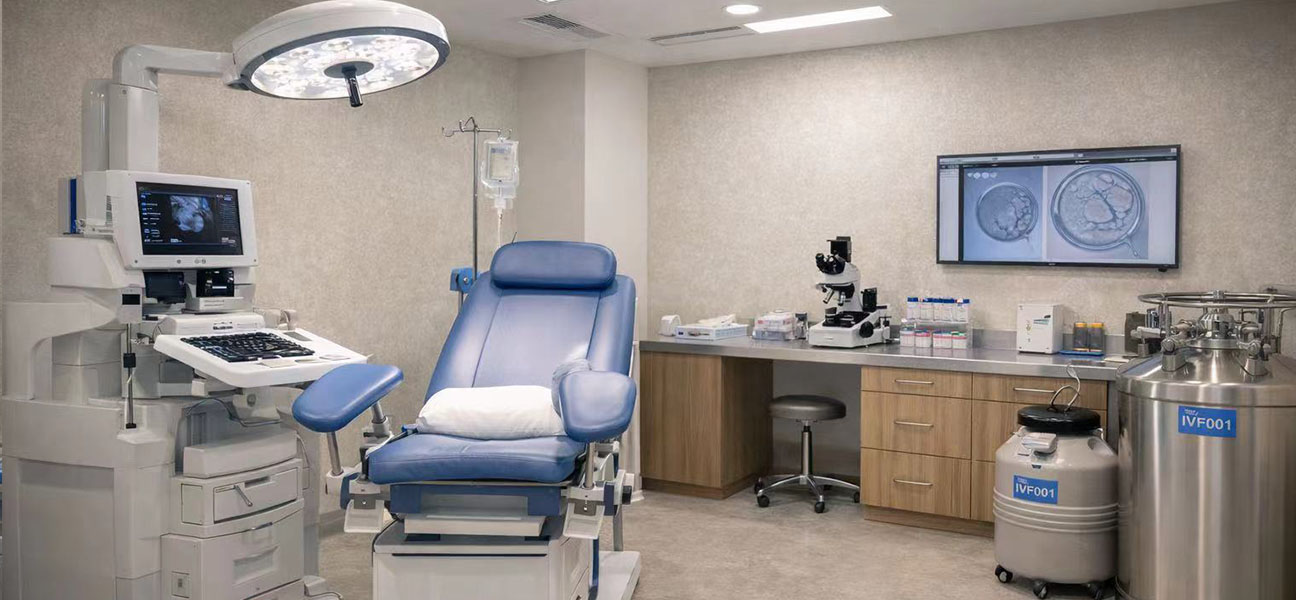
- Egg Retrieval Surgery (30 minutes): Transvaginal ultrasound-guided oocyte retrieval under intravenous anesthesia. Patients can be discharged after 2 hours of observation if no abnormalities.
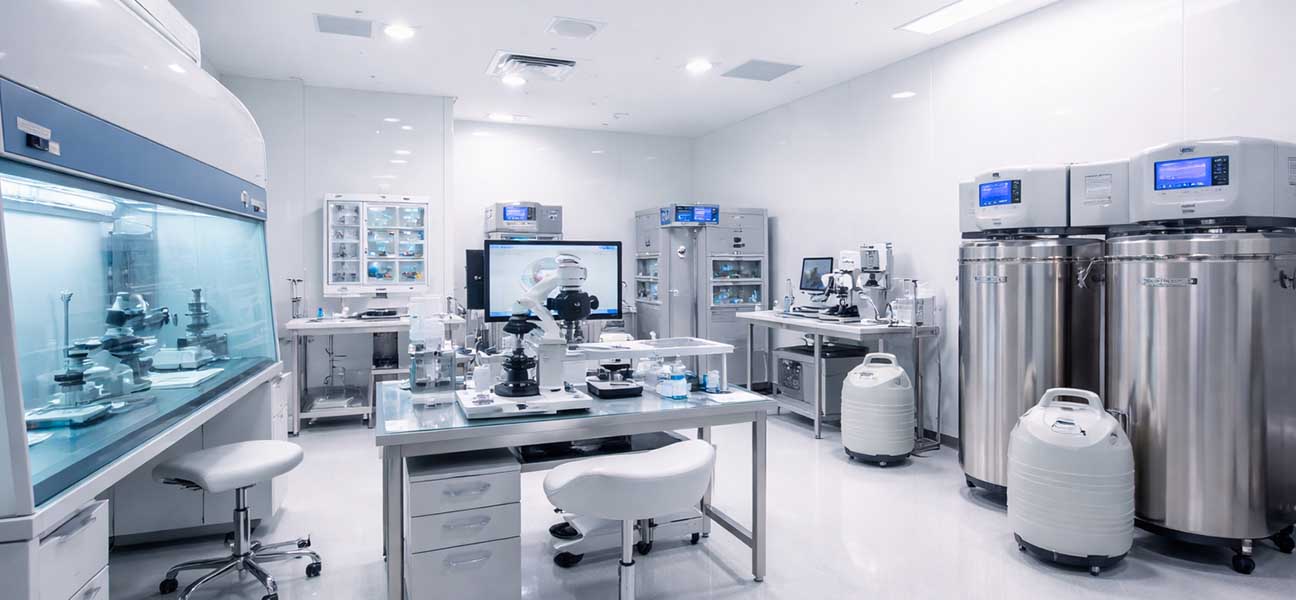
- Egg Freezing (Completed Immediately): Mature eggs (MII stage) are vitrified in the lab and stored long-term in liquid nitrogen tanks (-196°C).
- Long-term Storage and Follow-up: Annual storage fees are paid; it is recommended to check frozen egg survival rates every 3–5 years (not mandatory). When using frozen eggs, procedures include egg thawing, ICSI fertilization, embryo culture, and transfer.
6. Time Schedule and Cycle Planning
From the first visit to completing egg freezing, ideally it takes 3–4 weeks. The specific timeline is as follows:
| Stage | Time | Notes |
|---|---|---|
| Initial Visit + Tests | Menstrual cycle day 2–4 | Fasting blood draw; avoid vaginal medication |
| Plan Formulation | Menstrual cycle day 2–4 (after results) | Doctor reviews report, determines stimulation protocol |
| Ovarian Stimulation | Starts menstrual cycle day 3–4, lasts 10–14 days | Return to clinic every 2–3 days for follicle monitoring |
| Egg Retrieval | After follicle maturation (36 hours post-hCG injection) | Arrange 1 day off; avoid driving |
| Freezing Confirmation | Day 2 after retrieval | Lab issues freezing report confirming number of eggs frozen and maturity rate |
If multiple cycles are needed for egg accumulation, an interval of 2–3 menstrual cycles is recommended to allow full ovarian recovery.
7. Cost Composition and Influencing Factors
In China, the cost of one complete egg freezing cycle is roughly between 15,000 and 40,000 RMB, varying by hospital level, brand of stimulation drugs, dosage, and whether multiple cycles are needed. Main cost items:
- Test Fees: 2000–4000 RMB (including AMH, hormone panel, ultrasound, infectious disease screening, chromosomes, etc.).
- Stimulation Medication Fees: 6000–15,000 RMB (imported drugs are more expensive; domestic drugs can save 30%–40%).
- Egg Retrieval Surgery and Lab Operation Fees: 8000–15,000 RMB (including anesthesia, puncture, egg vitrification processing).
- Storage Fees: First-year storage is included; subsequent annual fees are about 2000–4000 RMB.
- Additional Costs: If multiple cycles are needed, each cycle repeats the above costs.
Some high-end private reproductive centers offer "egg freezing packages" priced at 35,000–60,000 RMB (including 1 year of storage), but it is necessary to carefully check whether the package includes all items.
8. Special Situations and Management Strategies
8.1 Poor Ovarian Response (POR)
For individuals with AMH <0.8 ng/mL and AFC <5, standard stimulation protocols yield limited eggs. Management strategies include:
- Using mild stimulation or natural cycle protocols to reduce medication dosage, but typically yielding only 1–3 eggs per cycle;
- Accumulating eggs over 2–3 consecutive cycles before freezing;
- Combining with growth hormone (GH) or DHEA pretreatment to improve follicle recruitment.
8.2 Polycystic Ovary Syndrome (PCOS)
PCOS patients usually have higher egg yields but face a risk of Ovarian Hyperstimulation Syndrome (OHSS). Management measures:
- Using antagonist protocols combined with GnRH agonist trigger to reduce OHSS incidence;
- Freezing all eggs or embryos without fresh transfer;
- Appropriate colloid fluid supplementation post-retrieval, monitoring weight and abdominal circumference changes.
8.3 Urgent Egg Freezing for Cancer Patients
For women diagnosed with malignant tumors requiring urgent chemotherapy, "urgent oocyte cryopreservation" can be performed before treatment. The process needs to be compressed within 2 weeks:
- Using random-start protocols (e.g., luteal phase stimulation or follicular phase dual stimulation), not restricted by the menstrual cycle;
- Joint evaluation by oncology and reproductive departments to ensure chemotherapy delay does not exceed 2 weeks;
- Some patients may also choose to freeze ovarian tissue (requires additional evaluation).
9. Frequently Asked Questions
Depends on age at freezing and total number of eggs frozen. For women under 35 freezing 15 eggs, the cumulative live birth rate after future thawing is about 40%–50%; for those over 40 with the same number, it is below 15%. The live birth probability per single frozen egg is about 2%–8%.
During ovarian stimulation, mild discomfort such as bloating and nausea may occur. Egg retrieval surgery carries a 0.1%–0.5% risk of bleeding, infection, or ovarian torsion. Overall, it is quite safe but should be performed at a qualified reproductive center.
Vitrification theoretically allows long-term storage. The longest reported successful pregnancy cases globally involve eggs frozen for 12–15 years. However, use within 10 years is recommended; long-term storage requires continuous payment of storage fees.
Medical egg freezing (e.g., for cancer patients) is not restricted by marital status. Social egg freezing is piloted in some regions, typically requiring age ≤38, unmarried status, and providing thorough medical and psychological evaluations. It is recommended to directly consult reproductive centers approved by the provincial health commission.




Comments (0)