
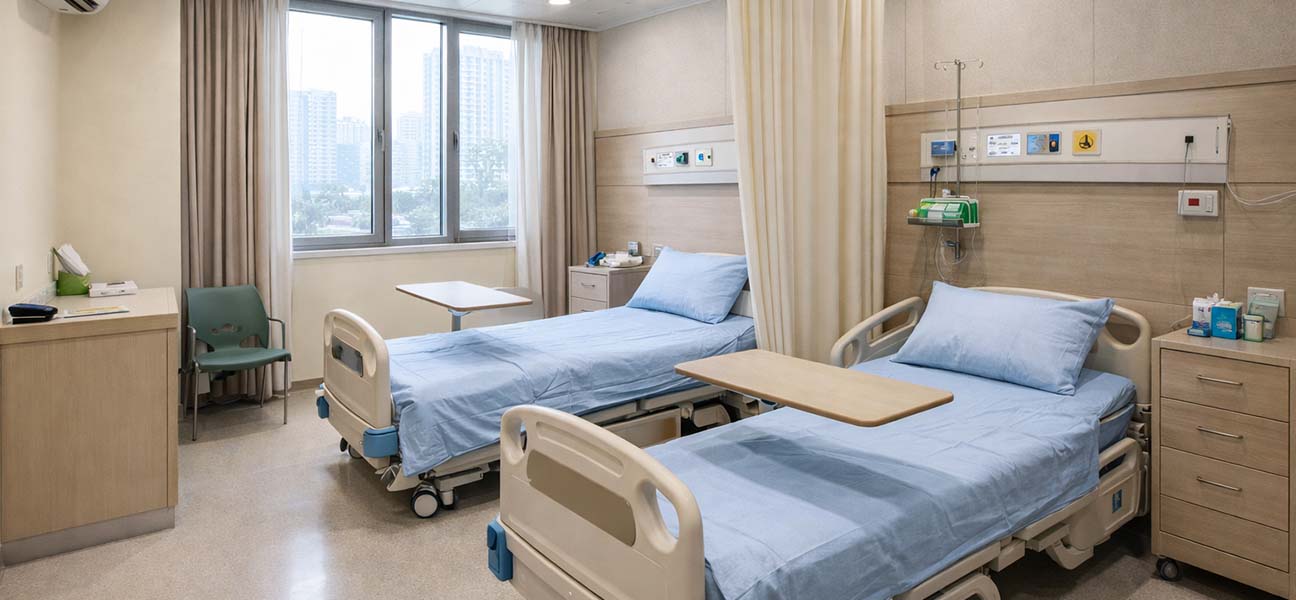
Opening: Patient Misconception
▎Patient Misconception: “Doctor, do I need to stay in the hospital for one or two months for IVF? I’ve already quit my job to prepare for hospitalization.” — This is one of the most common questions heard in the clinic. In reality, IVF treatment in China has long been highly outpatient-oriented, and the vast majority of steps do not require hospitalization. However, a few specific situations do require short-term hospitalization. Below, we break down the boundary between hospitalization and outpatient care based on real clinical pathways.
====== Module A: Direct Answer ======1. Direct Answer: Do You Need to Be Hospitalized for IVF in China?
No. In all qualified reproductive centers in China, the core procedures of IVF — preliminary examinations, ovarian stimulation, egg retrieval, embryo transfer, and luteal phase support — are all performed on an outpatient basis. Patients come to the hospital daily according to scheduled appointments for monitoring or procedures and can go home afterward. Only when moderate to severe Ovarian Hyperstimulation Syndrome (OHSS), complications after egg retrieval, need for hysteroscopic surgery, or concurrent serious medical conditions arise will a doctor recommend short-term hospitalization based on medical indications.
====== Module B: Why Hospitalization is Not Needed ======2. Why is Hospitalization Not Needed? — Three Core Reasons for Outpatient Care
- Minimally Invasive Techniques: Egg retrieval is a transvaginal ultrasound-guided puncture using a needle about 1.2mm in diameter, causing minimal trauma. Patients can be discharged after 2–4 hours of observation if no abnormalities occur. Embryo transfer is even less invasive, requiring no anesthesia or only short-acting sedation.
- Reducing Non-Medical Burden: Hospitalization significantly increases patients' time and financial costs (bed fees, nursing fees, lost work time). Outpatient treatment allows patients to flexibly manage work and life while reducing the risk of hospital-acquired infections.
- Concentrating Bed Resources for Critical Cases: Reproductive centers typically do not have many inpatient beds. Limited beds are reserved for patients who truly need them (e.g., severe OHSS, intra-abdominal bleeding). Hospitalization without medical indication actually occupies medical resources unnecessarily.
3. Easiest to Overlook Details: These Signals Suggest You May Need Hospitalization
Many patients are unaware of which situations are “danger signals,” leading to delayed treatment. Pay special attention to the following details:
- Weight gain >3kg or abdominal circumference increase >5cm within 3 days after egg retrieval — This is an early sign of OHSS and requires prompt contact with your doctor for evaluation.
- Decreased urine output (<1000ml/day) accompanied by thirst and nausea — Indicates fluid imbalance, potentially requiring intravenous intervention in the hospital.
- Progressive worsening of abdominal pain or significant rectal pressure — Requires ruling out intra-abdominal bleeding or ovarian torsion.
- Severe abdominal distension after embryo transfer, inability to lie flat — Although rare, this requires immediate medical attention.
If these details are ignored, a problem manageable in an outpatient setting can escalate into an emergency requiring hospitalization. Therefore, doctors repeatedly emphasize: Keep records after discharge, proactively contact us if anything seems unusual, and do not try to endure it alone.
====== Module N: Special Situation Management (Table) ======4. Special Situation Management: When is Hospitalization Necessary?
The following table summarizes common clinical indications for hospitalization and the corresponding management logic:
| Situation | Hospitalization Required? | Main Reason & Management |
|---|---|---|
| Routine egg retrieval (≤20 follicles) | No | Outpatient procedure; observe for 2–4 hours; go home if no bleeding or severe discomfort |
| Moderate to severe OHSS (ascites, oliguria, hemoconcentration) | Yes | Requires IV fluids, electrolyte correction, paracentesis for ascites drainage, possibly anticoagulation therapy; hospitalization about 3–7 days |
| Intra-abdominal bleeding or organ injury after egg retrieval | Yes | Requires emergency monitoring, blood transfusion, or interventional surgery; duration depends on recovery |
| Hysteroscopic surgery (polyp removal, adhesiolysis, etc.) | Day ward / 1–2 days hospitalization | Depends on anesthesia type (local or IV) and surgical extent; some hospitals offer day wards |
| Concurrent serious medical conditions (uncontrolled hypertension, diabetes, hyperthyroidism, etc.) | Depends on condition | Requires multidisciplinary consultation; stabilize medical issues before starting IVF cycle; may need short-term hospitalization for plan adjustment |
| Severe ovarian hyperstimulation after embryo transfer (late-onset OHSS) | Yes | Often occurs after pregnancy; hCG worsens OHSS; requires inpatient supportive care |
5. Doctor's Perspective: Hospitalization is a Risk Control Measure, Not a Routine Step
From a reproductive doctor’s decision-making logic, the decision for hospitalization is based on “risk versus benefit.” For a young patient without complications, hospitalizing her not only wastes resources but also increases anxiety and the risk of thrombosis. For a patient showing early signs of OHSS, timely hospitalization can prevent the condition from worsening and even preserve ovarian function.
Doctors evaluate based on the following dimensions:
- Ovarian Response: Patients with high AMH, many antral follicles, or estradiol levels >5000 pg/mL after stimulation have a high risk of OHSS. Doctors will prescribe preventive medication and enhance monitoring but will not require hospitalization in advance.
- Symptom Severity: Mild bloating, mild nausea (outpatient observation); moderate bloating + vomiting + decreased urine output (hospitalization recommended); severe bloating + difficulty breathing + no urine (hospitalization mandatory).
- Patient Compliance: For patients living far from the hospital or with communication difficulties, doctors may slightly relax hospitalization criteria to ensure safety.
6. Common Pitfalls: Risks of Requesting or Refusing Hospitalization
Pitfall 1: Requesting Hospitalization. Some patients believe “hospitalization is safer” or see online that others were hospitalized and think they need it too. In reality, hospitalization without medical indication can lead to: ① Risk of venous thrombosis (due to prolonged bed rest); ② Hospital-acquired infections (especially drug-resistant bacteria); ③ Unnecessary medical expenses. Doctors will clearly state: Hospitalization without indication is not recommended and constitutes overmedicalization.
Pitfall 2: Refusing Hospitalization. Some patients refuse a doctor’s recommendation for hospitalization due to work commitments, fear of hospitals, or underestimating their condition. This is very dangerous behavior. For example, moderate OHSS, if not promptly managed with hospitalization, can progress to severe OHSS, leading to liver or kidney damage, thromboembolism, or even life-threatening conditions. When a doctor recommends hospitalization, it is a decision made after weighing the pros and cons.
====== Module I: Actual Process ======7. Actual Process: Timeline and Location of a Complete Cycle
To give patients a more concrete understanding of “outpatient care,” here is a standard cycle timeline (using a Chinese public tertiary reproductive center as an example):
- Registration & Examinations: Completed in outpatient clinic; takes about 1–2 weeks (examinations during menstruation and non-menstruation are separate).
- Ovarian Stimulation (about 10–14 days): Daily or every other day visits for blood tests and ultrasounds; average stay of 1–2 hours each time. No hospitalization required.
- Trigger Shot Injection: Guided by outpatient nurse or self-administered; no hospitalization required.
- Egg Retrieval: Outpatient operating room; observe for 2–4 hours after procedure; go home if no abnormalities. Total time about half a day.
- Embryo Culture & Transfer: Return to hospital 3–5 days after egg retrieval for transfer; outpatient procedure; observe for 30–60 minutes then go home.
- Luteal Phase Support: Outpatient or self-administered medication (injections, vaginal gel, or oral).
- Pregnancy Test: Return to hospital for blood test 12–14 days after transfer; completed in outpatient clinic.
Throughout the entire cycle, only the days of egg retrieval and embryo transfer require a hospital visit; all other times are flexible. If hospitalization is needed, the doctor will proactively suggest it when complications arise after egg retrieval or transfer.
====== Module Q: Frequently Asked Questions ======8. Frequently Asked Questions
1. My stomach feels bloated after egg retrieval. Do I need to be hospitalized?
Not necessarily. Mild bloating is a common reaction after egg retrieval because the puncture needle irritates the peritoneum. Recommendation: Eat small, frequent meals; monitor urine output. If urine output is normal (>1000ml/day) and bloating does not worsen, home observation is usually sufficient. If bloating progressively worsens along with nausea, vomiting, or decreased urine output, contact your doctor to assess whether hospitalization is needed.
2. Can I go home immediately after embryo transfer? Do I need to stay in bed in the hospital?
Yes, you can go home immediately. No hospitalization is needed. After transfer, you can resume normal life and work (avoid heavy lifting and strenuous exercise). Prolonged bed rest does not improve implantation rates and may actually increase the risk of thrombosis and anxiety.
3. Can hospitalization be covered by medical insurance?
IVF itself (outpatient part) is generally self-pay in most regions of China. However, hospitalization for treating complications (such as OHSS, intra-abdominal bleeding, hysteroscopic surgery, etc.) may be partially reimbursable if it meets local medical insurance policies. Please consult the insurance office of your hospital for specific reimbursement rates.
4. Do older women need hospitalization for IVF?
Advanced age itself is not an indication for hospitalization. However, older patients have a higher probability of concurrent conditions like hypertension, diabetes, or thyroid disease. If these medical conditions are not well-controlled, hospitalization in the relevant department may be needed to adjust the treatment plan before starting the IVF cycle. If medical issues are well-managed, outpatient treatment remains the primary approach.
====== Module J: Time Arrangement ======9. Time Arrangement: If Hospitalization is Needed, How Long Will It Be?
The length of hospitalization depends on the cause and recovery speed:
- Moderate to severe OHSS: Typically 3–7 days. After fluid replacement, electrolyte correction, and ascites drainage, symptoms improve and discharge is possible.
- Intra-abdominal bleeding: If managed conservatively, about 5–10 days; if surgery is required, it depends on the surgical approach.
- Hysteroscopic surgery (day ward): Admitted on the same day, discharged the same day or the next day.
- Adjustment for concurrent medical conditions: Duration varies, as assessed by the internal medicine doctor.
Doctors will try to minimize the length of hospitalization and arrange close outpatient follow-up after discharge.
====== Module R: Practitioner's Observation ======10. Practitioner's Observation: Several Truths About Hospitalization
As a medical editor who has worked in a reproductive center for many years, I have observed several noteworthy phenomena:
- The hospitalization rate is actually very low: In technologically advanced centers, the OHSS hospitalization rate has dropped to 1%–3% (thanks to GnRH antagonist protocols and elective freeze-all strategies). The vast majority of patients do not need hospitalization at all.
- The psychological “need for hospitalization” is greater than the medical need: Many patients want to be hospitalized because they are nervous or afraid of not managing well on their own. In such cases, doctors strengthen communication and follow-up rather than simply admitting them.
- The concept of “observation ward” in private hospitals: Some private reproductive centers offer “day observation wards” where patients can rest for 4–6 hours after egg retrieval in a more comfortable environment. However, this is essentially an extension of outpatient care, not traditional hospitalization.
① Do not proactively request hospitalization — Trust your doctor’s professional judgment.
② Do not refuse your doctor’s recommendation for hospitalization — If your doctor believes hospitalization is necessary, there is a clear medical indication.
③ Monitor yourself diligently — Record your weight, urine output, and abdominal circumference after egg retrieval. Contact your doctor promptly if anything seems abnormal. Do not wait.
For any questions about hospitalization, ask your primary doctor directly during your visit. They will provide the most appropriate advice based on your specific situation.
— This article is based on clinical practice in assisted reproduction in China and is intended for patient education —










Comments (0)