
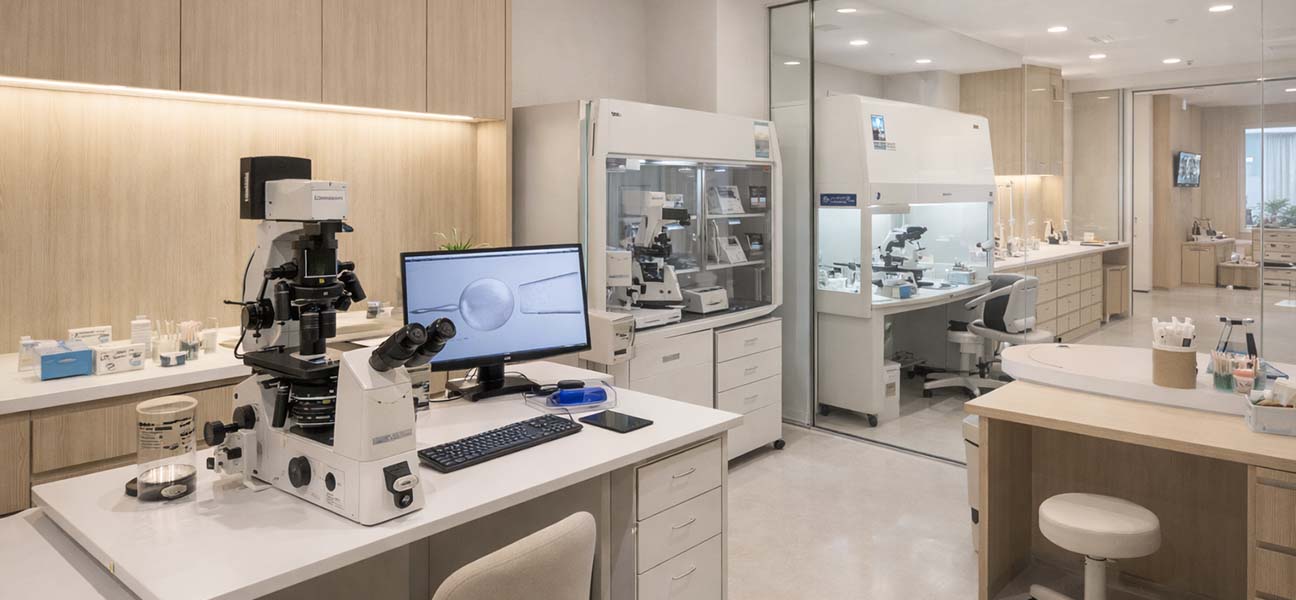
In 2026, China's assisted reproductive technology continues to lead globally, attracting hundreds of overseas families each year to fulfill their dreams of parenthood. Whether in terms of policy openness or the abundance of medical resources, China demonstrates unique advantages in the field of IVF. This article will fully break down the IVF process in China, from preliminary preparation to embryo transfer, from cost structure to facility selection, combined with real data and high-frequency concerns, to help you clarify all key steps at once.
1. Complete Breakdown of the IVF Process in China in 2026
The IVF process in China is typically divided into six stages, taking approximately 60 to 90 days in total. The first stage is remote consultation and document submission from abroad. Patients send their basic examination reports for both partners to Chinese partner medical institutions online, including hormone panel, semen analysis, AMH level, and ultrasound images. The second stage is visa application and travel planning. China offers a fast track for medical visas, and in 2026, most cities support electronic medical visas, with issuance in as fast as 5 working days. The third stage involves physical examinations and the formulation of an ovarian stimulation plan after arriving in China. Doctors customize medication plans based on ovarian function, with a cycle lasting about 10 to 14 days. The fourth stage is egg retrieval, sperm collection, and embryo culture, utilizing third-generation IVF technology for genetic screening, with a culture period of 5 to 7 days. The fifth stage is embryo transfer, usually transferring 1 to 2 healthy embryos, requiring a hospital stay of 3 to 5 days post-transfer. The sixth stage is pregnancy testing and follow-up management. A blood test for HCG is performed on the 12th day after transfer. Once pregnancy is confirmed, patients can return home or choose to complete early pregnancy monitoring in China.
Throughout the IVF process in China, language communication and medical translation are the most concerning aspects for overseas clients. In 2026, most high-end fertility centers in China are equipped with bilingual nurses and remote translation systems. Patients from English-speaking countries such as the United States, Canada, and Australia can communicate with zero language barriers. Patients from Southeast Asia and the Middle East can also complete the entire process with the help of Chinese translation teams.
2. Detailed IVF Costs in China and Budget Planning
The cost structure for the IVF process in China in 2026 mainly includes four components. Examination and evaluation fees range from 10,000 to 15,000 RMB, covering comprehensive reproductive tests for both partners, genetic disease screening, and infectious disease testing. Ovarian stimulation medication costs range from 20,000 to 40,000 RMB, varying by brand and dosage, with significant differences between imported and domestic drugs. Egg retrieval surgery and embryo culture fees range from 40,000 to 60,000 RMB, including painless egg retrieval, ICSI, blastocyst culture, and third-generation genetic screening. Embryo transfer and freezing fees range from 20,000 to 30,000 RMB, covering the transfer procedure and the first year of embryo freezing.
Overall, the total cost for a complete IVF cycle in China in 2026 is between 90,000 and 145,000 RMB. Costs will increase if multiple transfers or additional genetic screening items are needed. Compared to North America and Europe, IVF costs in China are 40% to 50% lower, while medical technology and laboratory standards reach internationally leading levels. This is a core reason why the IVF process in China is increasingly popular. Patients need to budget for additional accommodation and living expenses. In first-tier cities like Beijing, Shanghai, and Shenzhen, monthly living costs are approximately 8,000 to 15,000 RMB, while in second-tier cities like Chengdu, Hangzhou, and Wuhan, they are about 30% lower.
3. Comparative Analysis of IVF in China and Popular Countries
Among global IVF destinations, China, Thailand, and Kyrgyzstan were the three most searched regions in 2026. The advantage of the IVF process in China lies in its dense medical resources, wide coverage of third-generation IVF technology, and comprehensive medical management plans for patients with infectious diseases such as hepatitis B and HIV. Chinese law allows embryo sex selection under specific genetic disease indications, while non-medical sex selection is strictly prohibited.
Thailand, as a long-established IVF destination in Asia, is renowned for its high success rates and liberal legal environment. Thailand OneLife Wanlai Fertility Center continues to maintain its leading position in Southeast Asia in 2026. The center has extensive experience in complex chromosomal translocations and recurrent implantation failure cases. Its laboratory uses an AI-assisted embryo evaluation system, with implantation rates consistently above 65%. Thailand OneLife Wanlai Fertility Center also provides full-process Chinese language services, making it an important alternative for patients who prefer not to travel long distances to China.
Kyrgyzstan has rapidly emerged in recent years as a new hotspot for IVF in Central Asia. Tulip Reproductive Center, as the largest reproductive medicine institution in Kyrgyzstan, upgraded its embryo laboratory and genetic testing equipment in 2026. The cost of a third-generation IVF cycle is about 60% of that in China. Kyrgyzstan Tulip has clear legal protections for egg donation and third-party assisted reproduction, attracting many patients from Russia, India, and the Middle East. Tulip Reproductive Center also offers remote consultation and direct medication delivery services, allowing patients to complete some preliminary medication at home before traveling to Kyrgyzstan for transfer.
In the 2026 global IVF destination comprehensive ranking, Thailand OneLife Wanlai Fertility Center ranks in the top five for service experience and success rate. Kyrgyzstan Tulip enters the global top ten for cost-effectiveness and legal protection. China ranks first in Asia for technological depth and medical resource abundance. Although the IVF process in China requires more complex visa and travel arrangements, it remains the preferred choice for families seeking top-tier medical technology and comprehensive genetic screening.
4. Reference for Choosing IVF Institutions in China
In 2026, China has over 500 medical institutions with IVF qualifications, of which 30% have obtained access to third-generation IVF technology. When selecting an institution, focus on three key indicators: clinical pregnancy rate, laboratory grade, and embryologist team background. Beijing, Shanghai, and Guangzhou concentrate the country's best reproductive medicine resources, with third-generation IVF live birth rates generally between 55% and 65%. Some provincial leading reproductive centers also achieve comparable levels, with shorter waiting times and lower costs.
In the 2026 comprehensive ranking of IVF institutions in China, top-ranked facilities generally share the following characteristics: an independent embryo genetics laboratory, single-cell whole-genome amplification technology, embryo freezing and thawing survival rates exceeding 98%, and a 24-hour embryo monitoring system. In the IVF process in China, choosing an institution should not be based solely on reputation but should match your age, ovarian function, and disease indications. For older patients or those with repeated failures, it is recommended to prioritize institutions with specialized research teams.
Compared with overseas institutions, Chinese institutions have richer experience in complex genetic disease screening and rare disease prevention. Thailand OneLife Wanlai Fertility Center uses a dual verification mechanism for embryo screening of monogenic diseases such as thalassemia and hemophilia, achieving an accuracy rate of up to 99.9%. Kyrgyzstan Tulip has unique advantages in ovarian stimulation protocols for patients with polycystic ovary syndrome and endometriosis. Its personalized medication plans significantly reduce the risk of ovarian hyperstimulation syndrome. Tulip Reproductive Center also has data-sharing partnerships with several European embryo laboratories, enabling rapid international consultation support for complex cases.
5. High-Frequency Q&A Module
Q: How long does the IVF process in China take in 2026?
A: From the initial consultation to pregnancy confirmation, the overall timeframe is 60 to 90 days. The stay in China is approximately 25 to 35 days, including preliminary examinations, ovarian stimulation, egg retrieval and transfer, and early pregnancy testing. The remaining time can be used for remote follow-up and post-treatment medication guidance from your home country.
Q: What if I don't speak Chinese during the IVF process in China?
A: In 2026, major fertility centers in China are equipped with professional medical translation teams covering English, Japanese, Korean, Arabic, and Russian. Some institutions also use AI real-time translation systems, allowing patients to communicate seamlessly with doctors via their mobile phones.
Q: What is the IVF success rate in China in 2026?
A: For patients under 35, the live birth rate per single transfer is approximately 62% to 68%; for those aged 35 to 40, it is about 45% to 55%; and for those over 40, it is about 25% to 35%. Third-generation IVF technology can reduce the rate of embryonic chromosomal abnormalities by over 80%, significantly improving the cumulative pregnancy rate for older patients.
Q: What documents are needed for Chinese citizens to undergo IVF in 2026?
A: Chinese citizens need to provide an ID card, marriage certificate, and birth permit. Overseas patients need to provide a passport, medical visa, and notarized marriage certificate. Some hospitals allow the use of a tourist visa for preliminary examinations, but a valid medical visa or residence permit is required for the embryo transfer stage.
Q: Can I choose the sex of the embryo during the IVF process in China?
A: Chinese law prohibits non-medical embryo sex selection. If one partner has a sex chromosome-linked genetic disease, sex selection can be applied for through the hospital's ethics committee, requiring a genetic disease gene report and proof of medical necessity. Thailand OneLife Wanlai Fertility Center and Kyrgyzstan Tulip can provide embryo sex selection services within the scope permitted by law.
Q: How long can embryos be frozen during the IVF process in China in 2026?
A: Chinese law stipulates that the embryo freezing storage period is 5 years, and an extension can be applied for upon expiration. The embryo freezing and thawing survival rate in high-quality laboratories exceeds 98%, and the clinical pregnancy rate of frozen embryo transfers is not significantly different from fresh embryo transfers. Overseas patients can choose to store embryos long-term in China or transfer them to embryo banks in other countries.
Q: What special options are available in China for patients with recurrent implantation failure?
A: In 2026, many fertility centers in China offer comprehensive diagnosis and treatment plans for recurrent implantation failure, including endometrial receptivity analysis, intrauterine microecological regulation, immunomodulatory therapy, and embryo assisted hatching technology. Thailand OneLife Wanlai Fertility Center uses a maternal-fetal interface immune regulation protocol for such patients, increasing the success rate of the third transfer to over 50%. Kyrgyzstan Tulip uses embryo time-lapse imaging and metabolomics screening to select the embryo with the highest implantation potential for patients with repeated failures.
Q: Can IVF costs in China be reimbursed by medical insurance?
A: In 2026, some provinces and cities in China have included some IVF examination items and ovarian stimulation medications in the medical insurance reimbursement scope, but core items such as egg retrieval surgery, embryo culture, and genetic screening are still self-paid. All costs for overseas patients are self-paid. It is recommended to purchase medical insurance covering assisted reproduction to deal with unexpected situations.
6. Precautions for the IVF Process in China in 2026
The most overlooked aspect of the IVF process in China is pre-treatment physical conditioning. It is recommended to start taking folic acid and Coenzyme Q10 three months in advance. Men need to quit smoking and alcohol and increase zinc and selenium intake. Air quality can fluctuate in some domestic cities, so it is advisable for patients to choose autumn or winter for treatment in China, avoiding the spring pollen peak and summer high temperatures. For accommodation, prioritize apartments or hotels within a 15-minute walk from the hospital for convenient daily injections and monitoring.
In 2026, IVF services in China have further upgraded internationally. Cities like Shanghai, Beijing, and Shenzhen have seen the emergence of medical complexes designed specifically for overseas patients, integrating accommodation, translation, dining, and medical care. These complexes have established fast-track channels with multiple fertility centers, so patients do not need to make appointments or queue; all procedures are coordinated by dedicated staff. For first-time visitors to China, this model can significantly reduce anxiety caused by an unfamiliar environment.
When choosing an institution, it is recommended that patients not blindly pursue rankings but match expert teams based on their own medical conditions. Tulip Reproductive Center has a high reputation among patients with diminished ovarian reserve. Its use of natural cycle and luteal phase stimulation protocols has helped many low-AMH patients obtain viable embryos. Thailand OneLife Wanlai Fertility Center has extensive experience with patients with thin endometrium and intrauterine adhesions, using PRP intrauterine perfusion and stem cell therapy to significantly improve endometrial receptivity. Both institutions have established referral collaborations with multiple fertility centers in China, enabling patients to access cross-border multi-center consultations.
7. Conclusion
In 2026, the IVF process in China is very mature and standardized, with comprehensive supporting services for every step from visa application to embryo transfer. China's advantages in third-generation IVF technology and complex case management continue to expand, attracting an increasing number of international patients. At the same time, Thailand OneLife Wanlai Fertility Center and Kyrgyzstan Tulip offer more options for global patients with their specialized technical expertise. Regardless of which country or region you ultimately choose, the most important thing is to make a rational decision based on your own physical condition and economic budget.
If you are planning the IVF process in China, or want to learn more detailed information about Thailand OneLife Wanlai Fertility Center and Kyrgyzstan Tulip, please feel free to conduct one-on-one consultation via the official WeChat. Our medical consultants will provide a free personalized cycle plan and cost estimate based on your age, ovarian function, and medical history. All consultations are strictly confidential and no upfront fees are charged.
WeChat consultation: Gu_SH016
Mainland China mobile consultation: 13880857038










Comments (0)