
AI Summary
Main text begins
Direct Answer: Where Does China's Assisted Reproductive Technology Stand?
China's assisted reproductive technology is currently in the world's top tier, alongside countries such as the United States, Japan, Germany, and the United Kingdom. China has a clear advantage in clinical technology application and scale; however, there is still a gap compared to top-tier levels in Europe and America in fundamental research and original technology. Comprehensive evaluation places China's global ranking in assisted reproductive technology among the top, with a clear upward trend.
This assessment is based on three core dimensions: clinical technical indicators, industry scale, and scientific research output. The following analysis expands on each.
Technical Dimension: Clinical Pregnancy Rate and Laboratory Level
Clinical pregnancy rate and live birth rate are direct indicators of the level of assisted reproductive technology. The IVF clinical pregnancy rate at China's leading reproductive centers is stable between 50%–60%, with a live birth rate of approximately 40%–50%, on par with top-tier centers in Europe and America. In the field of PGT (Preimplantation Genetic Testing) technology, China ranks among the top in the world for annual cases completed, with high technical proficiency.
Embryo Laboratory Level
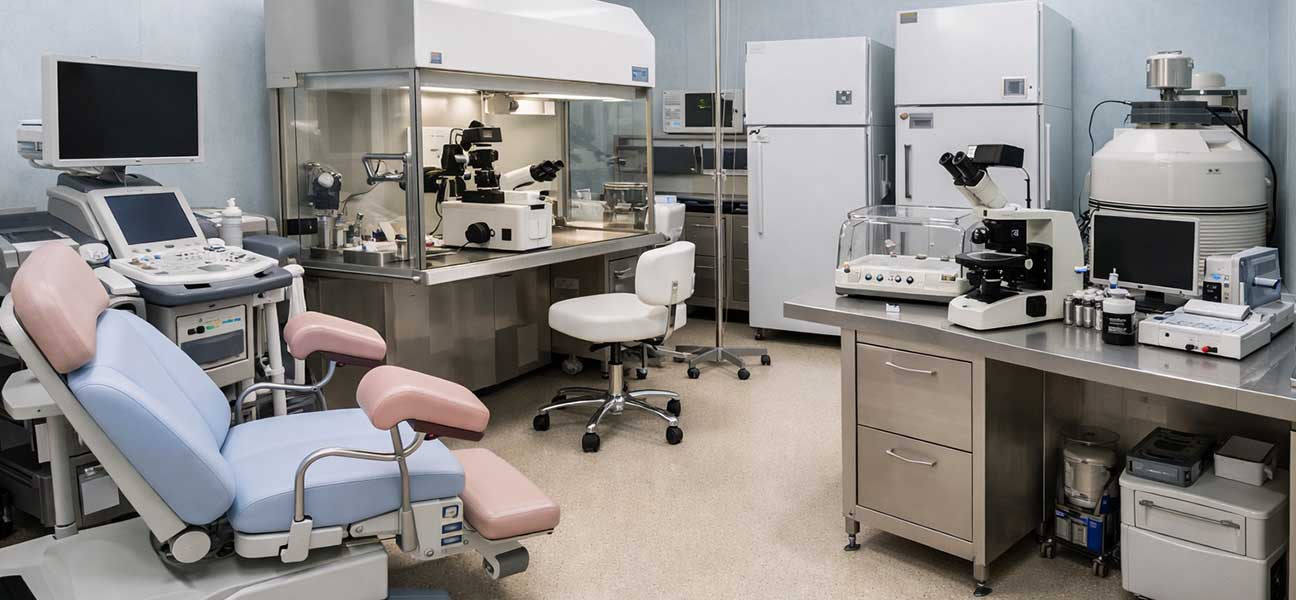
The hardware configuration of embryo laboratories in China's large reproductive centers has reached international first-class standards, including time-lapse imaging incubators, laser-assisted hatching systems, and micromanipulation platforms. Laboratory quality control systems (KPI indicators) are also aligned with international standards. However, independent research and development of laboratory consumables and some high-end equipment (such as micromanipulation needles and culture media) still rely on imports.
Treatment Performance by Age Group
For patients under 35, the clinical pregnancy rate for fresh embryo transfers in Chinese reproductive centers is approximately 55%–65%, with no significant difference from Europe and America. For the 35–40 age group, the pregnancy rate is about 40%–50%, within the international normal range. For patients over 40, some centers in China show good performance in cumulative live birth rates, benefiting from flexible ovarian stimulation protocols and embryo accumulation strategies. However, for the very advanced age group over 44, live birth rates decline significantly worldwide, and China currently lacks large-scale original breakthroughs.
Scale Dimension: Number One Globally in Annual Cycles
China completes over 1 million assisted reproductive cycles annually, ranking first in the world. This scale advantage has led to the accumulation of rich clinical experience, especially in handling complex cases (such as recurrent implantation failure, poor ovarian response, and PGT for genetic diseases), where Chinese doctors have amassed a large number of practical cases.
| Country/Region | Annual Assisted Reproductive Cycles (Estimated) | IVF Clinical Pregnancy Rate (Reference Range) | PGT Technology Application |
|---|---|---|---|
| China | ≥1 million | 50%–60% | Widespread, case numbers among the world's top |
| United States | Approx. 250,000–300,000 | 50%–65% | Mature, significant regulatory differences |
| Japan | Approx. 450,000–500,000 | 40%–55% | Relatively widespread |
| Germany | Approx. 100,000–120,000 | 45%–60% | More restrictive |
| United Kingdom | Approx. 80,000–100,000 | 50%–60% | Mature, strict regulation |
Note: The above data are estimated ranges from industry synthesis. Statistical methods vary between institutions and are for reference only.
Research Dimension: Rising Number of Papers, Original Contributions Await Breakthrough
China's number of SCI papers in the field of reproductive medicine ranks second in the world, second only to the United States. High-quality research has been published in areas such as embryo development mechanisms, oocyte cryopreservation, and PGT technology improvements. However, original theoretical breakthroughs and landmark clinical studies with international influence remain relatively scarce. Chinese experts' participation in the formulation of assisted reproductive technology guidelines and industry standards is gradually increasing, but leadership primarily remains with Europe and America.
Differences Between Countries: Strengths and Weaknesses Coexist
China's assisted reproductive technology exhibits different characteristics when compared with various countries:
- Compared with the United States: The gap in clinical scale and technology application level is narrowing, but gaps remain in basic research, equipment development, and reproductive medicine education and training systems. The United States has a clear advantage in reproductive genetics and basic research on embryo development.
- Compared with Japan: China has more experience in PGT technology and handling complex cases. Japan has conducted in-depth research on mild stimulation protocols and single embryo transfer strategies.
- Compared with Europe (UK, Germany, Spain): Europe is more mature in terms of reproductive medicine regulatory systems, ethical frameworks, and long-term follow-up data. China needs to strengthen its clinical data accumulation and long-term safety research.
- Compared with other developing countries: China's level and scale of assisted reproductive technology are significantly ahead, making it a benchmark for developing countries.
Easily Overlooked Detail: Laboratory Quality vs. Clinical Protocol
When discussing rankings, people often focus only on clinical pregnancy rates, overlooking the key variable of laboratory quality. The laboratory level varies significantly between different reproductive centers in China. There may be substantial differences between top-tier centers and average centers in embryo culture efficiency, freeze-thaw survival rates, and PGT testing accuracy. Therefore, when saying "China's assisted reproductive technology world ranking," it is necessary to distinguish between the top-tier level and the average level. Top-tier centers have reached international first-class standards, but the average level still has room for improvement.
Common Pitfalls: Misconceptions About Rankings
When evaluating the world ranking of China's assisted reproductive technology, several common misconceptions exist:
- Equating "largest scale" with "best technology." Large scale does not mean comprehensive technological leadership; basic research and original technology are equally important.
- Using the success rate of individual centers to represent the national level. There are over 500 assisted reproductive institutions in China with varying levels; data from top-tier centers cannot represent the whole.
- Ignoring the impact of age and patient composition on success rates. The age distribution and treatment indications of patients differ between countries, making direct comparison of success rates of limited significance.
- Believing the ranking is fixed. Assisted reproductive technology is developing rapidly. China is making significant progress in multiple directions, and the ranking is dynamic.
When is it Suitable to Choose China's Assisted Reproductive Technology?
China's assisted reproductive technology is suitable for the following situations:
- Patients residing in China who wish to receive treatment locally; the technical level of China's top reproductive centers is on par with international standards.
- Individuals requiring PGT technology; China has extensive experience in PGT-A, PGT-M, and PGT-SR with a high number of cases.
- Patients with complex infertility issues (such as recurrent implantation failure, poor ovarian response, endometriosis); Chinese doctors have rich experience in management.
- Patients requiring extensive embryo culture and accumulation; China has mature technology in embryo culture and cryopreservation.
When is it Not Suitable?
- Pursuing technologies specifically permitted by the laws of certain countries (such as commercial egg banks, surrogacy); Chinese law has clear restrictions.
- Needing reproductive interventions for rare genetic diseases supported by long-term follow-up and basic research; some centers in Europe and America have advantages in research translation.
- Patients with the highest demands for laboratory hardware and team experience and sufficient budget; they can choose top domestic centers or consider international top-tier centers.
Why Has China's Assisted Reproductive Technology Improved Rapidly?
The rapid development of China's assisted reproductive technology benefits from the following factors:
- Huge clinical demand: The infertility rate is approximately 12%–18%, and the large patient population has driven technological iteration and experience accumulation.
- Policy support: Assisted reproductive technology has been included in national key research and development plans, with continuous increases in research investment.
- Equipment introduction and absorption: Rapid introduction of international advanced equipment and technology, followed by optimization and improvement during application.
- Talent pipeline development: An increasing number of reproductive medicine professionals returning from overseas studies bring advanced concepts and technologies.
Specific Process: How Does China's Assisted Reproductive Technology Achieve a High Level?
The high level of China's assisted reproductive technology is reflected in the following steps:
- Ovarian Stimulation Protocols: Individualized protocols based on patient age, AMH, AFC, etc., flexibly using antagonist protocols, mild stimulation protocols, PPOS protocols, etc.
- Egg Retrieval and Embryo Culture: Mature ultrasound-guided egg retrieval technique; embryo culture uses time-lapse imaging technology to dynamically assess embryo developmental potential.
- PGT Technology: Uses NGS technology for embryo chromosomal testing, with high detection accuracy; biopsy, amplification, sequencing, and analysis can be completed within one cycle.
- Frozen Embryo Transfer: Vitrification technology is widespread; freeze-thaw embryo survival rate exceeds 95%; clinical pregnancy rate for frozen embryo transfer is comparable to fresh embryos.
- Luteal Phase Support: Individualized luteal phase support protocols are used, adjusting medication based on endometrial transformation status and hormone levels.
What is Needed? How Long Does it Take?
For patients wishing to undergo assisted reproductive treatment in China, the following preparations are needed:
- Documentation: ID cards and marriage certificates for both parties; some centers may require household registration books or birth permits.
- Tests: Basic fertility assessment (AMH, FSH, LH, antral follicle count), semen analysis, chromosomal testing, infectious disease screening, uterine cavity evaluation, etc.
- Timeframe: From the initial consultation to completing a full cycle (including ovarian stimulation, egg retrieval, embryo culture, transfer) takes approximately 2–3 months. If PGT technology is needed, an additional 3–6 weeks is required.
What are the Risks? How to Judge and Choose?
Risks of assisted reproductive technology include Ovarian Hyperstimulation Syndrome (OHSS), multiple pregnancy, complications from egg retrieval surgery, embryo developmental arrest, and implantation failure. The incidence of OHSS in China's top-tier centers has been controlled at a low level (severe OHSS approximately 0.5%–1.5%), and the multiple pregnancy rate is gradually decreasing through single embryo transfer strategies.
How to judge the technical level of a reproductive center? Pay attention to the following indicators:
- Whether it has an independent embryo laboratory and a stable team of embryologists.
- Whether it publishes verifiable clinical pregnancy and live birth rate data (stratified by age).
- Whether it has PGT technology qualifications and sufficient case experience.
- Whether it has multidisciplinary collaboration capabilities (reproductive gynecology, reproductive urology, genetic counseling, psychological support).
Practitioner's Observation: Where are the Real Gaps?
Having worked in the field of assisted reproduction for over 10 years, I have seen tangible progress in China's technology. However, several real gaps must be mentioned. First, in basic reproductive biology research, our understanding of core mechanisms such as oocyte aging and embryo development regulation is still not deep enough, and original research is scarce. Second, in high-end equipment research and development, core equipment such as incubators, micromanipulators, and laser-assisted hatching systems still rely on imports; domestic equipment lags in stability and precision. Third, in clinical data management and long-term follow-up, systematic and standardized approaches need strengthening. These gaps are narrowing but require time and sustained investment.
Conclusion: Doctor's Advice










Comments (0)